
Optimizing Exam Room Lighting: A Guide to Safety, Focus, and Patient Care
The right lighting in an exam room is far more than a simple utility; it is a critical component of effective healthcare delivery. Often overlooked in favor of more prominent medical equipment, exam room lights are, in fact, foundational medical tools. For medical professionals, proper illumination is essential for accurate diagnoses, performing precise procedures, and ensuring documentation clarity. For patients, it directly impacts comfort, reduces anxiety, and can influence their overall perception of care. This guide delves into the multifaceted role of lighting, exploring how strategic choices enhance clinical outcomes, comply with stringent medical standards, and create a true healing environment. We will navigate the essential balance between functional task lighting and ambient comfort, providing actionable insights for healthcare facility managers, designers, and practitioners.
The Critical Role of Lighting in Clinical Accuracy and Diagnosis
Adequate lighting is non-negotiable for clinical precision. In an environment where subtle visual cues can dictate a diagnosis, the quality of light is as important as the clinician’s own visual acuity. This section establishes the foundational importance of light in medical settings, moving beyond mere visibility to optimized visual performance.
Enhancing Visual Acuity for Physical Examinations
The human eye is a remarkable instrument, but its performance is wholly dependent on the light available. For physical examinations, specific lighting parameters are paramount. Color Rendering Index (CRI), a measure of a light source’s ability to reveal the true colors of objects compared to natural light, is critical. A high CRI (>90) is essential for accurately assessing skin tone, detecting the subtle yellowing of jaundice, identifying the true hue and texture of rashes, and evaluating wound bed health (e.g., distinguishing between viable granulation tissue and necrotic slough). Poor lighting with a low CRI can mask cyanosis, pallor, or erythema, potentially leading to diagnostic delays or errors.
Similarly, illuminance (measured in lux or foot-candles) must be sufficient for the task. While general ambient light might be around 300-500 lux, the focused area for a detailed skin or wound exam may require 1,000 lux or more. The color temperature also plays a role; cooler light (5000K-6500K) enhances contrast and can make details “pop,” aiding in the detection of fine textures and variations.
Supporting Minor Surgical and Procedural Tasks
When a procedure moves from examination to intervention—be it suturing a laceration, performing an incision and drainage, or removing a skin lesion—lighting requirements become even more stringent. The primary goals are shadow reduction, precise beam control, and high-intensity, glare-free illumination.
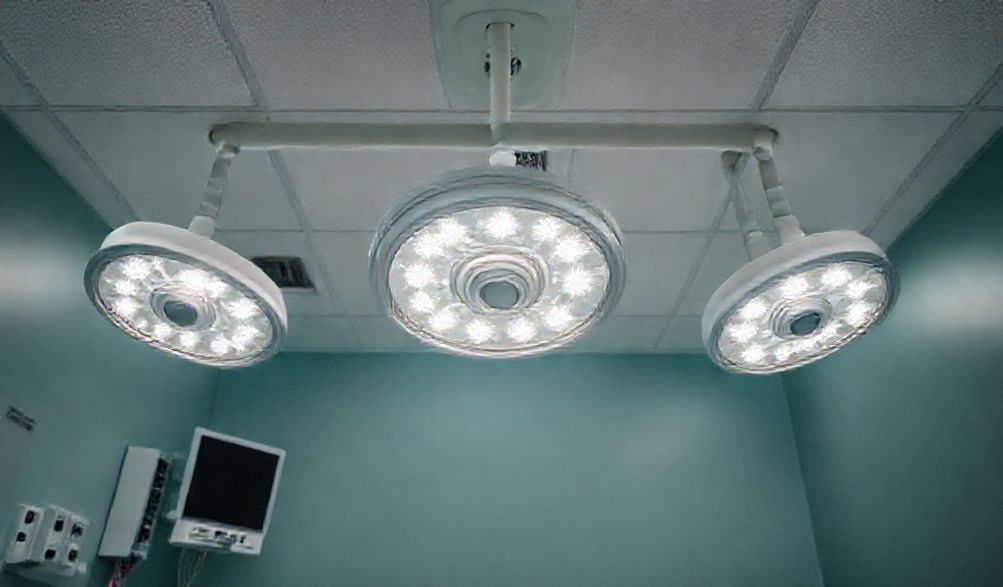
Overhead surgical or procedure lights are designed for this. They typically feature multiple LED arrays arranged in concentric rings. This design allows light to emanate from several angles, virtually eliminating the shadows cast by the clinician’s head and hands. The best lights offer adjustable spot size and intensity, allowing the beam to be focused precisely on the anatomical site. This ensures the clinician has a clear, bright, and color-accurate view of the field, which is crucial for precision, reducing procedural time, and minimizing tissue trauma.
Reducing Eye Strain and Fatigue for Healthcare Providers
The well-being of healthcare providers is intrinsically linked to patient safety. Improper lighting is a significant, yet often unaddressed, contributor to provider fatigue. Glare from reflective surfaces (instrument trays, computer screens), flicker from low-quality fluorescent or LED drivers, and insufficient or uneven brightness force the eyes to constantly work harder to adjust.
This visual stress manifests as headaches, burning eyes, blurred vision, and decreased concentration—symptoms that can compound over a long shift. Evidence-based lighting design seeks to eliminate these stressors. Flicker-free LED technology, indirect lighting techniques to soften ambient light, and adjustable task lights that allow providers to control their immediate visual environment are key. By promoting visual comfort, facilities support staff well-being, reduce error rates, and sustain the high level of attention to detail required in patient care.
Key Features and Technology for Modern Medical Exam Lighting
Not all lights are created equal for medical use. The technology embedded in modern exam room lights is specifically engineered to meet the unique demands of the clinical environment. Understanding these components is essential for making informed decisions.
Color Rendering Index (CRI) and Color Temperature
These two metrics are the cornerstones of quality medical lighting.
- Color Rendering Index (CRI): On a scale of 0 to 100, CRI indicates how naturally a light source reveals colors. Sunlight has a CRI of 100. For clinical accuracy, a CRI of 90 or higher is considered the minimum standard. A light with a CRI of 95+ will allow a clinician to see the truest colors of skin, blood, tissue, and medication, ensuring assessments are based on reality, not a distorted color cast from poor lighting.
- Color Temperature: Measured in Kelvins (K), this describes the visual “warmth” or “coolness” of light.
- Cool White (5000K – 6500K): Mimics midday daylight. This temperature promotes alertness, enhances contrast, and is ideal for primary task lighting in exam and procedure areas where visual acuity is critical.
- Warm White (2700K – 3500K): Mimics incandescent or sunset light. It feels calming and welcoming. This is best suited for ambient lighting in waiting areas, consultation zones, or patient recovery spaces to reduce anxiety and create a less sterile atmosphere.
A well-designed room often uses both: cool, high-CRI light for the exam zone and warmer, diffused light for the periphery.
Adjustability, Flexibility, and Control Systems
Static, one-size-fits-all lighting is inadequate for the dynamic needs of an exam room. Flexibility is key.
- Physical Adjustability: Ceiling-mounted exam lights should offer multiple axes of movement—horizontal reach, vertical travel, and rotational tilt—to position the beam exactly where needed, regardless of patient or table position.
- Dimming and Presets: Full-range dimming is not a luxury; it’s a necessity. It allows a clinician to ramp up intensity for a detailed exam and lower it for patient comfort or pupilary checks. Programmable presets (e.g., “General Exam,” “Wound Care,” “Consultation”) can recall specific intensity and color temperature settings at the touch of a button, streamlining workflow.
- Control Systems: Options range from manual handles and touch panels to touchless infrared or gesture controls, which are superior for maintaining sterility. Centralized room control systems can integrate lighting with shades and other environmental factors.
Glare Reduction and Diffused Light Distribution
Harsh light and glare are the enemies of visual comfort and accuracy. Modern medical lighting employs specific engineering to combat this:
- Glare Reduction: Fixtures use optical lenses, micro-prismatic diffusers, and baffles to control light distribution, preventing direct view of the bright LED source. This is especially crucial for lights positioned above seated patients or clinicians working at computer stations.
- Diffused Light Distribution: Instead of a single point source, high-quality lights use multiple LED nodes spread over a surface. This creates an even, broad “pool” of light that minimizes sharp shadows and eliminates the “hotspot” effect common with older halogen lights. For ambient lighting, indirect techniques—bouncing light off walls or ceilings—provide shadowless, low-glare illumination that fills the room softly.
Designing for Patient Comfort and Psychological Well-being
While clinical utility is paramount, the patient’s experience cannot be secondary. Lighting is a powerful, non-pharmacological tool that can significantly affect a patient’s emotional state and perception of care.
Minimizing Anxiety with Soothing Ambient Light
The traditional, stark exam room lit solely by a bright overhead fluorescent troffer is inherently anxiety-provoking. It feels interrogative and cold. A layered lighting design transforms this experience. By combining the adjustable, high-intensity exam light with separate, softer ambient sources (e.g., wall sconces, cove lighting, or indirect ceiling fixtures), the room gains dimension and control. During consultation or waiting periods, the ambient light can dominate, creating a reassuring atmosphere. When examination is required, the task light takes center stage without the need for the harsh overhead light. This dynamic control helps reduce a patient’s sense of vulnerability.
Lighting Considerations for Vulnerable Populations
Special consideration should be given to patients with specific sensitivities:
- Pediatrics: Bright, glaring lights can frighten children. Dimmable lights allow for a gentle increase in intensity. Themed or colorful indirect lighting can be distracting and comforting.
- Geriatrics: Older eyes have slower pupil response, reduced contrast sensitivity, and greater susceptibility to glare. Even, shadow-free ambient light is crucial to prevent falls. Task lights should be bright but must avoid causing disabling glare.
- Neurological Sensitivities: For patients with migraines, autism, or other sensory processing conditions, flicker-free lighting is mandatory. The ability to dramatically lower light levels and avoid fluorescent-style “buzzing” can prevent distress and sensory overload.
Integrating with Room Design and Daylight
Exam room lights should not fight the room’s architecture but complement it. Where possible, access to natural daylight should be maximized. Daylight has proven psychological benefits, regulating circadian rhythms and improving mood. Operable shades or blinds are essential to control glare and patient privacy.
Artificial lighting should be coordinated with the room’s color scheme. Warm wall colors under warm ambient light feel inviting, while cooler tones under high-CRI task lighting support clinical functions. The goal is to avoid a monolithic, intimidating feel by creating a space that is both technically competent and human-centric.
Compliance, Safety, and Operational Efficiency
Exam room lighting must exist within a framework of rigorous standards and support the practical, day-to-day operational needs of a healthcare facility.
Meeting Healthcare Facility Standards and Codes
Lighting installations are governed by a web of regulations:
* The Joint Commission (TJC): Standards address emergency power for lighting, minimum illumination levels for medication preparation, and overall environmental safety.
* Illuminating Engineering Society (IES/ANSI): Publishes detailed recommended practice documents (e.g., RP-29-16) for lighting in healthcare facilities, specifying illuminance levels for various tasks.
* International Electrotechnical Commission (IEC) & National Electrical Code (NEC): Dictate electrical safety, particularly for fixtures in patient care vicinities, requiring specific isolation and grounding protocols.
* Facility Guidelines Institute (FGI): Provides guidelines on design and construction, including aspects of lighting.
Compliance ensures not just legality, but baseline safety and performance.
Energy Efficiency and Sustainable Practices
The shift to LED technology is the single most impactful change in medical lighting. Compared to halogen or fluorescent, LEDs offer:
* Dramatically Lower Energy Consumption (often 50-70% savings).
* Minimal Heat Output, improving patient and staff comfort and reducing HVAC load.
* Exceptionally Long Lifespan (50,000+ hours), slashing maintenance and lamp replacement costs.
The return on investment (ROI) for a full LED retrofit is typically compelling, paying for itself in energy and maintenance savings within a few years, all while supporting institutional sustainability goals.
Infection Control and Ease of Maintenance
In a clinical setting, every surface is a potential fomite. Lighting fixtures must be part of the infection control strategy.
* Cleanable Surfaces: Fixtures should have smooth, seamless, non-porous housings (often medical-grade polymer or stainless steel) that can withstand daily wiping with harsh hospital-grade disinfectants without degrading.
* Sealed Design: To prevent the accumulation of dust, microbes, and pathogens, exam room lights should be IP-rated (Ingress Protection) where appropriate, with sealed joints and gaskets. This is especially critical for surgical lights but is a best practice for all exam room fixtures.
* Maintenance Access: Design should allow for easy access to internal components for servicing without compromising the cleanable exterior envelope.
FAQ: Common Questions About Exam Room Lighting
Q: What is the ideal color temperature for an exam room’s primary task light?
A: For diagnostic and procedural tasks, a cooler color temperature in the range of 5000K to 6500K (daylight white) is generally recommended. This provides high-contrast illumination that improves visual clarity and color discrimination, crucial for accurate assessments.
Q: How can we reduce shadows during patient examinations?
A: Shadows are best minimized by using multiple light sources or fixtures designed with multiple LED arrays/points. Ceiling-mounted exam lights with concentric rings of LEDs or strategically placed wall-mounted directional lights can fill in shadows created by the clinician’s head or hands.
Q: Are LED lights safe and approved for use in medical exam rooms?
A: Yes, modern high-quality LED fixtures are not only safe but are now the standard for new installations and retrofits. It is critical to select LEDs that are flicker-free, have a high CRI (>90), and are housed in UL-listed or medically rated fixtures designed for clinical environments to ensure electrical safety and durability.
Q: How important is dimming capability for exam lights?
A: Extremely important. Dimming allows clinicians to tailor light levels precisely to the task at hand—bright for a detailed exam, lowered for patient comfort during discussion or while checking a light-sensitive response (like pupil reaction). It also aids in creating a calming ambient environment when the full intensity is not required.
Conclusion
Optimizing exam room lighting is a strategic investment that pays dividends across clinical, operational, and human dimensions. By prioritizing high-CRI, adjustable, and glare-free task lighting, healthcare facilities empower their staff to perform at the highest level of diagnostic accuracy and procedural precision. Simultaneously, a thoughtful, layered approach that incorporates patient-centric ambient lighting fosters an environment of comfort, dignity, and trust. Adhering to stringent safety, efficiency, and infection control standards ensures the solution is responsible, sustainable, and built to last. Ultimately, moving beyond viewing lights as mere fixtures to understanding them as essential, dynamic medical tools is key to designing exam rooms that truly support healing, accuracy, and exceptional patient care. Begin your assessment today: evaluate your current lighting not just for brightness, but for its holistic contribution to clinical outcomes and the human experience within your walls.
p>