
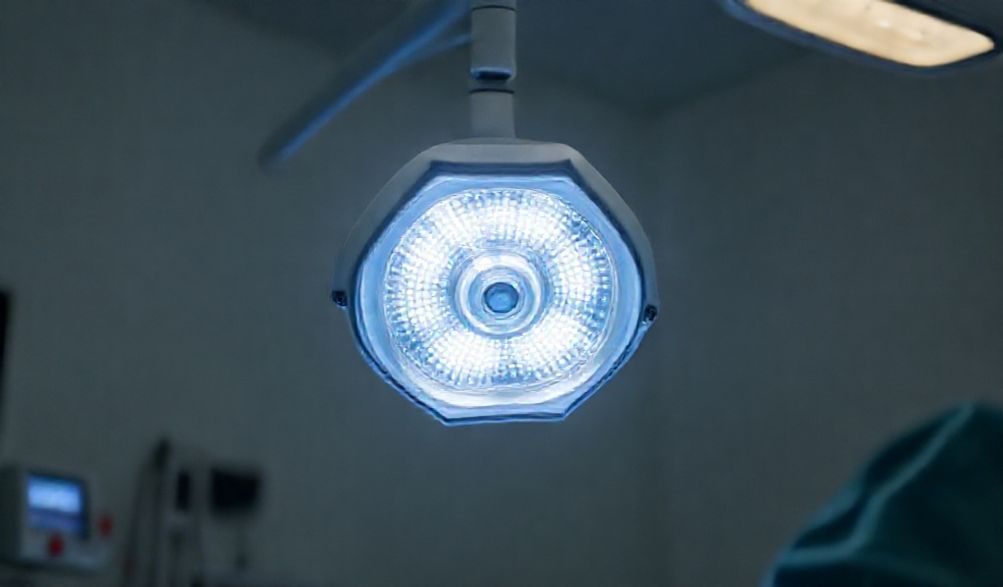
LED Surgery Lights: A Comprehensive Guide to Modern Surgical Illumination
In the high-stakes environment of the operating room, where millimeters can determine outcomes, clarity is non-negotiable. The surgeon’s vision is their primary guide, and the quality of illumination directly impacts precision, speed, and ultimately, patient safety. For decades, the warm glow of halogen and metal halide lights was the standard. Today, a quiet revolution has taken place, driven by Light Emitting Diode (LED) technology. This shift is more than a simple upgrade to a “brighter bulb”; it represents a fundamental advancement in surgical science, merging optics, ergonomics, and digital control into systems designed for unparalleled performance.
This guide serves as an authoritative, experience-based resource for the key decision-makers in this critical acquisition: surgeons, hospital procurement committees, and biomedical engineers. Selecting an operating room light is a long-term investment with profound clinical implications. Misinformation or overlooking a key specification can lead to years of surgeon fatigue, compromised visualization, and hidden costs. Our purpose is to demystify the technical jargon, translate features into clinical benefits, and provide a clear framework for evaluation. By the end, you will possess a comprehensive understanding of why LED is the gold standard and how to select the optimal system for your specific surgical needs, ensuring both exceptional patient care and sound fiscal management.
Why LED Technology Revolutionized Surgical Lighting
To appreciate the value of LED, one must first understand the limitations of the technologies it replaced.
The Limitations of Traditional Halogen and Metal Halide Lights
- High Heat Emission: Traditional lights were essentially powerful incandescent heaters. A significant portion of their energy output was infrared radiation, which posed a dual risk: drying and desiccating exposed patient tissue (particularly in open cavities) and creating an uncomfortably hot environment for the surgical team.
- Inconsistent Light Quality: Color temperature and Color Rendering Index (CRI) could fluctuate as bulbs aged, subtly changing how tissue appeared. Distinguishing between a small artery, a vein, or a bile duct relied on consistent, accurate color.
- Operational Inefficiency: Halogen bulbs typically lasted only 1,000-2,000 hours. Their predictable failure meant frequent, disruptive changes to the OR schedule and ongoing inventory and labor costs. They were also energy hogs, converting most electricity into heat rather than usable light.
- Shadow Challenges: While improved over earlier systems, shadow management was often a compromise between light intensity and diffusion.
Core Advantages of LED Surgical Lights
LED technology addressed these shortcomings directly, introducing a new paradigm in surgical illumination.
- Cool Light Source: LEDs emit minimal infrared and ultraviolet radiation. This “cold light” dramatically reduces the risk of tissue thermal damage and increases comfort for the surgical team during long procedures.
- Superior Color Rendering Index (CRI): High-quality LED systems boast a CRI of >90 (some exceeding 95). A CRI close to 100 means colors are rendered as they would appear under ideal, natural light. This fidelity is critical for accurate tissue differentiation, enhancing the surgeon’s ability to identify anatomical structures and pathological changes.
- Exceptional Shadow Control: This is a hallmark of modern LED lights. Instead of a single, powerful point source, they utilize hundreds of small LEDs arranged in a specific matrix. Combined with sophisticated secondary optics and reflectors, this creates a phenomenon called “shadow dilution.” When an instrument or hand obstructs part of the light field, surrounding LEDs fill in the gap, resulting in a uniformly lit field with dramatically reduced, low-contrast shadows.
- Longevity and Reliability: LED modules are rated for 50,000 to 60,000 hours of operation. This translates to over a decade of typical use without a “bulb change,” eliminating a major source of OR downtime and maintenance cost.
- Energy Efficiency: LED systems consume up to 60% less energy than comparable halogen systems, yielding significant utility savings and aligning with hospital sustainability goals.
Key Technical Specifications to Evaluate
Beyond the general advantages, understanding specific technical metrics is crucial for matching a light to your clinical requirements.
Understanding Light Intensity and Depth of Illumination
- Intensity (Lux/Lumens): Measured in lux (illuminance on a surface), surgical lights typically offer adjustable intensity from 40,000 to over 160,000 lux. A superficial procedure may require less, while a deep cavity in cardiothoracic or pelvic surgery demands maximum, focused intensity.
- Depth of Illumination: This is perhaps more important than peak surface lux. It refers to the light’s ability to penetrate deep into a wound cavity without causing excessive glare on the surface. A light with excellent depth of illumination will brightly and evenly illuminate the base of a deep incision.
Color Temperature and Its Surgical Impact
Measured in Kelvin (K), color temperature describes the hue of the white light.
* ~4000K: A “neutral white,” often considered a balanced choice that provides good contrast without being too harsh.
* ~4500K – 5000K: A “cool white” or “daylight white.” This higher Kelvin temperature increases perceived contrast and can make details “pop,” which is beneficial for differentiating subtle tissue structures. However, some surgeons find cooler light less comfortable for their eyes over very long procedures.
The best systems often offer adjustable or selectable color temperatures, allowing the team to tailor the light to the procedure and personal preference.
Beam Shape and Field Diameter
- Focused/Spot Beam: Provides high-intensity light in a smaller diameter (e.g., 10-15 cm), ideal for deep-cavity surgery where maximum light must be delivered to a confined area.
- Wide/Field Beam: Illuminates a larger area (e.g., 25-30 cm) with more diffuse light, perfect for orthopedic, trauma, or superficial procedures where a broad field of view is needed.
Many advanced lights are “focus-free” or have continuously adjustable field diameters, seamlessly transitioning from spot to wide field.
Critical Features for Safety and Ergonomics
A surgical light is a physical instrument in the OR. Its design directly impacts infection control and workflow.
Sterility and Infection Control Design
- The light head should have a smooth, seamless, and closed housing with no gaps or crevices where contaminants can accumulate.
- Materials must withstand frequent cleaning with hospital-grade disinfectants without degrading.
- A closed system prevents dust and microbes from entering the interior and contaminating the optical components.
Ergonomic Movement and Positioning
- The ceiling mount must be perfectly balanced, allowing the heavy light head to be repositioned with minimal effort using a sterile handle.
- A large range of motion (horizontal, vertical, tilt) is essential to position the light optimally without obstructing other equipment or personnel.
- Advanced features include touchless control (via sterile foot pedals or voice commands), automatic positioning to a preset “home” location, and memory settings that recall perfect light positions for specific, repetitive procedures.
Selecting the Right LED Surgery Light: A Buyer’s Framework
Armed with technical knowledge, apply this structured framework to your procurement process.
Assessing Clinical Needs by Surgical Specialty
Create a needs checklist:
* Trauma/High-Acuity OR: Prioritize intensity, depth of illumination, and reliability. A focus-free or adjustable beam is highly versatile.
* Specialty OR (e.g., Neuro, Cardiac): Often require very high-intensity spot lighting and exceptional shadow control for deep, narrow cavities.
* Minor Procedure/Outpatient Rooms: May prioritize cost-effectiveness and a good wide-field beam over extreme intensity.
* Hybrid ORs/Video Integration: Require lights with excellent color rendering for monitors and compatibility with camera systems, potentially with built-in or attachable video capabilities.
Total Cost of Ownership (TCO) Analysis
Look beyond the sticker price. A true financial analysis includes:
* Upfront Cost: Purchase price of the light and mount.
* Long-Term Savings: Calculate energy savings (LED vs. old system) and the eliminated cost of bulb replacements and associated labor over 5-10 years.
* Downtime Cost: Factor the value of OR time lost to bulb failures and maintenance. LED’s reliability minimizes this.
* Warranty & Service: Understand the warranty length (5+ years is standard for premium lights) and the cost and coverage of recommended service contracts.
Integration with Operating Room Infrastructure
- Ceiling Mount: Is the new light compatible with your existing track or fixed mount? Does the OR structure support the weight and reach requirements?
- Control Systems: Can the light integrate with your OR’s touch panels or nurse control systems?
- Future-Proofing: Consider lights with digital interfaces (e.g., DALI) that allow for integration with future OR automation, lighting presets, or data logging.
Maintenance and Best Practices for Longevity
Proper care protects your investment and ensures consistent performance.
Routine Cleaning and Disinfection Protocols
- Daily/Post-Procedure: Wipe the exterior housing and handle with a soft cloth dampened with a mild, hospital-approved disinfectant. Avoid abrasive cleaners or solvents that can damage coatings.
- Critical: Never spray liquid directly onto the light. Spray the cloth first to prevent fluid from seeping into vents or joints.
Scheduled Performance Checks
- Bi-Annual/Annual: Biomedical engineering should verify light intensity (lux) and color temperature against manufacturer specifications using a calibrated light meter.
- Mechanical Inspection: Check all movements for smooth operation, verify balance, and ensure that locking mechanisms engage securely.
Frequently Asked Questions (FAQ)
Q1: Are LED Surgery Lights really worth the higher initial investment?
A: Absolutely. While the upfront cost can be higher, the long-term savings on energy (up to 60% less), elimination of bulb replacements, and reduced downtime for maintenance lead to a significantly lower Total Cost of Ownership (TCO) over 5-10 years. The clinical benefits in patient safety and surgical precision provide invaluable non-financial ROI.
Q2: How does the shadow reduction technology actually work?
A: Modern LED surgery lights use a multi-source design with hundreds of individual LEDs arranged in a specific pattern. Combined with precisely engineered reflectors, this creates overlapping light beams. When a surgeon’s hand or instrument obstructs one beam, light from the surrounding LEDs fills in the shadow, dramatically reducing contrast and maintaining a uniformly lit field.
Q3: What is the typical lifespan of an LED surgery light, and what happens when it fails?
A: High-quality LED modules are rated for 50,000 to 60,000 hours of use. Unlike halogen bulbs that burn out suddenly, LEDs typically experience gradual lumen depreciation. Reputable manufacturers design systems with redundant LED arrays, so a few failing diodes do not black out the light. Service involves replacing a modular LED cluster, not the entire light head.
Q4: Can LED surgery lights be used for all types of procedures?
A: Yes, but specifications should be matched to the procedure. For example, deep-cavity cardiothoracic surgery requires a light with high depth-of-illumination and a focused beam, while a wide-field light is better for orthopedic or superficial procedures. Most lights offer adjustable field sizes and intensity to accommodate a range of needs.
Conclusion
The transition to LED surgery lights is a definitive step forward in surgical care. It is an investment not merely in a piece of equipment, but in enhanced visual clarity, improved patient safety through reduced thermal risk, and greater operational efficiency. The combination of cool, high-CRI light, exceptional shadow control, and unparalleled reliability creates an environment where surgical teams can perform at their peak.
Remember, this is ultimately a clinical decision. The financial TCO is compelling, but the primary justification lies in improved outcomes. We strongly encourage involving key stakeholders—surgeons, nurses, and clinical engineers—in the evaluation process. Request detailed specifications, clinical white papers, and, most importantly, arrange for an in-person demonstration or trial in a simulated OR setting. There is no substitute for seeing the light quality and testing the ergonomics firsthand.
As you move forward, use the framework in this guide to create a detailed requirement sheet. Evaluate potential suppliers not just on price, but on clinical evidence, service support, and system integration capabilities. The future of surgical illumination is bright, with trends pointing towards smarter systems featuring automated light tracking, adjustable spectral outputs for enhanced tissue contrast, and deeper integration into the digital OR. Choosing the right LED surgery light today positions your facility to leverage these advancements tomorrow, ensuring you provide the highest standard of care for years to come.
p>