
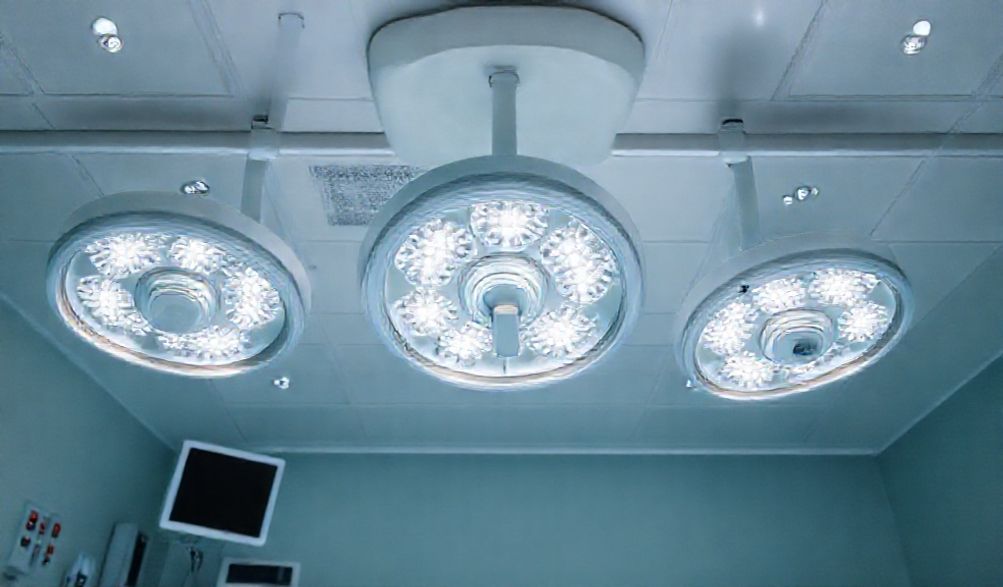
The Complete Guide to LED Operating Room Lights: Benefits, Technology & Selection Criteria
Introduction
In the high-stakes environment of the operating room, every detail matters. The surgeon’s skill, the team’s coordination, and the precision of instruments are all paramount. Yet, one fundamental element underpins all of these: light. Optimal illumination is not a mere convenience; it is a critical component of surgical accuracy, patient safety, and procedural efficiency. For decades, halogen and metal halide lights were the standard. But today, a question is reshaping procurement discussions in hospitals worldwide: What if the light source itself could actively improve surgical precision, reduce long-term operational costs, and significantly enhance team comfort and safety?
This guide is designed to answer that question. Its purpose is to serve as a comprehensive, evidence-based resource for the professionals responsible for equipping modern surgical suites: hospital administrators, surgical directors, clinical engineers, and procurement specialists. The information herein synthesizes insights from clinical studies, manufacturer whitepapers, and established healthcare facility standards, such as the international standard IEC 60601-2-41 for surgical luminaires.
Our intent is strictly to inform and educate, providing a neutral framework for evaluation. We do not endorse specific brands. The decision to invest in LED operating room lights is significant, and we strongly encourage consultation with certified biomedical engineering professionals and clinical stakeholders before any procurement. This guide will detail the compelling advantages of LED technology over traditional sources, demystify key technical features, and provide a practical, step-by-step framework for selecting the optimal system for your facility’s unique needs.
Why LED Technology is Revolutionizing the Operating Room
The shift from halogen to LED in the operating room is more than a simple bulb swap; it’s a fundamental technological upgrade that touches every aspect of surgical care. The benefits are multifaceted, impacting clinical outcomes, operational workflow, and financial performance.
Superior Illumination Quality for Surgical Precision
The primary mandate of any surgical light is to enable the surgeon to see the anatomical field with absolute clarity. LED technology excels in this regard through several key attributes:
- High Color Rendering Index (CRI): CRI measures a light source’s ability to reveal the true colors of objects compared to natural light. In surgery, accurate color differentiation between tissues—arteries, veins, nerves, fat, and muscle—is vital. Traditional lights often have a CRI around 85-90. Premium LED operating room lights consistently achieve a CRI of 95 or higher, providing exceptional color fidelity that enhances tissue discrimination and reduces visual strain.
- Advanced Shadow Reduction & Homogeneity: Older lights often cast sharp, distracting shadows from the surgeon’s head and hands. Modern LED systems use multi-point source technology (hundreds of individual LEDs arranged in a specific pattern) combined with sophisticated reflectors and diffusers. This creates a deeply homogeneous “light field,” where shadows are dramatically reduced or “filled in” by surrounding light points, ensuring consistent illumination even in deep cavities.
- Adjustable Color Temperature: Different procedures benefit from different light “tones.” A cooler color temperature (e.g., 4500K-6000K) provides high contrast and a “bright white” light ideal for surface and soft tissue surgery. A warmer tone (e.g., 3500K-4000K) can improve depth perception and reduce glare in longer procedures. Many LED systems offer stepless adjustment between these spectrums, allowing the team to tailor the light to the specific surgical task.
Enhanced Safety and Reduced Operational Risk
Safety in the OR extends beyond the patient to the entire surgical team. LED technology introduces major safety improvements:
- Minimal Heat Emission (Cool Light): Halogen lights are essentially high-powered heaters; a significant portion of their energy is emitted as infrared (IR) radiation. This can lead to tissue desiccation (drying) at the incision site and cause significant discomfort for surgeons and staff. LED operating room lights emit virtually no IR radiation, directing almost all energy into visible light. This “cool light” minimizes thermal risk to tissue and improves the comfort of the surgical team, especially during lengthy operations.
- Elimination of Harmful Radiation: Beyond IR, LEDs produce no ultraviolet (UV) radiation, which can be damaging to both tissue and certain materials in the OR.
- Consistent, Decay-Free Output: Halogen bulbs experience lumen depreciation—their brightness dims significantly over their lifespan. A surgeon may not notice the gradual decline until a bulb fails. LEDs maintain a consistent light output (typically >90% of initial lumens) throughout their entire lifespan, ensuring predictable performance and eliminating the risk of a sudden, mid-procedure drop in illumination.
Significant Long-Term Cost Savings and Sustainability
While the initial capital outlay for a high-quality LED system can be higher, the total cost of ownership (TCO) tells a dramatically different story:
- Exceptional Energy Efficiency: LEDs convert a much higher percentage of electrical energy into light. They typically consume 40-60% less power than equivalent halogen systems, leading to direct and substantial savings on electricity bills.
- Drastically Extended Lifespan: A halogen bulb may last 1,000 to 2,000 hours. An LED light engine is rated for 50,000 to 60,000 hours or more. In a high-use OR, this translates to over a decade of service versus annual or bi-annual bulb replacements. This eliminates not only the cost of bulbs but also the labor for replacement and the associated downtime or scheduling disruptions.
- Reduced HVAC Load: Because they emit far less heat, LED operating room lights place a lower cooling burden on the hospital’s HVAC system, contributing to further energy savings.
- Support for Sustainability Goals: The combined reduction in energy consumption, waste from frequent bulb disposal, and carbon footprint aligns perfectly with the environmental, social, and governance (ESG) initiatives of modern healthcare institutions.
Key Technical Features to Evaluate in LED Surgical Lights
Navigating the specifications of LED operating room lights requires understanding a few critical technical features. Here’s what to look beyond the marketing brochures.
Light Output and Intensity Control
- Lux and Lumen Requirements: Illuminance (Lux) measures the amount of light falling on a surface. Surgical standards often recommend a minimum of 40,000 to 160,000 Lux at the center of the light field, depending on the specialty (e.g., neurosurgery requires extremely high intensity). Ensure the system can deliver the required intensity at a typical working distance (e.g., 1 meter).
- Stepless, Color-Stable Dimming: The ability to smoothly dim the light from 100% down to very low levels (often 10% or less) is crucial. This must be achieved without any shift in color temperature (“color stability”)—a common flaw in inferior LED systems. Intuitive controls, often via a touchscreen or sterile handle interface, are essential.
- Depth of Illumination & Field Diameter: This refers to the light’s ability to illuminate deep cavities (like in pelvic or spinal surgery) without a fall-off in intensity at the periphery. A good system provides a wide, adjustable field diameter with deep, uniform penetration.
Mechanical Design and Ergonomics
The best light is useless if it’s difficult or cumbersome to position.
* Articulation and Range of Motion: Evaluate the light head’s movement—tilt, rotation, and extension. Ceiling-mounted systems with multi-articulated arms offer the greatest flexibility and keep the floor clear. Consider the required reach and the potential for collision with other ceiling-mounted equipment.
* Sterilization and Cleanability: All surfaces, especially handles and the light head itself, must be designed for easy and effective cleaning and disinfection. Look for seamless, closed designs that resist fluid ingress and can withstand harsh hospital-grade disinfectants.
* Balance and Stability: Once positioned, the light must stay put without drifting or requiring constant re-adjustment. Counterbalanced arms with smooth, precise movement and reliable locking mechanisms are key to preventing surgeon frustration and maintaining a sterile field.
Integration and Compatibility
The modern OR is a networked ecosystem. Lighting should integrate, not interfere.
* Compatibility with Imaging Systems: The light must not cause electromagnetic interference (EMI) with sensitive equipment like intraoperative MRI, C-arms, or patient monitors. Look for systems with appropriate EMI/RFI shielding certifications.
* Surgical Video Integration: Many lights now offer built-in or optional 4K camera systems for documentation, telemedicine, and teaching. Consider the video quality, ease of integration with your existing recording/streaming infrastructure, and the control interface.
* Backup Systems: Redundancy is critical. Systems should have a backup power system (often a battery) that automatically engages in a power failure, providing sufficient light to safely conclude or pause a procedure. Some systems feature redundant LED modules that remain active if others fail.
A Step-by-Step Guide to Selecting the Right System
Selecting LED operating room lights is a strategic process that requires input from multiple departments.
Assessing Your Facility’s Specific Needs
Begin with an internal audit:
1. Procedural Analysis: What surgical specialties dominate your schedule? Cardiac and neurosurgeons have different intensity and depth requirements than orthopedic or ophthalmic teams. Survey your surgeons for their specific needs and frustrations with current lighting.
2. Infrastructure Evaluation: Assess your OR ceilings. What is the load-bearing capacity? Where are the structural supports? Are there existing electrical conduits and data points? This will determine if a ceiling-mounted track system, single-point mount, or a mobile floor stand is feasible.
3. Stakeholder Input: Form a selection committee. Include representatives from: Surgery (surgeons, nurses), Clinical Engineering/Biomed (for maintenance and specs), Facilities Management (for installation), and Finance/Procurement (for budgeting and TCO).
The Procurement Checklist: Questions to Ask Vendors
Arm your committee with pointed questions:
* Technical Specifications: “Can you provide certified test reports for Lux output at 1m, CRI, and lifespan (L70 rating)?” “What is the dimming range and is it truly color-stable?”
* Service & Support: “What is included in the warranty (parts, labor, travel)?” “What are the recommended preventive maintenance intervals and costs?” “What is the guaranteed parts availability period?”
* Compliance & Certification: “Does the system carry full ISO 60601-2-41 certification? FDA 510(k) clearance or CE Marking for medical devices?” “Are the handles designed for use with standard sterile sleeves?”
* Validation: “Can you provide contact information for clinical references at similar-sized institutions?” “Do you offer an on-site trial or evaluation period?”
Total Cost of Ownership (TCO) Analysis
Move the conversation beyond the sticker price. Create a 7-10 year TCO model comparing your current system to proposed LED options. Include:
* Initial purchase & installation.
* Estimated energy consumption costs.
* Costs of replacement bulbs/parts (for traditional lights) vs. predicted LED module lifespan.
* Estimated maintenance labor and service contract costs.
* Potential costs associated with OR downtime for bulb changes or repairs.
The results often reveal that the higher-efficiency, longer-lasting LED operating room lights offer a lower TCO, providing a clear return on investment (ROI).
Addressing Common Concerns and Future Trends
Debunking Myths About LED Surgical Lighting
- Blue Light Hazard: Some concerns exist about exposure to blue light wavelengths. It’s important to contextualize this: the spectral output of medical-grade LEDs is carefully engineered and filtered. The intensity and exposure time in a surgical setting, where the light is directed at the surgical field and not the surgeon’s eyes for prolonged direct viewing, do not constitute a hazard. Reputable manufacturers design their spectra with safety in mind.
- “Flicker-Free” Operation: Flicker, caused by rapid power modulation, can cause eye strain and headaches. High-quality medical LEDs use constant current drivers to ensure truly flicker-free light. This is now a mandatory expectation, not a premium feature—insist on it.
The Future of OR Illumination
The evolution continues toward smarter, more integrated systems:
* Smart OR Integration: Lights that automatically adjust preset intensity and color temperature based on the scheduled procedure pulled from the OR management system.
* Advanced Imaging Overlay: Research is ongoing into lights that can project vital imaging data (like tumor margins from a pre-op MRI) directly onto the surgical field in perfect alignment.
* Adaptive Lighting: Systems using cameras and sensors to analyze the surgical field and automatically adjust light distribution and intensity to maintain optimal illumination as instruments and hands move.
FAQ Section
Q1: How long do LED operating room lights typically last?
A: The LED light engines are typically rated for 50,000 to 60,000 hours of operation. In a busy operating room used 8 hours a day, 5 days a week, this equates to over 15 years of service before a significant drop in output occurs. This contrasts sharply with halogen bulbs, which may need replacement every 6-12 months.
Q2: Are LED OR lights compatible with all types of surgery?
A: Yes, modern LED systems are highly versatile. Their adjustable intensity and color temperature make them suitable for everything from superficial procedures to deep-cavity surgeries. For highly specialized needs (e.g., certain endoscopic or microsurgical procedures), it’s important to verify that the light’s depth of illumination and optional accessories (like lens attachments) meet the specific requirements.
Q3: What is the most important technical specification to look for?
A: It’s the combination of several factors, not one single spec. The core triad for quality is: 1) A Color Rendering Index (CRI) of >90 (with >95 being ideal), 2) Sufficient Lux intensity for your surgical specialties (e.g., 100,000+ Lux at 1m), and 3) Excellent shadow reduction through multi-source homogeneous light field technology.
Q4: Is the initial investment in LED technology justified?
A: Absolutely, when viewed through the lens of Total Cost of Ownership (TCO). While the upfront cost is higher, the ROI is realized through: 70-80% energy savings, the complete elimination of halogen bulb purchases, drastically reduced maintenance labor, and minimized OR downtime. A formal TCO analysis over 5-10 years almost always favors LED.
Q5: How do I ensure the lights remain sterile and safe?
A: Manufacturers design for this. Key features include: Sterile handles designed for single-use, disposable plastic sleeves; seamless, closed housing on the light head that can be wiped down with standard disinfectants; and easy-to-clean surfaces without crevices. Always follow the manufacturer’s validated cleaning and disinfection protocols.
Conclusion
The transition to LED operating room lights represents a transformative upgrade for any surgical facility. The benefits are clear and compelling: unparalleled illumination quality that enhances surgical precision and safety, a significant reduction in long-term operational and energy costs, and a major improvement in the physical working environment for the surgical team.
This decision is a substantial capital investment that demands a rigorous, multidisciplinary approach. It requires balancing clinical needs with technical specifications and financial planning. We urge you to use the framework provided in this guide—assessing needs, scrutinizing technical features, conducting a thorough TCO analysis, and actively involving all stakeholders—as the foundation of your evaluation process.
Ultimately, upgrading to advanced LED surgical lighting is more than just replacing old equipment. It is a strategic investment in the future of your surgical services—an investment in enhanced patient outcomes, improved team performance, and greater operational efficiency for years to come. Begin the conversation with your clinical and financial teams today, and take the first step toward illuminating a new standard of care in your operating rooms.
p>