
Surgery Lights: A Comprehensive Guide to Types, Features, and Selection for Optimal Outcomes
What if the single most important tool in an operating room isn’t wielded by a surgeon’s hand, but hangs silently above them? While scalpels, imaging, and skilled personnel rightfully capture attention, the quality of illumination is a foundational, non-negotiable pillar of surgical success. Inadequate or poorly managed light can obscure critical anatomy, accelerate surgeon fatigue, and compromise patient safety. This guide moves beyond viewing the surgery light as mere infrastructure, positioning it instead as a precision medical device integral to clinical outcomes.
This post is built upon a synthesis of industry standards (such as DIN EN 60601-2-41), clinical requirements from surgical protocols, and technical engineering principles. It draws from manufacturer whitepapers, peer-reviewed studies on surgical ergonomics, and guidelines from authoritative bodies like the American College of Surgeons and the Association for the Advancement of Medical Instrumentation (AAMI). Our objective is strictly educational: to empower surgeons, hospital procurement teams, and surgical center administrators with the knowledge to make informed decisions. We do not promote specific brands. By the end of this guide, you will understand the critical technology, key evaluation features, and selection criteria for surgical lighting systems that ensure both patient safety and procedural efficiency.
The Critical Role of Surgical Lighting in Patient Safety and Procedure Success
A surgery light does far more than just “light up the room.” It is a critical component of the surgical ecosystem, directly influencing the surgeon’s performance and, by extension, patient outcomes.
Beyond Illumination: How Lighting Directly Impacts Clinical Outcomes
The connection between light and surgical performance is quantifiable. First, surgeon visual fatigue and eye strain are directly linked to poor lighting conditions. Flicker, glare, and inadequate illuminance force the ocular muscles to work harder, leading to headaches, decreased concentration, and slower reaction times over long procedures. A high-quality surgical light provides stable, homogenous light that minimizes this cognitive and physical drain.
Second, shadow management is paramount for procedural accuracy, especially in minimally invasive and deep-cavity surgeries. The presence of shadows can obscure bleeders, mask tissue planes, or hide critical structures. Modern surgery lights are engineered to eliminate the surgeon’s own shadow from the immediate field, a feature essential for precision in disciplines like neurosurgery and microsurgery. The ability to see clearly and accurately is the first step in any successful intervention.
Key Performance Metrics: Lux, Color Temperature, and Shadow Management
To evaluate a surgery light, one must speak the language of its key performance indicators:
- Illuminance (Lux): This measures the amount of light falling on the surgical field. While extremely high lux values (e.g., 160,000+ lux at center) are possible, the critical factor is homogeneity—how evenly that light is distributed across the entire field. A rapid fall-off in intensity at the edges can create a “tunnel vision” effect. Equally important is depth of illumination, the light’s ability to maintain intensity and color quality deep within a body cavity without causing thermal damage at the surface.
- Color Rendering Index (CRI): Perhaps the most clinically vital metric, CRI measures a light source’s ability to reveal the true colors of objects compared to natural light. In surgery, distinguishing between arterial blood (oxygenated) and venous blood, identifying subtle tissue pathologies, and differentiating between similar-looking structures requires a CRI of 90 or higher. A low CRI can make tissues appear washed out or artificially tinted, risking misdiagnosis or error.
- Correlated Color Temperature (CCT): Measured in Kelvin (K), CCT describes the perceived “warmth” or “coolness” of white light. Surgical lighting typically ranges from 4000K (neutral white) to 5000K (cool, daylight white). A cooler CCT is often preferred as it provides a brighter, more alert visual perception and enhances contrast, which can be less fatiguing over time.
Types of Surgery Lights: Understanding the Technology
Not all surgical lights are created equal. The technology and configuration must align with the procedural needs of the operating room.
LED vs. Halogen: A Modern Comparison
The shift from halogen to LED is the defining technological evolution in surgical lighting.
- Halogen Lights: The traditional standard, halogen bulbs produce light via a heated filament. They offer excellent color rendering but generate significant radiant heat at the surgical site, which can desiccate tissue. Their lifespan is short (typically 1,000-2,000 hours), leading to frequent, costly bulb changes and operational downtime.
- LED (Light Emitting Diode) Lights: Now the undisputed standard for new installations, LEDs offer transformative benefits:
- Cool Operation: They emit minimal infrared radiation, drastically reducing heat at the tissue plane.
- Longevity & Consistency: With lifespans of 50,000 to 60,000 hours, LEDs virtually eliminate bulb replacement during the light’s service life, maintaining consistent light output over time.
- Energy Efficiency: They consume up to 80% less power than halogen systems.
- Total Cost of Ownership: While the upfront cost may be higher, the savings in energy, maintenance, and bulb replacement make LED systems more economical over their lifespan.
Surgical Light Head Configurations: Single, Dual, and Multi-Section
The design of the light head determines its shadow-reduction capability.
- Single Dome Lights: Feature one large, central light source. They are cost-effective and suitable for minor procedure rooms or offices where shadow control is less critical.
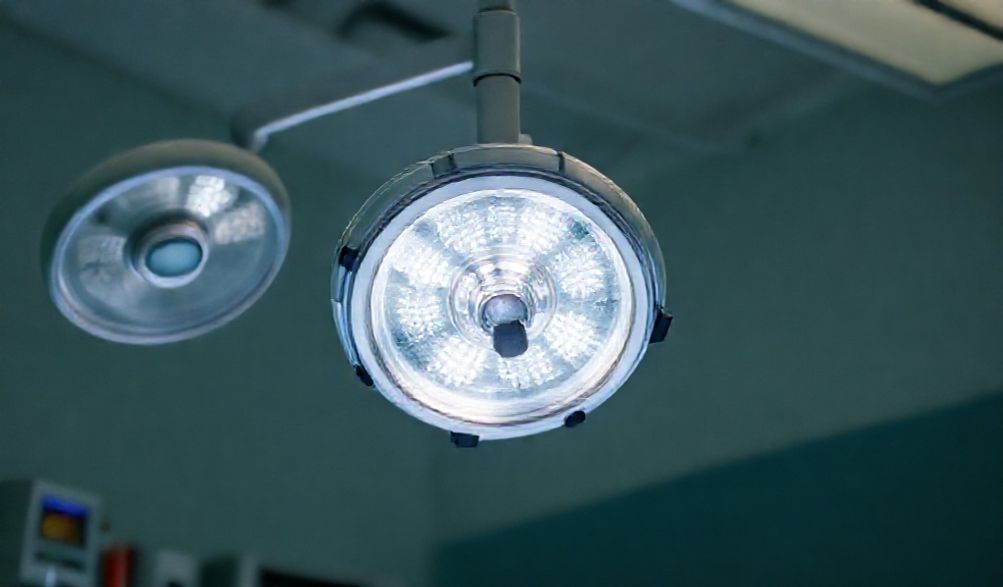
- Dual and Multi-Section Lights: The standard for major operating rooms. These lights consist of two or more independent LED arrays arranged in a ring. By projecting light from multiple slightly offset angles, they effectively “fill in” shadows created by the surgeon’s hands and instruments. This is known as shadow dilution. Furthermore, multi-section designs offer built-in redundancy; if one section fails, the others continue to provide adequate illumination to safely conclude the procedure.
Specialized Lighting for Different Surgical Disciplines
Surgical needs vary, and lighting systems can be tailored accordingly.
- Lights for General and Orthopedic Surgery: These procedures often require high intensity and exceptional depth of illumination to penetrate deep into abdominal or joint cavities. Lights with large field diameters and adjustable focus are common.
- Lights for Neurosurgery and Ophthalmic Surgery: Precision is everything. Lights for these fields prioritize minimal heat emission to protect sensitive neural or ocular tissues. They often feature extremely high, homogeneous lux levels and may integrate with surgical microscopes or offer built-in coaxial illumination for enhanced surface detail.
- Lights for Endoscopic/Laparoscopic Procedures: Here, the primary visual feedback comes from the monitor, not the open field. The role of the overhead surgery light shifts to providing optimal ambient illumination for the surgical team to move safely around the room and handle instruments, without causing glare on the monitor screens. Dimmability and indirect lighting modes are key features.
Essential Features to Evaluate When Selecting Surgery Lights
Beyond core performance metrics, several practical features determine how well a surgical light integrates into the sterile workflow of the OR.
Sterility and Infection Control: Handling, Draping, and Cleanability
The surgery light is a frequent point of contact in a sterile environment. Its design must support infection control protocols.
* Sealed Surfaces: The light head should have a smooth, seamless canopy with no crevices where contaminants can lodge.
* Cleanability: Materials must withstand aggressive, frequent cleaning with hospital-grade disinfectants without degrading.
* Draping Compatibility: For certain procedures, the light must be fully drapable with a sterile cover. The design should facilitate easy, secure draping without compromising balance or maneuverability.
Maneuverability and Ergonomics: Ease of Positioning
A light that is difficult to position is a hazard. Surgeons and nurses need to adjust the field quickly and precisely without breaking sterility.
* Balance Systems: Sophisticated counterbalance mechanisms allow the heavy light head to be moved effortlessly with a fingertip touch and remain securely in position, even at full extension.
* Reach and Articulation: The ceiling mount or boom must provide sufficient range of motion to cover the entire OR table from multiple angles, accommodating different patient positions and surgeon preferences.
* Sterile Control: Options include sterile handles on the light head itself or touchless control via foot pedals or voice activation, allowing for intraoperative adjustment without contaminating the field.
System Reliability and Safety: Redundancy and Fail-Safes
In the middle of a life-saving procedure, light failure is not an option.
* Redundant Light Sources: As mentioned, multi-section LED heads provide inherent redundancy.
* Backup Power: The system should have a battery backup that automatically engages during a mains power failure, providing sufficient light to safely terminate the surgery.
* Thermal Management: Built-in sensors and cooling systems should prevent the light head from overheating, protecting both the device and the patient.
The Procurement Process: A Step-by-Step Guide for Healthcare Facilities
Selecting a surgical lighting system is a major capital investment. A structured procurement process ensures the technology meets clinical needs and provides long-term value.
Conducting a Needs Assessment for Your OR Suite
Begin by defining your requirements. Create a checklist:
* Procedure Mix: What specialties are performed (e.g., cardiac, ortho, neuro)?
* Room Specifications: Ceiling height, room size, column placements.
* Workflow: Number of daily surgeries, typical team size, and common table positions.
* Future-Proofing: Are you planning to adopt new robotic or hybrid imaging technologies?
Interpreting Specifications and Comparing Vendor Quotes
Move beyond marketing claims to hard data.
* Create a Technical RFP: Your Request for Proposal should mandate specific, measurable performance data (e.g., “Minimum 100,000 lux at 1m, CRI ≥95, homogeneous field diameter of 30cm”).
* Prioritize Clinical Utility: Request live demonstrations or loaner units. Have surgeons from key disciplines test the lights in a simulated environment. How does it feel in a real-world scenario?
* Evaluate Total Cost: Compare upfront price, warranty terms, expected service costs, and energy consumption projections over a 10-year period.
Installation, Calibration, and Staff Training Considerations
The best light is ineffective if poorly installed.
* Certified Installation: Ensure installation is performed by certified technicians familiar with medical-grade electrical and mounting requirements.
* Initial Calibration: After installation, the light field must be professionally calibrated to ensure the focal point, homogeneity, and color temperature are set to manufacturer and clinical specifications.
* Comprehensive Training: Training for surgeons, nurses, and biomedical engineering staff is crucial. Everyone must understand basic operation, sterile handling, cleaning protocols, and troubleshooting steps.
Frequently Asked Questions (FAQ) About Surgery Lights
Q: What is the typical lifespan of an LED surgical light, and what does maintenance involve?
A: High-quality LED surgery lights have a lifespan of 50,000 to 60,000 hours—often equating to 15+ years of normal use. Maintenance primarily involves regular cleaning of the canopy according to hospital protocol and periodic (usually annual) professional inspection by a biomedical technician to verify performance and recalibrate if necessary. Unlike halogen systems, there are no bulbs to routinely replace.
Q: How do we ensure our surgery lights comply with current medical device regulations?
A: Purchase from reputable manufacturers who can provide clear regulatory documentation. In the U.S., look for FDA 510(k) clearance. In other markets, CE Marking under the Medical Device Regulation (MDR) is essential. Compliance with the international safety standard IEC 60601-2-41 (for surgical lights) is a fundamental requirement. Always request and file the Certificate of Compliance.
Q: Can existing halogen light systems be upgraded to LED?
A: Some manufacturers offer LED retrofit kits for specific halogen models. However, a full system replacement is often recommended. A new LED system includes not just the light head but also modern electronics, balancing systems, and safety features that a retrofit may not provide. A new system also comes with a full warranty and is designed from the ground up for optimal LED performance.
Q: What is the “color rendering index” and why is it critical in surgery?
A: The Color Rendering Index (CRI) is a measure (on a scale of 0-100) of how accurately a light source reveals the true colors of objects compared to natural daylight. In surgery, a CRI of 90 or higher is critical because it allows the surgical team to accurately distinguish tissue types, identify blood vessel oxygenation, recognize subtle color changes indicative of pathology, and differentiate between structures that may look similar under poor light. It is a direct patient safety feature.
Q: How much should a hospital budget for a new surgical lighting system?
A: Costs vary too widely for a specific figure, influenced by type (single vs. multi-dome), technology, ceiling mount complexity, and installation requirements. A single major-OR light with a sophisticated ceiling mount can range significantly. The key is to budget for lifecycle value, not just upfront cost. Consider the 10-year total cost of ownership, including energy, maintenance, and potential impact on surgical efficiency and outcomes. Obtain detailed quotes from multiple vendors based on your specific technical RFP.
Conclusion
Selecting a surgery light is a decision that resonates through every procedure performed under it. It is not a simple piece of overhead equipment but a foundational medical device that directly impacts surgical precision, team fatigue, and ultimately, patient safety. An informed selection requires a careful balance of rigorous technical specifications, clinical workflow needs, and uncompromising safety standards.
The path forward is one of diligent research and clinical engagement. Consult with your clinical engineering team, who understand the technical landscape. Request live demonstrations or trial installations to gather hands-on feedback from your surgical staff. Finally, use the insights from this guide to draft a detailed, requirements-driven document that reflects the unique needs of your surgical services, ensuring your investment delivers optimal outcomes for years to come.
p>