
Surgical Lights: A Comprehensive Guide to Types, Technology, and Selection for Optimal Operating Room Outcomes
Introduction
In the high-stakes environment of an operating room, where millimeters can define success, a surgeon’s most fundamental tool is not held in their hand—it is the quality of light that illuminates the surgical field. Studies suggest that up to 43% of preventable surgical errors can be linked, at least in part, to inadequate visualization. Proper illumination is not merely about brightness; it is about precision, safety, and efficiency. It affects a surgeon’s ability to differentiate between tissue types, control bleeding, and navigate complex anatomy, directly influencing procedure time and, most importantly, patient outcomes.
This guide serves as an authoritative, in-depth resource for the key decision-makers shaping the modern operating suite: surgeons, hospital procurement teams, biomedical engineers, and healthcare facility managers. Compiled from industry standards (such as those from AAMI and IEC), clinical studies, and technical specifications, our aim is to provide a clear, expert-driven framework. We will detail the evolution, core technologies, various types, and critical selection criteria for surgical lights, empowering you to make informed decisions that enhance surgical performance and elevate patient care.
The Evolution of Surgical Lighting: From Shadow to Precision
The journey of surgical lighting mirrors the advancement of surgery itself—a relentless pursuit of clarity and control over the operative environment.
Early Days: Sunlight and Simple Lamps
For centuries, surgeons were constrained by the sun. Procedures were scheduled for daylight hours near windows. The introduction of candles and oil lamps offered some independence but created significant problems: flickering light, dangerous open flames, copious smoke, and profound, obstructive shadows. These conditions made complex or internal surgeries exceedingly risky.
The Incandescent Breakthrough and Its Limitations
Thomas Edison’s incandescent bulb in the late 19th century was a watershed moment. Electric surgical lights, often single-bulb pendants, provided a consistent, movable source. However, early incandescent lights were intensely hot, causing patient tissue desiccation and surgeon discomfort. The light quality was often yellowish, and shadow management was primitive, typically relying on a single point source that created harsh, dark shadows.
The Halogen Era: Improved Intensity and Color
The mid-20th century saw the adoption of halogen bulbs. These offered a whiter, more intense light with a better Color Rendering Index (CRI) than standard incandescents, allowing for improved tissue differentiation. Design evolved to incorporate multiple bulbs in a single head and reflective casings to help diffuse light and reduce shadows. Despite these advances, halogen lights remained energy-inefficient, generated substantial radiant heat, and had relatively short lifespans, leading to high operational costs and maintenance burdens.
The LED Revolution: Efficiency, Control, and Coolness
The advent of Light Emitting Diode (LED) technology has fundamentally transformed surgical lighting over the past two decades. LEDs represent a paradigm shift, offering cool light emission, exceptional energy efficiency (using up to 80% less power than halogen), and lifespans measured in decades of OR use. This technological leap has unlocked unprecedented control over light field characteristics, enabling the precise, customizable, and reliable illumination that defines the modern operating room.
Core Technologies in Modern Surgical Lights
Understanding the underlying technology is key to evaluating any surgical lighting system.
LED (Light Emitting Diode) Technology
LEDs are the undisputed standard in new installations. Their benefits are manifold:
* Cool Light: They emit minimal infrared radiation, drastically reducing the risk of tissue thermal damage and surgeon discomfort.
* Energy Efficiency: They consume far less power, lowering hospital operating costs and environmental impact.
* Long Lifespan: With rated lives of 50,000 to 100,000 hours, LED modules rarely need replacement, minimizing downtime and maintenance costs.
* Instant Performance: They achieve full intensity instantly with no warm-up time and are unaffected by frequent on/off cycling.
Light Field Characteristics: What Defines Quality?
Beyond the light source itself, the quality of the illuminated field is paramount. Key metrics include:
LUX Intensity and Depth of Illumination
Intensity, measured in lux (lumens per square meter), must be sufficient to reveal fine detail. Modern lights often exceed 160,000 lux at the center of the field. Crucially, this intensity must be maintained with depth of illumination—the ability to provide consistent, deep-cavity lighting without “hot spots” or rapid fall-off at the periphery. A good system delivers uniform light across a defined diameter (e.g., 30cm) at a typical working distance.
Color Rendering Index (CRI) and Color Temperature
CRI measures a light’s ability to reveal the true colors of objects compared to natural light. In surgery, a CRI >90 (with 100 being perfect) is essential for accurately distinguishing between arterial and venous blood, healthy and necrotic tissue, and subtle variations in organ color. Color Temperature, measured in Kelvin (K), describes the light’s “warmth” or “coolness.” Surgical lights typically range from 4000K (neutral white) to 5000K (cool, daylight white), with the latter often preferred for its alert, high-contrast quality.
Shadow Management and Reduction
Complete shadow elimination is impossible, but effective management is critical. Advanced systems use multipoint source technology, where hundreds of individual LEDs are arranged in a specific pattern. When a surgeon’s head or instrument obstructs one set of LEDs, the others fill in the shadow, creating only a soft, diluted “penumbra” that does not obscure the field. This is far superior to the deep, obstructive shadows of single-source lights.
Ergonomic Design and Maneuverability
A brilliant light is useless if it’s difficult to position. Ergonomic design includes:
* Sterile Handles: Large, easy-to-grip handles that can be covered with sterile sleeves for intraoperative adjustment by the surgical team.
* Perfect Balance: The light head should stay in the exact position it is placed, without drift, thanks to precision counterbalance systems.
* Range of Motion: Arms should provide extensive reach and flexibility to cover any position on the surgical table, from head to toe, without impeding staff movement.
Types of Surgical Lights and Their Applications
Different procedures and OR setups demand different lighting solutions.
Ceiling-Mounted Surgical Lights
The workhorse of the major operating room.
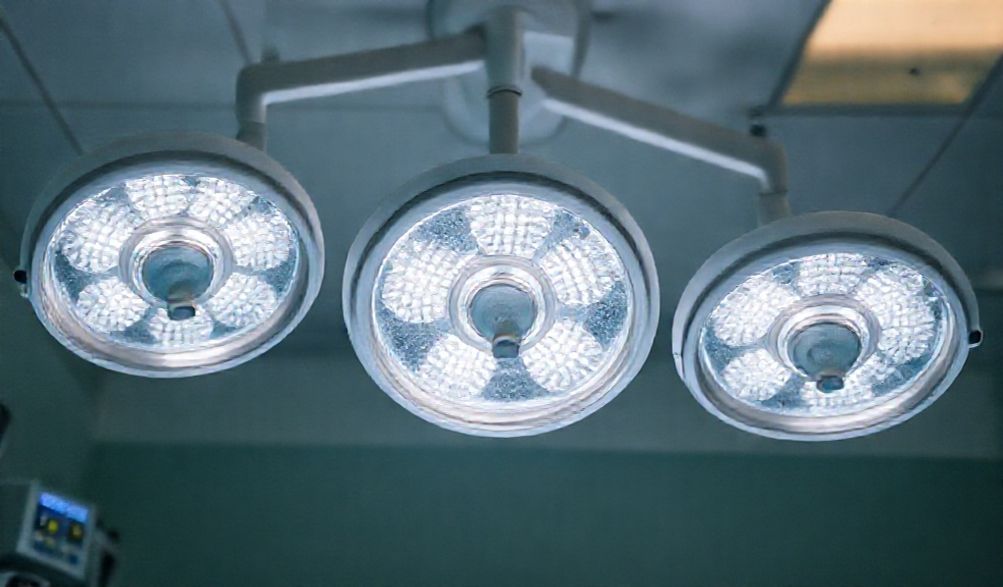
* Single vs. Multi-Arm Configurations: Single-arm lights offer simplicity and a smaller footprint. Multi-arm systems (e.g., twin, triple, or quad configurations) provide unparalleled flexibility, allowing two light heads to be merged for maximum intensity or separated for multi-disciplinary teams or complex procedures requiring illumination from multiple angles.
* Ideal For: Major open surgeries (cardiac, orthopedic, general), long-duration procedures, and any case where hands-free, broad-field illumination is required.
Surgical Headlights and Loupe Lights
These provide personal, portable illumination directly in the surgeon’s line of sight.
* Headlights: Typically LED-based, mounted on a headband or surgical loupes. They offer brilliant, shadow-free light exactly where the surgeon is looking.
* Loupe Lights: Integrated into or attached to surgical magnification loupes.
* Ideal For: Specialties with deep or narrow cavities: Otolaryngology (ENT), neurosurgery, plastic/reconstructive surgery, dentistry, and vascular surgery.
Specialty Lights: Endoscopic, Examination, and Minor Procedure Lights
- Endoscopic Lights: High-intensity light sources that connect to endoscopes and laparoscopes via fiber-optic or liquid light guides, illuminating internal cavities for minimally invasive surgery.
- Examination/Minor Procedure Lights: Smaller, often mobile lights used in outpatient clinics, emergency rooms, and minor procedure rooms for examinations, wound care, and simple surgeries.
Integrated Systems: Lights with Cameras and Connectivity
The frontier of OR integration. These systems combine a high-performance surgical light with a 4K or higher-resolution camera embedded in the light head. This allows for seamless recording and live broadcasting of the surgical field for teaching, telemedicine, and documentation without obstructing the surgeon’s view or requiring a separate, bulky camera stand.
Key Selection Criteria for Operating Rooms
Selecting the right light requires a multi-faceted evaluation that balances clinical needs with practical realities.
Clinical Requirements: Matching Light to Surgical Specialty
- Cardiac/Thoracic: Requires exceptional depth of illumination for deep cavities and high CRI for differentiating myocardial tissue and vessel quality.
- Neurosurgery: Needs intense, focused light with superb shadow control for deep, narrow exposures. Headlights are often a critical adjunct.
- Orthopedic: Benefits from broad, uniform fields for large incisions and joint spaces, with robust construction to withstand a busy OR environment.
- Plastic/Microsurgery: Demands the highest CRI and color temperature for accurate tissue assessment and color matching, often paired with loupe lights.
Technical Specifications Checklist
Create a checklist based on quantifiable metrics:
* Center Intensity: > 160,000 lux.
* Color Rendering Index (CRI): > 90 (ideally ≥ 95).
* Field Diameter: e.g., 30 cm at 1m distance.
* Depth of Illumination: Measure lux at the center and edge of the field at the intended working depth.
* Shadow Dilution: What percentage of illumination remains when the primary light path is obstructed?
Operational and Safety Factors
- Heat Dissipation: Verify surface temperature data to ensure patient safety.
- Backup Systems: Does the light have redundant LED drivers or modules to prevent complete failure?
- Fail-Safe Brakes: The system must hold position securely to prevent injury.
- Noise Level: Motors and cooling fans should be virtually silent.
Total Cost of Ownership (TCO)
Look beyond the sticker price. Consider:
* Initial Investment: Purchase price.
* Energy Consumption: LED systems offer dramatic savings.
* Maintenance Costs: Filter changes, calibration, and repairs.
* Lifespan: The projected lifespan of the LED modules before significant light degradation (often 50,000+ hours). A cheaper light with a 2-year bulb replacement cycle can quickly become more expensive than a premium LED system.
Installation, Maintenance, and Safety Standards
Proper implementation is as important as the selection. Adherence to standards like IEC 60601-2-41, which specifically governs the basic safety and essential performance of surgical luminaires, is non-negotiable for patient and staff safety.
Proper OR Planning and Installation
Involve biomedical engineering and facilities management early. Considerations include ceiling load capacity, structural support for the boom, electrical requirements, optimal placement for table coverage, and integration with other ceiling-mounted equipment (anesthesia booms, imaging systems).
Routine Cleaning and Disinfection Protocols
Light handles and surfaces are frequent touch points. The design must allow for easy and effective cleaning with hospital-grade disinfectants without damaging seals, lenses, or finishes. Clear protocols must be established for terminal cleaning between cases.
Preventive Maintenance and Calibration Schedules
Even reliable LED systems require attention. An annual preventive maintenance (PM) schedule should include:
* Inspection of mechanical arms, bearings, and brakes.
* Verification of light intensity and color metrics.
* Cleaning of internal filters and optical components.
* Calibration of the balance system.
Staff Training on Optimal Use
Surgeons, nurses, and techs should be trained on how to properly position, focus, and adjust the lights to maximize their benefits. This includes training on using sterile handles, merging light fields, and understanding the control panel functions.
FAQ Section
Q1: What is the most important factor when choosing a surgical light?
A: There is no single factor; optimal selection requires a balance of intensity, shadow control, color accuracy (CRI), depth of illumination, and ergonomics, all tailored to the specific needs of the surgical specialties using the room.
Q2: How often do surgical lights need to be replaced or serviced?
A: LED modules themselves can last 50,000 to 100,000 hours (15+ years of typical OR use). However, annual professional inspection, cleaning, and calibration are strongly recommended to ensure ongoing performance, safety, and mechanical reliability.
Q3: Can surgical lights cause tissue damage due to heat?
A: Modern LED lights emit significantly less radiant heat in the surgical field compared to halogen or incandescent technologies, greatly reducing this risk. However, proper design (effective heat sinking away from the head) and maintaining appropriate distance are still important safety considerations.
Q4: What does a high Color Rendering Index (CRI) mean for surgery?
A: A high CRI (≥90) ensures that tissues, blood, organs, and sutures appear in their true, natural colors. This is vital for accurate visual diagnosis, differentiating between tissue types, identifying ischemic areas, and controlling hemorrhage during a procedure.
Q5: Are portable surgical lights as effective as ceiling-mounted ones?
A: They are highly effective for their intended applications—minor procedures, examinations, and as surgeon headlights. However, for major open surgery, they typically cannot match the intense, wide, hands-free illumination field, superior shadow management, and convenience of a large, ceiling-mounted system.
Conclusion
Surgical lights have evolved from simple tools of visibility into sophisticated, technology-driven instruments that are fundamental to clinical success. They directly impact a surgeon’s precision, a procedure’s efficiency, and, ultimately, patient safety. As this guide has outlined, a prudent investment must be based on a thorough evaluation of clinical needs, rigorous technical specifications, and a clear understanding of total cost of ownership—not merely the initial purchase price.
Looking forward, the integration of surgical lighting with the broader “smart OR” ecosystem will continue. We can anticipate adaptive lighting that automatically adjusts to surgical video displays, deeper integration with augmented reality (AR) platforms, and AI-driven systems that optimize light field settings for specific procedure steps. The goal remains constant: to provide the perfect eye for the surgeon’s skilled hands.
We encourage all stakeholders—clinical teams, biomedical engineers, and procurement officers—to consult together and conduct hands-on evaluations with reputable manufacturers. Experience the ergonomics, test the shadow control, and see the true color rendering for yourself. The right illumination is an investment in excellence for every operation to come.
p>