
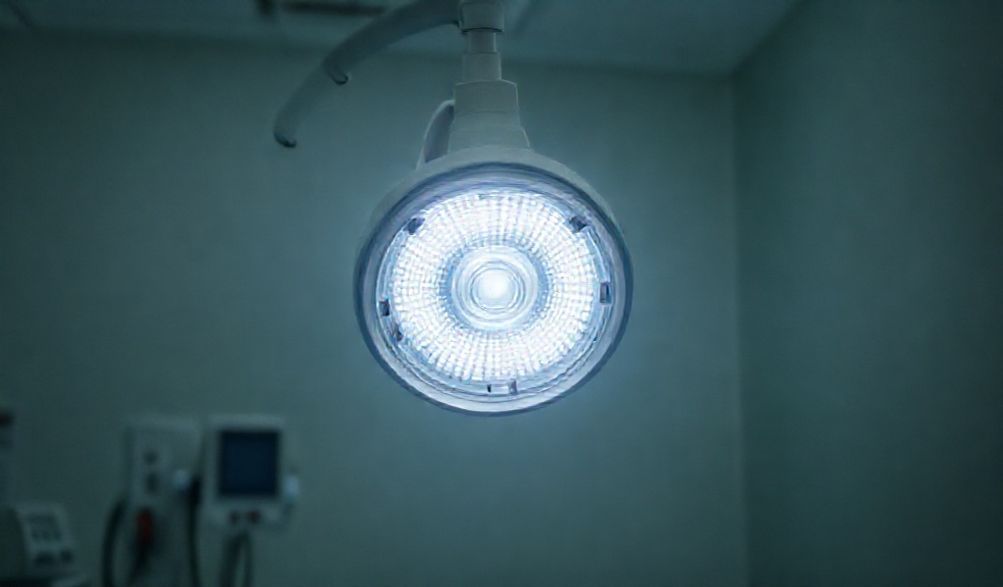
The Ultimate Guide to Medical Examination Lights: Choosing the Right Light for Accurate Diagnosis
In the precise world of medical diagnosis, clarity is everything. The humble medical examination light, often called an exam light, is a cornerstone of clinical practice, illuminating the subtle details that inform patient care. From a routine check-up to a critical procedural assessment, the quality of light directly impacts diagnostic accuracy and practitioner comfort. Yet, this vital tool is often an afterthought, selected based on price or convenience rather than performance.
This comprehensive guide is designed for healthcare professionals, clinic managers, and procurement specialists. We will delve into the science, technology, and key considerations behind modern medical lighting. Our analysis is built on expert insights from clinical ergonomics, ophthalmology, and medical device engineering, combined with verified product specifications and user experiences, to help you make an informed, evidence-based decision for your practice. Choosing the right exam light is not just about buying equipment; it’s about investing in diagnostic confidence.
Understanding Medical Examination Lights: Core Principles and Importance
An exam light is far more than a simple lamp. It is a precision optical instrument designed to meet the stringent demands of clinical observation. Its core function is to replicate natural daylight in a controlled, consistent manner, allowing the human eye to perceive the finest details without strain or distortion.
The Critical Role of Lighting in Clinical Accuracy
The link between lighting quality and diagnostic outcomes is well-established in clinical literature. Proper illumination is the first step in the visual diagnostic chain.
- Reducing Diagnostic Errors: Subtle cues—a faint rash, the early yellowing of sclera indicating jaundice, variations in wound granulation tissue, or the vascular patterns of a lesion—can be missed under poor light. A high-quality exam light reveals true tissue color, texture, moisture, and topography, forming the basis for accurate assessment and reducing the risk of oversight.
- Combating Practitioner Visual Fatigue: Clinicians spend hours performing visually demanding tasks. Glare, flicker, poor color rendering, and inadequate illumination force the eyes to work harder, leading to eyestrain, headaches, and decreased concentration. This fatigue can directly impact diagnostic performance and job satisfaction.
- Real-World Clinical Examples:
- Dermatology: Assessing erythema (redness), cyanosis (blueness), or the subtle pigmentation of a melanoma requires light that renders color perfectly.
- Wound Care: Evaluating a wound’s bed (color of granulation vs. slough), its edges, and signs of infection depends on clear, shadow-free illumination.
- General Physical Exam: Detecting pallor, jaundice, or oral mucosal abnormalities relies on consistent, neutral light across the examination room.
Key Technical Specifications: What Do They Mean?
Navigating product specifications is crucial. Here’s what to look for:
- Color Rendering Index (CRI): This is arguably the most critical spec for an exam light. CRI measures a light source’s ability to reveal the true colors of an object compared to natural sunlight (which has a CRI of 100). For clinical settings, a CRI of 90 or higher is non-negotiable. A light with a low CRI can make healthy tissue look abnormal or mask pathological signs, leading to misdiagnosis.
- Color Temperature (Kelvin): Measured in Kelvins (K), this describes the “warmth” or “coolness” of white light. Warm light (<4000K) has a yellowish hue, while cool light (>5500K) appears bluish. For clinical examination, a neutral white light in the range of 4500K to 5500K is generally preferred. This range closely mimics midday daylight, providing a familiar, accurate visual environment that minimizes color bias.
- Illuminance (Lux/Lumens): This is the measure of brightness on a surface (lux = lumens per square meter). General examination may require 1,000 to 5,000 lux, while minor surgical or procedural tasks can demand 10,000 to 30,000 lux or more at the center of the field. The key is adjustable intensity to suit different tasks without causing glare.
- Glare Control and Shadow Reduction: Harsh shadows can hide critical anatomy. Advanced exam lights use optical systems like diffusers, Fresnel lenses, or multiple LED arrays to create even, homogeneous light. Some surgical lights use twin-head designs where the shadows cast by one head are filled in by the other, virtually eliminating them in the working cavity.
Types of Medical Examination Lights: A Detailed Comparison
The ideal exam light depends heavily on its intended application. Here’s a breakdown of the primary designs.
Overhead Examination Lights (Ceiling-Mounted)
These are the workhorses of general practice and examination rooms.
- Best for: Primary care clinics, general examination rooms, pediatric offices, and any setting where floor space is at a premium.
- Pros: Offer completely hands-free operation, allowing the clinician to maintain sterility or use both hands for the exam. They provide broad, even coverage for whole-body observation and keep the floor completely clear of obstructions (a key safety consideration). Modern versions feature highly articulated arms with excellent reach and positioning.
- Cons: Their position is fixed relative to the room, which may require adjusting the patient or the exam table to achieve the perfect angle, as opposed to moving the light itself.
Procedural & Surgical Lights
These are specialized high-performance tools designed for more invasive or detailed work.
- Differentiation from Standard Exam Lights: They provide significantly higher intensity and luminance for deep-cavity illumination. Their core design focus is on advanced shadow reduction—often through multi-point source configurations (e.g., ring-shaped LED arrays or multiple independent light heads). They offer exceptional depth of field, keeping the site in focus even as instruments move in and out.
- Key Features: Designed for sterile environments, they often feature seamless, smooth housings that can withstand rigorous chemical disinfection. Their maneuverability is ultra-precise, with balanced arms that stay in position effortlessly. Focus and intensity controls are typically integrated into handles for sterile adjustment.
Wall-Mounted and Portable Diagnostic Lights
These provide flexible, targeted illumination for specific needs.
- Wall-Mounted Lights: A space-saving solution ideal for directing light onto a fixed point, such as an exam table in a small room, an ENT chair, or a specific workstation. They free up ceiling space and can be positioned at an optimal height.
- Portable/Handheld Lights: Represent the ultimate in flexibility. This category includes:
- Diagnostic Pen Lights: Essential for checking pupil reactivity, examining the oropharynx, or performing quick focused checks.
- Rechargeable Headlights: Provide bright, directed light completely independent of room fixtures, crucial for emergency settings, home visits, or procedures where the clinician’s head position is key.
- Small Procedure Lights: Battery-powered or plug-in lights on small arms that can be moved from room to room or attached to a bed rail.
How to Choose the Best Exam Light for Your Practice: A Buyer’s Checklist
Moving from theory to practice requires a structured evaluation. Use this checklist to guide your selection.
Assessing Your Clinical Needs and Environment
Start by defining your requirements:
* What are your primary procedures? (General physicals, wound care, minor surgery, pelvic exams, etc.)
* What is your room layout? Ceiling height, exam table position, presence of other equipment.
* What is your workflow? How many practitioners use the room? How often during a standard exam does the light need to be repositioned? Is true hands-free operation a critical need?
* Who are your patients? Consider pediatric, geriatric, or bariatric patients who may require specific positioning.
Evaluating Durability, Safety, and Compliance
An exam light is a long-term investment and a medical device.
* Medical Device Certifications: Do not compromise. Look for lights certified to ISO 13485 (Quality Management for Medical Devices) and compliant with IEC 60601-1 (the international safety standard for medical electrical equipment). This ensures it was designed and tested for clinical use.
* Build Quality and Cleanability: The housing should be robust, often aluminum or high-grade polymer. Surfaces should be smooth, non-porous, and able to withstand frequent wiping with hospital-grade disinfectants without degrading. Seams and joints should be minimal to prevent dirt accumulation.
* Electrical and Thermal Safety: The unit should have appropriate ingress protection. For LED lights, verify that heat sinks effectively dissipate heat away from the light head to prevent any risk of thermal injury to patients or clinicians.
Ergonomics and Ease of Use
A light that is difficult to position will be used incorrectly or not to its full potential.
* Effortless Positioning: Articulating arms should move smoothly and stay firmly in place once positioned. Look for features like gas spring counterbalancing or magnetic braking. The range of motion should cover all necessary positions without requiring excessive force.
* Intuitive Controls: Controls should be easy to locate and use, even when attention is on the patient. Options include touch-sensitive panels on the light head, handles with integrated switches, or convenient foot pedals for sterile, hands-free intensity adjustment.
* Minimizing Clinician Strain: The goal is to allow the clinician to focus on the patient, not on wrestling with equipment. A well-designed, responsive exam light reduces physical and cognitive load.
The Evolution of Exam Light Technology: LED and Beyond
The shift from halogen and incandescent to LED technology represents the most significant advancement in medical lighting in decades.
Why LED is Now the Standard
The evidence for LED superiority is overwhelming:
* Cooler Operation: LEDs emit very little infrared radiation, meaning the light beam is “cold.” This eliminates the risk of patient thermal discomfort or burns, a real concern with hot halogen bulbs, and prevents the drying of exposed tissues.
* Exceptional Lifespan: LED sources typically last 30,000 to 50,000 hours—compared to 1,000-2,000 hours for halogen. This translates to over a decade of normal clinical use without a bulb change, eliminating downtime and maintenance costs.
* Energy Efficiency: LEDs consume up to 80% less energy than halogen systems for the same light output, leading to substantial savings on electricity bills and a reduced environmental footprint.
* Consistent Performance: LEDs provide instant, flicker-free full brightness the moment they are switched on and maintain their color temperature and intensity consistently throughout their lifespan, unlike halogens which dim and yellow over time.
Smart Features and Future Trends
The modern exam light is becoming an intelligent clinical tool:
* Adjustable Color Temperature: Some high-end models allow clinicians to switch between presets (e.g., 4500K for general exam, 5500K for high-contrast procedure work, or even a warmer tone for patient comfort).
* Integration and Connectivity: Future-facing lights may feature integration with room control systems or Electronic Health Records (EHR), allowing preset lighting scenes for different procedure types to be recalled automatically.
* Advanced Materials: The use of copper-infused or silver-ion antimicrobial coatings on frequently touched surfaces is a growing trend for enhanced infection control.
* Touchless Operation: Gesture control or voice-activated adjustment, while still emerging, point toward a future of completely sterile light manipulation.
Frequently Asked Questions (FAQ) About Medical Exam Lights
Q1: What is the most important feature to look for in a general-purpose exam light?
A: A high Color Rendering Index (CRI >90) is paramount. It ensures colors of skin, tissue, and fluids are rendered accurately, which is fundamental for correct visual diagnosis. This should be combined with sufficient, adjustable brightness and good maneuverability.
Q2: Are LED exam lights really better than traditional halogen lights?
A: Yes, based on performance data and user experience. LED lights offer significant advantages: they run cooler (reducing patient discomfort and burn risk), last 10-20 times longer, consume far less energy, and provide instant, consistent full brightness. The clinical quality of light from modern LEDs meets or exceeds that of halogen.
Q3: How do I properly clean and maintain my medical examination light?
A: Always follow the manufacturer’s specific instructions. Generally, use a soft cloth with a mild disinfectant suitable for medical equipment. Avoid abrasive cleaners or spraying liquid directly onto the light head or joints. Regularly check the tension in articulating arms and the function of controls. Proper maintenance ensures safety, longevity, and infection control compliance.
Q4: Can I use a standard room light instead of a dedicated exam light?
A: It is strongly discouraged. Standard room lights are designed for ambient illumination, not focused clinical observation. They typically have poor CRI, cause shadows and glare, and lack the intensity and directional control needed for detailed examination, potentially compromising diagnostic accuracy.
Q5: What safety certifications should a quality medical exam light have?
A: Look for lights that are certified as medical devices. Key certifications include ISO 13485 (Quality Management for Medical Devices) and compliance with IEC 60601-1 (a series of safety and performance standards for medical electrical equipment). These ensure the product has been designed and tested for clinical safety and reliability.
Conclusion
Selecting the right medical exam light is a critical decision that impacts patient outcomes, practitioner well-being, and clinic efficiency. It goes beyond mere brightness, requiring a careful balance of superior color accuracy (high CRI), appropriate intensity, ergonomic design, and proven durability. By prioritizing evidence-based technical specifications—like LED technology with a CRI above 90—and aligning them with your specific clinical workflows, you invest in a tool that enhances diagnostic confidence. Remember, the best exam light is one that fades into the background of the procedure itself, providing perfect, natural illumination that lets clinical expertise take center stage. We recommend consulting with clinical engineers and trusted medical equipment providers to see demonstrations, ensuring your final choice meets the stringent demands of modern healthcare.
p>