
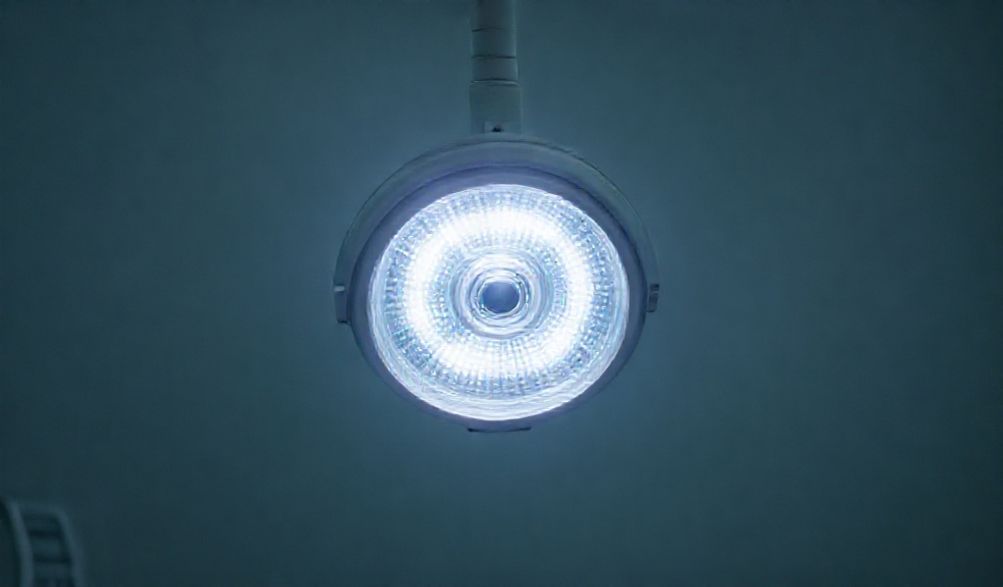
The Ultimate Guide to LED Exam Lights: Benefits, Features & How to Choose
For over a decade, our team has worked directly with clinicians, practice managers, and procurement officers to outfit medical, dental, and veterinary facilities with the tools they need to succeed. In that time, we’ve witnessed a quiet revolution in one of the most fundamental pieces of equipment in any exam room: the light. The shift from halogen and fluorescent to LED exam lighting isn’t just a trend; it’s a significant upgrade in diagnostic capability, practitioner comfort, and operational efficiency. If you’re researching your next purchase, you’re likely sifting through dense technical specifications and conflicting claims. This guide is designed to cut through that noise. We’ll leverage our hands-on experience to provide a clear, comprehensive, and trustworthy comparison, demonstrating why the right LED exam light is a critical investment in patient care and practice performance.
What Are LED Exam Lights and Why Are They Revolutionizing Clinical Practice?
An LED exam light is a medical-grade illumination device that uses Light Emitting Diodes (LEDs) as its source. But to call it merely a “light” undersells its role. It is a precision diagnostic instrument. The transition to LED technology represents the most significant leap in clinical lighting since the move from incandescent bulbs, fundamentally changing what is possible during patient assessment and treatment.
From Incandescent to LED: A Brief History of Medical Lighting
To appreciate the LED revolution, it helps to understand what came before. For years, halogen lights were the clinical standard. While an improvement over early incandescent bulbs, they came with pronounced drawbacks:
* Excessive Heat: Halogen bulbs emit a substantial amount of infrared radiation, generating intense heat. This could cause patient discomfort during prolonged procedures and even pose a burn risk if placed too close.
* Poor Color Fidelity: Their light tended to be yellowish, distorting the true color of tissue—a critical flaw when diagnosing conditions like jaundice, cyanosis, or inflammation.
* High Operational Cost: They were energy-inefficient, consuming large amounts of electricity, and their filaments had short lifespans (typically 1,000-2,000 hours), leading to frequent, costly bulb replacements and clinical downtime.
* Slow Response: They took time to reach full brightness after being switched on.
Fluorescent lights, sometimes used for ambient room lighting, were even worse for exams, often casting a green or blue hue and suffering from perceptible flicker that could cause eye strain. LED technology has systematically addressed every one of these limitations.
Core Advantages of LED Technology in Clinical Settings
The benefits of LED exam lights are interconnected, creating a holistic improvement in the clinical environment.
-
Superior Color Rendering (CRI >90): This is arguably the most critical advantage. The Color Rendering Index (CRI) measures a light’s ability to reveal the true colors of an object compared to natural daylight (CRI 100). High-quality LED exam lights boast a CRI of 90, 95, or even higher. This exceptional color accuracy is non-negotiable for accurate diagnosis. It allows a dermatologist to discern subtle variations in pigmentation, a surgeon to differentiate between arterial and venous blood, and a pediatrician to accurately assess a newborn for signs of jaundice.
-
Cool, Focused Illumination: LEDs produce minimal infrared and ultraviolet emissions. The light you feel is remarkably cool, even at high intensities. This dramatically increases patient comfort, especially during sensitive or lengthy procedures. It also allows the practitioner to work closer to the field without heat discomfort and reduces the risk of accidentally drying out tissue.
-
Energy Efficiency & Longevity: The numbers are compelling. LED exam lights typically use 60-80% less energy than equivalent halogen models. Their lifespan is measured not in thousands, but in tens of thousands of hours—often 50,000 to 100,000 hours. This translates to decades of use before a decline in light output. The result is drastically reduced electricity bills and the virtual elimination of bulb replacement costs and associated labor, offering a rapid return on investment.
-
Instant On & Perfect Dimmability: LEDs achieve full brightness instantly, with no warm-up time. Coupled with smooth, flicker-free dimming controls, this allows clinicians to instantly adjust the light intensity to the perfect level for every task, from a routine throat exam to a detailed suturing procedure, without compromising color quality.
Key Features to Evaluate When Choosing an LED Exam Light
Navigating product specifications requires knowing which metrics truly matter. Based on our experience installing and comparing hundreds of models, here are the key features to scrutinize.
Light Quality Metrics: Understanding CCT, CRI, and Lux
- Correlated Color Temperature (CCT): Measured in Kelvin (K), this describes the “warmth” or “coolness” of the white light. A lower temperature (e.g., 3000K) is warm/yellow, while a higher temperature (e.g., 6500K) is cool/blue. For clinical exams, a “daylight” spectrum around 4500K is widely considered optimal. It provides a neutral, bright white light that reduces eye strain and supports accurate color perception. Some advanced models offer adjustable CCT.
- Color Rendering Index (CRI): As discussed, aim for a CRI of 90 or higher. For specialties like dermatology, aesthetics, or dentistry, a CRI of 95+ is a worthwhile investment for supreme color fidelity.
- Illuminance (Lux): This measures the amount of light falling on a surface. A general exam light should deliver a minimum of 20,000 to 40,000 lux at a typical working distance (e.g., 1 meter). Surgical and dental lights demand much higher intensities, often exceeding 100,000 lux, to illuminate deep cavities and create a shadow-reduced field.
Mechanical Design & Ergonomics for Daily Use
A light with perfect specs is useless if it’s difficult to position.
* Articulation & Balance: The arm(s) should offer a wide range of motion (horizontal reach, vertical height, rotational adjustment) with smooth, fluid movement. Crucially, it must have excellent “stay-put” capability. A counterbalanced or spring-assisted design holds its position securely once placed, preventing drift and reducing practitioner fatigue from constantly re-adjusting a heavy head.
* Mounting Options: Consider your room layout and workflow.
* Ceiling Mount: Offers the largest range of motion, keeps the floor clear, and is ideal for multi-purpose rooms.
* Wall Mount: A space-saving solution for smaller rooms or specific exam setups.
* Floor Stand: Provides ultimate flexibility and portability, perfect for shared or temporary spaces.
* Track/Rail Mount: Allows the light to be shared between multiple workstations along a track.
Hygiene, Durability, and Maintenance
Clinical equipment must withstand rigorous cleaning.
* Housings & Seals: Look for seamless, non-porous housings (often anodized aluminum or high-grade polymer) that can be wiped down quickly with hospital-grade disinfectants. An Ingress Protection (IP) rating (e.g., IP54) certifies resistance to dust and fluid splashes, a key indicator of durability and safety.
* Build Quality & Warranty: Weight and feel can indicate build quality. A robust, metal-arm construction will typically outlast a lightweight, plastic-heavy model. A strong warranty (e.g., 5+ years on the LED engine, 2-3 years on parts) reflects the manufacturer’s confidence in their product’s long-term reliability.
LED Exam Lights for Different Medical Specialties
While core principles apply, optimal features vary by clinical need.
Primary Care & General Practice
Versatility and ease of use are paramount. A single light head with a broad, even field of illumination (30,000-50,000 lux) and excellent CRI is ideal for everything from otoscopic to abdominal exams. A simple, intuitive control handle and a mounting style that suits your room layout (often ceiling or wall) are key considerations.
Dentistry & Oral Surgery
The oral cavity is a deep, shadow-prone workspace. Dental LED lights require very high intensity (often 80,000-120,000+ lux) and are specifically engineered to be shadow-reduced. This is often achieved through multiple LED arrays or specialized reflector designs. Many dental lights feature two independent light heads for dual-operator procedures. Ceiling mounts are most common to keep the operatory uncluttered.
Dermatology & Aesthetics
Here, color accuracy is the supreme priority. A CRI of 95 or higher is essential to accurately assess erythema, pigmentation, telangiectasias, and subtle textural changes. A uniform, diffuse light that minimizes glare and harsh shadows on the skin is also critical. Adjustable intensity and, in some cases, adjustable CCT or specialized wavelength modes (e.g., for UV visualization) can be beneficial.
Veterinary Medicine
Veterinary lights must be exceptionally durable and powerful. They need higher intensity to penetrate fur and illuminate larger fields. Mounting is often tailored to surgical tables or adjustable floor stands to accommodate a wide variety of animal sizes. Housings must be robust and easily cleanable from hair, dander, and fluids.
A Step-by-Step Guide to Selecting the Right Light for Your Practice
Follow this actionable framework to make a confident, evidence-based decision.
Step 1: Assess Your Clinical Workflow and Space
Conduct a simple audit. Measure your room dimensions and note the placement of the exam table, chair, and key equipment. What are the most common procedures performed? Who uses the light (doctors, nurses, assistants)? Understanding daily use patterns is the foundation of a good choice.
Step 2: Set Your Performance Priorities and Budget
Create two lists: Must-Haves and Nice-to-Haves. A CRI >90 and adequate lux are almost certainly must-haves. Adjustable color temperature or a specific mounting style might be on the second list. Critically, think in terms of Total Cost of Ownership (TCO), not just the upfront price. Factor in the 5-10 year savings from energy efficiency and zero bulb replacements.
Step 3: Compare Brands and Models Objectively
Create a comparison spreadsheet. For each model, list: CCT, CRI, Lux @ distance, arm reach, mounting type, IP rating, warranty length, and price. Focus on manufacturers with a reputation for clinical-grade quality, strong customer support, and compliance with medical device standards (like IEC 60601).
Step 4: Consider Installation and Future-Proofing
Some ceiling mounts require professional installation to ensure secure anchoring. Consider if the system is modular—can you add a secondary light head later? Does the manufacturer offer upgrade paths? Choosing a system from a company with a clear product roadmap can protect your investment.
Frequently Asked Questions (FAQ) About LED Exam Lights
Q: Are LED exam lights really worth the higher upfront cost compared to halogen?
A: Absolutely, when you consider the total cost of ownership. A basic cost-benefit analysis over 5 years tells the story: Factor in the price of 10-15 halogen bulb replacements, the labor to change them, and the significantly higher energy consumption (easily adding hundreds of dollars annually to your utility bill). The ROI for an active practice is almost always positive within 2-3 years, after which you enjoy pure savings and superior performance for years to come.
Q: Can the “daylight” spectrum of LEDs cause eye strain for practitioners?
A: Quite the opposite. High-quality LEDs with a consistent spectral output and no perceptible flicker are significantly easier on the eyes than the uneven, yellowish light of halogens or the flicker of fluorescents. The neutral 4500K “daylight” spectrum reduces the need for the eye to constantly adjust. If concern remains, some models offer adjustable CCT, allowing you to select a slightly warmer tone.
Q: How do I properly clean and disinfect an LED exam light?
A: Always follow the manufacturer’s instructions in the user manual first. Generally, use a soft, lint-free cloth lightly dampened with a mild detergent solution or an approved disinfectant wipe. Gently wipe the housing and diffuser lens. Crucially, avoid harsh chemicals (bleach, ammonia-based cleaners), abrasive pads, or aerosol sprays directly on the light, as these can damage anti-reflective coatings, lenses, and seals, voiding the warranty.
Q: What happens when the LED eventually fails? Is the whole unit disposable?
A: While individual LEDs have an exceptionally long life (50,000+ hours), high-quality medical units are designed for serviceability. The LED array or “light engine” is typically a replaceable module. Reputable manufacturers will offer replacement parts and service. This is a key question to ask your supplier and a point to check in the warranty terms.
Conclusion
Choosing an LED exam light is an investment in one of your practice’s most vital diagnostic tools. It directly impacts diagnostic accuracy, practitioner ergonomics, and your facility’s bottom line. By prioritizing true color rendering (CRI), cool and focused illumination, and a durable, ergonomic design, you select a partner that will enhance patient care for the next decade or more.
We encourage you to use the criteria and step-by-step guide outlined here to navigate your options with confidence. For the final step, we recommend consulting with a qualified medical equipment supplier. A live demonstration or trial period in your own space is invaluable. Our team of specialists is always available to answer your specific questions and help you find the perfect LED lighting solution for your unique clinical needs.
p>