
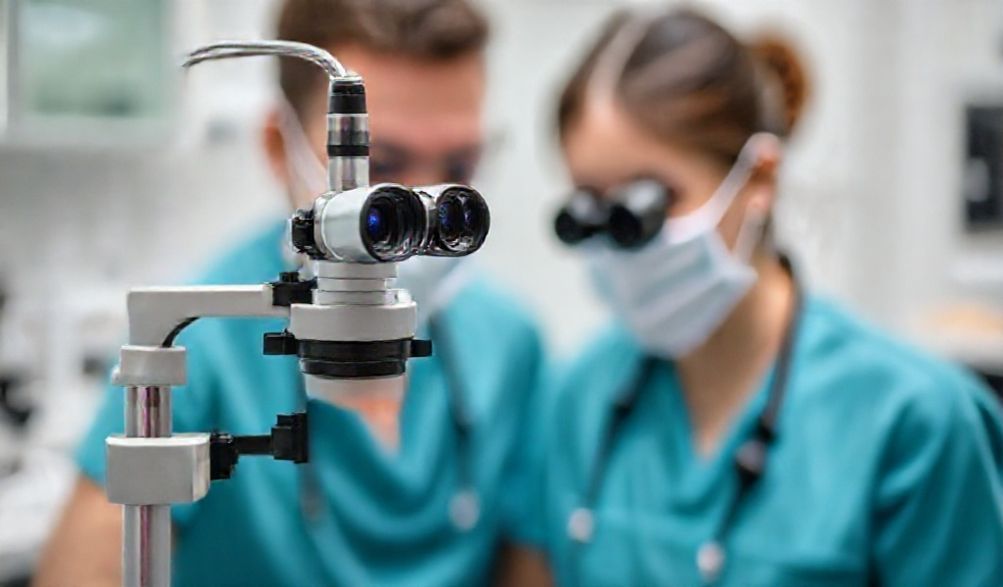
Loupes for Dental Assistants: The Ultimate Guide to Enhanced Vision, Ergonomics, and Care
You’ve just finished assisting with a lengthy composite restoration. As you finally straighten up, a familiar ache radiates from your neck down to your shoulders, and a dull throb begins behind your eyes. You squint, trying to clear the lingering blurriness from focusing so intently on a tiny operative field all morning. Sound like a typical Tuesday? For many dental assistants, this physical toll is just part of the job. But what if a key piece of equipment could fundamentally change that experience—reducing your pain, sharpening your vision, and elevating the level of care you provide?
Contrary to a common misconception, dental loupes are not exclusive to dentists. They are a critical, career-preserving tool for the modern dental assistant. This guide isn’t about following a trend; it’s about understanding how this investment directly impacts your clinical precision, your long-term physical health, and the efficiency of your entire team. Built on an analysis of industry standards, manufacturer specifications, and the real-world experiences of seasoned dental professionals, this comprehensive resource aims to empower you with unbiased knowledge. We’ll walk through the undeniable benefits, decode the technical features, review top brands, demystify the fitting process, and provide essential care tips. Consider this your first step toward working smarter, not harder.
Why Dental Assistants Need Loupes: Beyond Magnification
The role of a dental assistant is dynamic, requiring sharp eyes, steady hands, and the endurance to maintain awkward postures for extended periods. While magnification might seem like the primary function of loupes, their true value lies in a holistic improvement of your work life. Let’s explore the tangible benefits reported by assistants who have made the switch.
Enhancing Clinical Precision and Patient Care
Your ability to see fine details directly translates to the quality of patient care. Loupes transform your view of the oral cavity.
- Superior Visualization: Suddenly, subgingival margins, fracture lines, and the nuances of tissue health become clear. You can better assess the field for debris during a procedure or ensure perfect isolation.
- Anticipating Needs: When you can see what the dentist sees, you move from reactive to proactive. You’ll spot the need for the next instrument, a specific angle of suction, or a change in retraction before a verbal request is made.
- Accuracy in Tasks: Detailed work like cord placement, delicate retraction, handling small endodontic files, or precisely dispensing materials becomes significantly more accurate and confident.
Combating Occupational Pain and Fatigue (Ergonomics)
This is arguably the most compelling reason to invest. Dental professionals have one of the highest rates of work-related musculoskeletal disorders (MSDs). Chronic neck, back, and shoulder pain are not badges of honor; they are warning signs.
- Forcing Proper Posture: High-quality loupes are custom-fitted with a specific declination angle and working distance. This engineering forces you to sit upright with a neutral spine. Instead of craning your neck forward and hunching your back to see, you look down through the lenses comfortably.
- Reducing Physical Strain: By maintaining this ergonomic posture, you drastically reduce the strain on your cervical spine, trapezius muscles, and lower back. The long-term benefit is the prevention of chronic, career-limiting pain.
- Eliminating Eye Strain: Your eyes are muscles. Focusing on a tiny area for hours without optical aid causes significant fatigue and headaches. Loupes bring the focal point to a comfortable distance, reducing the constant effort of accommodation.
Boosting Efficiency and Team Coordination
A comfortable, clear-seeing assistant is an efficient assistant. The benefits ripple through the entire procedure.
- Faster, Smoother Workflow: With a magnified and illuminated field, you can identify, grasp, and transfer instruments more quickly. Preparing materials like mixing a perfect impression or a small increment of composite is done with greater speed and less waste.
- Improved Communication: Shared visual clarity eliminates guesswork. Phrases like “right there,” “the distal margin,” or “see that bleed?” are understood instantly, creating a seamless, synchronized team dynamic.
- Reduced Procedure Time & Stress: This synergy of clear vision, ergonomic comfort, and enhanced communication naturally leads to more efficient procedures, a calmer operatory environment, and less fatigue for everyone involved.
Key Features to Consider When Choosing Loupes
Navigating the specifications can feel overwhelming. This section breaks down the critical features, transforming technical jargon into practical decision-making points.
Magnification Power (Galilean vs. Prismatic)
Magnification is expressed in “x” (times). Common starting points for assistants range from 2.5x to 3.5x. More isn’t always better; higher magnification narrows your field of view and requires a steadier hand. There are two main optical systems:
- Galilean Systems: These are more common for entry-level and mid-range magnification (typically up to 3.5x). They are lighter, more compact, and offer a wider field of view. They are an excellent, comfortable starting point for most dental assistants.
- Prismatic (Keplerian) Systems: These use a more complex series of prisms to achieve higher magnification (3.5x and above). They offer a longer working distance and superior depth of field but can be heavier and more expensive. Assistants in specialty practices (like periodontics or endodontics) might lean toward these.
Working Distance and Field of View
These two features are intrinsically linked to magnification.
- Working Distance: This is the precise distance from your eyes to the patient’s mouth when you are in your ideal ergonomic posture. It is measured during a professional fitting (often elbow-to-patient distance). Loupes must be custom-made to your unique working distance. Using loupes set for a different distance will force you into poor posture.
- Field of View: This is the diameter of the area you can see through the lenses. As magnification increases, the field of view decreases. You must find the sweet spot where the magnification is helpful but the field is still wide enough to be practical for your tasks.
Declination Angle and Frame Fit
This is the ergonomic heart of the loupe system.
- Declination Angle: This is the angle at which the optical barrels are set relative to your glasses frame. A proper declination angle (usually between 25-45 degrees) allows you to look straight ahead with your head upright, while your eyes gaze down comfortably through the lenses. An incorrect angle will have you tilting your head forward, defeating the ergonomic purpose.
- Frame Fit: Comfort is key for all-day wear. Frames should be secure but not pinch. Many brands offer styles that fit over prescription glasses or can have your prescription lenses incorporated directly (a process called “in-sert”).
Weight, Balance, and Light Integration
The best loupes are the ones you’ll wear consistently.
- Weight & Balance: Modern loupes use lightweight materials like titanium and carbon fiber. A well-balanced system distributes weight evenly between the frame and the optical barrels, preventing pressure points on your nose and ears.
- Coaxial LED Light: This is non-negotiable. Magnification without proper light is like turning on a microscope without the illuminator—shadows obscure the very details you’re trying to see. A coaxial light (meaning it travels along the same axis as your vision) attaches to your loupes and casts a bright, white, shadow-free beam directly into your field of view. It is a core component, not an optional accessory.
Top Loupe Brands and Models for Dental Assistants Reviewed
The market offers several reputable brands, each with its strengths. A professional fitting will let you try different models to see what feels best for you.
Through-the-Lens (TTL) vs. Flip-Up Loupes
First, decide on the basic style.
- Through-the-Lens (TTL): The optical barrels are permanently mounted in the lens of the frame.
- Pros: Generally lighter, more compact, and always perfectly aligned with your line of sight. They offer a “no-fuss” experience.
- Cons: You must look through them to see; to talk to a patient across the room, you must look over or around them. They are custom-made for one working distance.
- Flip-Up Loupes: The magnification barrels are mounted on a hinge and can be flipped up out of the way.
- Pros: Incredible versatility. You can flip them up to talk to patients, consult charts, or walk around, then flip them down for precise work. The optical unit can sometimes be adjusted or moved to a new frame.
- Cons: Can be slightly heavier and bulkier than TTL models. The hinge mechanism is an extra point of potential maintenance.
Overview of Leading Brands
- Orascoptic: Known for their innovative, lightweight designs (like the NauLight frame). They are a favorite among professionals who prioritize all-day comfort and offer excellent customer service.
- Designs for Vision (DFV): A long-standing leader with a strong reputation for durability and optical quality. They offer a wide range of magnification and frame options, with a significant presence in dental schools and practices.
- Heine: Renowned for exceptional German optical clarity and robust construction. Their lenses are known for providing a sharp, bright, and color-true image.
- SurgiTel / Q-Optics: Both brands are highly focused on advanced ergonomics. Q-Optics, in particular, is known for its “Q-Factor” fitting process that meticulously analyzes posture. SurgiTel offers highly customizable systems.
- Admetec / Andau Medical: These are strong contenders known for integrating cutting-edge technology, such as ultra-lightweight materials and advanced lighting systems, often at competitive price points.
What to Expect During a Professional Fitting
Do not buy loupes online without a fitting. A professional fitting is essential for health, comfort, and performance. Here’s what it typically involves:
- Posture Analysis: The representative will assess your natural seated posture at the chairside.
- Working Distance Measurement: They will meticulously measure your unique elbow-to-patient distance.
- Trial and Comparison: You will try on multiple models (TTL and Flip-Up, different magnifications) to feel the weight, balance, and see the difference in field of view.
- Declination & Pupillary Distance Setting: They will adjust demo models to approximate your correct declination angle and measure the distance between your pupils (PD).
- Light Demo: You’ll experience the transformative effect of a coaxial LED light compared to overhead operatory lighting.
Maintaining Your Investment: Loupe Care and Safety
Your loupes are a precision optical instrument. Proper care protects your investment and ensures optimal performance.
Daily Cleaning and Disinfection Protocol
- Do: Use a soft, lint-free microfiber cloth. For disinfection, use lens wipes or sprays that are approved for anti-reflective coatings (typically alcohol-free). Gently wipe the lenses and frames.
- Do Not: Use paper towels, shirt sleeves, or harsh chemicals like bleach, ammonia-based glass cleaners (e.g., Windex), or abrasive cleaners. These will permanently damage the delicate anti-reflective and anti-fog coatings on the lenses.
Proper Storage and Handling
- Always use the hard protective case provided. When not in use, even for a short break, place them in the case. Never lay them lens-down on a surface.
- Handle them by the frames, not the optical barrels.
- For loupes with a light, carefully coil the cord without creating sharp kinks, and store the battery pack as instructed.
When to Seek Professional Service
If you notice any of the following, contact the manufacturer or an authorized service center:
* Blurriness or Double Vision: This indicates the optical alignment may be off.
* Physical Misalignment: The barrels seem crooked or loose.
* Light Failure: Flickering, dimming, or complete failure of the LED.
* Damaged Frame: A broken hinge or temple.
Never attempt to repair the optics yourself. Manufacturer servicing ensures precise realignment.
Frequently Asked Questions (FAQ) About Dental Assistant Loupes
Q: Are loupes really worth the investment for a dental assistant?
A: Absolutely. Frame it as an investment in three critical areas: 1) Your Health: Preventing chronic pain that could shorten your career. 2) Your Performance: Enhancing your clinical skills and efficiency. 3) Patient Care: Enabling you to provide a higher standard of support. The cost is significant, but it amortizes over many years of a healthier, more capable career.
Q: Can I use the same loupes as my dentist?
A: Almost certainly not. Your working distance and ideal declination angle are different from the dentist’s, as your chair position and role are different. Using improperly fitted loupes will cause poor posture and discomfort, negating the benefits.
Q: What is a good starting magnification?
A: Most dental assistants find a magnification between 2.5x and 3.0x to be an ideal starting point. It provides a noticeable improvement in detail without an overly restrictive field of view. Your fitter will help you decide based on your specific tasks.
Q: Is the light source really that important?
A: Yes, it is critical. Magnification alone simply makes shadows and poor lighting more obvious. A bright, white, coaxial LED light eliminates shadows, reduces eye strain, and reveals the true color and texture of tissue and materials. It is an essential part of the system.
Q: How can I convince my practice to help cover the cost?
A: Build a professional case focusing on Return on Investment (ROI) for the practice. Highlight: Increased procedural efficiency (faster turnover), reduced risk of error, enhanced team coordination, and the practice’s commitment to staff wellness and injury prevention (which reduces absenteeism and turnover). Some practices offer stipends, interest-free loans, or lease-to-own arrangements.
Conclusion
Choosing to invest in dental loupes is a powerful decision that goes beyond acquiring a new tool. It is a commitment to your own physical well-being, a step toward mastering your clinical craft, and an upgrade to the level of care your entire team can provide. By bringing the fine details of dentistry into clear, comfortable focus, loupes protect you from the occupational hazards of the profession while empowering you to perform at your best.
Remember, the most important step is to experience the difference for yourself through a professional, hands-on fitting with a reputable vendor. This ensures your loupes become a seamless extension of your skills, perfectly tailored to protect your body and advance your career. Take the next step: research authorized dealers in your area to schedule a consultation, or begin a conversation with your practice manager about the tangible benefits for both you and the practice. Your future self—free from neck pain and armed with crystal-clear vision—will thank you.
p>