
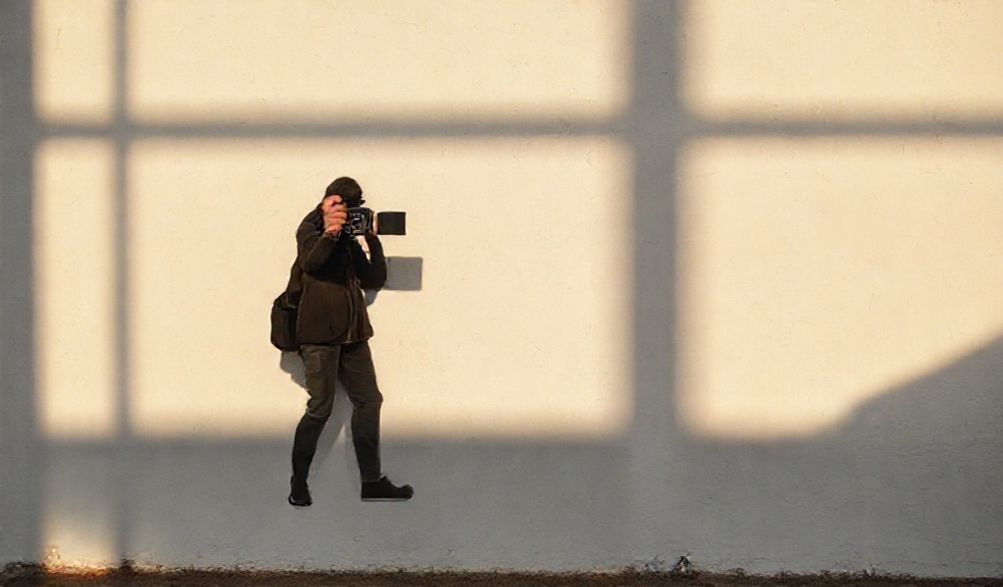
How to Take a Picture Without a Shadow: A Professional’s Guide to Flawless Lighting
Have you ever set up what you thought was the perfect shot—a beautiful handmade product for your shop, an important document for work, or a portrait of a friend—only to have the final image ruined by a harsh, distracting shadow? That dark silhouette stretching across the scene, obscuring details, creating unflattering contrasts, and instantly making your photo look amateurish. If you’ve nodded in agreement, you’re not alone. The battle against unwanted shadows is one of the most common frustrations in photography, from smartphone snapshots to professional shoots.
As a professional photographer with over a decade of experience in both studio and natural light, I’ve spent countless hours learning to sculpt and control light. I can tell you with certainty that shadows aren’t inherently bad—they add depth and dimension. But unwanted shadows, the kind that hide crucial details or create a messy look, are a problem with a solution. The good news? Learning how to take a picture without a shadow is a skill anyone can master, and it often requires more knowledge than expensive gear.
This guide is designed to demystify the process. We’ll move from core principles to actionable techniques you can use right now, whether you’re holding a flagship DSLR or the smartphone in your pocket. By understanding light and applying a few key methods, you can achieve that clean, professional, shadow-free look for any subject.
Understanding Light & Shadow: The Core Principles
Before we jump into the “how,” let’s build a quick foundation of the “why.” This isn’t just theory; understanding these principles will help you diagnose lighting problems and choose the right fix every time, making you a more authoritative and capable photographer.
Why Shadows Form
At its simplest, a shadow is created when an object blocks a light source. The characteristics of that shadow—whether it’s razor-sharp and dark or soft and faint—depend entirely on the light itself.
* Hard Light: This comes from a small, intense, and direct light source relative to your subject (think the midday sun, a camera flash, or a bare lightbulb). Hard light creates shadows with very defined, sharp edges and high contrast between light and dark areas. These are often the “problem” shadows we want to eliminate.
* Soft Light: This comes from a large, diffused light source relative to your subject (think a cloudy sky, light coming through a large window, or a professional softbox). Soft light “wraps” around the subject, creating shadows with soft, gradual edges and low contrast. These shadows are often subtle and desirable.
The Goal: Even, Diffused Illumination
For the purposes of taking a picture without a shadow, our goal is to create even, diffused illumination from as many angles as possible. When light hits your subject uniformly from multiple sides, the shadows one light source creates are “filled in” by another. The larger and closer your light source is, the softer and less pronounced the shadows become. This is the golden rule you’ll see in every method that follows.
Method 1: Harnessing Natural Light (The Free Studio)
You don’t need to buy a single piece of equipment to start taking shadow-free photos. The best light source in the world is free—you just need to know how and when to use it. These are techniques I use regularly, even on commercial shoots.
The Golden Hour & Open Shade
“Golden hour”—the hour after sunrise and before sunset—is famous for its warm color, but it’s also phenomenal for shadow control. The sun is low in the sky, providing directional yet softened light. Even better, look for open shade. This is a shaded area (like the shadow side of a building) that is still illuminated by the vast, bright open sky. The entire sky acts as a gigantic softbox, bathing your subject in perfectly even, shadow-minimizing light. It’s the most reliable natural setup for flattering portraits and product shots.
Using a Window as a Softbox
A north-facing window (in the Northern Hemisphere) is a portrait photographer’s secret weapon because it provides consistent, indirect light all day. But any large window can work! The key is to position your subject close to the window, so the light fills the frame. The window becomes a large, beautiful softbox. For even more even lighting, angle your subject so they are facing toward the light, and use a simple white poster board on the opposite side to bounce light back into any minor shadows (a technique we’ll expand on next).
The Cloudy Day Advantage
Instead of lamenting an overcast day, grab your camera! A thick blanket of clouds is nature’s ultimate diffuser. It transforms the tiny, harsh point of the sun into a massive, soft light source that covers the entire sky. The result is fantastically even, shadow-free illumination that’s perfect for photography. It’s the easiest “set-and-forget” natural light scenario for eliminating harsh shadows.
Method 2: Creating a DIY Diffusion Setup
When you can’t rely on perfect natural light, it’s time to create your own. This is where a little ingenuity builds trust—you can solve professional problems with everyday items, no huge investment required.
Essential DIY Diffusers
Look around your home. Many items can scatter harsh light into beautiful soft light:
* White Bed Sheet or Curtain: Drape it over a frame (like a doorway or two chairs) between your light and subject.
* Parchment Paper or Tracing Paper: Tape it directly over a harsh lamp.
* Frosted Shower Curtain Liner: An excellent, large-scale diffuser.
* White Umbrella: A classic for a reason—shine a light through it.
* Large Piece of White Poster Board or Foam Core: This is less a diffuser and more a reflector/bounce card, which is its own powerful tool.
The Bounce Card Technique
This is one of the most effective and underused tricks. A bounce card is simply a white (or silver/gold for different tones) reflective surface used to redirect light into shadow areas.
How to do it: Place your subject with your main light source (a window, lamp, etc.) to one side. You’ll see shadows form on the opposite side. Now, hold a large piece of white foam core or poster board on the shadow side, angled to catch the main light and bounce it back onto the subject. You will visibly see the shadows lighten and soften. It’s like adding a second light for free.
Building a “Cloud” for Direct Light
Got a harsh desk lamp or direct sun streaming through a window? Build a cloud. Position your DIY diffuser (e.g., a stretched white sheet) between the harsh light source and your subject. The light will hit the diffuser first, spreading out and softening before it ever reaches your subject, dramatically reducing hard shadows. The closer the diffuser is to the subject, the softer the light becomes.
Method 3: Using Artificial Lighting for Total Control
For consistent, on-demand results, artificial lighting is the answer. Understanding how to use it authoritatively opens up a world of creative control.
The Two-Light Setup (Key & Fill)
This is the foundational studio technique for shadow elimination.
1. Key Light: This is your main light, placed to one side of the camera, often diffused through a softbox or umbrella. It establishes the primary lighting on your subject.
2. Fill Light: This is the second light (or a large reflector/bounce card) placed on the opposite side of the camera from the key light. Its sole purpose is to “fill in” the shadows created by the key light. By adjusting the power of the fill light (or the distance of the reflector), you control the shadow depth. For a near-shadowless look, the fill light should be almost as bright as the key.
Softboxes and Umbrellas 101
These are light modifiers, and they are crucial.
* Softbox: A box with a diffusing front that encloses a light. It creates a controlled, rectangular soft light source with very soft shadows. It’s the professional standard for portraiture and product work.
* Umbrella (Shoot-Through): You point your light into an umbrella, and the light fires through the white fabric towards your subject. It creates a broader, slightly less controlled soft light than a softbox, but is incredibly effective and affordable.
Ring Lights: Are They the Answer?
Ring lights have surged in popularity, and for specific uses, they’re brilliant. The light surrounds the camera lens, producing a unique, virtually shadow-free frontal light that is perfect for beauty videos, macro photography, and creating a distinctive circular catchlight in the eyes.
The Caveat: This shadow-free quality can also make lighting look very flat, lacking the dimension that gentle shadows provide. The distinctive ring-shaped eye reflection can also be a stylistic giveaway. They are a tool, not a magic wand for every scenario.
Advanced Techniques & Post-Processing Tips
Once you’ve mastered the basics, these next-level techniques can help you tackle specific challenges and add final polish.
Focus Stacking for Macro/Product Photography
When shooting extremely close-up (macro) or detailed products, a new problem arises: shadows caused by depth of field. Even with perfect soft lighting, parts of your subject will fall into shadowy blur. Focus stacking is the solution. You take a series of identical shots, slowly moving the focus point from the front to the back of your subject. Then, using software (like Photoshop, Helicon Focus, or even some cameras in-camera), you blend all the sharply focused areas into one final image that is completely sharp—and effectively shadow-free from depth-related blur—from front to back.
Basic Editing to Reduce Shadows
It’s always best to get it right in-camera, but editing can provide a helpful nudge.
* Global Adjustment: In apps like Adobe Lightroom or Snapseed, gently raising the Shadows slider will lighten the darker areas of your entire image. The key is subtlety.
* Local Adjustment: For more control, use a tool like Lightroom’s Adjustment Brush or Snapseed’s Selective tool to paint over just the shadow areas and increase their exposure or brightness.
A Strong Caution: Overdoing this will make your image look fake, muddy, and “HDR-like.” Use editing to assist good lighting, not replace it.
Common Scenarios & Quick Fixes
Let’s apply everything directly to the situations you likely encounter.
Photographing Documents or Flat Art
The goal is perfectly even, glare-free light. Overhead lighting is key. Place the document on the floor and position two identical lamps (or use window light from two sides) at 45-degree angles to it. Ensure you and your camera are not casting a shadow. A smartphone document-scanning app can also work wonders by automatically flattening and correcting such images.
Shadowless Product Photography for E-commerce
Recap the ideal setup: a light tent (a cube of diffusion material you place the product inside) or a simple tabletop setup with two diffused lights placed at 45-degree angles on either side of the product. A third, weaker light or reflector above can help eliminate any top shadows. The white, seamless background common in e-commerce is also a giant reflector, filling in shadows from below.
Flattering, Shadow-Free Portraits
Combine the best of all worlds:
1. Location: Pose your subject in open shade.
2. Reflector: Use a bounce card (white or silver) to add a sparkle to the eyes and fill any shadows under the chin.
3. Positioning: If using a single light source (sun or window), have your subject face towards it. This minimizes shadows on the face. The “loop lighting” pattern (a small, soft shadow from the nose) is more flattering than completely flat light.
FAQ Section
Q: What is the easiest way to remove shadows from a picture with my phone?
A: Use natural light from a large window on a cloudy day, or position your subject in open shade. For more control, create a DIY diffuser by taping parchment paper over a bright lamp and using a piece of white paper as a bounce card opposite the light.
Q: Can I just remove shadows in Photoshop or a free app?
A: While editing tools can help reduce shadows, it’s always better to get the lighting right in-camera. Edited shadows can often look fake, muddy, or lack detail. Good lighting is the non-negotiable foundation; editing is the finishing touch.
Q: Do I need expensive equipment to take pictures without shadows?
A: Absolutely not. Some of the best shadow-free lighting is free (open shade, cloudy days) or very cheap (white poster board as a reflector, a bed sheet as a diffuser). Start with these before investing in gear.
Q: Why do professional product photos often have no visible shadows?
A: They typically use a controlled setup with multiple softboxes or a light tent to surround the subject with even, diffused light from several angles. This multi-directional illumination effectively cancels out visible shadows, creating that clean, “floating” look.
Conclusion
The journey to mastering shadow-free photography boils down to one core mantra: seek large, diffused light sources. Whether it’s the open sky, a window with a sheer curtain, a professional softbox, or a simple piece of poster board used creatively, the principle remains the same.
Start with the simplest method—experiment with window light and a DIY bounce card this afternoon. Observe how the light changes. As you practice, you’ll develop an intuitive sense for light that will improve every photo you take, with or without shadows. Remember, controlling light is a fundamental photography skill that transcends gear.
I’m passionate about making professional techniques accessible. If you try these methods, I’d love to see your results! Share your shadow-free photos or ask any follow-up questions in the comments below. Now you’re equipped with the knowledge to confidently take a picture without a shadow in almost any situation.
p>