
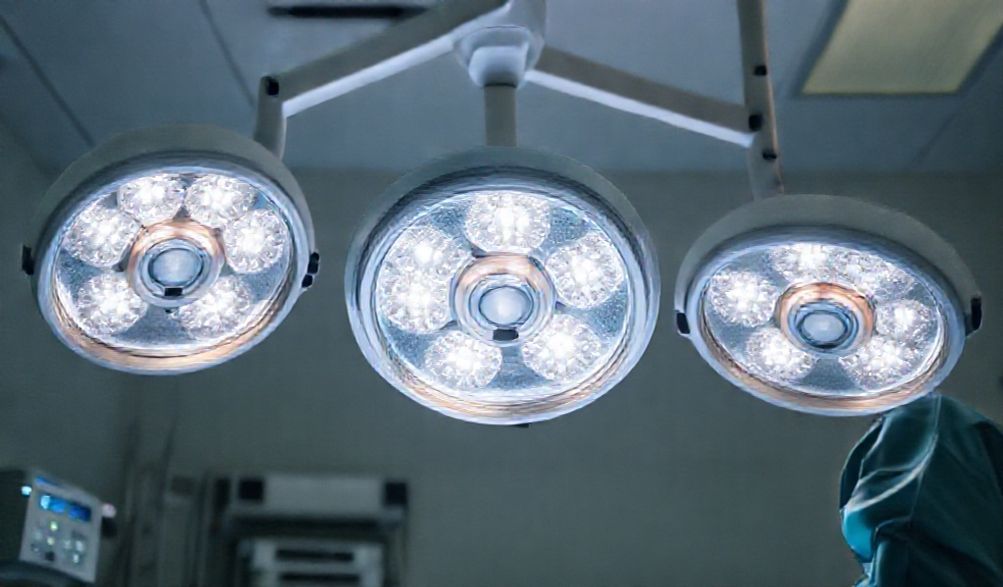
Surgical Examination Lights: A Comprehensive Guide to Optimal Lighting in Medical Procedures
In the high-stakes environment of an operating room, every detail matters. The precision of a scalpel, the steadiness of a surgeon’s hand, and the silent communication of the surgical team are all critical. Yet, one foundational element is so fundamental it’s often overlooked until it fails: light. Surgical examination lights are the unsung heroes of modern medicine. A single shadow obscuring a critical vessel, a glare masking tissue differentiation, or inadequate intensity at depth can mean the difference between a routine procedure and a life-altering complication. optimal lighting is not a luxury; it is a direct contributor to surgical success, patient safety, and team performance.
This comprehensive guide is designed to be an authoritative, evidence-based resource. Whether you are a surgeon, an OR nurse, a clinical engineer, a facility manager, or part of a procurement team, making an informed decision about surgical examination lights requires a deep understanding of their technology, features, and impact. We have synthesized information from international medical device standards (like IEC 60601-2-41), peer-reviewed studies on ergonomics and clinical outcomes, and established best practices to create this essential overview. We will explore the critical role of lighting, break down key technologies and features, provide a practical procurement checklist, and outline vital maintenance protocols.
The Critical Role of Lighting in Modern Surgery
Beyond Illumination: How Lighting Impacts Surgical Outcomes
surgical lighting does far more than simply “light up” the operative field. It is a sophisticated tool that directly influences physiological, cognitive, and procedural outcomes.
- Reducing Surgeon Fatigue and Eye Strain: Hours of intense visual focus under poor lighting lead to accommodative stress—where the eye muscles struggle to maintain focus. This causes headaches, dry eyes, and general fatigue, which can impair concentration and fine motor skills as a procedure progresses. Optimal, shadow-reduced illumination with appropriate color temperature minimizes this strain, helping to sustain peak surgeon performance.
- Enhancing Visual Acuity and Depth Perception: Precise surgery demands exceptional depth perception. High-quality surgical examination lights provide intense, even illumination that allows the surgeon’s brain to accurately interpret subtle shadows and contours, translating a two-dimensional view into a precise three-dimensional understanding of the anatomy. This is paramount for tasks like suturing, dissecting delicate layers, or navigating around vital structures.
- Enabling Accurate Tissue Differentiation and Color Rendition: Is that tissue ischemic or healthy? Is that shade of red arterial or venous blood? Accurate color perception is a diagnostic tool. Subpar lighting can distort colors, making tissues appear jaundiced, cyanotic, or otherwise abnormal. This can lead to misjudgment. Furthermore, the ability to differentiate between similar-looking tissues (e.g., a nerve versus a tendon) relies on subtle contrasts in texture and color that are only visible under true, high-fidelity light.
- Impact on Procedure Time and Error Rates: While difficult to isolate, a growing body of evidence suggests a correlation between optimal lighting and improved procedural efficiency and safety. A well-lit field reduces visual search time, allows for more confident and swift actions, and minimizes the risk of errors caused by visual uncertainty. In essence, superior lighting helps the surgical team work at the top of their skill set.
Evolution of Surgical Lighting: From Shadow to LED
The journey to today’s advanced systems is a story of solving core challenges: heat, shadow, and fidelity.
- The Early Era (Sunlight to Incandescent): Surgeons once scheduled operations based on sunlight availability. The introduction of incandescent operating lamps was a revolution, but they produced intense heat and cast harsh, single-point shadows.
- The Halogen Age: Halogen lights offered brighter, whiter light than their incandescent predecessors and became the standard for decades. However, they were extremely hot (posing burn risks and drying tissue), energy-inefficient, and had short lifespans, requiring frequent and costly bulb replacements.
- The LED Revolution: The adoption of Light Emitting Diode (LED) technology represents a quantum leap. LEDs solved the historic trifecta of problems: they emit minimal infrared radiation (cool light), are incredibly energy-efficient, and have lifespans measured in decades of clinical use. This technological shift has enabled new designs focused on shadow control, color accuracy, and smart integration, making modern surgical examination lights a cornerstone of the digital operating room.
Key Technologies and Features of Surgical Examination Lights
LED Technology: The Gold Standard
Modern surgical lighting is synonymous with LED technology, and for compelling reasons:
- Cool Light Operation: LEDs convert most energy into visible light, not heat. This dramatically reduces the radiant heat directed at the surgical site, minimizing tissue desiccation and improving comfort for both patient and surgeon.
- Exceptional Energy Efficiency & Longevity: LED systems consume up to 80% less energy than comparable halogen systems. With rated lifespans of 50,000 to 100,000 hours, they can last over a decade without needing a “bulb change,” slashing maintenance costs and downtime.
- Consistent Color Temperature & High CRI: LEDs provide stable, consistent color output throughout their lifespan. The Color Rendering Index (CRI) is a critical metric, scored from 0-100. It measures a light source’s ability to reveal the true colors of objects compared to natural light. For surgery, a CRI of 90 or higher is non-negotiable. A high-CRI LED ensures blood, organs, and tissues are seen in their authentic hues, which is vital for accurate assessment.
Essential Performance Characteristics
When evaluating surgical examination lights, these technical specifications define their capability:
- Illuminance (Measured in Lux): This is the intensity of light falling on the surgical field. Requirements vary by procedure, but general surgery typically demands 40,000 to 160,000 lux at the center of the field. Specialized procedures like microsurgery may require even higher levels.
- Depth of Illumination (Depth of Field): A great light doesn’t just shine brightly on the surface. It maintains a high percentage of its central illuminance (e.g., 60% at 20cm depth) as the surgeon works deeper into a cavity. This ensures consistent visibility without constantly needing to readjust the light head.
- Shadow Reduction: Advanced lights use multi-point source technology. Instead of one bright bulb, the light head contains an array of many small LEDs arranged in a specific pattern. When a surgeon’s hand or instrument blocks some of these points, the remaining unblocked LEDs fill in the shadow, dramatically reducing obstruction. Some systems also feature a central “cold spot” or specially designed reflectors to further minimize shadowing from the surgeon’s head.
- Color Temperature (Measured in Kelvin – K): This describes the perceived “warmth” or “coolness” of the light. A candle flame is warm (~1800K), midday sun is cool (~5500K). For surgery, a color temperature between 4000K and 5000K is generally preferred. This range provides a bright, neutral white light that closely mimics daylight, promoting accurate color perception and reducing visual fatigue. Some systems offer adjustable color temperature for specific applications.
How to Choose the Right Surgical Light: A Procurement Checklist
Selecting the right system is a strategic investment. This checklist guides you through the key considerations.
Assessing Clinical Needs and Procedure Types
The “best” light is the one that best fits your clinical workflow.
- Specialty Alignment: A high-intensity, large-diameter light is ideal for general and trauma surgery. Neurosurgery and spinal procedures often benefit from lights with exceptional depth of illumination and maneuverability for deep cavities. Minimally invasive surgery suites might prioritize integration with video systems. Outpatient clinics and examination rooms may opt for simpler, cost-effective yet high-quality examination lights.
- Light Head Size and Configuration: Consider the size of the typical operative field. Larger light heads provide wider coverage, while smaller ones offer more focused intensity. Dual-head ceiling-mounted lights are the standard for major ORs, providing overlapping fields from two angles for superb shadow control.
Ergonomic and Operational Considerations
A light that is difficult to use will not be used optimally.
- Maneuverability and Balance: The light must move effortlessly, with a perfectly balanced arm system that stays in position without drift. Test the “float” function—the ability to move the light head with a gentle touch—and its resistance to accidental bumps.
- Control Systems: Evaluate the user interface. Are controls intuitive? Options include:
- Touchscreen panels on the light head or a remote pendant.
- Manual handles (often capable of being covered with a sterile sleeve).
- Preset modes for different procedure types (e.g., “shallow cavity,” “deep cavity”).
- Voice control or integration into the OR’s central touch panel.
Safety, Compliance, and Total Cost of Ownership (TCO)
Look beyond the initial purchase price.
- Safety & Compliance: The system must comply with relevant medical device regulations, such as IEC 60601-2-41. This ensures electrical safety, mechanical safety (e.g., backup systems to prevent free-fall), and performance standards.
- Infection Control: The entire light, especially the handle and light head, must have a seamless, cleanable design with no crevices where contaminants can lodge. It should be compatible with standard hospital disinfectants.
- Total Cost of Ownership (TCO): Calculate the long-term costs:
- Energy Consumption: LED systems offer massive savings.
- Maintenance & Parts: With LEDs, bulb replacement costs vanish. Consider the cost and terms of service contracts.
- Durability: A robust, well-built system will have a longer service life and lower repair frequency.
Installation, Maintenance, and Best Practices
Professional Installation and Calibration
Never treat installation as an afterthought. Certified biomedical or clinical engineering technicians must install and calibrate surgical examination lights. Proper installation ensures:
* Correct ceiling load-bearing and electrical connections.
* Optimal positioning and range of motion for the room’s layout.
* Initial calibration of light intensity and color temperature to manufacturer specifications.
* Validation of all safety features, including the backup arrestor system.
Routine Cleaning and Preventive Maintenance
- Daily/Post-Procedure Cleaning: Follow the manufacturer’s instructions precisely. Typically, this involves wiping down all touch surfaces (handles, control panels, light head exterior) with a soft cloth dampened with a mild, non-abrasive disinfectant. Avoid harsh chemicals, aerosols, or excessive moisture that could damage electronics or optical surfaces.
- User Checks: OR staff should perform a basic functional check: verify the light turns on/off, moves smoothly through its full range, holds position securely, and maintains bright, even illumination without dark spots or flickering.
- Preventive Maintenance Schedule: Adhere to the manufacturer’s recommended service intervals. An annual professional inspection and calibration is a common and critical best practice. This service will check mechanical integrity, electrical safety, verify illuminance and color metrics, and clean internal components.
Troubleshooting Common Issues
- Dimming Lights: This is almost always a sign to call for service. It could indicate LED driver failure or power supply issues.
- Erratic Movement or Drift: Check for obvious obstructions in the arm joints. If clear, this indicates a problem with the balancing system or internal brakes—a service call is required.
- Calibration Drift (Color/Intensity feels “off”): Users should not attempt recalibration. Document the issue and schedule a professional service.
- Rule of Thumb: For any electronic, mechanical, or optical performance issue beyond basic cleaning, contact your clinical engineering department or the manufacturer’s service provider. User repairs can void warranties and compromise safety.
Frequently Asked Questions (FAQ)
Q1: What is the typical lifespan of a modern LED surgical light?
A: High-quality LED surgical lights are designed to last 50,000 to 100,000 hours. In a busy operating room used 8 hours a day, this translates to over 15 years of clinical use before a significant decrease in light output (lumen depreciation) is typically observed.
Q2: How important is the Color Rendering Index (CRI) for a surgical light?
A: It is absolutely critical. A CRI of 90+ (out of 100) is the industry standard for surgery. This high fidelity ensures that the subtle differences in tissue color, oxygenation level of blood, and visual texture are rendered accurately, supporting vital intraoperative decisions.
Q3: Can surgical lights be integrated with other operating room systems?
A: Yes, increasingly so. Modern “smart” surgical examination lights can integrate with OR integration suites. This allows for centralized control of lights, room lights, and audiovisual equipment. They can also interface with surgical video recorders to provide optimal lighting for documentation and have preset modes linked to specific procedure profiles in the OR schedule.
Q4: What are the main advantages of LED over older halogen lights?
A: The advantages are transformative: 1) Cool Light – drastically less heat at the surgical site; 2) Energy Efficiency – up to 80% lower power consumption; 3) Longevity – decades of use vs. frequent halogen bulb replacements; 4) Performance – more consistent, shadow-reduced light with superior color quality.
Q5: How often should surgical lights be professionally serviced?
A: While you must follow the specific manufacturer’s maintenance schedule, a general best practice is an annual professional service and calibration. This ensures all performance metrics (illuminance, color temperature, depth of field) remain within specification and all mechanical and safety systems are functioning correctly.
Conclusion
Surgical examination lights are far more than simple fixtures; they are a vital, technology-driven investment in patient safety, surgical precision, and team well-being. The transition to LED technology has unlocked unprecedented levels of performance, efficiency, and reliability. Choosing the right system requires a careful analysis of clinical needs, ergonomic features, and long-term value.
As you evaluate options, leverage authoritative resources. Consult with your clinical engineering team, engage with reputable medical device vendors who can provide clinical validation data, and insist on seeing demonstrations in a realistic setting. Remember, the right lighting system forms the visual foundation of a high-performance operating room. It silently empowers the surgical team, enhances their exceptional skill, and plays a direct, undeniable role in achieving the best possible outcomes for every patient.
Ready to illuminate your next step? Consider requesting a live, in-situ demonstration of shortlisted surgical examination lights, reviewing published clinical studies on specific models, or scheduling a consultation with a hospital procurement specialist to conduct a detailed total cost of ownership analysis.
p>