
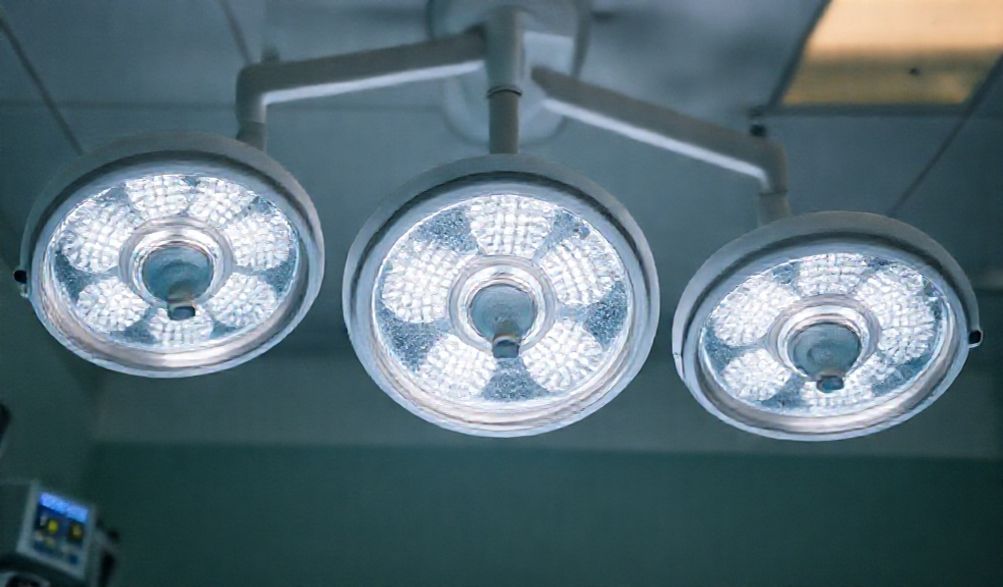
Surgical Lights: A Comprehensive Guide to Operating Room Illumination
In the high-stakes environment of an operating room, where precision is measured in millimeters and outcomes hinge on flawless execution, one critical tool is often overlooked: light. Beyond simply illuminating the field, modern surgical lighting is a sophisticated, engineered system that directly influences surgical accuracy, team performance, and, most importantly, patient safety. A surgeon’s ability to differentiate between subtle tissue types, identify delicate structures, and control bleeding is fundamentally dependent on the quality of illumination.
This guide is designed to be an authoritative, experience-driven resource for the medical professionals, clinical engineers, and facility managers tasked with the critical decision of selecting, maintaining, and optimizing surgical lighting. We synthesize insights from manufacturer specifications, peer-reviewed clinical studies, and industry best practices to cut through the marketing jargon. Whether you are researching a major capital purchase, planning a new OR suite, or seeking to understand the technology your team relies on daily, this comprehensive overview will provide the trustworthy, detailed information you need.
We will explore the critical role of surgical illumination, break down the technologies and configurations available, detail the essential features that impact performance, and provide a step-by-step framework for making an informed procurement decision. Finally, we’ll cover best practices for installation, maintenance, and staff training to ensure your investment delivers optimal value and safety for years to come.
The Critical Role of Surgical Lighting in Modern Medicine
Surgical lighting has evolved from simple spotlights to integral components of the surgical ecosystem. Its primary function is to create an optimal visual environment that mimics natural daylight, allowing the surgical team to work with confidence and precision for extended periods.
How Proper Illumination Impacts Surgical Outcomes and Patient Safety
The correlation between lighting quality and surgical success is well-documented. Superior illumination directly contributes to:
- Reduction of Visual Errors and Fatigue: Inadequate or poorly directed light forces surgeons to strain, leading to eye fatigue, headaches, and decreased concentration. High-quality, homogeneous light reduces this strain, promoting sustained focus and reducing the risk of procedural errors.
- Enhanced Tissue Differentiation: The ability to distinguish between arteries, veins, nerves, and various tissue types is paramount. Lighting with excellent color rendering allows for accurate identification of tissue viability, oxygenation levels (cyanosis), and subtle color changes that signal critical anatomical boundaries.
- Improved Depth Perception and Spatial Awareness: In deep cavity surgeries, such as those in cardiothoracic, pelvic, or spinal procedures, lighting must penetrate and illuminate narrow, deep sites without creating blinding reflections or casting obstructive shadows from instruments and hands.
Key Performance Metrics: Illuminance, Shadow Reduction, and Color Rendering
Evaluating surgical lights requires understanding three core technical metrics:
- Illuminance (Lux): This measures the amount of light falling on the surgical field. While a bright light is essential, more is not always better. The ISO 9680 standard recommends a minimum of 40,000 lux at the center of the light field, with many modern LED systems exceeding 160,000 lux. The key is achieving this intensity without excessive heat.
- Shadow Reduction and Dilution: No light can eliminate all shadows, but advanced systems minimize them. Shadow dilution is achieved through multiple light sources (often hundreds of individual LEDs) arranged in a specific pattern. When a surgeon’s head or hand obstructs one light source, the others fill in the shadow, maintaining consistent illumination. The measure of this capability is often expressed as a percentage of shadow reduction.
- Color Rendering Index (CRI): CRI measures a light source’s ability to reveal the true colors of objects compared to natural light. In surgery, a high CRI (≥90, with ≥95 being ideal) is non-negotiable. It ensures that the red of arterial blood, the blue of a vein, and the subtle yellow of fat are displayed accurately, which is critical for diagnosis and dissection.
Types of Surgical Lights: Technology and Applications
The two primary technological paths are traditional halogen and modern LED, each with distinct advantages and considerations.
LED vs. Halogen: A Comparison of Light Source Technologies
The shift from halogen to LED represents the most significant advancement in surgical lighting in decades.
-
LED (Light Emitting Diode):
- Longevity & Cost: The most compelling advantage. LED modules last 30,000 to 60,000 hours, effectively the lifespan of the light. This eliminates the cost and downtime of frequent bulb replacements.
- Heat Emission: LEDs emit minimal infrared radiation, directing vastly less heat onto the surgical site and the surgical team. This improves patient safety (reduced tissue desiccation) and staff comfort.
- Efficiency & Control: LEDs are highly energy-efficient. They also offer instant-on capability and advanced features like adjustable color temperature (e.g., a cooler light for enhanced contrast in neurosurgery or a warmer light for general procedures).
- Light Quality: Modern multi-diode LED arrays provide exceptional homogeneity and deep-cavity penetration.
-
Halogen:
- Cost: Lower initial purchase price, but this is misleading.
- Ongoing Expenses: Halogen bulbs typically last only 1,000-2,000 hours, requiring frequent, costly replacements and associated labor. They are also far less energy-efficient.
- Heat: They emit significant heat, which can be a hazard and a comfort issue.
- Technology: While offering good color rendering, they lack the advanced features, longevity, and total cost-of-ownership benefits of LED systems.
Verdict: For any new procurement or upgrade, LED technology is the unequivocal standard due to its superior lifecycle economics, safety, and performance.
Choosing the Right Configuration: Ceiling-Mounted, Wall-Mounted, and Portable Systems
- Ceiling-Mounted (Single, Double, or Multi-Arm): The standard for main operating rooms. They offer the greatest flexibility, unobstructed floor space, and are typically the most powerful. Multi-arm configurations (e.g., two independent lights on one ceiling mount) provide redundancy and allow two surgeons to illuminate the field from different angles.
- Wall-Mounted or Column-Mounted: Ideal for smaller procedure rooms, endoscopy suites, or labor & delivery where ceiling space is limited or structural reinforcement is challenging. They provide good maneuverability but have a more limited range of motion.
- Portable/Stand-Mounted Systems: Crucial for emergency situations, field hospitals, or minor procedures in non-OR settings (e.g., ICU, plaster room). They offer flexibility but are less powerful and can be an obstacle in a crowded space.
Essential Features and Specifications to Evaluate
Beyond the basic type, several nuanced features define high-performance surgical lighting.
Understanding Light Field Characteristics: Depth of Field and Homogeneity
Think of the light field as a three-dimensional “pool” of light.
* Depth of Illumination: This indicates how effectively the light penetrates into a deep cavity while maintaining intensity. A light with a deep depth of field will provide adequate lux not just on the surface, but 20-30cm down into a wound.
* Homogeneity: This refers to the evenness of light across the entire field. A perfect light would have no “hot spots” (overly bright centers) or dim edges. High homogeneity reduces eye strain as the surgeon’s gaze moves across the field.
Ergonomic Design and Sterilization Compatibility
The light must be a seamless extension of the surgical team.
* Handles & Maneuverability: Handles must be designed for easy, intuitive manipulation while wearing sterile gloves. They should allow for precise positioning with minimal effort. The system should stay firmly in position once placed, with smooth braking systems.
* Cleanability: Every surface must be seamless, non-porous, and resistant to hospital-grade disinfectants. The design should have no cracks or crevices where contaminants can hide. Removable, autoclavable handles are a key feature.
Integration with Operating Room Systems and Safety Standards
A surgical light is not an island. It must integrate safely into the OR ecosystem.
* Safety Standards: Compliance with IEC 60601-2-41 (the international standard for the safety of surgical luminaires) is mandatory. This covers electrical safety, mechanical stability, heat dissipation, and backup power systems.
* OR Integration: Consider compatibility with other systems. Does the light have ports for integrating a camera for teaching or documentation? Is its heat output low enough not to interfere with the room’s HVAC and laminar airflow systems?
A Step-by-Step Guide to Selecting Surgical Lights for Your Facility
A structured approach ensures your selection meets clinical needs and financial parameters.
Assessing Your Clinical Needs and Surgical Specialties
Start with a clinical needs assessment. Form a committee including surgeons, nurses, sterile processing, and clinical engineering.
* Checklist:
* What are the primary surgical specialties? (Cardiac needs differ from ophthalmology).
* What is the typical size of the surgical team?
* What are the room dimensions and ceiling height?
* Is there a need for teaching/documentation capabilities?
* What are the peak daily usage hours?
Budgeting and Total Cost of Ownership Analysis
Move beyond the sticker price. A cheaper light with high ongoing costs is a poor investment.
* TCO Components:
* Initial purchase price.
* Installation/structural reinforcement costs.
* Energy consumption (LEDs can use 50-70% less power than halogen).
* Replacement parts (LED modules vs. halogen bulbs, filters, handles).
* Preventive maintenance and service contracts.
* Potential downtime costs during repairs.
The Procurement Process: Questions to Ask Manufacturers and Vendors
Come to demonstrations armed with specific questions.
* “What is the complete warranty, and what does the service response time agreement look like?”
* “Can you provide clinical studies or white papers on the shadow reduction and depth of illumination metrics?”
* “What training do you provide for our biomedical engineers and surgical staff?”
* “What is the expected lifespan of the LED array, and what is the replacement cost?”
* “Can we arrange a trial or demo in a simulated OR setting?”
Installation, Maintenance, and Best Practices
Proper implementation is as important as the selection.
Planning for Optimal Installation and Ceiling Load
Surgical lights, especially large multi-arm systems, are heavy. A structural assessment by an engineer is essential to verify the ceiling can support the dynamic load (weight in motion). Installation must be performed by certified technicians to ensure electrical safety and optimal functionality.
Routine Maintenance Protocols to Ensure Peak Performance and Longevity
- Daily: Wiping down all surfaces with approved disinfectant by OR staff.
- Weekly/Monthly: Inspection by clinical engineering for smooth movement, secure fittings, and clean filters.
- Annually: A full technical inspection and calibration by the manufacturer or certified technician to verify illuminance, color temperature, and safety systems. This is critical and often a warranty requirement.
Training Surgical Staff for Effective and Safe Light Use
The best light is ineffective if used poorly. Mandatory training for surgeons, nurses, and scrub techs should cover:
* Optimal positioning techniques to maximize shadow reduction.
* Proper use of sterile handles and touchless controls.
* Understanding the different light modes (e.g., contrast enhancement).
* Basic troubleshooting.
Frequently Asked Questions (FAQ) About Surgical Lights
Q: What is the typical lifespan of an LED surgical light compared to a halogen one?
A: LED light modules typically last 30,000-60,000 hours (10-20 years of normal use), while halogen bulbs last 1,000-2,000 hours, requiring frequent and costly replacements. The long lifespan makes LED the clear choice for total cost of ownership.
Q: How often should surgical lights be serviced or calibrated?
A: Follow the manufacturer’s specific guidelines. Generally, a thorough professional technical inspection, cleaning, and calibration are recommended at least annually to ensure they meet original performance and safety specifications.
Q: Can surgical lights be adjusted during a sterile procedure?
A: Yes. Modern lights are designed with this in mind. They feature sterile, removable handles that can be attached by the scrub nurse, or touchless control systems (often infrared or voice-activated) that allow the surgeon to adjust position, focus, and intensity without breaking the sterile field.
Q: What is the most important factor when choosing a light for deep cavity surgery?
A: Depth of illumination and exceptional shadow reduction are paramount. You need a light that can project a high-intensity, homogeneous beam deep into a narrow site while minimizing shadows from instruments and the surgeon’s hands.
Q: Are there specific lights recommended for specialized procedures like neurosurgery or ophthalmology?
A: Yes. Many manufacturers offer specialty lights or modes. Neurosurgery lights may have a “contrast enhancement” mode that emphasizes red/blue differentiation. Ophthalmic lights often use co-axial illumination (light directed along the axis of view) to minimize retinal glare and are specifically designed for microscope integration.
Conclusion
Selecting the right surgical lighting is a multifaceted decision that balances advanced technology, ergonomic design, clinical necessity, and financial stewardship. As we’ve outlined, it requires a clear understanding of performance metrics like illuminance and CRI, a commitment to the superior lifecycle value of LED technology, and a rigorous evaluation of features that impact daily use—from depth of field to sterilization compatibility.
Ultimately, investing in high-quality surgical illumination is an investment in the foundational elements of healthcare: patient safety and surgical excellence. The data and best practices underscore that optimal lighting is not a luxury but a critical component of the modern OR’s infrastructure. We encourage you to use this guide as a framework for your evaluation. Consult closely with your clinical engineers, solicit feedback from experienced surgical teams, and engage with reputable manufacturers who can provide clinical evidence and hands-on demonstrations. The goal is to make an informed, strategic decision that will illuminate the path to better outcomes for years to come.
p>