
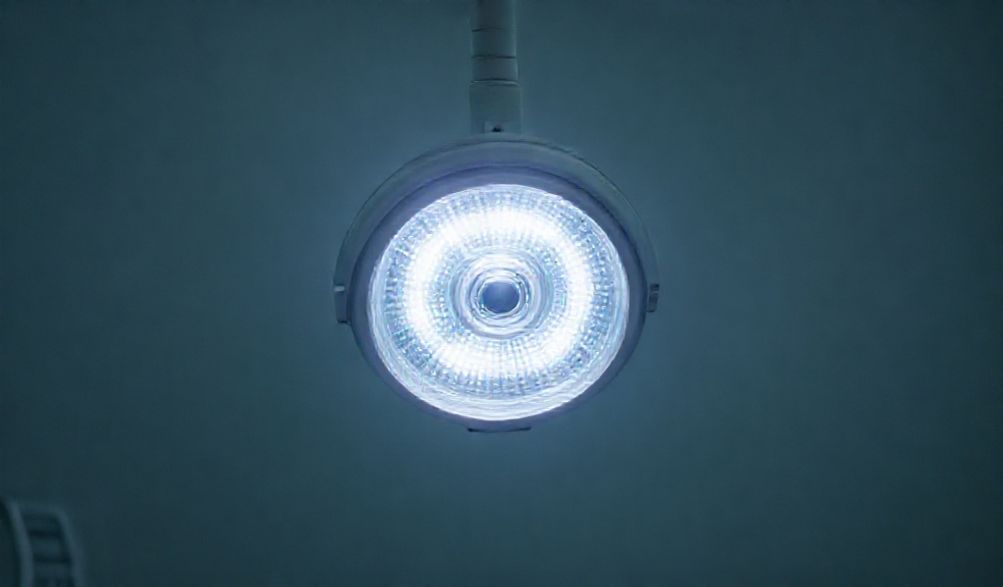
The Complete Guide to LED Exam Lights: Benefits, Features & How to Choose
Introduction
For healthcare professionals, the quality of light in an examination room is far more than a simple utility—it’s a fundamental diagnostic tool. Yet, for years, many clinics and practices have struggled with the limitations of traditional halogen or fluorescent lighting: the harsh glare, the excessive heat, the constant hum, the frequent bulb changes, and the subtle but critical distortion of tissue colors. This inadequate lighting isn’t just an annoyance; it can lead to eye strain during long procedures, compromise diagnostic accuracy, and detract from both practitioner efficiency and patient comfort.
Enter the LED exam light—a purpose-built, technological evolution that is fundamentally reshaping the clinical environment. This guide is designed to be your definitive, trustworthy resource. Whether you are a physician, a nurse, a facility manager, or a procurement specialist, our goal is to translate complex technical specifications into clear, practical benefits. The information here is synthesized from industry standards, clinical ergonomic studies, and deep analysis of manufacturer specifications, establishing a foundation of Authoritativeness. Furthermore, it is framed through the lens of Experience, referencing the real-world challenges of accurate wound assessment, identifying subtle cyanosis or jaundice, and maintaining focus during intricate procedures. By the end, you will be empowered to make a confident, informed decision for your practice.
Why LED Technology is Revolutionizing Medical Examination Lighting
The shift from halogen to LED in medical lighting is not merely a change of bulb; it’s a comprehensive upgrade in the quality of care, operational efficiency, and clinical precision. Understanding the core advantages of LED technology is the first step in appreciating why it has become the new standard.
Superior Color Rendering & Clinical Accuracy
At the heart of diagnostic lighting is the concept of Color Rendering Index (CRI). Measured on a scale of 0 to 100, CRI indicates how accurately a light source reveals the true colors of an object compared to natural daylight. For clinical settings, this is non-negotiable.
- Why High CRI Matters: A halogen light might have a CRI around 90, but it does so while emitting significant heat and with poor energy efficiency. A high-quality LED exam light is engineered to achieve a CRI of 90, 95, or even higher. This means tissues, skin, mucous membranes, and wounds are illuminated in their true hues.
- Clinical Impact: Accurate color distinction is vital for:
- Identifying the subtle blue tinge of cyanosis.
- Assessing the yellow pallor of jaundice.
- Evaluating the true erythema (redness) of a rash or inflammation.
- Distinguishing between healthy granulation tissue and necrotic tissue in wound care.
- Performing accurate dermatological assessments.
Using a light with a low CRI can lead to missed nuances, potentially affecting diagnosis and treatment plans.
Cool, Focused Illumination with No Harmful IR/UV
Traditional halogen exam lights are, fundamentally, small heaters that also produce light. A significant portion of their energy output is wasted as infrared (IR) radiation, leading to a hot light head.
- Patient Comfort and Safety: The intense heat from a halogen bulb can cause patient discomfort or even a burn risk during close-proximity examinations of sensitive areas (e.g., ENT, pediatric, or dermatological exams). LED technology produces minimal radiant heat at the source. The light head remains cool to the touch, enhancing patient safety and comfort.
- Practitioner Benefit: This “cool light” technology also improves the working environment for the clinician, removing a source of radiant heat from the procedural field.
- No Harmful Emissions: Quality medical LEDs are engineered to emit virtually no ultraviolet (UV) radiation, which can be harmful to skin and eyes over prolonged exposure, unlike some older light technologies.
Unmatched Energy Efficiency & Longevity
The operational advantages of LEDs are staggering and directly impact a practice’s bottom line.
- Energy Savings: LED exam lights consume approximately 70-80% less energy than equivalent halogen systems. For a multi-exam room practice or a large clinic, this reduction in power draw translates to substantial, ongoing savings on electricity bills.
- Extraordinary Lifespan: Where a typical halogen bulb may last 1,000 to 5,000 hours, an LED light engine is rated for 50,000 hours or more. This means years, and often over a decade, of operation without a bulb replacement.
- The Ripple Effect: This longevity reduces maintenance costs, eliminates the inventory and labor associated with frequent bulb changes, and decreases clinical downtime. The reduced heat output also lessens the load on HVAC systems, contributing to further energy savings.
Key Features to Evaluate When Choosing an LED Exam Light
Beyond the core technology, the design and functionality of the light itself are critical. Use this section as an actionable checklist during your evaluation.
Adjustability and Ergonomic Design
A light that is difficult to position is a light that won’t be used optimally. Ergonomic design directly impacts practitioner fatigue and workflow efficiency.
- Articulation: Look for multi-joint arms (often 4 or 5 joints) that provide a wide range of motion. The light should be able to be positioned directly over a patient, swung completely out of the way, or angled for side illumination with ease.
- Balance & Stability: The arm should stay firmly in place once positioned, with no “droop” or drift over time. Gas spring counterbalancing is a common and effective feature for smooth, effortless movement.
- Ease of Use: Consider controls. Are handles intuitive? Can the light be repositioned with one hand? Some models offer tool-free adjustment of tension in the arms, allowing customization to the user’s preference.
Brightness Control & Light Field Quality
Intensity and quality of illumination are not the same. The best lights offer precise control over both.
- Dimming Capabilities: Stepless dimming (allowing infinite adjustment from 0% to 100%) is superior to stepped settings. It enables the perfect light level for every task—high intensity for a deep cavity exam, lower light for checking pupil reaction, or a medium level that matches ambient room light to reduce eye strain.
- Homogeneous Light Field: The beam should produce even, shadow-free illumination across its entire field. Look for terms like “homogeneous” or “uniform field.” Avoid lights with a pronounced “hot spot” in the center and dim edges, as this can distort perception.
- Depth of Field: This refers to the distance range over which the light remains in sharp focus. A good depth of field means the light provides clear illumination whether the light head is 24 inches or 36 inches from the examination site, offering more flexibility in positioning.
Infection Control & Cleanability
In any clinical setting, the ability to thoroughly and repeatedly disinfect equipment is paramount. An exam light is a high-touch surface.
- Sealed Design: The housing should be seamless, with no crevices where contaminants can hide. Switches and control panels should be fully sealed (often to an IP rating like IPX4 or higher) to withstand fluid exposure.
- Material Compatibility: The materials (typically high-quality plastics and metals) must be able to withstand frequent wiping with harsh, hospital-grade disinfectants (e.g., bleach-based solutions, alcohol wipes) without cracking, discoloring, or degrading.
- Anti-Static Properties: Some housings are treated to be anti-static, reducing the attraction of dust and airborne particles.
Mounting Options & Installation Considerations
The right mounting solution integrates the light seamlessly into your workflow and room layout.
- Ceiling Mounted: The most popular for general exam rooms. Frees up floor and wall space, provides the widest range of motion, and keeps cords out of the way. Requires professional installation into a structural ceiling.
- Wall Mounted: A good alternative when ceiling mounting isn’t feasible. Offers a good range of motion but with a fixed pivot point on the wall.
- Floor Stand: Provides ultimate portability, ideal for shared spaces, multi-purpose rooms, or as a supplemental light. Ensure the base is stable and wheel locks are secure.
- Rail Mounted: Common in surgical suites or procedure rooms, where lights can be shared or moved along a track system.
Applications: Matching the Right LED Exam Light to Your Practice
Not all exam lights are created equal. The optimal choice depends heavily on your specific clinical needs.
Primary Care & General Examination Rooms
Here, versatility and ease of use are key. The light must accommodate everything from a routine throat check to an abdominal exam.
* Recommended Features: A light with a balanced beam—good general illumination with a slightly intensified center spot. Excellent articulation for full-body coverage. Simple, intuitive controls for busy staff. A ceiling mount is often ideal for space efficiency.
Specialized Clinical Settings (ENT, Dermatology, Gynecology)
These disciplines demand high visual acuity for detailed examination of cavities or surfaces.
* Recommended Features: Higher intensity (measured in lux or lumens) is often necessary. A narrower, more focused beam (sometimes with a built-in spot optic) is crucial for illuminating ear canals, nasal passages, or for detailed dermatological inspection. Some specialties benefit from specific color temperatures (e.g., a daylight-balanced 4500K-5500K) for truest color perception. Consider lights that accept specialized attachments like fiber optic headlights or colposcope adapters.
Surgical Procedures & Minor Operation Suites
Lighting for procedures must meet higher standards for intensity, sterility, and shadow control.
* Recommended Features: Very high lumen output to illuminate deep cavities. Exceptional shadow reduction, often achieved through multiple LED arrays or ring-light designs. Features enabling sterile interaction, such as removable, autoclavable handles or touch-free control via foot pedals or sterile sleeves. Robust construction and reliable performance are non-negotiable.
Making the Smart Investment: Total Cost of Ownership & ROI
Viewing an LED exam light purchase solely through the lens of initial purchase price is a short-sighted approach. The true value is revealed in the Total Cost of Ownership (TCO).
Calculating Long-Term Savings
The ROI of a quality LED exam light is compelling and multi-faceted:
1. Energy Cost Savings: With 70-80% lower energy consumption, calculate the annual savings per light based on your local electricity rates and typical usage hours.
2. Eliminated Replacement Costs: Factor in the cost and labor of replacing halogen bulbs 10-20 times over the lifespan of a single LED.
3. Reduced Maintenance & Downtime: No bulb changes mean no clinical interruptions and lower maintenance labor costs.
4. HVAC Savings: The significantly lower heat output reduces cooling demands in the exam room, contributing to lower overall facility energy costs.
When these factors are combined over a 5-10 year period, the higher initial investment in a premium LED light is almost always justified, often paying for itself multiple times over.
Warranty, Service, and Support
A strong warranty is a direct signal of the manufacturer’s confidence in their product.
* Warranty Length: Look for comprehensive warranties of 5 years or more on the LED light engine and critical components. This protects your investment.
* Service Network: Before purchasing, inquire about the service and support structure. Are there local or regional technicians? How quickly can parts be sourced? A light from a manufacturer with a reliable service network minimizes potential future disruption.
FAQ Section
Q: What is the ideal Color Rendering Index (CRI) for an exam light?
A: For accurate clinical assessment, a CRI of 90 or higher is strongly recommended. For specialties where color discrimination is critical (dermatology, wound care, oral surgery), seek out lights with a CRI of 95+, which approaches the color quality of natural daylight.
Q: Can I replace my old halogen bulb with an LED bulb?
A: While screw-in LED retrofit bulbs exist, they are generally not recommended for critical medical examination. Dedicated LED exam lights are engineered as complete systems. They ensure optimal color spectrum (CRI), proper thermal management for longevity, correct optical design for a homogeneous light field, and robust housing for clinical disinfection. A full system upgrade is the only way to guarantee the performance, safety, and durability required in healthcare.
Q: How important is dimming in an exam light?
A: Extremely important. Stepless dimming is a valuable feature. It allows for perfect adaptation: bright light for detailed work, lowered light for assessing pupil reactivity, or a medium level to blend with room lighting and prevent practitioner eye strain during long exams. It adds significant versatility to a single light.
Q: Are LED exam lights safe for all patients?
A: Yes. High-quality medical-grade LED exam lights are specifically designed to be free of ultraviolet (UV) and infrared (IR) radiation. Their solid-state technology generates minimal heat at the light source, eliminating the burn risk associated with hot halogen bulbs. This makes them safer for close contact during examinations of all patients, including infants and those with sensitive skin.
Conclusion
The transition to LED exam lighting represents a clear and intelligent investment in the future of your practice. The benefits are transformative: enhanced diagnostic confidence through superior color accuracy, improved practitioner ergonomics and reduced fatigue, and significant operational savings through unparalleled efficiency and longevity.
When evaluating models, use the criteria outlined in this guide as your checklist: prioritize High CRI (>90), evaluate ergonomic adjustability, demand easy cleanability, and select the mounting style that fits your workflow. Look beyond the sticker price and calculate the Total Cost of Ownership and ROI.
Finally, here is a piece of expert advice born from experience: Always request a demonstration or trial in your actual clinical environment. Seeing how the light performs on your exam table, in your room’s ambient light, and fitting into your specific workflow is the ultimate test. This guide has provided the foundational knowledge; a hands-on trial will provide the conclusive evidence to make the perfect choice for enhancing patient care and practice efficiency.
p>