
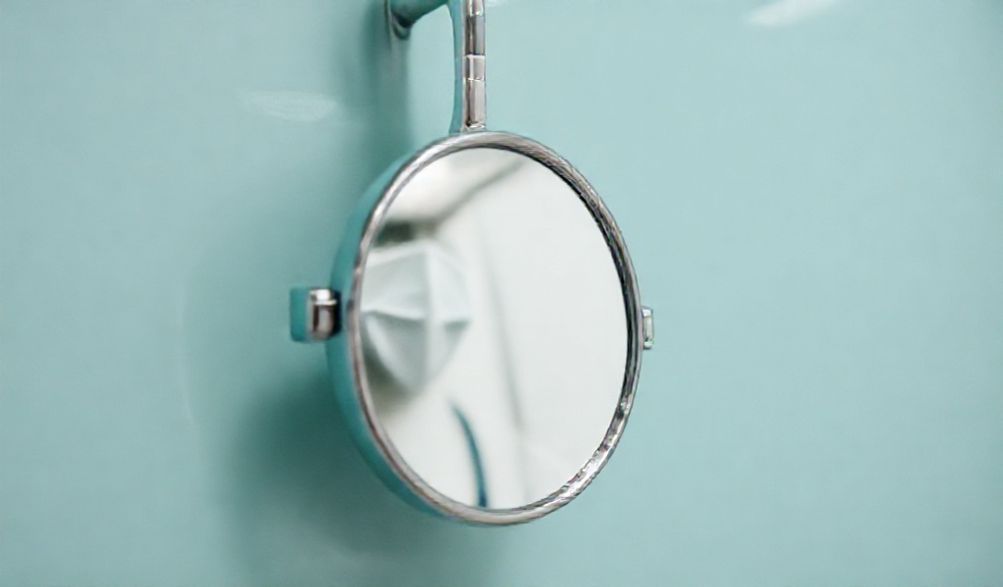
The Doctor’s Head Mirror: A Timeless Beacon in Modern Medicine
In the collective imagination of medicine, few images are as iconic or as evocative. Picture a physician, brow furrowed in concentration, a gleaming disc of silver strapped to their forehead, reflecting a focused beam of light into the depths of a patient’s ear or throat. It is a scene that speaks of meticulous examination, of quiet expertise, and of a direct, hands-on connection between healer and patient.
In our current era—dominated by the silent hum of MRI machines, the digital glow of ultrasound screens, and the fiber-optic threads of minimally invasive scopes—this simple tool, the doctor’s head mirror (or cephalic mirror), can seem like a charming anachronism. A relic from a bygone age of black bags and house calls. Yet, to dismiss it as merely historical would be to misunderstand a fundamental truth of medical practice: the most advanced technology is only as good as the foundational skill of the clinician using it.
This exploration is not just about a piece of equipment; it’s about a principle. We will delve into the fascinating history, precise function, and surprising ongoing utility of the head mirror. We will demystify its use, explain why it remains an essential tool in certain specialists’ arsenals, and connect its elegant simplicity to the very heart of expert, patient-centered care. In an age of digital intermediation, the head mirror stands as a powerful symbol of direct observation, manual dexterity, and enduring clinical trust.
What is a Doctor’s Head Mirror? Anatomy and Function
At first glance, the head mirror appears deceptively simple. But its design is a masterpiece of practical optics, engineered to solve a very specific problem: how to brightly illuminate a deep, dark cavity while keeping both hands free to operate.
The Components: Mirror, Headband, and Central Aperture
The classic head mirror consists of three key parts:
- The concave mirror: This is the heart of the device. It is not a flat mirror but a carefully curved, concave one, typically about 3 to 4 inches in diameter. This curvature is what allows it to gather and focus light.
- The Adjustable Headband: Usually made of stainless steel or another sturdy metal, the headband is adjustable to fit any head size. It features a pivot or ball joint that allows the wearer to position the mirror at precisely the right angle. A leather or padded cushion ensures comfort during prolonged use.
- The Central Aperture: This is the most distinctive feature—a small hole, usually ¼ to ½ inch in diameter, drilled directly through the center of the mirror. This is not a manufacturing flaw; it is the critical feature that enables the tool’s primary function.
The Fundamental Optical Principle: Illumination and Focus
The magic of the head mirror lies in basic physics. The concave mirror acts like a satellite dish for light. When an external light source (traditionally a standalone lamp, often with a frosted bulb to diffuse the light) is placed beside and slightly behind the patient, the doctor positions the mirror on their forehead to catch this light.
The concave surface then reflects and concentrates the scattered light rays into a bright, focused beam, directing it exactly where the doctor needs to see—into the nasal passage, down the throat, or into the ear canal.
Now, the central aperture comes into play. The doctor positions their eye directly behind this hole. By doing so, they are peering directly along the same axis as the beam of reflected light they are projecting. This alignment eliminates shadows and parallax error, providing perfectly coaxial illumination. What the doctor illuminates is exactly what they see, with stunning clarity and without the obstruction of their own head or hands. Both hands remain completely free to hold a speculum, a tongue depressor, or delicate surgical instruments.
A Brief History of the Cephalic Mirror
The head mirror’s story is intertwined with the birth of specialized medical examination.
19th Century Origins and the Father of the Head Mirror
While forms of reflective headgear existed earlier, the head mirror as we know it was popularized in the mid-19th century. A key figure in its development was Johann Friedrich Horner, a Swiss ophthalmologist (for whom “Horner’s syndrome” is named). In the 1840s and 1850s, he and other pioneers refined the design for examining eyes and, crucially, the deeper ear, nose, and throat cavities.
Its impact was revolutionary. Before its adoption, examining these areas was exceedingly difficult, relying on awkward handheld mirrors and candles or poor ambient light. The head mirror transformed otolaryngology (ENT) from a guessing game into a discipline of precise visual diagnosis. It became the stethoscope of the ENT specialist and a ubiquitous symbol of the examining physician throughout the late 19th and early 20th centuries.
From Ubiquity to Specialized Use
For decades, the head mirror was as standard in a doctor’s bag as a thermometer. Its decline in everyday general practice began with the advent of convenient, self-contained alternatives. The electric penlight and the otoscope (the familiar device used for ear exams) brought integrated illumination to the fingertips of every pediatrician and internist. These tools were faster to deploy for a quick check and required less setup.
As a result, the head mirror retreated from the front lines of general medicine. However, it did not disappear. Instead, it transitioned into a tool of specialization, finding a permanent and respected home in fields where its unique advantages—superior illumination and hands-free operation—remained irreplaceable.
When and How is a Head Mirror Used Today?
Today, you are most likely to encounter a head mirror in a specialist’s office or operating room, where it is not a relic but a preferred instrument.
The Primary Domain: Otolaryngology (ENT)
For the otolaryngologist, the head mirror is often the tool of choice for many office procedures and even some surgeries.
* Nasal Endoscopy: When examining the deep nasal passages and sinuses with a slender endoscope, the head mirror provides brilliant, shadow-free light that outperforms many built-in scope lights for clarity and tissue color rendering.
* Laryngoscopy: Viewing the voice box (larynx) requires intense, focused light directed at just the right angle. The head mirror, used with a laryngeal mirror held in the throat, offers unparalleled control.
* Microsurgery of the Ear: In procedures like tympanoplasty (eardrum repair), the surgeon, looking through a microscope, may use a head mirror to provide additional focused illumination to the surgical field, freeing the surgical assistant’s hands.
The common thread is the need for maximal illumination and bimanual dexterity. In these delicate spaces, every hand is needed for an instrument, and the quality of light can mean the difference between seeing a subtle lesion and missing it.
Other Medical and Specialist Applications
- Ophthalmology: Some ophthalmologists use a similar, often simpler, lensless version called a Loupe for certain external procedures or slit-lamp adjustments.
- Oral & Maxillofacial Surgery: For complex intraoral work, the principle of hands-free, coaxial illumination remains valuable.
- Teaching: In medical schools, the head mirror is an excellent teaching tool. It forces the student to understand optics, patient positioning, and manual coordination, building foundational skills that inform their use of all subsequent diagnostic technology.
The Head Mirror vs. Modern Alternatives
The head mirror’s persistence invites a natural comparison with its modern counterparts.
The Electric Headlight: The Direct Successor
The most direct evolution is the electric headlight. This device replaces the external lamp and reflective mirror with a battery-powered LED light source mounted directly on a headband. It offers clear advantages: no need for an external light source, adjustable intensity, and often a more comfortable weight distribution.
However, many purists and experienced surgeons still prefer the traditional head mirror. They argue it provides a softer, more diffuse, and more natural light that reduces glare and improves depth perception and tissue differentiation compared to the sometimes-harsh, point-source light of an LED. The head mirror also has no batteries to die and is utterly reliable.
Specialized Scopes and Cameras
For the vast majority of routine examinations—checking an ear for infection or a throat for redness—modern otoscopes, ophthalmoscopes, and flexible nasopharyngoscopes are the standard of care. They are efficient, portable, and often feature digital cameras for documentation and patient education.
This is where the head mirror’s true significance shines through in terms of E-E-A-T (Experience, Expertise, Authoritativeness, Trustworthiness). The clinician who masters the head mirror is demonstrating a deep-seated Expertise in the physical exam. Their Experience with this tool represents a mastery of foundational, hands-on diagnostic skills. This foundation is what allows them to authoritatively interpret the images on a digital screen; they know what the tissue should look and feel like because they have seen it directly, with their own eyes, under perfect illumination. The tool itself becomes a symbol of Trust—it signifies a clinician invested in the tactile, direct-care traditions of medicine, even while embracing technology.
The Symbolism of the Head Mirror: Trust and Tradition
Beyond its practical utility, the head mirror carries profound symbolic weight.
An Icon of Medical Practice
It is one of the most recognizable medical icons in the world. From Norman Rockwell paintings to vintage pharmaceutical advertisements and classic film portrayals of doctors, the head-marked physician signifies intelligence, diligence, and care. It is a visual shorthand for the medical profession itself.
What It Represents in Patient Care
In an examination room, the head mirror symbolizes focused attention. The act of donning it signals a shift to deep, undistracted observation. It represents manual skill and precision—the steady hands and trained eye of the expert. Most importantly, it embodies a direct, unmediated connection. There is no camera sensor or video screen between the doctor’s eye and the patient’s anatomy. This directness can be profoundly reassuring; it is the essence of hands-on healing. In a healthcare landscape that can feel fragmented and technological, the head mirror is a tangible reminder of the authoritative, personal, and trustworthy core of the patient-doctor relationship.
FAQ Section
Q: Do all doctors still use a head mirror?
A: No, it is not standard equipment for most general practitioners, pediatricians, or hospitalists today. Its primary and sustained use is among certain specialists, notably otolaryngologists (ENT doctors), for specific diagnostic and surgical procedures.
Q: Why look through a hole in a mirror? Isn’t that awkward?
A: It requires practice to master, but it offers a critical optical advantage. By aligning their eye with the central aperture, the doctor looks directly along the path of the focused light beam they are projecting. This provides optimal, shadow-free, coaxial illumination of deep, narrow cavities like the nose, throat, or ear canal, which is impossible with off-axis lighting.
Q: What is the head mirror made of?
A: Traditionally, the mirror is made of glass, precision-ground to a specific concave curvature, with a silver or other reflective coating on the front surface (first-surface mirror) to prevent double reflections. The headband is typically made of stainless steel or plated metal, with a leather or synthetic padded cushion for comfort during extended wear.
Q: Is using a head mirror considered “old-fashioned” or less effective?
A: Not in its specific, intended applications. For the procedures it’s designed for, many expert clinicians consider it more effective in terms of light quality and control. It is valued for its simplicity, reliability, and exceptional illumination. It is a complementary tool that exists alongside modern technology, not in competition with it.
Q: Can I buy a doctor’s head mirror?
A: Yes, they are available for purchase through medical and scientific supply companies. However, effective and safe use requires significant training, practice, and understanding of its optical principles. It is a professional medical instrument.
Conclusion
The doctor’s head mirror is far more than a curious artifact from medicine’s past. It is a testament to the enduring principles that underpin all effective medical care: the focused application of light, the primacy of direct observation, and the irreplaceable value of manual skill. While diagnostic technology has advanced at a breathtaking pace, this elegantly simple tool persists in niches where its unique benefits remain unmatched.
It serves as a powerful, tangible link to the history of medicine and a symbol of the Expertise, Experience, and Trust that form the bedrock of the patient-doctor relationship. In its reflective surface, we see not just an illuminated path into the human body, but a reflection of medicine’s core ethos: that the most sophisticated care is always built upon the foundation of a skilled clinician’s hands, eyes, and undivided attention. The head mirror’s legacy continues to illuminate, reminding us that sometimes, the most profound tools are those that empower the human element at the heart of healing.
p>