
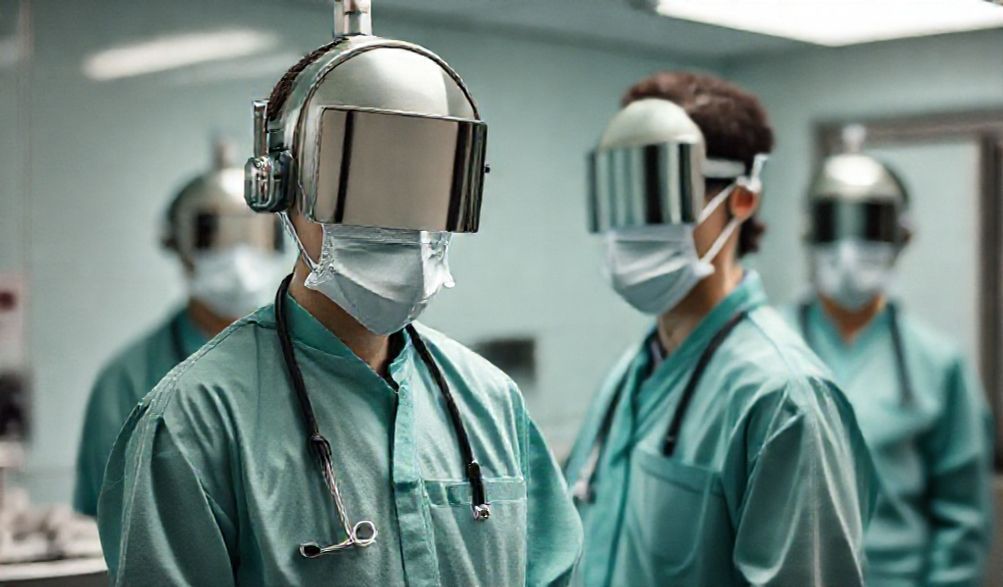
Why Did Doctors Wear Head Mirrors? The Fascinating History of a Medical Icon
For generations, the image of a doctor was incomplete without a few key props: the stethoscope, the white coat, and that mysterious circular mirror strapped to their forehead. In cartoons, classic films, and even our collective imagination, this stern-faced physician peering intently through a head-mounted lens is the archetype of medical authority. Yet, walk into any modern clinic or hospital today, and you’ll be hard-pressed to find one. This iconic tool has vanished from daily practice, transforming from a state-of-the-art instrument to a historical curiosity.
So, why did doctors wear head mirrors? The answer is a compelling tale of practical ingenuity, optical science, and the relentless march of technological progress. Far from being mere decoration, the head mirror was a brilliant solution to a fundamental problem in early medicine: how to see into the dark, hidden cavities of the human body. Its story, from indispensable diagnostic aid to retired relic, mirrors the evolution of medical technology itself, highlighting our constant pursuit of better, safer, and more effective patient care. This journey, pieced together from historical medical texts, museum archives, and optical principles, reveals not just the function of a tool, but a chapter in the history of healing.
The Primary Function: Illumination and Reflection
At its core, the doctor’s head mirror was a device of elegant simplicity, designed to perform one crucial task: to throw light into dark places. Before the widespread availability of bright, focused, and portable electric lights, physicians faced a significant challenge during examinations. Body orifices like the nose, throat, and ear canals are naturally shadowed and deep. To diagnose infections, obstructions, or injuries, doctors needed a clear, illuminated view.
A Simple Solution for Directed Light
The head mirror provided an ingenious workaround. It was not a light source itself, but a reflector. A physician would position an external light source—often an adjustable oil lamp, a gas lamp, or even daylight from a window—to one side and slightly behind them. The concave mirror, strapped securely to their forehead, would capture this ambient light and redirect it as a bright beam directly into the patient’s mouth, nose, or ear. The key advantage was hands-free operation. Unlike holding a lamp or a candle, which would occupy a hand needed for holding a tongue depressor or an instrument, the head mirror allowed the doctor to direct light precisely while keeping both hands free for the examination. This made procedures safer and more efficient.
The Optical Principle: Concentration and Focus
The effectiveness of the head mirror lies in basic optical physics. The mirror was not flat; it was concave (curved inward, like a shallow bowl). This shape is crucial because it gathers light over its surface area and focuses, or converges, the rays to a single point. By adjusting the distance between their head and the patient, the doctor could position this focal point exactly on the area they wished to examine, creating a spot of intense illumination.
The second critical feature was the central hole (about ¼ to ½ inch in diameter) drilled through the middle of the mirror. This aperture allowed the doctor to position their eye directly behind it. By doing so, they could look along the same axis as the beam of reflected light they were projecting. This alignment meant the light illuminated exactly what they were looking at, minimizing shadows and providing an unobstructed view. In essence, the doctor’s eye and the light source were perfectly coordinated—a simple yet sophisticated application of optics for diagnosis.
The Evolution of the Head Mirror in Medical Specialties
While the head mirror is part of the general historical image of medicine, its use was particularly specialized. It became the defining tool for certain fields, shaping the very practice of those specialties.
The Domain of the Otolaryngologist (ENT)
The head mirror found its true home in the field of Otolaryngology—Ear, Nose, and Throat medicine. For the early ENT specialist, it was as fundamental as the stethoscope is to a cardiologist. The tool was central to two key diagnostic procedures:
* Otoscopy: Examining the ear canal and eardrum. A doctor would use the head mirror to illuminate the ear canal while using a handheld speculum to gently open it for viewing.
* Laryngoscopy: Visualizing the larynx (voice box) and the back of the throat. This required reflecting light deep into the patient’s open mouth, often while they said “ahh,” to reveal the vocal cords and surrounding structures. The head mirror, often used with a small laryngeal mirror held in the throat, was the primary method for this exam for nearly a century.
The mastery of the head mirror was a rite of passage for ENT practitioners, requiring steady posture, precise head movements, and an intuitive understanding of light alignment.
Use in General Practice and Other Fields
Although synonymous with ENT, the head mirror was also a versatile tool in the broader medical kit of the late 19th and early 20th centuries. General practitioners might use one for routine throat examinations or to get a better look at a wound or skin lesion. Early ophthalmologists sometimes employed a version to help illuminate the eye before the development of the modern, self-illuminated ophthalmoscope. Its utility as a general-purpose, hands-free light source made it a valuable, if not universally used, instrument across medicine during an era defined by mechanical, rather than electronic, solutions.
The Decline of the Head Mirror: A Story of Technological Progress
The disappearance of the head mirror from clinics wasn’t due to a flaw in its design, but rather to the arrival of technologies that solved the same problems more effectively. Its obsolescence is a direct narrative of medical advancement.
The Advent of Electric Lighting
The first major shift came with the miniaturization and commercialization of electric lighting. The invention of small, bright, battery-powered bulbs led to tools like the penlight. For the first time, a doctor could hold a light source directly, offering more intuitive control. However, this still occupied one hand. The penlight was a step forward, but not the complete revolution. It signaled the beginning of the end for the external light source but didn’t yet replace the need for a separate, handheld viewing instrument.
The Rise of Self-Illuminated Diagnostic Tools
The true death knell for the head mirror was the development of all-in-one, self-illuminated diagnostic instruments. This represented a paradigm shift in medical device design.
* The Modern Otoscope/Ophthalmoscope: These familiar devices combine a light source (first incandescent bulbs, then halogen, and now bright, cool LEDs), a magnifying lens, and a speculum or viewing head into a single, handheld unit. They provide intense, focused, and shadow-free illumination directly where the doctor is looking, with no need for external alignment.
* Fiber-Optic Technology: The incorporation of fiber-optic bundles allowed light to be transmitted brilliantly through flexible or rigid scopes. This enabled the development of sophisticated laryngoscopes and nasopharyngoscopes that could provide not just light, but also magnified views and even video documentation.
* Ergonomics and Hygiene: Modern tools are designed for comfort and sterility. Disposable specula and easy-to-clean surfaces reduce infection risk—a significant advantage over the reusable metal specula used with head mirrors. The need to maintain and position a separate lamp also became obsolete.
In short, technology integrated the functions of the light source, the reflector, and the viewing portal into superior, more reliable, and easier-to-use instruments. The specialized skill of aligning a head mirror was rendered unnecessary by engineering.
The Legacy and Symbolism of the Head Mirror
While its practical use has faded, the head mirror’s cultural and symbolic resonance endures, speaking to its deep embedding in the identity of medicine.
From Tool to Symbol: Representing Medical Authority
Long after it ceased to be common in practice, the head mirror persisted in popular culture as a visual shorthand for “doctor.” In newspaper cartoons, advertisements for medical products, and early Hollywood films, a character wearing a head mirror was instantly recognizable as a physician, and usually a specialist of some kind. Alongside the white coat and stethoscope, it completed the uniform of medical expertise, symbolizing scientific examination, focused intellect, and diagnostic authority. It represented an era of medicine that was mechanical, personal, and required a tangible, visible skill from the practitioner.
An Artifact in Museums and Collections
Today, the physical head mirror has found a new home: the medical history museum and the collections of medical antiquarians. These artifacts, often made of glass with a silvered concave surface mounted on an adjustable metal headband, serve as tangible links to the practices of the past. They are teaching tools, illustrating to new generations of medical students and the public how doctors overcame limitations with creativity. They remind us that today’s advanced endoscopes and digital imagers stand on the shoulders of simple, clever tools like the frontal mirror.
FAQ Section
Q: Do any doctors still use head mirrors today?
A: It is extremely rare. In virtually all clinical settings in the developed world, they have been completely replaced by modern, self-illuminated instruments. You might find a very small number of veteran practitioners who use one out of personal preference for specific traditional techniques, or perhaps in extremely resource-limited settings where electricity is unreliable and simple, non-electric tools are necessary.
Q: What was the head mirror actually made of?
A: The reflective disc was typically made of glass with a silvered (or later, aluminized) concave surface to create the necessary focus. This was mounted in a metal ring attached to a sturdy, adjustable headband (often leather-padded for comfort) that could be tightened with a screw or clasp. The central viewing hole was usually 1/4 to 1/2 inch in diameter.
Q: Was it difficult to learn how to use?
A: Yes, it required significant skill and practice, much like learning to use a surgical instrument. The doctor had to learn to coordinate multiple elements simultaneously: aligning their dominant eye with the mirror’s hole, angling their head to reflect light from a fixed source (like a wall lamp), and focusing that beam onto a small, moving target inside a patient’s body—all while keeping the patient and the light source steady. Proficiency with the head mirror was a mark of a trained specialist’s dexterity.
Q: What is the proper name for a doctor’s head mirror?
A: It is most accurately and commonly called a “head mirror” or “frontal mirror.” In historical medical supply catalogs and texts, it might also be referred to as part of a “reflecting headband,” a “cephalic mirror,” or an “illuminating mirror.”
Conclusion
The journey of the doctor’s head mirror is a microcosm of medical progress. It began as a brilliant, hands-free solution to the fundamental problem of illumination, embodying the pragmatic ingenuity of physicians in an era of limited technology. For decades, it was the cornerstone of specialties like otolaryngology, defining the practice and skill set of entire fields. Its decline was not a story of failure, but one of remarkable success—it was rendered obsolete by the very innovations it helped inspire.
The head mirror was phased out by tools that offer brighter, more consistent light, magnified and even video-enhanced views, and superior ergonomics and hygiene. This transition underscores a central theme in medicine: the relentless pursuit of better tools for more accurate diagnoses and safer, more effective patient care. While it no longer has a place on the modern doctor’s brow, the head mirror remains a powerful icon. It stands as a testament to the resourcefulness of medical pioneers and a charming, tangible reminder of how far medical technology has come. It is a symbol not of outdated practice, but of the enduring ingenuity that continues to drive the medical field forward.
p>