
The Ultimate Guide to Medical Exam Lights: Choosing the Right Lighting for Patient Care & Accurate Diagnosis
Introduction
In the intricate world of healthcare, where precision is paramount, the tools of the trade are subjected to intense scrutiny. We evaluate the cutting-edge imaging software, the latest minimally invasive instruments, and the most advanced monitoring systems. Yet, one of the most fundamental diagnostic tools is often overlooked: the humble exam light. medical exam lights are far more than simple illumination tools; they are critical diagnostic instruments that directly impact patient outcomes, clinical efficiency, and practitioner well-being.
Consider this: a subtle yellow hue in the sclera indicating jaundice, the faint blush of early inflammation around a wound, the specific pallor of anemia, or the intricate vascular pattern of a suspicious skin lesion. Inadequate or poor-quality lighting can obscure these vital clues, leading to missed details, diagnostic delays, and compromised care. Conversely, optimal lighting enhances visual accuracy, reduces eye strain for clinicians, and creates a more comfortable environment for patients.
This comprehensive guide is designed for healthcare administrators, clinic managers, purchasing departments, and medical professionals who seek to move beyond basic procurement. Our goal is to provide a deep understanding of the technology, features, and critical selection criteria for medical exam lighting. By synthesizing information from clinical studies, manufacturer specifications, and industry best practices, we aim to empower you to make an informed, strategic investment—one that supports superior patient care, boosts clinical confidence, and complies with rigorous medical standards.
Why Medical Exam Lighting is a Critical Diagnostic Tool
To view medical lighting as merely a utility is to misunderstand its role in modern medicine. It is the primary interface between the clinician’s visual assessment and the patient’s condition. The right light doesn’t just make things visible; it reveals truth.
The Impact on Diagnostic Accuracy
Diagnostic accuracy hinges on the clinician’s ability to perceive true color, texture, and detail. This is where the technical specifications of light become clinically significant.
- Color Rendering Index (CRI): This is arguably the most critical metric. CRI measures a light source’s ability to reveal the true colors of an object compared to natural light. A low CRI light might make healthy tissue look unnaturally pale or mask the erythema (redness) of an infection. For accurate assessment of skin conditions, wound bed viability (distinguishing red granulation tissue from yellow slough), or identifying cyanosis (bluish discoloration), a CRI of 90 or above is essential. It is the difference between seeing an approximation and seeing reality.
- Color Temperature: Measured in Kelvins (K), this describes the “warmth” or “coolness” of white light. Warm white light (3000K-4000K) is often perceived as softer and can be calming for general exams. Cool white light (4500K-6000K or higher) appears brighter and more clinical, enhancing contrast and detail, which is crucial for tasks like suturing or examining fine tissue structures. The choice depends on the clinical task at hand.
- Shadow Management & Uniformity: Harsh, single-point shadows can hide critical anatomy or create visual deception. Quality medical lights are engineered to minimize shadows, often through multiple LED arrays or reflective optics, ensuring even illumination across the examination field.
Reducing Practitioner Fatigue and Enhancing Ergonomics
Clinician burnout and musculoskeletal injuries are significant concerns. Poor lighting is a contributing factor that is frequently underestimated.
- Eye Strain: Glare, flicker (from outdated fluorescent or poor-quality LEDs), and constantly adjusting to poorly lit areas force the eye muscles to work overtime, leading to headaches, dry eyes, and fatigue. This visual strain can directly contribute to decreased concentration and an increased risk of error over long shifts.
- Physical Strain: A light that is difficult to position—requiring a practitioner to awkwardly reach, twist, or hold an arm in place—can lead to neck, shoulder, and back pain. Ergonomic designs with smooth, counterbalanced articulation allow for easy, single-handed positioning, keeping the clinician’s focus on the patient, not the equipment.
Improving Patient Comfort and Cooperation
The exam experience can be anxiety-inducing. The lighting plays a subtle but powerful role in setting the tone.
- Heat and Glare: Traditional halogen lights emit a significant amount of infrared radiation (heat). This can be uncomfortable for a patient, especially during a prolonged exam of sensitive areas like the face or eyes. Modern LED lights produce minimal radiant heat.
- Intensity Control: A blindingly bright light pointed at a patient’s face triggers a natural defensive response. Dimmable lights allow the clinician to use only the necessary intensity, increasing from a lower, comfortable level to a brighter setting for detailed inspection, which feels more respectful and controlled.
- Psychological Comfort: Soft, diffuse lighting in a general setting can create a more welcoming atmosphere, while the confident, precise application of a high-quality exam light conveys professionalism and thoroughness, building patient trust.
Key Technical Specifications and Features to Evaluate
Navigating the market requires understanding the language of lighting technology. Here’s a breakdown of the key specifications that separate adequate lighting from exceptional diagnostic tools.
Light Quality Metrics: CRI, Color Temperature, and Lux/Lumens
- CRI (Color Rendering Index): As discussed, seek a minimum of Ra 90. For specialties like dermatology or plastic surgery, Ra 95+ is the gold standard.
- Color Temperature: Select lights that offer a fixed temperature appropriate for your specialty or, ideally, variable color temperature settings. This allows flexibility—using warmer light for patient comfort during initial consultation and cooler light for procedural accuracy.
- Illuminance (Lux): This is the amount of light falling on a surface. General examination may require 1,000 to 2,000 lux at the exam point. For minor surgical procedures or detailed work, requirements can exceed 5,000 lux or more. Manufacturer specifications should clearly state the lux level at a defined distance.
Light Source Technology: LED vs. Halogen vs. Fluorescent
- LED (Light Emitting Diode): The Modern Standard.
- Pros: Exceptional energy efficiency (saving 50-80% over halogen), extremely long lifespan (often 50,000+ hours), minimal heat output, instant on/off with full dimmability, and robust durability. High-quality LEDs now achieve CRIs superior to halogen.
- Cons: The initial cost can be higher. Concerns about blue light exposure are mitigated in medical-grade LEDs through phosphor coatings that produce balanced, white light.
- Halogen: The Traditional Workhorse.
- Pros: Excellent CRI, warm color temperature, and low initial purchase cost.
- Cons: Very inefficient, converting most energy to heat. Bulb lifespan is short (1,000-2,000 hours), leading to frequent, costly replacements and operational downtime. The heat can be uncomfortable and poses a minor burn risk.
- Fluorescent: Largely Obsolete.
- Cons: Poor CRI, potential for flicker (which can cause eye strain and headaches), contains mercury, and slower start-up time. Not recommended for primary diagnostic lighting.
Mechanical Design and Functionality
- Mobility & Positioning: Consider your space and workflow.
- Floor Stands: Offer maximum flexibility and mobility between rooms.
- Wall Mounts & Ceiling Tracks: Save floor space, provide wide coverage areas, and offer a clean, uncluttered look.
- Articulation: Look for arms with multiple points of movement (articulation). Counterbalanced or spring-assisted arms allow for smooth, effortless positioning that stays firmly in place once set.
- Adjustability & Controls: Intuitive controls are vital. Touch-sensitive panels, dials, or foot switches for intensity and spot size adjustment allow for sterile operation during procedures. The ability to switch between a focused spot and a wide field is crucial.
- Infection Control: The light must be easy to clean. Seamless housings without crevices, antimicrobial coatings on frequently touched surfaces, and materials that can withstand repeated cleaning with hospital-grade disinfectants are non-negotiable features in a clinical environment.
Selecting the Right Medical Exam Light for Your Specialty
A “one-size-fits-all” approach fails in medical lighting. The optimal light for a pediatric check-up differs from that needed for a minor surgical procedure.
Primary Care and General Examination Lights
- Requirements: Versatility is key. The light must adapt to ENT exams, dermatological inspections, abdominal assessments, and basic wound care.
- Recommended Features: A medium-to-long reach articulated arm (floor or wall mount), a light head capable of both broad and focused illumination, a CRI ≥90, and dimmable intensity. Shadow reduction technology is a significant benefit for comprehensive exams.
Surgical & Minor Procedure Lights
- Requirements: Uncompromising intensity, exceptional shadow cancellation, and deep cavity illumination. The light must provide consistent, bright, and uniform light even in deep or narrow surgical sites.
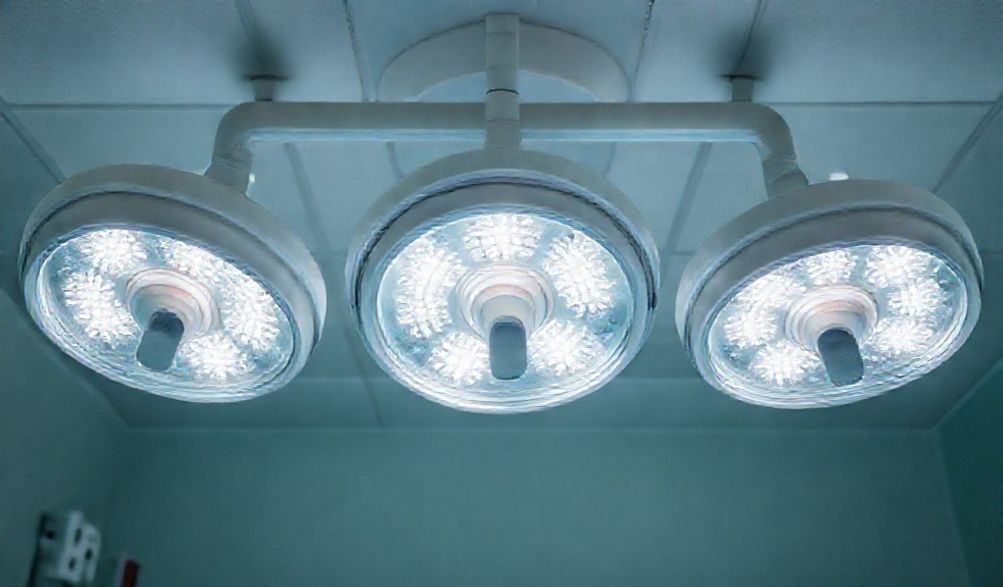
- Focus: Look for multi-diode LED arrays (often in a ring or cluster configuration) specifically designed to eliminate shadows from the surgeon’s head and hands. Sterility is paramount—designs should allow for easy draping or have built-in sterile handles. Color temperature is typically cooler (5000K+) for optimal tissue contrast.
Specialized Lights for Dermatology, Dentistry, and Ophthalmology
- Dermatology: True color is everything. Demand the highest CRI (95+). Features like polarized light are invaluable, as they reduce surface glare from skin oils, revealing subsurface detail of lesions, vasculature, and texture. Integration with magnification systems (like dermatoscopes) is common.
- Dentistry: Focus shifts to intraoral illumination. Dental lights are often compact, with a very cool color temperature (often 5500K+) to accurately match tooth shades for restorations. They are designed to be easily positioned by the dentist without obstructing their view or workspace.
- Ophthalmology: This field utilizes highly specialized instruments like slit lamps, which combine high-intensity light with a microscope. The principle remains—precision lighting is the cornerstone of diagnosis, allowing for detailed examination of the cornea, lens, and retina.
Compliance, Safety, and Making a Smart Investment
Purchasing medical equipment is a responsibility that extends beyond clinical need to encompass regulatory compliance and financial stewardship.
Understanding Regulatory Standards (FDA, IEC 60601)
Medical exam lights are not office fixtures. In most regions, including the United States and the European Union, they are classified as Class I or Class II medical devices. This means they must comply with stringent safety and performance standards.
* Key Standards: IEC 60601-1 (general electrical safety for medical equipment) and IEC 60601-2-41 (particular requirements for surgical and examination lights) are critical.
* Implication: Always purchase from reputable manufacturers who can provide documentation of compliance. This ensures the device is electrically safe, biocompatible (for touch surfaces), and performs to its stated specifications.
Total Cost of Ownership: Beyond the Purchase Price
The sticker price is just the beginning. A smart investment analyzes long-term costs:
* Energy Consumption: An LED light uses a fraction of the electricity of a halogen equivalent, leading to substantial savings on utility bills over its 10+ year lifespan.
* Maintenance & Bulb Replacement: Halogen bulbs require frequent, costly replacement and clinician time to change them. LED arrays are typically solid-state with no user-replaceable bulbs, eliminating this cost and hassle.
* Durability & Warranty: A robust warranty (e.g., 5 years on the LED, 2-3 years on parts) protects your investment. Consider the manufacturer’s reputation for reliability and service support.
Vendor Selection and Questions to Ask Before You Buy
Treat the vendor as a partner in care. Due diligence is essential.
* Vendor Checklist: Proven track record in healthcare, availability of clinical references or case studies, responsive technical support network, and willingness to provide product training.
* Key Questions to Ask:
1. “Can you provide the official test report for CRI and illuminance (lux) to IEC standards?”
2. “What is the exact warranty coverage on the LED light engine and the mechanical arms?”
3. “Is this model compatible with our room layout (e.g., ceiling height, power outlet locations)?”
4. “What is the expected lifespan in hours, and what does degradation look like at end-of-life?”
5. “Do you offer a trial or demonstration period?”
Frequently Asked Questions (FAQ)
Q1: What is the most important feature to look for in a medical exam light?
A: While adjustability and ergonomics are crucial, a high Color Rendering Index (CRI of 90 or above) is the non-negotiable foundation for diagnostic accuracy. It ensures you are making decisions based on the true visual presentation of tissue, skin, and fluids.
Q2: Are LED medical lights really better than halogen?
A: For the vast majority of modern clinical applications, yes. LEDs offer superior energy efficiency (saving 50-80% on power), produce minimal heat (enhancing patient comfort), have a vastly longer lifespan (50,000 vs. 2,000 hours), and modern high-quality LEDs match the excellent color quality of halogen. The total cost of ownership is almost always lower with LED.
Q3: How much should I expect to spend on a good medical exam light?
A: Investment varies by type. A high-quality, versatile LED exam light on a floor stand typically ranges from \$1,500 to \$4,000. More specialized procedural or surgical lights with advanced shadow management can range from \$5,000 to \$20,000+. Focus on clinical need, specifications, and total cost of ownership, not just the initial price tag.
Q4: Can I use a standard “bright” office or shop light for medical exams?
A: This is strongly discouraged and may be non-compliant and unsafe. Medical exam lights are regulated devices designed for clinical use. They meet specific standards for electrical safety, infection control, and—most importantly—light quality (CRI, color temperature, uniformity) that are essential for accurate diagnosis. Standard lights lack these critical, medically validated features.
Q5: How do I maintain and clean my medical exam light?
A: Always follow the manufacturer’s specific instructions. General guidelines include: using a soft, lint-free cloth dampened with a hospital-grade disinfectant safe for electronics; avoiding abrasive cleaners or spraying liquid directly onto seams or controls; and performing regular visual inspections of the power cord, articulation joints, and mounting hardware for signs of wear.
Conclusion
Selecting the right medical exam light is a strategic decision that resonates through every patient interaction. It is an investment in diagnostic confidence, clinical efficiency, practitioner well-being, and ultimately, patient outcomes. The process requires a careful balance: marrying non-negotiable technical specifications—like exceptional CRI and appropriate, adjustable intensity—with the practical realities of your specialty’s workflow, room ergonomics, and long-term operational budget.
By prioritizing medical-grade lights from reputable manufacturers who transparently comply with device regulations and by actively involving clinical staff in the evaluation process, you do more than just purchase equipment. You invest in a foundational tool that becomes a silent, reliable partner in the art and science of healing. We recommend requesting hands-on demonstrations, scrutinizing detailed test reports, and envisioning how each option integrates into your daily practice. The right light will illuminate not just the examination field, but also the path to higher standards of care.
p>