
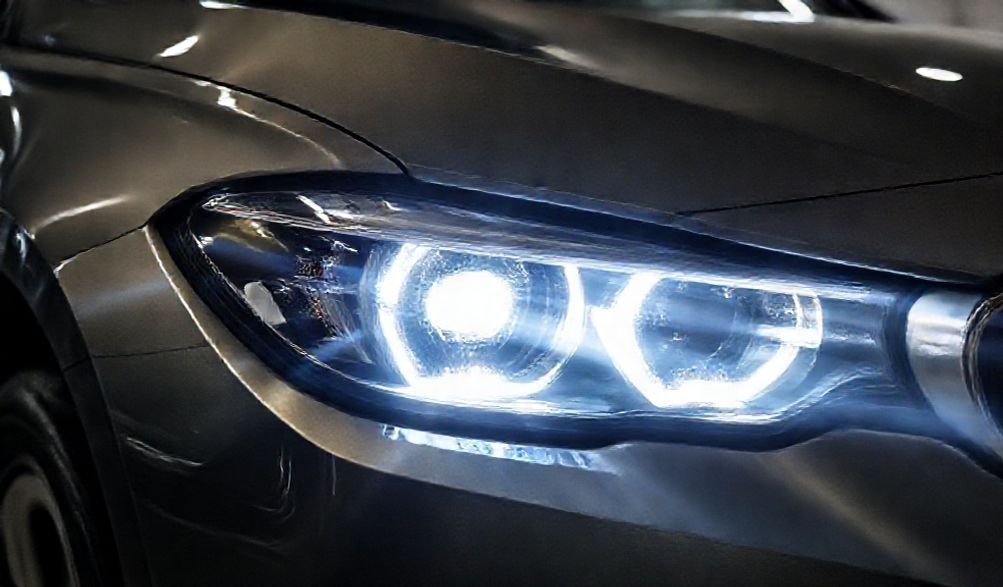
Adaptive Beam Headlights: A Complete Guide to Safer Night Driving
We’ve all been there. Driving on a dark, winding country road, you flick on your high beams for a much-needed view of the path ahead. Suddenly, a pair of headlights appears over the crest of a hill. You’re momentarily blinded, fumbling to switch back to low beams, only to be plunged into near darkness, straining to see the road’s edge. It’s a stressful, dangerous dance that defines night driving for millions.
But what if your headlights could intelligently see that oncoming car and automatically dim just the specific slice of light that would dazzle the other driver, while keeping the rest of the road—and the deer lurking in the ditch—fully illuminated? This isn’t science fiction; it’s the reality of Adaptive Beam Headlights. Also known as Adaptive Driving Beams (ADB) or matrix headlights, this technology represents the most significant leap in automotive lighting since the switch from sealed-beam halogens. It promises to transform night driving from a tense chore into a safer, more confident experience.
This guide will serve as your comprehensive resource. We’ll move beyond marketing jargon to provide an expert, in-depth look at how adaptive beam technology works, grounded in automotive engineering principles. We’ll examine the compelling safety data from leading institutions, demystify the terminology, explore the recent regulatory changes that are bringing it to more drivers, and explain what you need to know when considering your next vehicle.
What Are Adaptive Beam Headlights? Beyond “Auto High Beams”
At its core, an adaptive beam system is an intelligent lighting solution designed to maximize your forward vision without ever compromising the safety of other road users. To understand its genius, we must first move past a common point of confusion: this is not simply an “auto high beam” system.
Core Function: The “Always-On” High Beam Concept
Traditional auto high-beam assist is a binary system: it uses a sensor to detect light sources and automatically switches your headlights between full high beams and low beams. It’s either all on or all off.
Adaptive beam technology operates on a radically different principle: the “always-on” high beam. The system’s goal is to maintain high-beam levels of illumination across as much of the roadway as possible, 100% of the time. Instead of turning off the high beams when it detects another car, it actively and continuously reshapes the beam pattern. It creates dynamic, precise “shadow zones” around other vehicles, pedestrians, and even road signs, while the areas around and between them remain brightly lit. You get the visibility benefit of permanent high beams without the associated glare.
Key Components: How the System “Sees” and “Reacts”
This feat of optical engineering is made possible by a sophisticated integration of hardware and software. The system consists of three key components working in concert:
- Sensors: This is the system’s eyes. A high-resolution, forward-facing camera (often mounted near the rearview mirror) is the primary sensor. It continuously scans the road ahead, identifying light sources, their intensity, and their movement. This data is frequently supplemented by information from the car’s front radar sensor (used for adaptive cruise control) and sometimes GPS or map data to anticipate curves.
- Control Unit (ECU): This is the system’s brain. A dedicated electronic control unit processes the sensor data in real-time—within milliseconds. Using complex algorithms, it classifies objects (e.g., “oncoming car,” “preceding motorcycle,” “roadside reflector”) and calculates the exact shape and position of the shadows that need to be cast.
- Headlight Assembly: This is the system’s muscle. These are not standard headlights. They contain advanced hardware capable of precise light modulation. The most common technologies are:
- LED Matrix Modules: An array of dozens, sometimes over a hundred, individually addressable LED segments. The ECU can turn each tiny LED on or off independently to sculpt the light pattern.
- Digital Micromirror Devices (DMD): A technology borrowed from high-end projectors, using millions of microscopic mirrors that tilt to direct light pixel-by-pixel with extreme precision (used in systems like Mercedes-Benz Digital Light).
- Dynamic Shutter Systems: Some systems use movable mechanical shutters within the headlight housing to block specific portions of a high-intensity light source.
How Do Adaptive Headlights Actually Work? A Step-by-Step Breakdown
The magic happens in a continuous, high-speed loop of detection, calculation, and execution. Let’s break down the journey from sensor input to light output.
Detection: Identifying Other Vehicles, Pedestrians, and Road Signs
As you drive, the camera feeds a live video stream to the ECU. Image recognition software analyzes every frame. It doesn’t just see “light”; it classifies it:
* Oncoming Vehicles: Identified by paired white lights moving towards the sensor.
* Preceding Vehicles: Identified by paired red tail lights moving in the same direction.
* Pedestrians and Cyclists: Recognized by their shape, movement, and reflectivity.
* Road Signs: Their retroreflective surfaces are identified so the system can slightly dim the light hitting them to prevent glare-back that could wash out the sign’s message.
Calculation: Mapping the “Shadow Zones”
Once an object is classified, the ECU calculates its position, speed, and trajectory. It then determines which precise segments of the headlight beam need to be modified. For an oncoming car, it will map a vertical and horizontal shadow that moves with the vehicle. For a car you’re following, it will create a shadow zone around its rearview mirrors. The system can manage multiple shadow zones simultaneously for complex traffic scenarios.
Execution: Shaping the Light Beam
This is where the advanced headlight hardware comes into play. The ECU sends commands to the headlights to physically shape the beam. There are two primary methods, often used in combination:
- Matrix LED / Pixel Lighting: Imagine your headlight beam is a grid of tiny flashlights. The system can turn off individual “flashlights” that are pointed at other road users, while leaving all the others on. This creates sharp, pixelated shadows. An analogy is using your fingers to block specific beams from a flashlight array without covering the whole light.
- Dynamic Bending (Swiveling): In addition to shading, many systems integrate dynamic bending. As you approach a curve, the headlights proactively swivel to illuminate the arc of the turn before you turn the steering wheel. This is often paired with matrix shading to keep the light on the corner’s apex while shading any oncoming traffic in that new direction.
Conceptual Image Description: A split-screen graphic. The left side shows a standard high-beam pattern on a two-lane road at night, with an oncoming car fully engulfed in blinding white light. The right side shows an adaptive beam pattern: the oncoming car is sitting in a distinct, dark “shadow pocket,” while the road ahead, the shoulders, and road signs on either side of the car remain brilliantly illuminated.
Proven Safety Benefits: What the Data Says
This technology isn’t just a convenience feature; it’s a proven, active safety system with compelling data to back it up.
Reducing Nighttime Accident Risk
Leading safety institutions have documented significant risk reduction:
* The Insurance Institute for Highway Safety (IIHS) has stated that good headlights, particularly those with curve-adaptive and premium light sources, are a key factor in reducing nighttime crash rates. While specific studies on ADB are ongoing, the principle of maximizing seeing distance without glare is foundational to their headlight ratings program.
* Research from the University of Michigan Transportation Research Institute (UMTRI) and European studies have shown that adaptive beam systems can improve a driver’s ability to detect pedestrians and obstacles on the road’s periphery by maintaining broader illumination.
* A study by AAA highlighted that halogen headlights fail to safely illuminate unlit roadways at speeds over 45 mph, whereas advanced LED and adaptive systems provide critical extra reaction time.
The logic is clear: better, more consistent illumination leads to earlier hazard detection and more time to react.
Alleviating Driver Fatigue and Stress
The cognitive load of constantly judging when to dip your high beams is eliminated. The system handles it seamlessly. This reduction in minor but frequent tasks allows the driver to focus more on the overall driving environment, leading to lower mental fatigue on long night journeys. It removes the sudden transitions from bright to dark that strain the eyes and require constant adjustment.
Improving Visibility on Curves and Over Hills
This is a game-changer. On a dark, winding road, standard headlights only illuminate where the car is pointed now. Adaptive systems with dynamic bending light the corner before you enter it, revealing a pedestrian, debris, or an animal that would otherwise remain hidden until the last second. Similarly, when cresting a hill, the system can begin shaping the beam to avoid glaring vehicles on the other side before they are even visible to the human driver.
Adaptive Beam Headlights vs. Other Headlight Technologies
To avoid confusion, it’s essential to distinguish ADB from other common lighting features.
Adaptive Beams vs. Standard “Auto High Beams”
This is the most important distinction. Auto High Beams are a simple on/off switch automated by a sensor. Adaptive Driving Beams are a dynamic sculptor of light. One turns the main light off; the other continuously reshapes it.
Adaptive Beams vs. Adaptive Front-lighting System (AFS)
AFS is often a complementary or foundational technology. AFS typically handles static or slow-speed beam adjustments, like swiveling the headlights slightly at city speeds to better illuminate sidewalks, or raising/lowering the beam based on vehicle load. ADB handles dynamic, high-speed shading and precision beam shaping in response to immediate traffic. Many modern cars combine both: AFS for basic curve lighting and load leveling, with ADB layered on top for glare-free high beams.
A Note on Terminology: ADB, Matrix, Glare-Free High Beam
The naming can be a maze of marketing terms, but they generally refer to the same core adaptive beam technology:
* Audi: Matrix LED
* BMW: Adaptive LED Headlights / Laserlight with Anti-Dazzle
* Mercedes-Benz: DIGITAL LIGHT / MULTIBEAM LED
* Toyota/Lexus: Adaptive High-beam System (AHS)
* General Motors: Intellibeam (often refers to auto high beams, but newer versions are evolving toward ADB)
* Volvo: Active High Beam
When you see “matrix,” “pixel,” “digital,” or “glare-free high beam,” you’re likely looking at an adaptive beam system.
Availability, Regulations, and What to Look For
The availability of this technology has been heavily influenced by government regulations, which have only recently aligned in North America.
The Regulatory Landscape: US vs. Europe
For decades, Adaptive Driving Beams were essentially illegal in the United States due to a 50-year-old federal regulation (FMVSS 108) that had strict, binary definitions for high and low beams. Europe, with more flexible regulations, embraced the technology, making it common on vehicles there.
This changed in February 2022. The National Highway Traffic Safety Administration (NHTSA) amended FMVSS 108 to finally permit true adaptive beam headlight systems on new vehicles in the US. The new rule includes performance-based requirements to ensure the systems effectively detect and shade other vehicles. This landmark decision has opened the floodgates for automakers to offer the technology on US-market models without needing special exemptions.
Finding a Car with Adaptive Headlights
With the regulatory barrier removed, adoption is accelerating rapidly.
* Luxury Leaders: The technology is now standard or widely available on most models from Audi, BMW, Mercedes-Benz, Lexus, Porsche, and Volvo.
* Mainstream Adoption: It is quickly trickling down. You can now find it on higher trim levels of popular models from Hyundai (e.g., Santa Fe, Tucson), Kia (Telluride, EV9), Ford (Mustang Mach-E, F-150), and Volkswagen.
* Practical Buying Advice: Don’t just look for “LED headlights.” When configuring or researching a new car, scrutinize the optional packages. Look for specific terms like “Adaptive Driving Beam,” “Matrix LED,” “Glare-Free High Beam,” or “Pixel Headlights.” It is almost always bundled within a premium technology, lighting, or driver-assistance package.
Frequently Asked Questions (FAQ)
Q: Are adaptive beam headlights legal in the United States?
A: Yes, absolutely. As of early 2022, the NHTSA updated Federal Motor Vehicle Safety Standard 108 to explicitly permit these systems. New vehicle models are now being certified and sold with this technology enabled.
Q: Can I retrofit adaptive headlights to my older car?
A: It is generally not feasible, cost-effective, or legal for aftermarket installation. The system is deeply integrated into the vehicle’s network, requiring specific sensors, a dedicated control unit, specialized headlight assemblies, and factory calibration. An aftermarket “adaptive” light usually refers to a stylistic swivel, not the true camera-driven ADB system.
Q: Do adaptive beams work perfectly in all conditions (e.g., heavy rain, fog)?
A: While highly sophisticated, the camera-based detection system can be challenged by extreme conditions. Heavy rain, fog, or snow can obscure the camera’s lens or make it difficult to distinguish light sources. In such cases, most systems are programmed to default to a safer, more conservative beam pattern (often standard low beams) to avoid any risk of misdirecting light.
Q: Is this technology only for luxury vehicles?
A: Not anymore. While it was pioneered and perfected in the luxury segment, the 2022 US regulatory change has dramatically accelerated its democratization. It is now a rapidly spreading feature across many mainstream brands and models, particularly in their top trim levels.
Q: How do I know if my car’s adaptive headlights are working?
A: Many vehicles will display a dashboard icon—often an “A” inside a headlight symbol—when the adaptive function is active. The most definitive test is to drive on a dark road with other traffic. Observe the area around an oncoming car or the car ahead; you should see a sharp, dark “notch” or shadow in your headlight beam that tracks the vehicle, while the road around it stays bright.
Conclusion
Adaptive Beam Headlights represent a fundamental shift in automotive safety, moving lighting from a passive, static tool to an active, intelligent partner. By mastering the paradox of providing maximum light without maximum glare, this technology directly addresses one of the oldest and most persistent hazards of driving. The evidence is clear: by dramatically improving a driver’s consistent view of the road while eliminating a source of conflict and stress for others, ADB systems make nighttime journeys safer for everyone.
As an evidence-backed advancement now supported by updated US regulations, adaptive beam technology is poised to move from a luxury novelty to a mainstream safety expectation. When researching your next vehicle, consider it not just as a premium feature, but as a critical investment in safety—one that illuminates the path forward, quite literally, for a new era of confident and secure night driving.
p>