
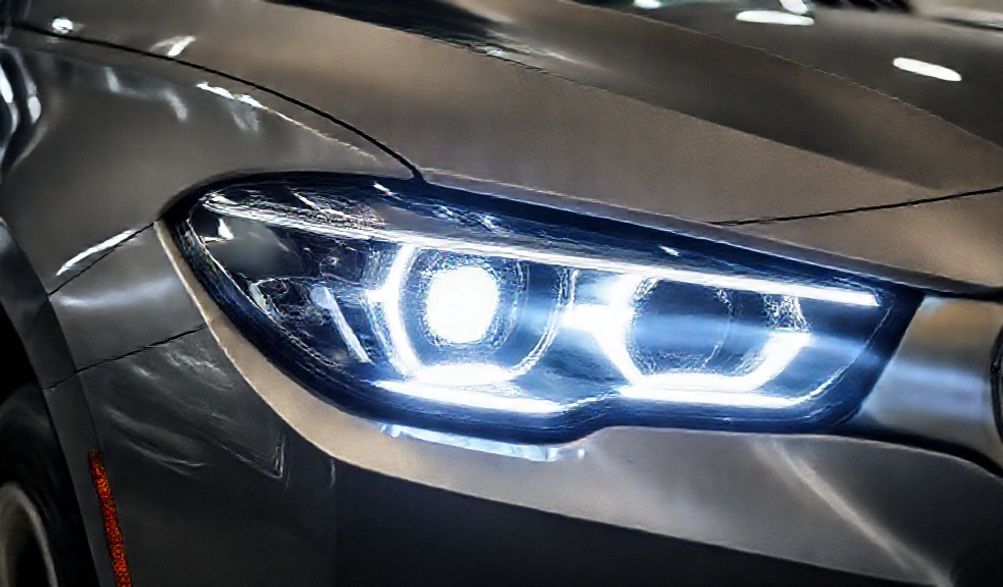
Adaptive Headlights Explained: Safety, Technology, and How They Work
For decades, the humble headlight was a relatively simple affair: you had low beams for regular driving and high beams for dark, empty roads. Switching between them was a manual dance, a constant negotiation between seeing far ahead and not blinding the driver approaching you. But as automotive technology has accelerated, so too has the intelligence of the systems that light our way. Enter adaptive headlights—a sophisticated fusion of sensors, software, and advanced lighting that actively shapes light to the road ahead. This guide is designed to demystify this complex safety feature. We’ll break down exactly what adaptive headlights are, how the technology works, the proven safety benefits, and what you need to know as a driver. The information here is synthesized from manufacturer specifications, safety studies from organizations like the IIHS and NHTSA, and insights from automotive engineering to provide you with a clear, authoritative, and practical resource.
What Are Adaptive Headlights? A Definition and Core Purpose
At its core, an adaptive headlight system is an active safety feature designed to optimize the headlight beam pattern for prevailing driving conditions. Unlike static lights, which project a fixed pattern of light, adaptive headlights dynamically adjust the direction, shape, and sometimes intensity of the beam in real-time. Their primary purpose is to maximize the driver’s forward visibility while simultaneously minimizing glare for other road users.
Beyond Standard Beams: The Fundamental Problem They Solve
Traditional headlights have two significant limitations:
1. Fixed Illumination on Curves: When you steer into a turn, standard headlights continue to shine straight ahead, leaving the area you’re actually turning into in relative darkness. This creates a dangerous “black hole” at the exact moment you need the most visual information.
2. The High-Beam Dilemma: High beams provide excellent long-range visibility but must be dimmed for oncoming traffic or when following another vehicle to avoid dazzling other drivers. This constant on/off cycle means drivers often spend long stretches with suboptimal (low-beam) lighting simply to be courteous and safe.
Adaptive headlights are engineered specifically to solve these two problems, transforming headlights from passive lamps into responsive visual aids.
The Adaptive Solution: How They Dynamically Respond
Also known as Adaptive Driving Beams (ADB) or Adaptive Front-lighting Systems (AFS), these systems automatically and continuously adjust the light output. The core principle is simple: use data from the car’s sensors to tailor the beam pattern to the immediate environment. This can mean physically swiveling the light housing into a bend, or digitally dimming specific segments of a high-beam to create a “shadow” around a detected vehicle, all while keeping the rest of the road fully illuminated.
How Do Adaptive Headlights Work? The Technology Behind the Beam
The magic of adaptive headlights is a seamless orchestration of input and output, all happening in milliseconds. The system can be broken down into two main parts: the sensors that gather data and the mechanisms that execute the adjustments.
The Sensory Input System: Cameras, Sensors, and Data
The “brain” of the adaptive headlight system relies on a suite of sensors, many of which are already onboard modern vehicles for other advanced driver-assistance systems (ADAS):
* Forward-Facing Camera(s): Typically mounted near the rearview mirror, this is the primary eye. It detects light sources—specifically the headlights and taillights of other vehicles—and determines their distance and position.
* Steering Angle Sensor: Located in the steering column, this tells the system how much and how quickly the driver is turning the wheel, predicting the vehicle’s path.
* Vehicle Speed Sensor: Speed data helps the system determine the appropriate range and spread of the beam. A faster speed may call for a longer, more focused beam.
* Yaw Rate Sensor: This detects the vehicle’s rotation around its vertical axis, providing additional data on cornering dynamics beyond just steering input.
* GPS & Navigation Data (in some systems): High-end systems can integrate map data to anticipate sharp curves, intersections, or highway exits, pre-adjusting the lights even before the driver turns the wheel.
This constant stream of data is fed to a central control unit.
The Execution: Mechanical and Digital Beam Control
The control unit processes the sensor data and commands the headlights to adapt. This is achieved through one of two primary methods, or sometimes a combination of both:
-
Mechanical Systems (Swiveling/Bending Lights): This is an earlier and still common form of adaptation. The entire headlight housing, or reflectors within it, are mounted on actuators that physically pivot left or right in response to steering input and speed. This effectively “steers” the beam into corners, illuminating the driver’s intended path. Some systems also adjust the beam’s vertical angle based on vehicle load or hill descent.
-
Digital Systems (Pixel/Matrix LED): This represents the cutting edge. Instead of moving parts, these systems use an array of dozens or even thousands of tiny, individually controlled LEDs. The camera identifies an oncoming or preceding vehicle, and the control unit instantly dims or turns off the specific LEDs that would cast light on that vehicle. The rest of the LEDs remain at full high-beam intensity. The result is a high-beam that constantly molds itself around other cars, creating a dynamic shadow. This provides the benefits of always-on high beams without the glare. The most advanced versions can project precise light patterns, like highlighting road edges or pedestrian warnings.
Proven Safety Benefits and Performance Insights
This technology isn’t just a convenience or a marketing gimmick; it’s a legitimate safety innovation with data to back it up.
What the Research Says: Studies and Crash Reduction Data
The Insurance Institute for Highway Safety (IIHS) has been a key advocate for adaptive lighting. Their research indicates that adaptive headlights, particularly those with curve-adaptive functionality, can lead to substantial safety gains:
* Illumination on Curves: IIHS tests consistently show that vehicles with good-rated curve-adaptive headlights illuminate low-beam curves far better than vehicles with only static lights.
* Crash Reduction Potential: While direct, large-scale crash causation studies are complex, the IIHS has stated that the improved visibility offered by these systems has the clear potential to reduce certain types of nighttime crashes, particularly single-vehicle run-off-road accidents and collisions at intersections on curves.
It’s important to note that studies often focus on specific scenarios, and real-world benefits depend on proper system function and driver behavior. However, the consensus among safety organizations is that adaptive headlights represent a meaningful step forward in nighttime driving safety.
Real-World Driver Experience: Enhanced Visibility and Reduced Fatigue
Beyond the statistics, the benefits are immediately tangible for the driver:
* Seeing Around Corners: The most noticeable advantage. Entering a dark, winding road feels safer as the beam sweeps across the lane, revealing potential hazards earlier.
* The “Always-On” High Beam Experience (with ADB): With matrix LED systems, drivers enjoy maximum forward visibility at all times, without the guilt or danger of blinding others. The system handles the complex task of light management seamlessly.
* Reduced Manual Input and Eye Strain: The automatic nature of the system eliminates the tedious task of constantly switching beams. This reduces cognitive load and minimizes the pupil adjustment and associated eye strain that comes with alternating between bright high beams and dimmer low beams.
Adaptive Headlights vs. Other Advanced Lighting
With many lighting terms used by manufacturers, confusion is common. Let’s clarify the distinctions.
Adaptive Headlights vs. Automatic High Beams
This is the most frequent point of confusion. Automatic high beams are a simpler system. A sensor (often the same camera) detects lights of other vehicles and automatically switches between high and low beams. It’s a binary on/off function. Adaptive headlights are far more sophisticated. While they may incorporate automatic high-beam control, their defining feature is the ability to shape and direct the light beam, not just turn it on or off. All adaptive systems are “automatic,” but not all automatic systems are “adaptive.”
LED, Matrix LED, and Laser Headlight Comparisons
It’s crucial to understand that these terms describe the light source technology, not the adaptive functionality itself. However, they are often intertwined:
* LED (Light-Emitting Diode): An energy-efficient, bright, and long-lasting light source. LED units can be used in both static and adaptive (swiveling) headlights.
* Matrix LED: This is a specific configuration of LEDs where clusters can be controlled independently. This digital control is what enables the precise beam-shaping of advanced adaptive systems (ADB). Matrix LED is a technology that enables a specific type of adaptive functionality.
* Laser Headlights: These use laser diodes to excite a phosphorous material, creating an extremely bright and long-range white light. They are often paired with adaptive mechanisms (like dynamic shields) to shape their intense beam. Laser is another high-end light source that can be part of an adaptive system.
In short: LED/Laser is the lamp; Adaptive or Matrix describes the smart, controllable system that uses that lamp.
Considerations for Drivers: Legality, Availability, and Maintenance
The Regulatory Landscape: Are They Legal Where You Drive?
This has been a significant hurdle, particularly in the United States. For over 50 years, Federal Motor Vehicle Safety Standard (FMVSS) 108 effectively outlawed the most advanced adaptive driving beam (ADB) systems by requiring a strict physical separation between high and low beams. While swiveling adaptive lights were allowed, the digital shadow-creating matrix systems were not.
The big change came in February 2022, when the NHTSA finalized a new rule amending FMVSS 108 to allow ADB systems on new vehicles in the U.S. This aligns U.S. regulations more closely with Europe and much of the world, where these systems have been common for years. As a result, we are now seeing a rapid increase in the availability of U.S.-spec vehicles with full ADB technology.
Cost, Availability, and Repair Considerations
- Availability: Adaptive headlights are no longer exclusive to luxury marques. While they often start as a feature on higher trim levels, the technology is rapidly trickling down to mainstream brands like Toyota, Honda, and Mazda. They are frequently packaged with other premium or safety-oriented options.
- Cost & Repair: The advanced technology comes with advanced repair bills. A headlight unit containing matrix LEDs, lasers, and actuators is vastly more expensive than a traditional halogen housing. Furthermore, these systems require precise calibration. After any front-end collision, suspension work, or even headlight replacement, the system must be professionally recalibrated to ensure the cameras and light projection are aligned correctly with the vehicle’s geometry. This adds to service complexity and cost.
- Maintenance Tip: Keep the area around the forward-facing camera (usually at the top of the windshield) and the headlight lenses clean. Dirt, snow, or ice can obstruct sensors and degrade system performance.
Frequently Asked Questions (FAQ)
Q1: Are adaptive headlights the same as “cornering lights”?
A: Not exactly. Cornering lights are usually a separate, fixed light (often a fog light) that activates at low speeds when you turn the steering wheel or use a turn signal. They provide a wide, short-range splash of light to the side. Adaptive headlights are integrated into the main headlight assembly and provide dynamic, continuous adjustment of the primary beam for both cornering and managing traffic.
Q2: Can I retrofit adaptive headlights to my older car?
A: It is generally not feasible or cost-effective. The system requires integrated sensors, cameras, wiring harnesses, and vehicle computer integration that is specific to each model. It is not a simple headlight swap and would likely require extensive, prohibitively expensive custom work with no guarantee of proper function or safety.
Q3: Do adaptive headlights require special maintenance?
A: The bulbs/LEDs themselves don’t, but the system does require proper calibration. If your front end is in a collision or sensors/cameras are blocked (e.g., by dirt or snow), the system may not function correctly and may need professional service.
Q4: What should I do if my adaptive headlight warning light comes on?
A: This indicates a system fault. First, check for obvious obstructions on the windshield (where the camera often is) and on the headlight lenses. If clear, the vehicle should be diagnosed by a qualified technician, as it could be a sensor, alignment, or software issue.
Q5: Do they work equally well in fog or heavy rain?
A: Their performance can be limited in severe weather. Sensors and cameras may be obstructed by precipitation. The beam-shaping logic is primarily designed for clear to moderate conditions. In dense fog, the reflection of light back at the driver can actually reduce visibility; a dedicated, low-mounted fog light pattern is better. Always reduce speed appropriately in poor visibility, regardless of your headlight technology.
Conclusion
Adaptive headlights represent a significant evolution in automotive safety, moving illumination from a passive, static function to an active, intelligent partner in the driving experience. By dynamically shaping light to the road, traffic, and vehicle dynamics, they dramatically enhance the driver’s vision while rigorously protecting other road users from glare. As regulations have finally adapted in the U.S., this technology is poised to become a standard safety feature, much like anti-lock brakes and electronic stability control before it. Looking ahead, the precise digital control of adaptive headlights will likely play a key role in the communication and perception systems of autonomous vehicles. For now, they stand as one of the most perceptible and beneficial advancements in making nighttime driving safer and less stressful. To understand the specific capabilities of the system in your vehicle, always consult your owner’s manual and rely on a trusted automotive professional for maintenance and repair.
p>