
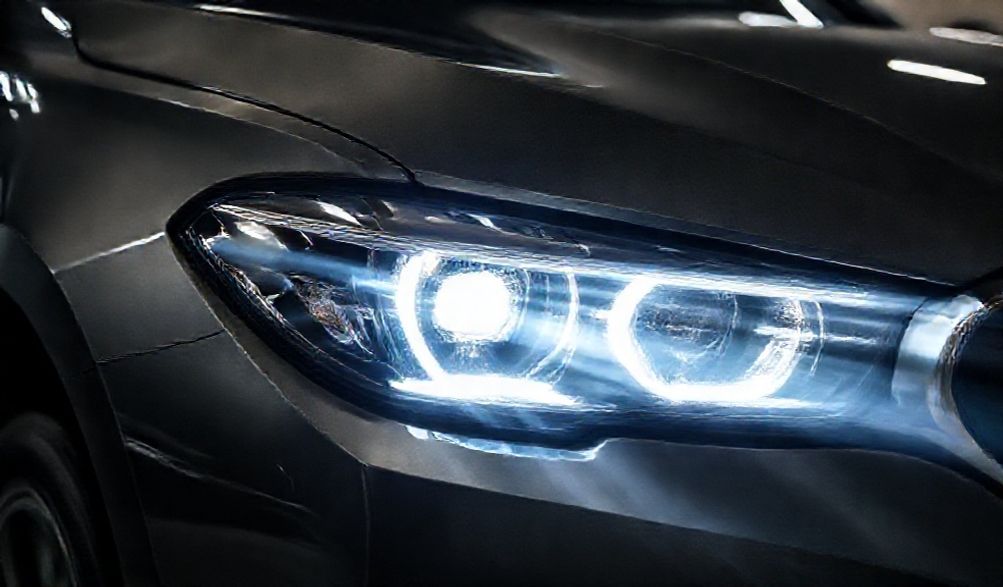
Dynamic Headlights Explained: Safety, Technology, and How They Work
You’re driving on a dark, winding country road. Your high beams are on, finally giving you a clear view of the deer lurking near the tree line. Then, a pair of headlights appears around the bend ahead. You fumble for the stalk, switching back to your dim, restrictive low beams just in time to avoid blinding the other driver, but now you’re back to squinting into a small pool of light, hoping you’ve seen every potential hazard. It’s a tense, familiar dance for anyone who drives at night.
But what if your headlights could intelligently adapt to these situations in real-time? What if they could keep the road ahead fully illuminated for you while automatically dimming just the specific slice of light that would hit the oncoming driver’s eyes? This isn’t science fiction; it’s the reality of modern dynamic headlights.
This post will provide a comprehensive, expert guide to dynamic headlights (also known as adaptive driving beams or matrix LED headlights). We will demystify the technology, explore its significant safety benefits, explain how it works in detail, and discuss its current availability and regulatory future. This guide is built on thorough research into automotive engineering publications, safety studies from organizations like the IIHS and NHTSA, and manufacturer technical specifications. Our goal is to be your authoritative, trustworthy resource for understanding this advanced vehicle safety feature.
What Are Dynamic Headlights? Beyond High and Low Beams
For over a century, headlight technology offered a binary choice: high beams for maximum distance illumination when alone on the road, and low beams to avoid glaring other drivers, at the cost of significantly reduced forward and peripheral visibility. Dynamic headlights shatter this old paradigm.
The Core Concept: Adaptive Light Distribution
At their core, dynamic headlights are systems that automatically and continuously adjust the headlight beam pattern without driver input. They don’t just switch between two preset modes; they actively sculpt and shape the light output in real-time. Think of it like having a spotlight operator sitting on your hood, constantly directing light exactly where you need it and away from where you don’t. This creates a “glare-free high beam” experience—the best of both worlds.
This is a fundamental leap from even the best automatic high-beam assist (AHBA) systems. AHBA is reactive; it detects lights and flips between full high and low beams. Dynamic headlights are proactive and nuanced, creating a custom beam for every millisecond of your drive.
Common Names and Technologies
You’ll hear several terms used, often interchangeably by manufacturers marketing their systems:
* Adaptive Driving Beam (ADB): The broad technical term, now officially adopted by U.S. regulators.
* Matrix LED: A common implementation using an array of individual LED segments.
* Glare-Free High Beam: A descriptive name focusing on the user benefit.
* Digital Light: Used by some brands (like Mercedes-Benz) for ultra-high-resolution systems using technology derived from digital projectors.
While implementations vary—using clusters of LEDs, mechanical shutters, or advanced Digital Light Processing (DLP) chips—the overarching goal remains identical: intelligent, adaptive light distribution.
How Dynamic Headlights Work: The Technology Behind the Beam
The magic of dynamic headlights happens through a seamless collaboration of sensors, computers, and precise lighting hardware. It’s a three-step process: see, think, and act.
The Sensory Suite: Cameras, Sensors, and Control Units
The system’s “eyes” are typically a high-resolution forward-facing camera mounted near the rearview mirror. This camera, often the same one used for lane-keeping and emergency braking systems, continuously scans the road ahead. Advanced software algorithms analyze this video feed in real-time to identify:
* The headlights and taillights of other vehicles (oncoming and preceding).
* Their distance, speed, and trajectory.
* Road signs and their reflectivity.
* The geometry of the road (curves, intersections, crests).
This data is fed to a dedicated electronic control unit (ECU)—the system’s “brain.” This ECU processes the information at lightning speed, calculating the optimal headlight beam pattern dozens of times per second.
The Execution: Shaping the Light
Once the ECU decides what the beam should look like, it commands the headlight hardware to execute the pattern. The most common method is the LED Matrix System.
LED Matrix Systems: Instead of one or two LED bulbs per headlight, a matrix system contains a grid or cluster of dozens, sometimes over a hundred, individually addressable LED segments. The ECU can turn each tiny LED on, off, or dim it to a specific brightness independently. When the camera detects an oncoming car, the ECU commands the specific LEDs whose light would hit that driver’s eyes to dim or turn off, creating a precise “shadow box” around the vehicle. The rest of the LEDs remain at full high-beam intensity, illuminating the roadside, signs, and the lane ahead of you. As the cars pass each other, the shadow seamlessly moves and dissolves.
Other Methods: Some earlier or alternative systems use fast-moving mechanical shutters (tiny louvers) that physically block portions of a traditional high-beam projector. The most advanced systems, like Mercedes’ Digital Light, use DLP chips with millions of microscopic mirrors to project ultra-high-resolution light patterns onto the road, capable of drawing symbols or highlighting specific hazards.
The Primary Benefit: Enhanced Safety for Everyone on the Road
The engineering is impressive, but the true value of dynamic headlights is measured in safety. By fundamentally improving visibility while eliminating a key source of driver stress and risk, they represent one of the most significant passive safety advances in recent years.
Maximizing Visibility Without Causing Glare
The primary safety thesis is simple yet powerful: more light on the road, where you need it, leads to earlier hazard detection. The Insurance Institute for Highway Safety (IIHS) has stated that good lighting is crucial for nighttime crash prevention, a time when death rates are three times higher than during the day. Dynamic headlights directly address this by providing near-constant high-beam-level illumination.
Studies and real-world data from regions where ADB has been long-legal, like Europe, suggest a meaningful reduction in nighttime driving strain and a corresponding decrease in accident risk. You’re less fatigued because you’re not constantly squinting, and you have more time to react to pedestrians, animals, or debris on the road.
Specific Safety Scenarios
The system’s intelligence shines in specific challenging situations:
* Oncoming Traffic: As described, it dims only the narrow vertical slice of the beam aimed at the other car, leaving the rest of your lane and the roadside brightly lit.
* Preceding Vehicles: When following a car, it creates a horizontal “tunnel” of shadow around the vehicle ahead, preventing your light from reflecting off their mirrors and trunk, while still lighting the road beside and beyond them.
* Curves and Intersections: Paired with Adaptive Front-lighting System (AFS) functionality, the beam can proactively swivel into a turn or widen at an intersection, illuminating your intended path before you even turn the steering wheel. Some systems can even highlight pedestrians or cyclists detected near the edge of the road with a focused flash of light.
Availability, Regulations, and Cost Considerations
The journey of dynamic headlights to the market, especially in the United States, is a story of technology outpacing regulation.
The Regulatory Landscape: A Shift in the U.S.
For over 50 years, a U.S. regulation known as Federal Motor Vehicle Safety Standard (FMVSS) 108 effectively banned adaptive beam systems. The rule, written in an era of sealed-beam headlights, required a strict physical separation between high and low beams. Dynamic headlights, which blend the two functions, were illegal.
This changed in February 2022. After years of research and petitions from automakers and safety advocates, the National Highway Traffic Safety Administration (NHTSA) amended FMVSS 108 to finally permit Adaptive Driving Beam systems. The new rule is performance-based, setting standards for how and how quickly the system must adapt to avoid glare. This landmark ruling opened the door for U.S. drivers to access technology that Europeans have benefited from for nearly a decade.
Which Cars Have Dynamic Headlights?
With the regulatory barrier removed, adoption is accelerating. The technology was pioneered by luxury European brands and is now spreading:
* Luxury Leaders: Audi (Matrix LED / Digital Matrix LED), BMW (Adaptive LED / Laserlight with Selective Beam), Mercedes-Benz (Digital Light), Volvo (Active High Beam), and Porsche are longtime proponents.
* Mainstream Adoption: Ford offers it on models like the Mustang Mach-E and F-150 (as Glare-Free High Beam). Hyundai and Kia have introduced similar systems on higher-end models like the Genesis brand vehicles. Toyota and Lexus also have ADB systems in their portfolios.
Currently, dynamic headlights are most commonly found as part of expensive optional technology or premium trim packages. However, as with all automotive tech, costs will fall and availability will widen over the next few model years.
Are They Worth the Investment?
The cost adder can range from a few hundred to over a thousand dollars as part of a larger package. Is it worth it? From a pure safety and driving comfort perspective, the answer is a resounding yes for those who frequently drive at night, especially on unlit roads. The reduction in driver fatigue and the potential to avoid a single collision could justify the cost many times over. It’s an investment in proactive safety, similar to automatic emergency braking. When shopping, consider it not just as a lighting upgrade, but as a critical advanced driver-assistance system (ADAS).
Dynamic Headlights vs. Other Advanced Lighting
It’s easy to confuse dynamic headlights with other advanced lighting features. Here’s how they differ.
Automatic High-Beam Assist (AHBA)
This is the most common point of confusion. AHBA is a helpful but simplistic system. It uses a sensor to detect lights of other cars and automatically switches between full high beams and full low beams. It’s a toggle switch. Dynamic headlights are a dimmer and a spotlight combined. They provide a continuous, optimized beam, making AHBA feel crude by comparison.
Adaptive Front-lighting System (AFS)
AFS refers to headlights that swivel left or right based on steering angle and vehicle speed to light around corners. This is a valuable feature, but it’s often one function within a broader dynamic headlight or ADB system. Think of AFS as the “turning” capability, while ADB includes that plus the “glare-free shaping” capability. Many modern ADB systems incorporate AFS.
Frequently Asked Questions (FAQ)
Q: Are dynamic headlights legal in the United States now?
A: Yes. As of early 2022, the NHTSA updated Federal Motor Vehicle Safety Standard (FMVSS) 108 to allow Adaptive Driving Beam systems. Manufacturers must comply with the new performance-based standard.
Q: Can I retrofit dynamic headlights to my older car?
A: Almost certainly not. These systems are deeply integrated into the vehicle’s sensor network, cameras, and computer architecture. They require specific housings, control units, wiring, and software calibration. A retrofit by anyone other than the manufacturer is not feasible, safe, or legal for road use.
Q: Do dynamic headlights require special maintenance?
A: The lights themselves are sealed units. However, proper system function is entirely dependent on the cleanliness and calibration of the forward-facing camera/sensor. If this lens is blocked by mud, snow, or ice, or becomes misaligned from an impact, the system will deactivate and alert the driver. Keeping the camera area clean is crucial.
Q: What happens if the camera/sensor is blocked by snow or dirt?
A: The system will typically deactivate and alert the driver with a dashboard message (e.g., “Camera Obstructed” or “Headlight Function Limited”), defaulting to standard low-beam operation until the obstruction is cleared.
Q: Are they brighter than regular LED headlights?
A: Not necessarily in total maximum output. The innovation is in the intelligent distribution of light, not just its raw intensity. The system works within regulated brightness limits but uses the available light far more effectively.
Conclusion
Dynamic headlights represent a fundamental evolution in automotive safety technology, moving from simple, static illumination to intelligent, real-time light management. By finally arriving in the U.S. market, they promise to make our roads safer, reducing the inherent dangers of nighttime driving for everyone.
Looking ahead, this technology is poised to become even more sophisticated. Future iterations may integrate with vehicle-to-everything (V2X) communication, allowing cars to “talk” to each other and coordinate their lighting patterns for optimal collective visibility. As we move toward higher levels of automation, intelligent lighting will remain a critical sensor and communication tool for both human drivers and machine vision systems.
The next time you research a vehicle, look beyond horsepower and fuel economy. Consider the technology that helps you see and be seen. Dynamic headlights are more than a premium feature; they are a profound investment in safety. If your vehicle is equipped with them, consult your owner’s manual to fully understand their capabilities—you might be surprised at how smart your headlights have become.
p>