
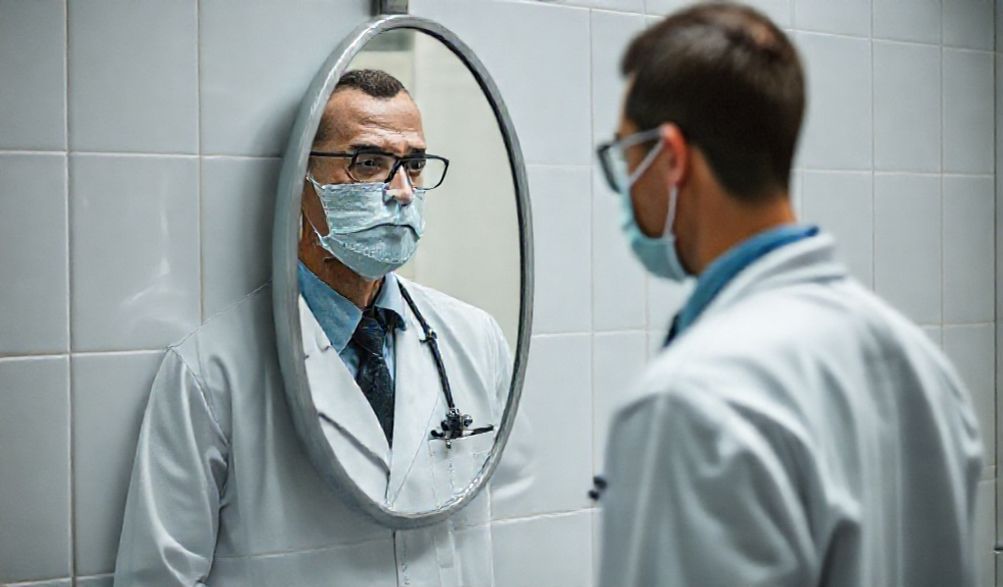
Doctor Mirror: Your Guide to Medical Mirrors for Home Health & Clinical Use
We’ve all been there. You feel a tickle in your throat and crane your neck under the bathroom light, trying in vain to get a glimpse of your tonsils. You notice a new mole on your back and twist into a yoga pose, smartphone in hand, attempting a blurry selfie for inspection. You need to put in eye drops, and the simple act becomes a frustrating game of aim and miss. These small, everyday health challenges highlight a universal need: the ability to see ourselves clearly, especially in hard-to-reach places.
Enter a simple yet transformative tool: the doctor mirror. Also known as a medical mirror, examination mirror, or most commonly for home use, a headband magnifying mirror, this device is an essential piece of kit that bridges the gap between professional clinical tools and practical home health. It’s the hands-free, illuminated, magnifying assistant you never knew you needed, empowering you to see details with clarity and precision.
This comprehensive guide is designed to be your trusted resource. We’ll demystify the doctor mirror, exploring its various forms, key features, and wide-ranging applications. Our goal is to provide you with the expertise and information needed to choose and use the right mirror for your needs, whether for home first aid, professional practice, or intricate hobbies. We’ll cover the different types available, what features to prioritize, and crucially, how to use this tool safely and effectively as part of a responsible approach to personal wellness.
What is a Doctor Mirror? Understanding the Tool
At its core, a doctor mirror is more than just a reflective surface. It’s a purpose-built visual enhancement system.
Core Definition and Primary Function
A doctor mirror is a hands-free optical device that combines magnification with integrated lighting to facilitate detailed visual examination. Its primary function is to liberate your hands while providing a clear, enlarged, and well-lit view of an area, overcoming the limitations of static mirrors and awkward angles. This makes it indispensable for tasks requiring both precision and visibility.
A Brief History: From Clinical Tool to Home Essential
The concept of specialized examination mirrors has deep roots in professional medicine. Dentists have used small, angled mirrors for over a century to visualize the hidden surfaces of teeth. Otorhinolaryngologists (ENTs) employ laryngeal mirrors to view the throat and vocal cords. These professional tools were defined by their need for sterility, durability, and specific optical angles.
The evolution into the modern headband-mounted doctor mirror for consumers began as technology miniaturized. The advent of bright, cool-running LED lights and lightweight, adjustable plastics allowed the core principles of the clinical tool—hands-free operation, magnification, and directed illumination—to be packaged into an affordable, user-friendly device. Today, it has transcended its medical origins to become a staple for home health enthusiasts, crafters, and anyone who needs to see fine details.
Doctor Mirror vs. Traditional Mirrors: Key Differences
You might wonder how a doctor mirror differs from the mirror in your bathroom or a compact in your purse. The distinctions are significant:
- Hands-Free Operation: The defining feature. A headband or similar apparatus holds the mirror in place, freeing both your hands to perform tasks—be it removing a splinter, applying a bandage, or working on a tiny electronic component.
- Integrated Magnification: While some bathroom mirrors may have a magnifying side, a doctor mirror offers specific, often adjustable, levels of optical magnification (e.g., 3x, 5x, 10x) to reveal details invisible to the naked eye.
- Directed, Shadow-Free Lighting: Built-in LED rings or lights illuminate the subject directly, eliminating shadows that can obscure details in a bathroom or room lit by a single overhead light.
- Full Articulation: The mirror head is typically on a flexible gooseneck or ball joint, allowing you to position the viewing angle precisely without moving your entire head or body.
Types of Doctor Mirrors and Their Specific Uses
Not all doctor mirrors are created equal. They fall into several categories, each suited to particular scenarios.
Headband Magnifying Mirrors (Most Common for Home Use)
This is the image most people conjure when they hear “doctor mirror.” It features an adjustable, padded headband with a mounted magnifying lens surrounded by an LED light ring. The mirror is attached via a flexible arm.
* Best For: General home health (skin checks, first aid), self-administering eye/ear drops, detailed hobbies (model building, jewelry repair), precision grooming (eyebrow plucking, makeup application), and reading small print.
Clinical Examination Mirrors (For Professionals)
These are the traditional tools used in medical and dental settings. They are often simpler in form—a small, circular mirror on the end of a metal handle—but are crafted for specific tasks and rigorous hygiene standards.
* Dental Mirrors: Small, angled mirrors used by dentists and hygienists. They are made of stainless steel and designed to be autoclaved (sterilized with steam).
* Laryngeal/Mouth Mirrors: Slightly larger mirrors used by ENT doctors to reflect light and view the throat and larynx.
* Key Difference: These prioritize sterility, durability, and specific reflection angles over built-in lighting and magnification (though headband loupes with lights are also standard in modern dentistry).
Specialized Mirrors: Otoscopes, Dermatoscopes, and More
This category includes advanced diagnostic instruments that incorporate mirror and lens systems but are far more complex.
* Otoscope: Used to look into the ear canal. It has a light, a magnifying lens, and a speculum but is typically a handheld device for a clinician.
* Dermatoscope: A handheld device that allows dermatologists to visualize skin lesions with polarized light and high magnification, often with digital imaging capabilities.
* Important Note: While these are “mirrors” in the optical sense, they are specialized professional diagnostic tools and not what is generally considered a purchasable “doctor mirror” for home use.
Key Features to Look For When Choosing a Doctor Mirror
If you’re in the market for a headband-style doctor mirror, here are the critical specifications to evaluate.
Magnification Power: Finding the Right Level
Magnification is a balancing act between detail and field of view.
* 3x Magnification: A great all-rounder. Provides a clear, enlarged view for general skin inspections, first aid, and most hobbies without too much distortion or a overly narrow field of view.
* 5x Magnification: Ideal for more detailed work like close-up crafting, intricate electronics, or very fine splinter removal. The field of view is smaller, so scanning larger areas takes longer.
* 10x Magnification and Above: Enters the realm of high-detail inspection—think jewelers or watchmakers. For medical use, this can be too powerful for general skin checks, as it can distort and show every pore and minor imperfection, potentially causing unnecessary concern. It’s best for very small, specific targets.
Lighting Options: LED Rings, Adjustable Arms, and Light Temperature
Lighting is arguably as important as magnification.
* LED Rings: The most common and effective setup. A circle of LEDs around the lens provides even, shadow-free illumination directly on the subject.
* Brightness & Modes: Look for adjustable brightness levels. Some models offer different light modes (e.g., white, warm yellow) which can be useful for differentiating between skin tones and redness or reducing eye strain during long hobby sessions.
* Color Temperature: Cool white light (bluer) offers high contrast and is very bright. Warm white light (yellower) is often easier on the eyes for prolonged use and can be better for assessing skin inflammation.
Comfort and Adjustability: Headband Fit, Mirror Articulation
You’ll likely wear this device for extended periods.
* Headband: Should be padded, adjustable, and lightweight. A well-balanced design prevents it from slipping or feeling heavy on your forehead or neck.
* Mirror Articulation: The connecting arm should be highly flexible (a sturdy gooseneck is standard) and hold its position firmly. The ability to tilt and rotate the mirror head itself is a major plus for achieving the perfect angle.
Build Quality and Portability
- Materials: Durable, lightweight plastics are common. Ensure the joints and arms feel robust, not flimsy.
- Power Source: Rechargeable lithium-ion batteries (via USB) are the most convenient and cost-effective modern standard, replacing disposable AA or AAA batteries. Check estimated battery life on a single charge.
Practical Applications: Who Needs a Doctor Mirror and Why?
The versatility of the doctor mirror is its greatest strength. Its utility extends far beyond a single niche.
For Home Health and First Aid
This is where it shines as a proactive wellness tool.
* Skin Surveillance: Regularly checking moles, spots, or rashes for changes in asymmetry, border, color, or diameter (the ABCDs of melanoma).
* Tick Checks: After outdoor activities, thoroughly scanning the scalp and body for tiny ticks.
* Wound Care: Cleaning and monitoring cuts, abrasions, or surgical incisions for signs of infection (redness, pus).
* Splinter & Foreign Object Removal: Providing the clear view needed to remove debris safely and completely.
* Administering Treatments: Applying eye drops, ear drops, or topical creams to a specific area with precision and no spillage.
For Professional and Student Use
- Medical/Dental/Veterinary Students: A valuable low-cost tool for practicing examination techniques and understanding anatomy.
- Aestheticians & Cosmetologists: For detailed skin analysis, eyebrow shaping, and lash extension application.
- Tattoo Artists: For inspecting skin texture and detail during intricate work.
- Practicing Clinicians: While they use professional-grade equipment, a personal headband light can be a useful supplementary tool in certain settings.
For Hobbies and Precision Work
- Jewelry Making & Watch Repair: Seeing tiny gears, settings, and solder points.
- Model Building & Miniature Painting: Applying decals, painting fine details, and assembling small parts.
- Electronics Repair: Soldering small components on circuit boards.
- Detailed Crafting: Embroidery, fly tying for fishing, or any craft requiring fine motor skills.
- Precision Grooming: Applying makeup, tweezing eyebrows, or trimming facial hair with absolute accuracy.
How to Use a Doctor Mirror Safely and Effectively
To get the most out of your tool while prioritizing safety, follow these guidelines.
Step-by-Step Guide for Self-Examination
- Prepare: Ensure the device is charged. Clean the lens with a microfiber cloth. Work in a stable, seated position if possible.
- Fit the Headband: Adjust the headband so it sits snugly and comfortably on your head. The mirror should be positioned just above your eye line when looking straight ahead.
- Position the Mirror: Turn on the LED lights. Using both hands, gently bend the flexible arm to position the mirror in front of the area you wish to examine. Look into the mirror, not directly at the object. You may need to adjust your body or the mirror slightly to get the right reflected view.
- Use Your Hands: With the mirror providing your view, both your hands are now free to part hair, hold skin taut, or use tools like tweezers or a cotton swab.
Important Safety Precautions and Limitations
This is the most critical section of this guide. Using a doctor mirror responsibly is paramount.
* It is a Visual Aid, NOT a Diagnostic Tool. This cannot be overstated. A doctor mirror helps you see better. It does not help you diagnose. It provides information, not medical judgment.
* Never Self-Diagnose. Seeing a concerning mole, rash, or lesion more clearly is the first step. The essential second step is consulting a licensed physician, dermatologist, or other relevant healthcare professional for an accurate diagnosis and treatment plan.
* Avoid Eye Strain and Heat: Do not place the LED lights extremely close to your eyes or skin for prolonged periods. Use the lowest comfortable brightness setting. Take breaks during long hobby sessions.
* Maintain Hygiene: Clean the device after each use, especially if it has contacted skin or wounds (see below).
Cleaning and Maintenance Tips
- Lens/Mirror: Use a soft, dry microfiber cloth first to remove dust. For smudges, lightly dampen part of the cloth with lens cleaner or 70% isopropyl alcohol. Gently wipe the lens. Never spray liquid directly onto the lens.
- Headband and Arms: Wipe down with a disinfectant wipe suitable for plastics or a cloth dampened with a mild soap solution. Avoid getting moisture into any joints or electronic ports.
- Battery Care: For rechargeable models, follow the manufacturer’s instructions. Typically, avoid fully draining the battery and store in a cool, dry place.
Frequently Asked Questions (FAQ) About Doctor Mirrors
Q: Can a doctor mirror replace a visit to an actual doctor?
A: Absolutely not. A doctor mirror is strictly a visual enhancement tool. Its purpose is to give you a better look at something so you can provide a more accurate description to a healthcare professional. It is no substitute for the training, expertise, and diagnostic equipment of a licensed medical doctor. Always seek professional advice for health concerns.
Q: What magnification strength is best for general home use?
A: For most households, a magnification between 3x and 5x is the ideal sweet spot. It provides sufficient detail for skin checks, first aid, and common hobbies without the overly narrow field of view and potential distortion of higher powers. A 5x mirror is a very popular and versatile choice.
Q: Are doctor mirrors difficult to set up and use?
A: Not at all. Modern headband models are designed for simplicity: adjust the headband for a comfortable fit, turn on the lights, and bend the flexible arm to direct the mirror. The only slight learning curve is coordinating your hand movements based on the mirrored view, which becomes intuitive after a few minutes of practice.
Q: How do I clean and disinfect my doctor mirror?
A: First, check any specific instructions from the manufacturer. Generally, use a microfiber cloth with a bit of lens cleaner or isopropyl alcohol for the optical lens. For the plastic headband and arms, use a disinfectant wipe. Ensure all parts are completely dry before storing or recharging.
Q: Can I use it for things like applying eyelash extensions or detailed makeup?
A: Yes, this is an excellent application. The hands-free, magnified, and brightly lit view is perfect for precision beauty tasks. Many aestheticians and makeup enthusiasts use these mirrors for applying false lashes, winged eyeliner, or detailed eyeshadow looks.
Conclusion
The humble doctor mirror stands as a testament to the power of simple, well-designed tools. It takes a fundamental human limitation—the inability to see parts of ourselves clearly—and provides an elegant, effective solution. From empowering individuals to take a more active role in monitoring their skin health to enabling the precision required for delicate hobbies and professional tasks, its utility is vast and varied.
As we’ve explored, choosing the right model involves considering magnification, lighting, comfort, and build quality to match your specific needs. However, the most important takeaway is one of responsible use. This guide, rooted in providing helpful and trustworthy information, concludes with a firm reminder: a doctor mirror is an aid to observation, not a substitute for professional judgment. It is a partner in your proactive health and precision toolkit, giving you the clarity to notice changes and the confidence to perform detailed tasks. Use it to become more informed, more capable, and more observant, but always in partnership with qualified experts for matters of diagnosis and health. Equip yourself with the right tools and knowledge, and take a clearer look at the details that matter.
p>