
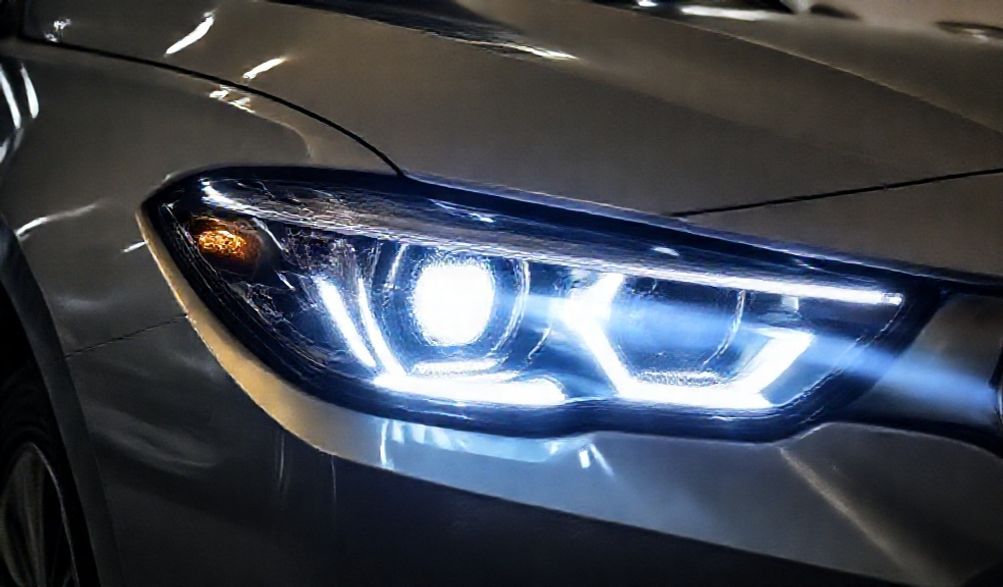
Adaptive LED Headlights Explained: Safety, Technology & How They Work
You’re driving on a dark, winding country road. Your knuckles are white on the steering wheel, your eyes straining against the tunnel of light from your headlights. Just as you lean forward, searching for the apex of the next curve, a pair of blinding high beams crests the hill ahead, forcing you to squint and look away. For a few dangerous seconds, you’re driving blind. This high-stress scenario is a universal nighttime driving experience, a dance between seeing and being seen that too often feels like a compromise.
But what if your headlights could think? What if they could see the road ahead, anticipate curves, and even politely dim themselves for oncoming cars—all without you lifting a finger? This isn’t science fiction; it’s the reality of Adaptive LED Headlights. Far more than just a luxury amenity, this technology represents one of the most significant leaps in proactive automotive safety in decades. This comprehensive guide will demystify adaptive LED headlights. We’ll explore how they work, their tangible safety benefits, and the practical considerations, empowering you with the knowledge to understand this critical innovation that’s transforming nighttime driving from a tense chore into a safer, more comfortable experience.
What Are Adaptive LED Headlights? Beyond Standard Beams
Core Definition and Key Differentiators
At its essence, an adaptive LED headlight system is one that automatically adjusts the beam pattern, direction, and/or intensity of the vehicle’s headlights in real-time based on driving conditions, vehicle speed, steering input, and the presence of other vehicles. The “adaptive” part refers to its dynamic nature, while “LED” denotes the light source—Light Emitting Diodes, which are bright, efficient, and allow for precise digital control.
This stands in stark contrast to traditional lighting:
* Halogen/Xenon (HID) Headlights: Offer a static beam pattern. You have low beams and high beams, manually toggled. The light pattern is fixed relative to the car.
* Standard (Static) LED Headlights: While more efficient and longer-lasting than halogens, their beam pattern is also fixed. They are brighter and whiter, but they don’t move or adapt.
Adaptive LED headlights combine the efficiency and clarity of LEDs with a sophisticated mechatronic system to create a beam of light that actively works for the driver.
The Primary Goal: Enhanced Safety and Visibility
The core mission of this technology is not aesthetic—it’s safety. By dramatically improving a driver’s ability to see the road and potential hazards while simultaneously minimizing the danger posed to other road users, adaptive headlights address a fundamental risk factor. The Insurance Institute for Highway Safety (IIHS), a leading authority on vehicle safety, has stated that good headlights are a crucial countermeasure for nighttime driving, which sees a fatality rate three times higher than daytime driving. Studies by automotive safety organizations in Europe, where the technology has been standard for years, consistently show that adaptive headlight systems contribute to a measurable reduction in nighttime collisions, particularly those involving pedestrians and on winding roads. They transform headlights from passive illumination devices into active safety systems.
How Adaptive LED Headlights Work: The Technology Unveiled
The magic of adaptive headlights is orchestrated by a seamless conversation between three core components: sensors, a brain, and actuators.
The Sensor Suite: Eyes of the System
The system is constantly fed data from a network of sensors:
* Front-Facing Camera(s): Mounted typically near the rearview mirror, this is the primary “eye.” It detects light sources (headlights, taillights) of other vehicles, reads road markings, and assesses ambient light conditions.
* Steering Angle Sensor: Located in the steering column, it tells the system how much and how quickly the driver is turning the wheel.
* Vehicle Speed Sensor: Provides real-time speed data from the car’s network.
* GPS & Navigation Data (in some advanced systems): Can pre-emptively illuminate curves the car is approaching, using map data to know the road layout ahead.
The Control Unit: The Brain Making Decisions
This data stream flows into a dedicated electronic control unit (ECU). This high-speed computer processes the information in milliseconds, comparing vehicle speed, steering angle, and camera input against complex algorithms. It makes the decisions: “Turn the beams left 8 degrees, dim the top-right quadrant, and switch to the urban light spread pattern.”
The Actuators: Physical Movement of Light
The ECU’s commands are executed by physical components that reshape the light:
* Swivel Modules: Small, fast electric motors physically rotate the entire headlight housing or internal reflector left and right in response to steering input for cornering.
* Electronic Shutters/Matrix LED Arrays: This is the key to “glare-free” high beams. Instead of a single bulb, the headlight contains an array of dozens of individual LED segments. The control unit can turn off or dim specific LEDs in the array—for example, those aimed directly at an oncoming car—while keeping the rest of the road fully illuminated. Some systems use tiny physical shutters that move to block portions of the beam.
Key Features and Lighting Modes
This technology enables several intelligent lighting modes that work together.
Adaptive High Beams (Glare-Free High Beams)
This is often the most impressive feature. When activated, the system keeps the high beams on permanently. Using the camera, it identifies other vehicles and selectively dims or turns off only the tiny LED segments that would shine directly into their windows or mirrors. The driver ahead remains in a “shadow” within your beam, while the road around them, including shoulders, signs, and pedestrians, stays brightly lit. It eliminates the need for manual high-beam toggling and provides maximum safe visibility.
Cornering and Steering-Responsive Lights
As you turn the steering wheel or use a turn signal, the headlights pivot in the direction of the intended turn (typically up to 15 degrees). Some systems also activate additional, wide-angle LED elements on the inner side of the turn to illuminate crosswalks, bike lanes, or the inside of a sharp bend that the main beam might miss. This dramatically improves visibility through intersections and on winding roads.
Urban, Country, and Motorway Beam Patterns
The system automatically changes the beam’s shape and reach based on speed and environment:
* Urban Mode (Low Speed): Creates a wide, short, and flat beam pattern to illuminate sidewalks, intersections, and pedestrians without blinding others in close proximity.
* Country Mode (Medium Speed): Focuses more on range and slightly raises the beam’s cutoff to see farther down the road, while maintaining a wide spread for roadside hazards.
* Motorway/Highway Mode (High Speed): Extends the beam’s reach significantly for long-range visibility at highway speeds, often engaging the adaptive high beam function if traffic allows.
Tangible Benefits: Why Consider Adaptive LED Headlights?
Unmatched Nighttime Driving Safety
The benefits are direct and profound:
* Earlier Hazard Detection: Illuminating curves and road edges reveals animals, debris, or pedestrians much sooner than static lights.
* Elimination of “Blind” Moments: No more being blinded by oncoming lights or fumbling to switch beams, keeping your eyes consistently on the road.
* Active Glare Reduction: You protect other drivers, making the roads safer for everyone.
Reduced Driver Fatigue and Increased Comfort
This is a significant, often overlooked benefit. The mental load of constantly judging when to dim high beams, squinting into darkness after being dazzled, and peering into unlit corners is exhausting. Adaptive headlights automate this cognitive task. The result is a more relaxed, less stressful driving experience on long nighttime journeys, allowing the driver to focus more on the overall driving task.
Potential Impact on Insurance Premiums
While not universal, many insurance companies recognize advanced driver-assistance systems (ADAS) as risk-reducing technologies. Some providers offer discounts for vehicles equipped with certified safety features, which can include adaptive headlight systems. It’s always worth inquiring with your insurance provider about potential savings.
Important Considerations and Potential Drawbacks
Cost of Purchase, Repair, and Replacement
This advanced technology comes at a premium. A vehicle equipped with adaptive LEDs can cost significantly more than one with standard halogens or LEDs. More critically, repair costs are high. A single adaptive LED headlight assembly is a complex unit containing lenses, LED arrays, motors, and control electronics. Replacement costs can easily range from $1,500 to $3,000 or more per unit, plus specialized labor for calibration. Even a minor fender bender that damages a headlight can lead to a surprisingly expensive insurance claim.
Regulatory Landscape: Variances by Region
This has been a major historical differentiator. For decades, US regulations (Federal Motor Vehicle Safety Standard 108) effectively banned adaptive driving beam (ADB) systems due to a requirement that headlights have only two modes: high and low beam. Europe, however, approved and widely adopted the technology over 15 years ago.
The good news: In February 2022, the National Highway Traffic Safety Administration (NHTSA) amended FMVSS 108 to finally allow adaptive driving beams in the United States. New vehicles can now be equipped with this safety technology. However, full market penetration will take time as automakers integrate it into US-bound models.
Complexity and Diagnostic Needs
These are not simple plug-and-play components. Diagnosis of any issue requires specialized scan tools and software to interface with the headlight’s control unit. Repairs and, crucially, post-replacement calibration must be performed by trained technicians, often at a dealership or certified collision center, to ensure the cameras and lighting elements are aligned correctly with the vehicle’s geometry.
Adaptive Headlights vs. Alternatives: A Clear Comparison
Adaptive LED vs. Standard LED Headlights
| Feature | Adaptive LED Headlights | Standard LED Headlights |
| :— | :— | :— |
| Cost | High (Premium option) | Moderate (Common on modern cars) |
| Safety | High – Actively improves visibility & reduces glare | Good – Better light quality than halogen, but static |
| Key Features | Auto high beam, cornering lights, beam pattern adaptation | Consistent bright white light, energy efficiency |
| Best For | Safety-focused drivers, frequent nighttime/rural drivers | Drivers wanting modern, efficient lighting without the premium cost |
Adaptive LED vs. Laser Headlights (Brief Overview)
Laser headlights are a different, even more premium technology. They don’t typically replace adaptive LEDs but supplement them. In some high-end systems (e.g., certain BMW, Audi models), a laser module activates only for the high-beam function, projecting light nearly twice as far as LEDs (up to 600 meters). The adaptive LED system still handles low beams, cornering, and matrix functions. Think of laser light as an ultra-long-range add-on to an already-advanced adaptive LED system.
FAQ: Your Adaptive Headlight Questions Answered
Q: Are adaptive LED headlights legal in the United States?
A: Yes, now they are. As of 2022, NHTSA regulations have been updated to permit adaptive driving beam (ADB) systems. You will increasingly find them as an option or standard feature on new vehicles sold in the US.
Q: Can I retrofit adaptive headlights to my older car?
A: Almost certainly not, and it’s not advisable to try. These systems require integration with the vehicle’s high-speed data network (CAN bus), steering angle sensor, front-facing camera, and windshield. They also need proprietary software coding. A retrofit would be prohibitively complex, expensive, and unlikely to function correctly or safely.
Q: Do they work effectively in fog or heavy rain?
A: They are not a substitute for fog lights. Their primary sensors (cameras) can be impaired by heavy precipitation or fog. While they may adjust beam patterns, they are designed for curve illumination and glare reduction on clear(ish) roads. In severe low-visibility conditions, dedicated fog lights, which cast a wide, low beam to cut under the fog, are still essential.
Q: How much does it typically cost to replace one?
A: Replacement is very expensive, as highlighted earlier. Costs typically range from $1,500 to $3,000+ for the part alone, plus several hours of labor for installation and critical calibration. Always use a certified repair center and ensure calibration is performed for safety and proper function.
Conclusion
Adaptive LED headlights represent a fundamental shift in automotive lighting—from a passive commodity to an intelligent, active safety partner. By dynamically shaping light to the driving environment, they provide unparalleled visibility, drastically reduce the dangerous glare for others, and lower the cognitive burden on the driver. While the cost and complexity are real considerations, their core value proposition is undeniable: they make nighttime driving significantly safer and less stressful.
For anyone in the market for a new vehicle, especially those who regularly drive after dark or on challenging roads, prioritizing this technology is a wise investment in safety. The best way to appreciate the difference is to experience it. On your next test drive, make a point to try a model equipped with adaptive LEDs at night—navigate a dark road, encounter oncoming traffic, and take a turn. You’ll feel the technology working, quietly and effectively, to light your way. As regulations evolve and the technology trickles down to more models, adaptive LED headlights are poised to become a standard pillar of modern vehicle safety, illuminating the path toward a future with fewer nighttime risks.
p>