
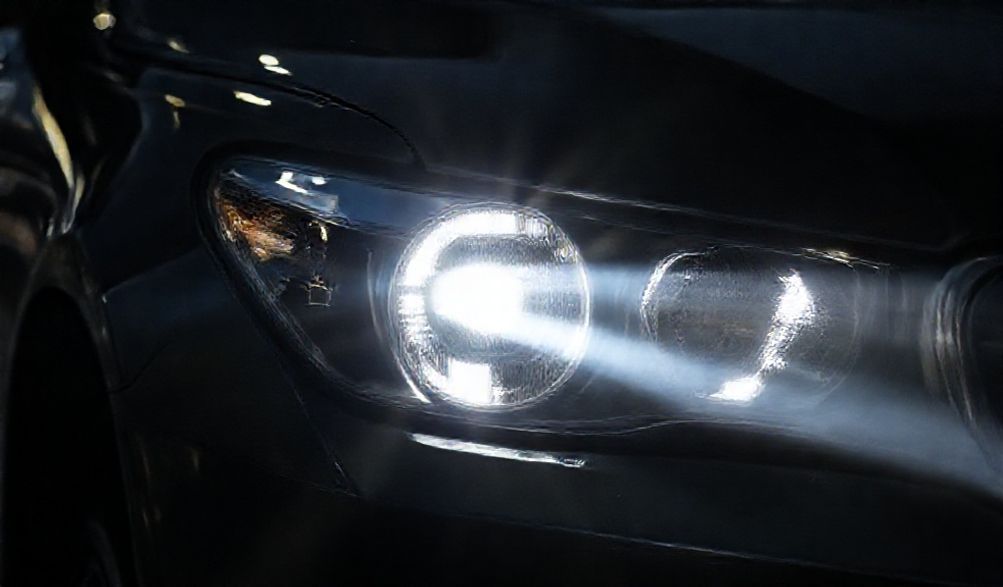
Moving Headlights Explained: Technology, Benefits, and How They Improve Night Driving Safety
Picture this: you’re driving on a dark, winding country road. As you approach a sharp bend, you lean forward, squinting into the darkness just beyond the reach of your headlights. Your hands tighten on the wheel, anticipating what might be hidden in the shadows—a deer, a pothole, or worse. You’re relying on a pool of static light that stubbornly points straight ahead, leaving the curve you’re about to enter in near-total darkness. This scenario, familiar to any nighttime driver, highlights the fundamental limitation of traditional headlights. But what if your headlights could see the turn before you do?
Welcome to the world of moving headlights, one of the most significant—yet often misunderstood—advancements in automotive safety technology. This post is designed to be your comprehensive, jargon-free guide. We’ll move beyond marketing terms to explain exactly how this technology works, why it’s a game-changer for safety, the different types available, and what you need to know as a driver. By the end, you’ll understand how these intelligent systems actively illuminate your path, transforming the nighttime driving experience from a game of anticipation into one of enhanced awareness.
What Are Moving Headlights and How Do They Work?
At its core, the principle of moving headlights is a paradigm shift from passive to active illumination. Traditional “static” headlights project a fixed beam pattern: low beam for oncoming traffic, high beam for more light. Moving headlights, formally known as Adaptive Front-lighting Systems (AFS) أو Adaptive Driving Beams (ADB), dynamically adjust the headlight beam in real-time. They pivot, bend, and reshape the light output based on steering input, vehicle speed, and sometimes even road topology and surrounding traffic. The goal is simple yet revolutionary: to put light exactly where the driver needs it, precisely when they need it.
The Technology Behind the Movement
This intelligent choreography of light is made possible by a symphony of sensors, computers, and actuators working together seamlessly.
-
Sensors & Inputs: The system’s “eyes and ears” are a network of vehicle sensors. The steering angle sensor tells the car how much you’re turning the wheel. The vehicle speed sensor indicates how fast you’re going (systems often activate only above a certain speed, like 25 mph). The yaw rate sensor detects the car’s rotation rate, helping anticipate a turn. More advanced systems incorporate a front-facing camera, typically mounted near the rearview mirror, to identify oncoming vehicles, taillights of cars ahead, and sometimes even road signs and lane markings.
-
The Control Unit: This data flows into a dedicated lighting control module or the car’s main computer. This “brain” processes the information hundreds of times per second, calculating the optimal headlight position and beam pattern for the current driving scenario.
-
Actuators & Execution: Finally, the command is executed. In systems with swiveling projectors, small electric motors physically rotate the headlight projector unit left or right. In the most advanced Matrix LED or ADB systems, there is no physical movement. Instead, the headlight contains an array of dozens of individual LED segments. The control unit can dim or turn off specific segments—for example, those that would shine directly into an oncoming car’s windshield—while keeping all others at full high-beam intensity.
Different Types of Adaptive Lighting Systems
Not all adaptive lights are created equal. The technology has evolved through several stages of sophistication:
- Static Bending Lights (Basic Cornering Lights): Often activated by the turn signal or steering input, these systems illuminate a fixed, wide-angle auxiliary light (usually a separate halogen bulb) to light up the side of the road when turning at low speeds. The main headlight beam itself does not move.
- Dynamic Bending Lights (Swiveling Headlights): Here, the main headlight projector physically swivels left or right in conjunction with the steering wheel, directing the core beam into the turn. This provides far superior illumination around corners compared to static lights.
- Advanced Front-lighting System (AFS): This is a more comprehensive system that often combines dynamic bending with other features. It may automatically switch between optimized beam patterns for different road types—a wider pattern for city driving, a longer throw for motorways, and a weather-specific pattern for rain. It usually includes automatic high-beam control as well.
- Adaptive Driving Beam (ADB) / Matrix LED: The current pinnacle of the technology. Using a camera and an array of LEDs, ADB systems create a precise, shadowed light map. They can continuously maintain high-beam levels while selectively “notching out” or dimming portions of the beam that would fall on other vehicles. This provides near-perfect, long-range visibility without ever dazzling other road users.
Key Benefits of Moving Headlights: Safety and Performance
The Insurance Institute for Highway Safety (IIHS) has stated that good headlights are a crucial safety feature, and their research shows a direct correlation between better headlight ratings and lower crash rates. Moving headlights are a primary reason many modern vehicles now earn top marks in IIHS headlight evaluations.
Enhanced Safety on the Road
- Improved Illumination of Curves: This is the most direct benefit. By lighting the inside of a curve, these systems can reveal pedestrians, cyclists, animals, or debris a critical few seconds earlier than static lights, giving the driver more time to react. Studies suggest this can improve object detection distance in curves by 30% or more.
- Reduced Glare for Oncoming Traffic: Particularly with ADB systems, the “always-on high beam” capability means your own visibility is maximized without the social (and legal) penalty of blinding other drivers. The system automatically and gracefully creates a dark “box” around other vehicles.
- Better Visibility on Uneven Terrain: By using leveling sensors, many AFS systems can also automatically adjust the beam’s vertical angle to compensate for hills and dips, preventing the lights from pointing uselessly into the sky or at the ground right in front of the car.
Driving Comfort and Convenience
- Reduced Driver Fatigue: The constant manual switching between high and low beams on rural roads is eliminated. More importantly, the reduced cognitive load of not straining to see into dark corners makes for a less stressful, more confident driving experience over long distances.
- Automated Adaptation: The system works entirely in the background. The driver benefits from optimal lighting in every situation—entering a highway on-ramp, navigating a roundabout, or climbing a mountain pass—without having to think about it.
Considerations and Limitations of Adaptive Headlight Systems
While the benefits are substantial, it’s important to have a balanced understanding. This advanced technology comes with its own set of practical considerations.
Cost and Complexity
- التكلفة الأولية: Vehicles equipped with true AFS or ADB systems are typically in higher trim levels or luxury segments, adding to the purchase price.
- Repair Costs: This is the most significant consideration for owners. A headlight unit with motors, sensors, and a complex LED array is exponentially more expensive to replace than a standard halogen assembly. A minor fender-bender that cracks a lens can result in a repair bill in the thousands of dollars, as the entire unit often must be replaced.
Maintenance and Legal Status
- Calibration is Critical: This cannot be overstated. After any front-end repair, wheel alignment, or even suspension work, adaptive headlights must be professionally recalibrated. This process, often using specialized targets and diagnostic tools, ensures the sensors and lighting actuators are perfectly aligned. An uncalibrated system can misdirect light, potentially creating a safety hazard. Always verify this service is performed by a qualified technician.
- Regulatory Landscape: For years, stringent US regulations based on a 1960s standard prevented the legal sale of true Adaptive Driving Beam systems. This changed in 2022 when new rules were adopted, allowing ADB technology. However, it’s crucial that any aftermarket modification or system complies with local Department of Transportation (DOT) regulations. A non-compliant system can be illegal and dangerous.
Do You Have Moving Headlights? Identifying and Using Your System
How to Identify Your Vehicle’s System
- The Owner’s Manual: This is the most authoritative source. Look in the index for terms like “Adaptive Front Lighting System (AFS),” “Cornering Lights,” “Adaptive Driving Beam,” or “Headlight Aiming.”
- Badges and Terminology: Inspect the headlight housing itself or nearby trim. You might find a small “AFS” badge. On the dashboard, when you start the car, you may see a specific icon (often a headlight with curved arrows) during the system check.
- The Simple Wall Test: In a safe, dark location like a garage or empty parking lot at night, park facing a wall. With the engine running and headlights on, slowly turn the steering wheel left and right. Observe the light pattern on the wall. If the bright hotspot of the beam moves side-to-side, you likely have dynamic bending lights.
Tips for Optimal Use and Care
- Keep Lenses Clean: The performance of camera-dependent systems (especially ADB) can be degraded by a dirty windshield where the camera is mounted or by grime-covered headlight lenses. Keep them clean for optimal sensor function.
- Learn the Indicators: Understand the dashboard symbols. A headlight icon with an “A” usually means auto high-beams are active. A separate icon, often with curved arrows, may indicate active cornering function.
- Know the Limits: No system is infallible. In heavy fog, snow, or rain, the camera’s ability to detect other vehicles can be impaired, and the system may default to a standard low-beam pattern. Always remain attentive.
- Professional Service Only: Due to the complexity and critical calibration needs, any repair or replacement must be handled by a dealer or a shop experienced with advanced driver-assistance systems (ADAS).
قسم الأسئلة الشائعة
Q: Are moving headlights the same as automatic high beams?
ج: No, they are different but often related features. Automatic high beams simply toggle between high and low beam based on sensor input. Moving headlights (AFS/ADB) physically adjust the beam’s direction, shape, and intensity. Many adaptive lighting systems incorporate automatic high-beam control as one of their functions.
Q: Can I retrofit moving headlights to my older car?
ج: Retrofitting a factory-style, sensor-integrated AFS or ADB system is generally not feasible or legal. It would require extensive wiring, new sensors, and integration with the car’s network, which is prohibitively complex. Simple aftermarket “cornering light” kits exist but are not the same as a true adaptive system.
Q: Why are my car’s moving headlights not working?
ج: Common causes include a blown fuse, a failed swivel motor or actuator, a faulty steering angle or leveling sensor, or a system that needs recalibration after servicing. The first step is always a professional diagnostic scan to read any fault codes stored in the lighting control module.
س4: هل تعمل المصابيح الأمامية التكيفية في جميع الظروف الجوية؟
ج: Performance can be reduced in severe conditions. Heavy snow, ice, or mud on the headlight lens or camera windshield will obstruct the system. In such cases, it will typically deactivate and revert to a standard, fixed beam pattern for safety.
الخاتمة
Moving headlights represent a fundamental leap from reactive to proactive vehicle lighting. They are no longer just bulbs in a housing; they are intelligent partners that actively work to illuminate your path, enhancing safety by revealing hazards sooner and reducing glare for others. While they introduce new considerations around cost and maintenance, the safety benefits—supported by research—are undeniable, especially for those who frequently traverse dark, winding, or rural roads.
As a driver, your first step is knowledge. Consult your owner’s manual to understand the specific capabilities of your vehicle. Use the system as intended, maintain it properly by keeping sensors clean, and always insist on professional recalibration after any relevant service. This technology is not just a luxury feature; it’s a foundational element of modern vehicle safety. In fact, the sophisticated sensor fusion and dynamic control required for adaptive lighting are the very building blocks for the autonomous driving systems of the future. By mastering this technology today, you’re not just driving safer at night—you’re experiencing the intelligent, responsive vehicle of tomorrow.
ص>