
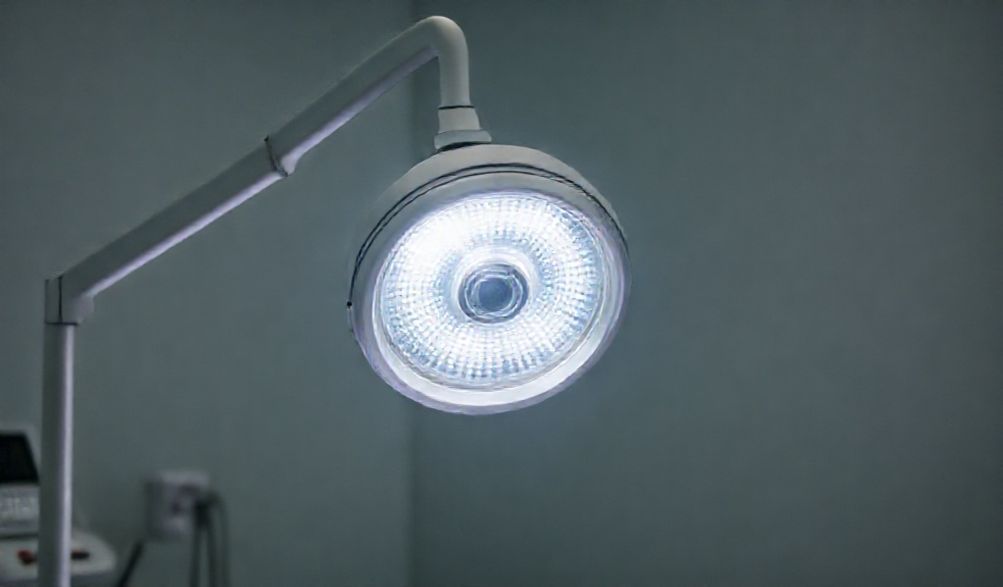
The Complete Guide to LED Examination Lamps: Enhancing Precision in Medical Diagnostics
Introduction
In the high-stakes world of medical diagnostics and surgical precision, what is the single most relied-upon tool? While advanced imaging and sophisticated instruments come to mind, the foundation of every visual assessment is something more fundamental: light. The quality of illumination can mean the difference between spotting a subtle lesion or missing it, between a confident diagnosis and an uncertain one. For decades, practitioners relied on the warm, familiar glow of halogen lamps. But what if the light source itself could be engineered to actively improve diagnostic outcomes, reduce clinician fatigue, and lower operational costs? This is not a hypothetical question—it is the reality delivered by modern LED examination lamps.
This comprehensive guide is designed for medical professionals, clinical procurement officers, and healthcare facility managers seeking an evidence-based resource for navigating the transition to LED medical lighting. The information herein is synthesized from clinical studies on visual ergonomics, technical specifications from leading global manufacturers, and established industry best practices. We will move beyond marketing claims to detail the tangible features, measurable benefits, and critical selection criteria that define superior LED examination lamps. By the end, you will understand why تقنية LED الحديثة has decisively replaced traditional halogen and fluorescent systems as the standard of care, transforming clinical precision, comfort, and efficiency.
Why LED Technology is Revolutionizing Medical Examination Lighting
The shift from halogen to LED is more than a simple bulb swap; it represents a fundamental leap in lighting physics and clinical utility. Understanding this evolution is key to appreciating the value proposition of modern LED examination lamps.
From Halogen to LED: A Leap in Efficiency and Performance
Traditional halogen lamps operate by heating a tungsten filament to incandescence, a process that converts only about 10% of the energy consumed into visible light. The remaining 90% is emitted as infrared radiation—essentially, waste heat. This inefficiency manifests in high electricity bills, uncomfortably hot lamp heads, and frequent bulb replacements due to short lifespans (typically 1,000-2,000 hours).
LED (Light Emitting Diode) technology works on an entirely different principle: electroluminescence. When an electrical current passes through a semiconductor, it emits photons (light) directly. This process is extraordinarily efficient. The key metric here is luminous efficacy—the amount of visible light (lumens) produced per watt of electrical power. Modern LED examination lamps boast efficacies often exceeding 100 lumens per watt, dwarfing halogen’s 15-25 lumens per watt. This translates to energy savings of 60-80% for equivalent or superior light output.
The performance gains are equally dramatic. LED lifespans are rated for 50,000 hours or more, meaning a lamp used 8 hours a day, 5 days a week could last over 20 years without a bulb change. This longevity, combined with massive energy savings, results in a significantly lower التكلفة الإجمالية للملكية, despite a higher initial investment. Furthermore, LEDs generate minimal radiant heat, enhancing patient comfort and eliminating a source of potential burns or interference with sensitive procedures.
Core Clinical Benefits for Practitioners and Patients
The advantages of LED technology extend far beyond the utility bill, delivering direct benefits at the point of care.
-
Enhanced Visual Accuracy: The cornerstone of diagnostic lighting is the مؤشر تجسيد اللون (CRI). This metric, on a scale of 0-100, measures a light source’s ability to reveal the true colors of objects compared to natural sunlight. High-quality LED examination lamps achieve a CRI of >90 (often 95+), rendering tissue tones, vascularity, bruising, rashes, and mucosal conditions with exceptional fidelity. This superior color accuracy directly supports more confident differentiation between healthy and pathological tissue, reducing diagnostic uncertainty.
-
Reduced Clinician Eye Strain and Fatigue: Halogen lights can exhibit subtle flicker and often have a yellow-biased color temperature, which can strain the eyes over long clinical days. LEDs provide consistent, flicker-free illumination. Coupled with smooth, stepless dimming and a neutral white اللون القابلة للتعديل (typically 4000K-5000K) that mimics daylight, they create a visually comfortable environment. This ergonomic benefit reduces practitioner fatigue, potentially improving concentration and procedural performance during extended examinations or surgeries.
-
Improved Patient Comfort and Safety: The near-absence of infrared radiation from LED lamp heads means patients are not subjected to the intense, localized heat characteristic of halogen lamps. This is particularly important for procedures involving sensitive areas or for anxious patients. Additionally, the cool operation allows clinicians to position the light closer to the examination site without discomfort or risk, optimizing illumination where it’s needed most.
Key Features to Evaluate When Choosing an LED Examination Lamp
Selecting the right LED examination lamp requires a careful assessment of specifications that directly impact clinical performance. Here are the critical features to scrutinize.
Optical Performance Metrics You Can’t Ignore
These technical specifications define the quality of the light itself.
- مؤشر تجسيد الألوان (CRI): As discussed, this is non-negotiable for medical use. Insist on a CRI of 90 or higher. A CRI of 95+ is ideal for specialties like dermatology, dentistry, and surgery where minute color variations are critical.
- Color Temperature (CCT – Correlated Color Temperature): Measured in Kelvins (K), this describes the “warmth” or “coolness” of white light. A range of 4000K to 5000K is generally recommended for clinical settings. 4000K offers a slightly warmer, calming tone suitable for general practice, while 5000K provides a crisper, cooler white that enhances contrast and alertness, often preferred for surgical and detailed diagnostic tasks. Some advanced lamps offer adjustable CCT, a valuable feature for matching ambient light or optimizing contrast for specific tissues.
- Illuminance & Uniformity: Illuminance (measured in lux) is the amount of light falling on a surface. Different procedures require different levels; a general exam may need 2,000-3,000 lux, while detailed surgical work may require 10,000 lux or more. Crucially, the light must be uniform—free from hot spots or sharp gradients that can create visual artifacts or shadows. Look for lamps that provide high, even illumination across the entire field of view.
Design, Ergonomics, and Sterility
A lamp’s physical design determines how effectively its excellent light can be deployed.
- Mobility and Positioning: The arm system is the lamp’s backbone. Look for multi-jointed, fully articulating arms with a wide (غالبًا أكثر من متر من نقطة التثبيت) ضروري لوضع الضوء بعيدًا عن يديك، ومساعدك، والمعدات الأخرى. and multiple degrees of freedom. It should move smoothly and stay firmly in position without drift or sagging, even when fully extended. Counterbalanced spring or gas-spring systems ensure effortless, tool-free repositioning.
- Ease of Decontamination: In an era of stringent infection control, the lamp must support your protocols. The housing, especially the lamp head, should have a seamless design with minimal crevices where pathogens can hide. Anti-microbial coatings on high-touch surfaces are a significant advantage. Materials should be compatible with common hospital-grade disinfectants without degrading.
- User Controls: Intuitive controls are essential for workflow. Touch-sensitive controls (often capacitive) are easy to clean and operate. Smooth, stepless dimming allows for perfect light level adjustment. Some models offer programmable memory settings to instantly recall preferred intensity and color temperature for different procedures.
Reliability and Compliance Standards
This ensures safety, durability, and regulatory acceptance.
- Medical Device Regulations: A professional-grade LED examination lamp is a medical device. It must comply with international safety standards such as IEC 60601-1 (for medical electrical equipment) and may carry CE marking (Europe) or FDA clearance (USA). Compliance ensures electrical safety, electromagnetic compatibility, and mechanical robustness.
- Durability and Warranty: Assess the build quality—materials, joint construction, and cable strain relief. A comprehensive warranty (often 3-5 years on the LED module and 1-2 years on parts) reflects the manufacturer’s confidence in their product and provides long-term value and peace of mind.
Application-Specific Considerations for Different Medical Fields
While core principles apply universally, optimal lamp choice can vary by specialty.
Primary Care and General Examination Lamps
For family medicine, pediatrics, or internal medicine, versatility is key. A lamp needs to provide excellent CRI for assessing skin, throat, and eyes. It should have a wide, even beam for general exams and good reach to cover a patient on an exam table. Ergonomic design for frequent repositioning and a patient-friendly, non-intimidating appearance are important considerations.
Specialized Lamps for Dental, Surgical, and ENT Procedures
These fields demand higher performance and sometimes unique features:
* Dentistry: Requires very high intensity (often 20,000+ lux) to illuminate the small, shadow-prone oral cavity. Focused spot size, excellent shadow reduction (often via multiple LED arrays or coaxial light paths), and frequently integrated cameras for documentation are standard. Color temperature around 5500K is preferred to match natural tooth shade guides.
* Surgery & Minor Procedure: Surgical task lighting needs extreme intensity, exceptional depth of field (staying in focus even as instruments move in and out), and virtually shadow-free illumination achieved through multiple light sources or large-diameter reflectors. Sterility is paramount, with many lamps designed for easy draping.
* طب الأنف والأذن والحنجرة: Often utilizes coaxial illumination (where light is projected down the same axis as the clinician’s view) for deep-cavity examinations like otoscopy or nasal endoscopy, eliminating shadows from the speculum or scope itself.
Implementing and Maintaining Your LED Examination Lamps
Proper integration and care maximize your investment and ensure consistent, safe performance.
Optimal Placement and Installation for Clinical Workflows
Plan the lamp’s mounting location (ceiling, wall, rail, or mobile floor stand) based on room layout and typical exam table/chair positioning. The goal is to have unobstructed access to all potential examination sites. For overhead mounting, ensure it is centered to allow the arm to reach both sides of the patient. Avoid placing lights where they will cast the clinician’s shadow onto the work area or create glare on computer screens.
Routine Maintenance and Safety Checks
LEDs are virtually maintenance-free, but the mechanical system requires attention.
* التنظيف: Follow a daily or between-patient wipe-down with a soft cloth dampened with a mild, manufacturer-approved disinfectant. Never spray liquid directly onto the lamp, especially the control panel or joints.
* Mechanical Check: Periodically check the tension and smoothness of all arm joints. Inspect the power cord for any fraying or damage.
* Performance Check: Occasionally verify that the dimming function is smooth and the light color and intensity appear consistent.
Trustworthiness Note: The advice above consists of general best practices. Always prioritize and follow the specific cleaning, disinfection, and maintenance instructions provided in the official user manual from the device manufacturer. This is critical for patient safety, staff safety, and maintaining the product warranty and regulatory compliance.
الأسئلة المتكررة (FAQ)
Q1: What is the typical lifespan of an LED examination lamp, and how does it compare to halogen?
ج: High-quality LED modules are typically rated for 50,000 hours of operation. In contrast, halogen bulbs last between 1,000 and 2,000 hours. This means an LED lamp may last decades without needing a light source replacement, drastically reducing maintenance labor, spare part costs, and clinical waste.
Q2: Is the higher upfront cost of an LED lamp justified?
ج: Absolutely, when considering the Total Cost of Ownership (TCO). While the initial purchase price may be higher, you save 60-80% on energy costs annually. You eliminate the recurring cost and labor of replacing halogen bulbs. You reduce downtime due to bulb failure. Over a 5-10 year period, the LED lamp almost always proves to be the more economical choice, in addition to its superior clinical performance.
Q3: How important is adjustable color temperature in an examination lamp?
ج: For general practice, a fixed, high-CRI color temperature (e.g., 4500K) is perfectly adequate. Adjustable CCT becomes a valuable, specialized tool. It allows a clinician to simulate different ambient lighting conditions to check for metamerism (e.g., in dermatology or dentistry) or to switch to a cooler temperature to enhance the visual contrast of red/blue vascular structures against tissue.
Q4: Can LED examination lamps be used in all clinical environments?
ج: Yes, LED lamps are suitable for the vast majority of clinical settings, from primary care to standard operating rooms. The only exceptions are highly specialized environments, such as certain surgical suites where flammable anesthetics are used, which may require explosion-proof (Ex-rated) fixtures. Always verify the lamp’s specific safety ratings against your facility’s requirements.
Q5: How do I properly clean and disinfect an LED lamp head?
ج: General best practice: Use a soft, lint-free cloth lightly moistened with a mild detergent or a disinfectant wipe that is safe for plastics and electronics. Gently wipe the surface. CRITICAL DISCLAIMER: You must defer to the cleaning and disinfection instructions in the device’s official instruction manual. Using unapproved chemicals or methods can damage anti-reflective coatings, degrade plastics, void the warranty, and potentially create a safety hazard.
الخاتمة
The transition to LED examination lamps represents far more than a simple technological upgrade. It is a strategic investment in the fundamental tool of visual diagnosis. By delivering superior optical performance with exceptional color accuracy, enhancing clinician ergonomics through flicker-free, adjustable light, and providing remarkable efficiency and longevity, LED technology directly supports better patient outcomes and more sustainable healthcare operations.
Use this guide as a foundational framework to engage knowledgeably with equipment suppliers. Do not hesitate to request product demonstrations, trial periods, or specification sheets to validate claims regarding CRI, illuminance, and compliance. See and feel the difference in positioning smoothness and light quality for yourself.
Ultimately, the goal of any medical technology is to improve care. By choosing an LED examination lamp that meets the highest standards, you are ensuring that every visual assessment is conducted under the best possible conditions. You are investing in precision, investing in practitioner well-being, and, most importantly, investing in the clarity needed to deliver exceptional patient care.
دعوة للعمل: Before making a procurement decision, consult with a qualified medical equipment specialist or biomedical engineer. They can help you assess the specific needs of your practice or facility and ensure that any selected LED examination lamp meets all necessary clinical, ergonomic, and regulatory standards for your region.
ص>