
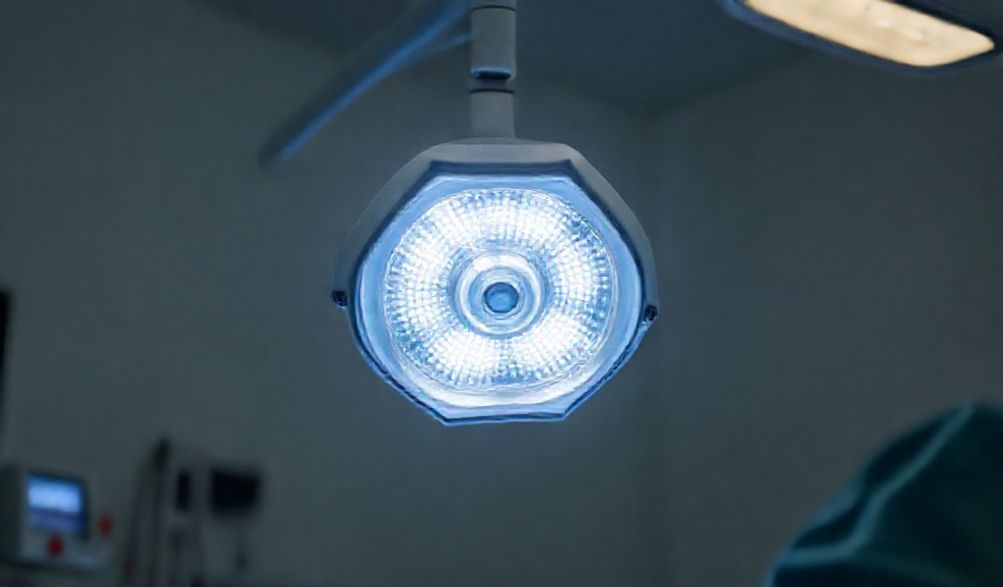
The Definitive Guide to LED Surgery Lights: Illuminating the Future of the Operating Room
Introduction
In the high-stakes, millimeter-precise world of modern surgery, visibility is everything. The quality of illumination can be the difference between a routine procedure and a surgical complication, between surgeon fatigue and sustained focus. For decades, the operating room was dominated by the intense glow and significant heat of halogen and incandescent lights. Today, a technological revolution has taken hold, fundamentally transforming this critical environment: the widespread adoption of LED surgery lights.
This shift represents far more than a simple bulb swap. It is a comprehensive advancement in surgical technology, driven by solid-state physics and engineered to meet the exacting demands of contemporary medicine. This guide serves as a detailed, authoritative resource on LED surgical lighting. We will dissect the core technology, translate engineering specifications into tangible clinical benefits, and provide a practical framework for selection. By understanding the nuances of LED surgery lights, hospital administrators, clinical engineers, and medical professionals can make informed decisions that directly impact patient safety, surgical outcomes, and operational efficiency.
1. The Technology Behind LED Surgical Lighting
To appreciate the superiority of LED systems, one must first understand the fundamental engineering principles that set them apart from their predecessors.
1.1 How LED Lights Differ from Traditional Surgical Lighting
- Core Mechanism: Traditional halogen lights operate like sophisticated incandescent bulbs. Electricity heats a tungsten filament inside a quartz capsule filled with halogen gas, causing it to glow white-hot and emit light—a process that wastes over 90% of its energy as heat. In stark contrast, a Light Emitting Diode (LED) is a semiconductor device. When an electrical current passes through it, electrons recombine with electron holes, releasing energy in the form of photons (light). This electroluminescence process is inherently more efficient, direct, and controllable.
- Spectral Output: Halogen lights produce a continuous spectrum but are heavily weighted toward the red and infrared regions, resulting in a characteristic yellowish hue. High-quality LED surgery lights use a combination of blue LEDs and phosphor coatings to generate a full, balanced spectrum of “natural” white light. This is quantified by the Color Rendering Index (CRI), where LEDs can achieve ratings >95, closely mimicking daylight and revealing tissue subtleties invisible under older lights.
- Heat Management: This is a critical differentiator. Halogen lights are essentially radiant heaters; a significant portion of their energy output is infrared (IR) radiation. This heat can dry exposed tissue (desiccation), increase patient metabolic stress, and create an uncomfortably hot environment for the surgical team. LEDs emit virtually no IR radiation in their beam. The light is “cold” at the point of delivery. Any heat generated is at the semiconductor junction and is managed through sophisticated passive or active cooling systems in the light head, preventing it from reaching the surgical field.
1.2 Key Technical Specifications and What They Mean
Navigating the specs of an LED surgery light is crucial. Here’s what matters most:
- Illuminance (Lux): This measures light intensity on a surface. Surgical lighting demands high, focused illuminance. Standards typically require between 40,000 to 160,000 lux at the center of the field, depending on the procedure depth. Deep-cavity surgeries (e.g., pelvic, spinal) need higher lux to compensate for light absorption and scatter within the cavity.
- مؤشر تجسيد الألوان (CRI): Arguably the most important spec for clinical accuracy. CRI measures a light source’s ability to reveal the true colors of objects compared to natural light. A CRI >90 is essential, with premium lights offering CRI ≥95. This allows surgeons to accurately distinguish between arterial blood (bright red), venous blood (dark red), fatty tissue (yellow), and various organ states, reducing diagnostic uncertainty.
- Color Temperature (Kelvin): Measured in Kelvins (K), this describes the “warmth” or “coolness” of white light. Adjustable color temperature is a key feature of advanced LED systems. A warmer light (e.g., 4000K) is often preferred for soft tissue and surface procedures, reducing glare. A cooler, bluer light (e.g., 6000K+), akin to a bright overcast day, enhances contrast and visual acuity for highly detailed work in specialties like neurosurgery or ophthalmology.
- Depth of Illumination & Shadow Reduction: Unlike a single-point source that creates harsh shadows, modern LED surgery lights use an array of dozens or hundreds of individual LEDs paired with complex reflector optics. This متعدد المصادر النقطية ensures that if an instrument blocks one light path, others fill in from different angles, dramatically reducing obstructive shadows. This creates homogeneous, deep-cavity illumination where the light penetrates evenly into wounds.
2. Clinical and Operational Benefits of LED Systems
The technical advantages of LED surgery lights translate directly into measurable benefits for patients, surgeons, and healthcare facilities.
2.1 Enhanced Surgical Precision and Patient Safety
- Improved Tissue Visualization: Superior CRI and adjustable color temperature are not just specs on a sheet; they are clinical tools. Studies have shown that enhanced color discrimination improves the identification of tumor margins in cancer surgery, aids in detecting subtle changes in tissue perfusion, and increases the accuracy of vessel ligation. It empowers surgeons to make more confident, precise decisions.
- Reduced Thermal Risk: The near-elimination of infrared radiation from the light beam is a direct patient safety benefit. It minimizes the risk of iatrogenic thermal injury, such as unintentional tissue drying or burns, which is especially crucial in long procedures like organ transplants or complex reconstructions. It also contributes to maintaining a stable core temperature for the patient.
2.2 Advantages for the Surgical Team and Hospital
- Ergonomics and Reduced Fatigue: Consistent, homogeneous, and flicker-free LED illumination significantly reduces visual strain. Surgeons no longer need to constantly refocus their eyes between brightly lit and shadowed areas. The reduction in radiant heat also makes the environment more physically comfortable. This leads to less mental and physical fatigue over long procedures, potentially improving concentration and reducing error rates.
- Operational Efficiency and Cost Savings:
- طول العمر: The lifespan disparity is staggering. While a halogen bulb may last 1,000-2,000 hours, LED modules are rated for 30,000 to 60,000 hours. Given an OR may be used 1,500 hours a year, this means 20-40 years of service before a significant lumen depreciation, versus annual or bi-annual halogen bulb replacements.
- كفاءة الطاقة: LED systems typically consume 60-80% less electricity than equivalent halogen systems. For a hospital with multiple operating rooms, this translates to tens of thousands of dollars in annual utility savings and a substantially reduced carbon footprint.
- Maintenance and Sterilization: LED modules are solid-state and extremely durable, with no fragile filaments or gas capsules. The light heads are designed to withstand rigorous daily cleaning with harsh disinfectants, and the lack of frequent bulb changes reduces maintenance labor and inventory costs.
3. Critical Factors for Selecting an LED Surgery Light
Choosing the right system requires a balance of clinical need, operational reality, and financial wisdom.
3.1 Assessing Your Clinical and Procedural Needs
- Procedure Mapping: Start with your surgical portfolio. A high-volume orthopedic center needing to illuminate deep joint cavities will prioritize maximum lux and depth of penetration. An ambulatory surgery center specializing in ophthalmology or plastics will place a premium on adjustable color temperature and homogeneous, shadow-free light for surface work. Create a requirements list based on your most common and most demanding procedures.
- OR Layout and Integration: Consider the physical space. Ceiling-mounted systems on single or double arms offer maximum flexibility. Track-mounted systems allow multiple light heads to be shared between rooms or positioned with exceptional flexibility. Consider integration with other OR infrastructure: can the light be mounted on an equipment boom? Does it interfere with anesthesia screens or imaging systems? Planning for integration is key to an uncluttered, efficient OR.
3.2 Evaluating Features, Durability, and Service
- Must-Have Features Checklist:
- مقابض معقمة: Removable and autoclavable handles for intraoperative positioning.
- عناصر التحكم البديهية: Touchscreen or simple button interfaces for adjusting intensity, color temperature, and focus.
- Battery Backup: Ensures the light remains operational during a power failure for critical procedure completion.
- Automatic Standby: Motion sensors that dim the light when not in use, saving energy and reducing heat.
- Camera Port: A built-in port for attaching a high-definition camera for documentation and teaching.
- Total Cost of Ownership (TCO) Analysis: Look beyond the sticker price. A proper TCO model includes:
- Initial purchase price.
- Projected energy costs over 10 years.
- Cost of replacement bulbs/parts (near-zero for LEDs).
- Estimated maintenance labor.
- Potential cost of OR downtime due to light failure.
- The LED system will almost always win on a 5-10 year TCO basis.
- Vendor and Support Assessment: The light is a long-term investment. Evaluate the manufacturer’s reputation, the comprehensiveness of the warranty (3-5 years is standard), the responsiveness of their service network, and the quality of installation and training they provide. Reliable support is as crucial as the technology itself.
4. The Future of Surgical Illumination
The evolution of the LED surgery light is moving towards greater intelligence and integration.
4.1 Integration with Digital and Robotic Surgery
Next-generation lights are becoming part of the digital OR ecosystem. They can integrate with 4K/8K camera systems, automatically adjusting intensity to optimize video capture. In robotic surgery, lighting profiles can be linked to the surgical console, ensuring the robotic arms do not cast shadows, or even adjusting based on the surgeon’s zoom level on the monitor.
4.2 Smart Lighting and Data Connectivity
The rise of the Internet of Medical Things (IoMT) brings us “smart” LED surgery lights. Equipped with sensors and network connectivity, these lights can:
* Adjust color temperature and intensity automatically based on the recognized surgical phase (e.g., brighter, cooler light for incision; softer light for closure).
* Provide usage analytics to OR managers for optimizing scheduling and maintenance.
* Enable predictive maintenance by monitoring LED performance and alerting technicians to potential issues before a failure occurs.
* Integrate with the hospital’s information system to automatically document lighting settings used for specific procedure types.
الأسئلة المتكررة (FAQ)
Q1: Are LED surgery lights really worth the higher upfront cost compared to halogen?
ج: Absolutely. While the initial investment is often higher, the Total Cost of Ownership (TCO) is significantly lower. Consider the 50x longer lifespan, 70% lower energy consumption, and near-zero maintenance costs. The clinical benefits—reduced heat, superior tissue visualization, and enhanced surgeon performance—also contribute to better patient outcomes, which is invaluable.
Q2: How do I know if the light’s color rendering is good enough for my OR?
ج: Look for the Color Rendering Index (CRI) specification. A CRI of 90 or above (on a scale of 0-100) is considered excellent for surgical applications. Some top-tier lights achieve a CRI of 95 or 97, closely mimicking natural sunlight. Request a demonstration in a simulated environment to visually assess tissue differentiation before purchasing.
Q3: Can LED surgery lights be used for all types of surgery?
ج: Yes, modern LED systems are highly versatile. The key is selecting a model with adjustable intensity (lux) and color temperature (Kelvin). For example, deep-cavity abdominal surgery may require maximum intensity and a cooler temperature, while superficial plastic surgery might use lower intensity and a warmer tone. Ensure the model’s specifications cover the range required by your hospital’s surgical specialties.
Q4: What is the typical warranty and expected lifespan of an LED surgical light?
ج: High-quality LED surgery lights typically carry a comprehensive warranty of 3-5 years on the entire unit, with a specific guarantee on the LED modules (often 30,000-60,000 hours of use). With an average of 1,500 OR hours per year, this translates to 20-40 years of service before a significant drop in light output, far exceeding any traditional lighting technology.
الخاتمة
The transition to LED surgical lighting has moved beyond trend to become the new standard of care in the modern operating room. This shift is justified by an overwhelming combination of factors: unparalleled illumination quality that elevates surgical precision, direct benefits to patient safety through reduced thermal risk, and tangible improvements in the ergonomics and well-being of surgical teams. From an operational perspective, the dramatic gains in energy efficiency, longevity, and reliability make a compelling financial case that rewards forward-thinking investment.
Selecting the right LED surgery light requires a meticulous, multi-faceted evaluation. It demands matching advanced technical specifications—CRI, lux, Kelvin, shadow control—to the specific procedural needs of your facility, while also planning for seamless OR integration and long-term operational support. By making an informed choice, healthcare institutions do more than purchase a piece of equipment; they invest in a foundational technology that enhances patient safety, empowers surgical excellence, and builds a more sustainable, efficient, and future-ready clinical environment. In the quest for optimal surgical outcomes, every detail matters, and it all begins with seeing clearly.
ص>