
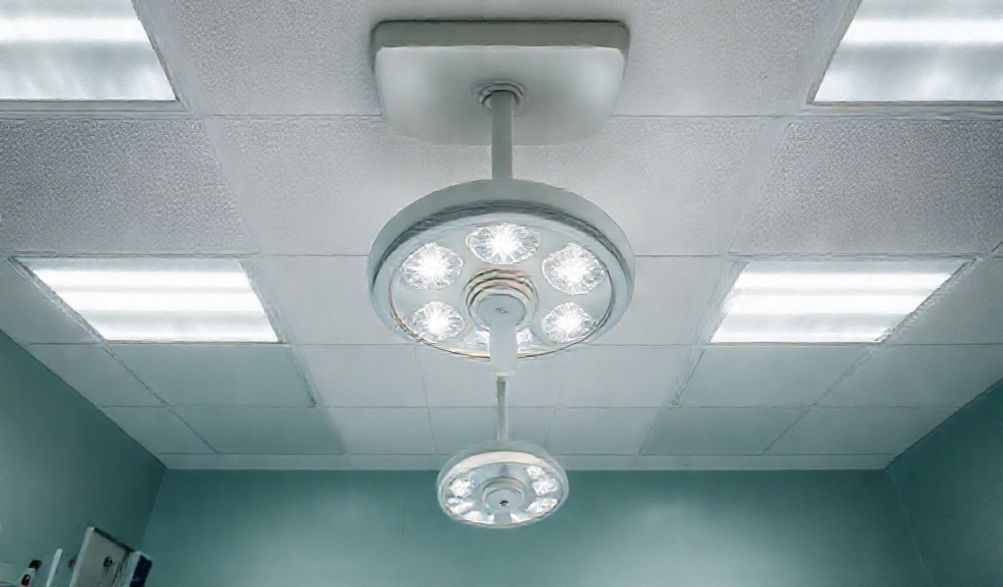
Operating Room Overhead Lights: A Guide to Technology, Safety, and Selection
Introduction
What if the single most important tool in an operating room isn’t held by a surgeon, but hangs above them? While scalpels, clamps, and imaging systems rightly command attention, the quality of illumination can be the decisive factor between a routine procedure and a surgical complication. أضواء السقف في غرفة العمليات, ، أو المصابيح الجراحية, are the unsung cornerstone of modern medicine. They are not mere room fixtures; they are sophisticated medical devices engineered to enable millimeter precision, reduce surgical team fatigue, and directly impact patient outcomes.
This guide serves as a comprehensive, authoritative resource for those responsible for specifying, procuring, and maintaining these critical systems: healthcare administrators, facility managers, biomedical engineers, and procurement specialists. We will move beyond basic specifications to explore how advanced technology, rigorous safety standards, and strategic selection converge to create an optimal surgical environment. By synthesizing industry standards, clinical insights, and technical data, this post aims to illuminate the path to making an informed, long-term investment in one of the OR’s most vital assets.
The Critical Role of Surgical Lighting in Modern Healthcare
The fundamental purpose of an operating room light is deceptively simple: to let the surgeon see. However, in the high-stakes, micro-detail world of surgery, “seeing” encompasses a complex interplay of light quality, shadow management, and color accuracy that goes far beyond basic brightness.
Beyond Illumination: Impact on Surgical Precision and Outcomes
Modern surgical procedures demand the ability to differentiate between subtle tissue types—distinguishing a nerve from a blood vessel, healthy tissue from malignant, or a tendon from its sheath. Poor lighting can obscure these critical distinctions. Key qualities of advanced operating room overhead lights directly influence this precision:
- تقليل الظل: A single-point light source creates harsh, obstructive shadows from the surgeon’s hands and instruments. Modern systems use multi-point LED sources and sophisticated reflector/optical designs to fill in these shadows, providing consistent illumination across the entire surgical field.
- مؤشر تجسيد الألوان (CRI): This metric, which we’ll detail later, is paramount. A high CRI light source renders colors close to how they appear under natural sunlight. This allows for accurate assessment of tissue perfusion (pink vs. pale), identification of bile ducts, and recognition of cyanosis. In essence, it ensures what the surgeon sees is a true representation of the patient’s anatomy.
Clinical studies and surgeon testimonials consistently link superior lighting to reduced error rates, decreased procedure times, and improved overall outcomes. When a surgeon can see with absolute clarity, confidence and efficiency follow.
Enhancing Surgical Team Performance and Reducing Fatigue
A major surgery can last for many hours, placing immense strain on the visual and cognitive resources of the entire team. Traditional hot lights (like halogen) contributed to thermal discomfort. Glare from reflective instruments or wet surfaces can cause momentary blindness and eye strain.
Contemporary LED-based surgical overhead lights address these ergonomic challenges head-on:
* Cool Light Emission: LEDs produce significantly less radiant heat than halogen or xenon bulbs, preventing the “hot spot” over the patient and increasing comfort for both patient and staff.
* Glare Control: Advanced diffusers and optical systems minimize specular reflection (glare) from moist tissues and metal tools, reducing squinting and visual fatigue.
* Consistent Intensity: Unlike bulbs that dim over time, LEDs maintain their specified lux output throughout their lifespan, preventing the subconscious strain of working under gradually deteriorating light.
The result is a less fatigued, more focused surgical team capable of maintaining peak performance throughout lengthy and complex operations.
Key Technologies and Features of Modern OR Lights
The evolution from simple incandescent bulbs to today’s systems represents a leap in medical engineering. Understanding these technologies is key to evaluating any operating room light system.
LED Technology: The New Standard for Efficiency and Performance
Light Emitting Diode (LED) technology has unequivocally become the standard for new installations and upgrades. Its advantages are transformative:
- Cool Operation & Patient Safety: Emitting minimal infrared radiation, LEDs drastically reduce the risk of thermal injury to exposed tissues and desiccation of surgical sites.
- Longevity and Reduced Maintenance: With lifespans often exceeding 50,000 hours (compared to 1,000-2,000 for halogen), LEDs eliminate the frequent, costly, and disruptive process of bulb replacement.
- كفاءة الطاقة: LEDs consume up to 75% less energy than halogen systems, leading to substantial cost savings and a smaller environmental footprint for the hospital.
- Instant On/Off & Dimming: They provide full intensity immediately without warm-up time and offer smooth, flicker-free dimming across a wide range.
Understanding Key Performance Metrics
When comparing operating room overhead lights, these technical specifications are non-negotiable:
- Lux (Illuminance): This measures the amount of light falling on the surgical field. While requirements vary, a general benchmark is 40,000 to 160,000 lux at a defined distance (e.g., 1 meter). Neurosurgery and microsurgery demand the highest intensities.
- مؤشر تجسيد الألوان (CRI): A scale from 0 to 100 indicating how accurately a light source reveals the true colors of objects. For surgery, a CRI of 90 or higher is essential. Some medical-grade LEDs now achieve a CRI >95, providing near-perfect color fidelity.
- Depth of Illumination (DoI): This critical feature measures a light’s ability to provide uniform, deep-cavity illumination (e.g., in pelvic or thoracic surgery) without creating a central “hot spot” and dark periphery. A high DoI (e.g., >25 cm) is a mark of advanced optical design.
Advanced Functionality for Complex Procedures
Today’s lights are integrated systems designed for the realities of modern ORs:
- Shadow Reduction Technology: Achieved through multiple, independently controlled LED modules arranged in a ring or matrix. Even if the surgeon’s head blocks one module, the others compensate to maintain a shadow-free field.
- Sterile Handling: Lights are designed for the aseptic zone. Features include:
- Sterile handles and diaphragms: Removable and autoclavable components that allow the circulating nurse to adjust light position without breaking sterility.
- Sealed, smooth surfaces: Prevent the accumulation of contaminants and allow for easy, thorough cleaning and disinfection.
- Integration Capabilities: In hybrid ORs and for teaching purposes, lights may offer:
- Built-in cameras for recording or broadcasting procedures.
- Compatibility with surgical navigation and imaging systems, sometimes allowing the light to automatically adjust or move based on the surgeon’s focus area.
Essential Safety and Compliance Standards
As regulated medical devices, operating room overhead lights must adhere to stringent international and national standards that ensure patient and staff safety.
Navigating Regulatory Requirements (FDA, IEC, UL)
In the United States, surgical lights are Class II medical devices requiring FDA 510(k) clearance. Globally, the سلسلة IEC 60601 of standards is paramount. Specifically, IEC 60601-2-41 details the particular requirements for the basic safety and essential performance of surgical luminaires and examination lights. Compliance with this standard covers electrical safety, mechanical stability, temperature limits, and light output characteristics. Look for certifications from recognized bodies like UL (USA) or CE (Europe) as evidence of compliance.
Infection Control and Ease of Cleaning
The design must actively support infection prevention protocols:
* Seamless Construction: The canopy and arms should have no cracks, seams, or crevices where blood, fluids, or pathogens could accumulate.
* Cleanroom-Compatible Materials: Surfaces must withstand repeated cleaning with hospital-grade disinfectants without degrading.
* Protected Optics: The light-emitting surface should be sealed to prevent fluid ingress, which could harbor bacteria and compromise light output.
Electrical and Mechanical Safety
Fail-safes are built into every aspect:
* Backup Systems: High-end systems feature redundant LED drivers or even a secondary, battery-powered light module that activates automatically in a power failure.
* السلامة الميكانيكية: Lights must be perfectly balanced to stay in position without drift. They incorporate multiple braking systems to prevent uncontrolled movement. The mounting system must be rated to support many times the light’s weight to eliminate any risk of collapse.
* Electrical Isolation: Designs ensure no risk of electrical shock, even in the event of a fault, particularly important in the wet environment of an OR.
How to Select the Right Operating Room Light System
Procurement is a strategic decision that balances clinical needs, facility constraints, and long-term value.
Assessing Your Clinical Needs: Specialty-Specific Considerations
Not all ORs are the same. Engage your surgical staff in the evaluation:
* General & Abdominal Surgery: Require a large field diameter (e.g., 30-40 cm), excellent depth of illumination, and high CRI for tissue differentiation.
* Neurosurgery & Orthopedics: Often need the highest possible lux levels (up to 160,000+) and very small, focused light fields for deep, narrow incisions.
* Cardiac & Trauma: Benefit from lights with exceptional shadow reduction and the ability to maintain sterile fields from multiple angles quickly.
* Endoscopy Suites: May prioritize lights with lower intensity but superior color rendering for ambient room lighting during monitor-based procedures.
Evaluating Mounting Options and OR Layout
The mount determines flexibility and workflow:
* Ceiling-Mounted Track Systems: Offer the greatest flexibility, allowing multiple light heads to be positioned anywhere along a ceiling rail. Ideal for multi-disciplinary ORs.
* Single-Point Ceiling Mounts: Provide a fixed point of rotation, often with a longer reach. They are less flexible than tracks but can be more stable and cost-effective for dedicated rooms.
* Mobile Floor Stands: Provide a portable solution for minor procedure rooms, emergency use, or as a backup system. They lack the stability and seamless integration of ceiling mounts.
Total Cost of Ownership (TCO) Analysis
Look beyond the initial purchase price:
1. Purchase Price: The initial capital investment.
2. التثبيت: Costs for structural reinforcement, electrical work, and calibration by certified technicians.
3. استهلاك الطاقة: Calculate the annual savings of an efficient LED system versus older technology.
4. الصيانة: Factor in the cost and frequency of replacing sterile handles, filters, and the vastly reduced need for LED module replacement versus halogen bulbs.
5. Lifespan & Downtime: A system with a 10-year lifespan and minimal service interruptions offers far greater value than a cheaper alternative requiring frequent repairs.
The Procurement Checklist
When requesting quotes or demos, ask vendors for:
– [ ] Certified performance data: Lux, CRI, Depth of Illumination at defined distances.
– [ ] Compliance certificates: IEC 60601-2-41, FDA 510(k), UL/CE.
– [ ] Details of shadow reduction technology and sterile handle system.
– [ ] Full warranty terms (parts, labor, LED lumen maintenance).
– [ ] Service network support and typical response times.
– [ ] Installation requirements and recommended maintenance schedule.
– [ ] References from similar healthcare facilities.
Installation, Maintenance, and Best Practices
A perfect light is only as good as its installation and upkeep.
التركيب والمعايرة الاحترافية
Installation is not a job for general contractors. It must be performed by certified biomedical equipment technicians (BMETs) or vendor-trained specialists. They ensure:
* The mounting is structurally secure.
* Electrical connections are safe and to code.
* The light is perfectly balanced and moves smoothly without drift.
* The light output is calibrated to meet the manufacturer’s specifications.
Routine Maintenance Schedule for Optimal Performance
A proactive schedule preserves performance and safety:
* Daily/Per Procedure: Wiping down all surfaces with approved disinfectant by environmental services staff.
* أسبوعيًا/شهريًا: Visual inspection for physical damage, verification of smooth movement and braking, and check of sterile handle integrity by nursing or BMET staff.
* سنوياً/كل عامين: Formal performance check by a BMET or service engineer to measure lux output, color temperature, and verify all safety functions. Replacement of worn sterile components.
Training the Surgical Staff for Effective Use
The best features are useless if the team doesn’t know how to use them. Insist on comprehensive training from the vendor for surgeons, nurses, and scrub techs. Training should cover:
* Optimal positioning techniques to maximize shadow reduction.
* Proper use of sterile handles and diaphragms.
* Understanding the control panel (intensity, color temperature adjustment if available).
* Basic troubleshooting (e.g., what to do if a single LED module fails).
الأسئلة المتكررة (FAQ)
Q: How often should surgical lights be replaced or upgraded?
ج: The primary driver is technological or clinical obsolescence, not always complete failure. While LED modules can last 10+ years, consider upgrading if your current lights lack essential features like high CRI, sufficient shadow reduction, or depth of illumination for newer surgical techniques. Mechanical wear on arms and joints may also necessitate replacement.
Q: Can traditional halogen surgical lights be retrofitted with LED?
ج: While retrofit kits exist, they are generally not recommended for critical operating room overhead lights. A surgical light is an integrated system where the optics, heat management, and electronics are designed for a specific light source. A retrofit may compromise performance, shadow reduction, color quality, and most importantly, may void existing safety certifications and manufacturer warranties.
Q: What is the typical warranty for a high-quality OR light?
ج: A strong warranty is a sign of manufacturer confidence. Look for a minimum of 3-5 years on parts (including LEDs) و 1-2 years on labor. Some premium manufacturers offer extended warranties. The warranty should clearly state the guaranteed lumen maintenance (e.g., >70% of initial output after 50,000 hours).
Q: How do we handle a complete light failure during a procedure?
ج: Every OR should have a contingency protocol. Immediate steps include utilizing a backup mobile الضوء الجراحي, switching to surgeon headlamps, or using a light from an adjacent OR if on a track system. This underscores the importance of systems with redundant light heads or backup power features, and the value of having a tested backup plan.
الخاتمة
أضواء السقف في غرفة العمليات are far more than simple illumination; they are a foundational technology that directly intersects with surgical success, team well-being, and facility efficiency. Selecting the right system requires a holistic view that prioritizes clinical performance metrics like CRI and depth of illumination, insists on rigorous safety and infection control standards, and evaluates the long-term total cost of ownership.
Treat this procurement not as a simple capital purchase, but as a strategic clinical decision. Begin by conducting a thorough needs assessment with your lead surgeons and OR nurses. Request live demonstrations from reputable manufacturers in a setting that mimics real use. Finally, consult closely with your biomedical engineering department to ensure the chosen system integrates seamlessly into your facility’s safety and maintenance ecosystem. By investing wisely in the light above the surgical field, you invest in the clarity, precision, and safety of every procedure that follows.
ص>