
The Ultimate Guide to Surgeon Headlights: Enhancing Precision, Safety, and Outcomes
In the high-stakes theater of the operating room, where millimeters matter and anatomy holds its secrets in shadow, the surgeon’s most fundamental tool is not the scalpel, the forceps, or the electrocautery. It is vision. The ability to see clearly, to differentiate tissue planes, to trace the delicate path of a nerve or vessel—this is the bedrock upon which successful surgery is built. But what happens when the primary source of illumination is a fixed, overhead light, casting shadows with every movement of the surgeon’s head and hands? The limitations become glaringly apparent.
This is the problem that surgeon headlights—also known as surgical headlamps أو LED headlights—were born to solve. They are not merely an accessory; they are a transformative technology that places a powerful, personal sun directly in the surgeon’s line of sight. This comprehensive guide is designed for surgeons, surgical residents, and hospital procurement teams seeking an evidence-based understanding of this critical tool. We will move beyond marketing claims to explore the core technology, the proven benefits, and the practical considerations for selecting and using a surgical headlight system, empowering you to make an informed decision that enhances both surgical performance and patient care.
What is a Surgeon Headlight? Core Technology and Evolution
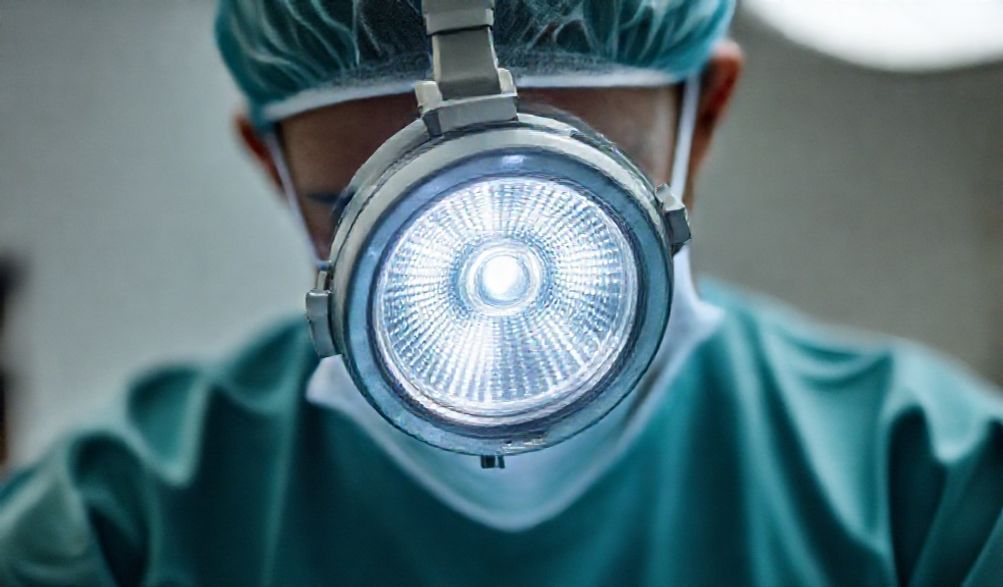
A surgeon headlight is a wearable illumination system designed to provide bright, shadow-free light directly onto the surgical field, precisely where the surgeon is looking. Unlike static overhead lights, it moves in perfect synchrony with the surgeon’s gaze, creating an intimate and controlled visual environment.
From Halogen to LED: A Brief History of Surgical Illumination
The journey to today’s advanced systems began with cumbersome, heat-generating halogen lamps. These early systems, often fiber-optic, provided a cooler light than incandescent bulbs but were plagued by limitations: bulky external light generators, fragile fiber bundles that degraded over time, and a yellowish light that could distort tissue color. The revolution came with the advent of Light Emitting Diode (LED) technology. LEDs offered a leap forward: they are incredibly energy-efficient, produce minimal heat, have a exceptionally long lifespan (often tens of thousands of hours), and deliver a bright, white “daylight” spectrum that reveals true tissue color. This evolution has made high-quality, personal illumination more reliable, affordable, and accessible than ever before.
Key Components of a Modern Surgical Headlight System
Understanding the components demystifies the selection process:
- Light Source (LED Modules): The heart of the system. Key specifications include:
- Lumens: A measure of total visible light output. More lumens generally mean a brighter light, but beam focus is equally important.
- درجة حرارة اللون: Measured in Kelvin (K). A range of 4500K to 5500K is considered “daylight white,” providing neutral, accurate color perception crucial for distinguishing between tissues, such as identifying a bile duct or assessing tissue perfusion.
- مؤشر تجسيد الألوان (CRI): A scale (0-100) indicating how accurately a light source reveals the true colors of objects. A high CRI (90+) is essential for surgery.
- Power Source: Modern systems use rechargeable Lithium-ion (Li-ion) battery packs. Considerations include battery life per charge (typically 4-8+ hours), the convenience of hot-swappable batteries for long cases, and whether the pack is belt-mounted, waist-clipped, or can be placed on a back table.
- Optical System: This shapes and delivers the light. Systems are either fiber-optic (where light is generated in a remote box and piped to the head via a light cable) or LED-on-head (where the LED module itself is mounted on the headband). LED-on-head systems are now dominant, offering superior brightness and efficiency. Lenses and reflectors then focus this light into a defined حجم البقعة الضوئية (e.g., small for microsurgery, large for open abdominal work) with a sharp or soft-edged beam pattern.
- Headband & Mounting: Often the most personal factor. A good headband is adjustable, well-padded, and balances weight to prevent neck strain during long procedures. It must also integrate seamlessly with surgical loupes, magnification systems, and protective eyewear without compromising comfort or stability.
Key Benefits of Using a Surgical Headlight System
The investment in a surgeon headlight pays dividends across multiple dimensions of surgical practice.
Unparalleled Visualization and Shadow Reduction
The paramount benefit is co-axial illumination—the light beam is aligned with the surgeon’s visual axis. As you look into a wound, the light follows. This eliminates the shadows cast by your head, hands, and instruments when using overhead lights. The result is a uniformly illuminated, high-contrast field that dramatically improves the recognition of anatomical details, tissue planes, and subtle color variations. It turns a deep, dark cavity into a well-lit workspace.
Enhanced Surgical Precision and Ergonomics
Hands-free, directable light translates directly to improved mechanics. Surgeons no longer need to constantly adjust overhead lights or hold retractors at awkward angles just to get light into a corner. This reduces physical strain, allows for more neutral postures, and minimizes fatigue during marathon procedures. The reduction in cognitive load—not having to think about lighting—frees mental bandwidth to focus entirely on the surgery itself, enhancing precision and flow.
Improving Patient Safety and Surgical Outcomes
Superior illumination is fundamentally a patient safety issue. Studies and expert consensus indicate that optimal lighting can reduce technical errors and improve accuracy, particularly in procedures involving delicate structures like nerves, microvasculature, or biliary anatomy. By providing a clearer view, it can facilitate more complete tumor resections, more precise anastomoses, and better hemostasis. Furthermore, the efficiency gains from not fighting shadows can contribute to reduced operative time—a benefit for both patient and institution.
Versatility Across Surgical Specialties
While indispensable in traditionally “deep and dark” fields, headlights are now ubiquitous across specialties:
* Neurosurgery & Spine: Illuminating the depths of the cranium or spinal canal.
* طب الأنف والأذن والحنجرة: Critical for sinus, laryngeal, and otologic procedures.
* الجراحة التجميلية والتجديدية: Essential for microsurgical flap dissection and delicate tissue handling.
* Orthopedic Surgery: Especially valuable in joint arthroplasty, spine, and trauma with deep wounds.
* Dental/Oral Maxillofacial: For procedures within the oral cavity.
* General, Vascular, and Cardiothoracic Surgery: For deep abdominal, pelvic, or thoracic cavities.
How to Choose the Right Surgeon Headlight: A Buyer’s Guide
Selecting a system is a personal and professional decision. Here’s a framework to guide your evaluation.
Assessing Your Surgical Needs and Specialty Requirements
Start with your practice. A cardiothoracic surgeon working in a large chest cavity has different needs than a hand surgeon performing microvascular anastomoses. Consider the typical depth of your field و required spot size. Microsurgery demands an intense, small, focused spot. Open abdominal surgery may benefit from a wider, flood-style beam. Your specialty society or experienced colleagues can offer valuable guidance on common specifications.
Technical Specifications Decoded: Lumens, Spot Size, and Beam Pattern
Don’t be intimidated by the numbers. Ask for a clinical demonstration.
* Lumens/Brightness: While more can be better, the focused intensity (often measured in مستوى الـ at a specific working distance) is more telling than raw lumen output. A 50,000-lux system focused on a 10cm spot is far brighter in that spot than a 100,000-lumen light diffused over a wide area.
* Spot Size & Beam Pattern: Do you need a sharp, defined circle of light or a soft-edged, wider flood? Can the system adjust between settings? This flexibility is key for surgeons who perform a variety of procedures.
Comfort and Usability: The Human Factors
The most powerful light is useless if it’s uncomfortable. You must try it on.
* Weight & Balance: The system should feel secure but not burdensome. Weight distribution between the front (light/loupes) and back (counterweight/battery) is critical.
* Heat Management: Even with LEDs, some heat is generated. Ensure it’s directed away from your forehead.
* إدارة الكابلات: Is the power cable intrusive? Does it snag? Some newer systems are wireless, with a battery directly on the headband.
* التوافق: Does it fit with your preferred loupes, safety glasses, or face shield? A combined fitting session is ideal.
Evaluating System Durability and Manufacturer Support
This is a professional tool for daily use. Investigate the warranty (often 2-5 years), the availability of service plans, and the turnaround time for repairs. A reputable manufacturer will offer strong clinical support, training, and easy access to consumables like batteries and sterile drapes. Read reviews and ask peers about long-term reliability.
Best Practices for Using and Maintaining Your Surgical Headlight
To protect your investment and ensure optimal performance, proper care is essential.
Proper Setup and Adjustment for Optimal Performance
Take time for the initial setup:
1. Balance the Headband: Adjust the straps so the unit sits comfortably without slipping, distributing weight evenly.
2. Align the Light Path: With your loupes on (if used), look at a fixed point. Adjust the light source until its hotspot is centered in your field of view. The goal is for the light to illuminate exactly where you are looking without creating a glare or “veiling” effect.
3. Set Focus/Spot Size: Adjust the focus ring (if available) to get the desired spot size and edge sharpness for your task at the typical working distance.
Cleaning, Disinfection, and Sterilization Protocols
Follow the manufacturer’s instructions meticulously. They are designed to prevent damage and ensure infection control.
* Headband & Cables: Typically, these are non-sterile and should be cleaned after each use with a hospital-grade disinfectant wipe. They should not be submerged or autoclaved.
* Light Source/LED Module: This is the critical component. Most are designed to be sterilizable. Common methods include low-temperature hydrogen peroxide plasma (e.g., STERRAD®) or ethylene oxide (EtO) gas. Some may be autoclavable—verify this explicitly in the manual. Always use a compatible, single-use sterile barrier sleeve or drape over the light source for each procedure.
Battery Care and Management for the OR
- Charging: Use only the manufacturer’s charger. Avoid constantly keeping batteries at 100% charge when not in use; modern Li-ion batteries prefer partial cycles.
- OR Strategy: Have at least one fully charged backup battery available. For predictable long cases, start with a fresh battery and have the backup ready. For unpredictable marathon cases, use a system with hot-swappable batteries.
- التخزين: If storing for extended periods, charge (or discharge) the battery to about 50% capacity.
Frequently Asked Questions (FAQ) About Surgeon Headlights
Q: How many lumens/lux do I really need for general surgery vs. microsurgery?
A: It’s less about lumens alone and more about focused intensity (lux). As a general guide, microsurgery (e.g., hand, plastics, ophthalmology) often requires systems rated between 40,000 to over 100,000 lux at the working distance to provide dazzling, shadow-free detail. For general, orthopedic, or spine surgery, systems in the 20,000 to 60,000 lux range are often sufficient. The best advice is to request a demo in a realistic setting (a deep tray simulator) to judge subjectively.
Q: Are surgeon headlights compatible with surgical loupes?
A: Absolutely. In fact, they are complementary technologies. Most modern headlight systems are designed with integrated or adaptable mounts for all major loupe brands. It is highly recommended to have a combined fitting session where your loupes and headlight are aligned together to ensure perfect co-axial illumination and comfort.
Q: What is the typical battery life, and is it sufficient for long procedures?
A: Battery life varies by model and brightness setting but commonly ranges from 4 to 8+ hours on a single charge بالنسبة لأنظمة الإضاءة المثبتة على الرأس. بالنسبة للغالبية العظمى من الإجراءات، هذا كافٍ. للحالات الطويلة بشكل استثنائي (مثل عمليات إعادة البناء المعقدة، زراعة الأعضاء المزدوجة)، فإن المفتاح هو اختيار نظام مزود بـ بطاريات قابلة للتبديل الساخن. هذا يسمح لك باستبدال البطارية المستنفدة بأخرى جديدة في ثوانٍ دون كسر التعقيم.
س: كيف يمكنني تبرير تكلفة نظام إضاءة رأس عالي الجودة لإدارة المستشفى؟
ج: قدمه كـ استثمار قائم على القيمة, وليس كمصروف.
* الكفاءة والإنتاجية: تحسين الرؤية يمكن أن يقلل الوقت المستغرق في البحث أو ضبط الأضواء العلوية، مما قد يقلل وقت غرفة العمليات.
* سلامة المرضى وتجنب التكاليف: من خلال تعزيز الدقة، قد يقلل من خطر حدوث مضاعفات مكلفة (مثل إصابة الأعصاب، تسرب الوصلة، العودة إلى غرفة العمليات)، والتي تحمل تكاليف مالية وبشرية كبيرة.
* راحة الجراحين والاحتفاظ بهم: تقليل الإجهاد البدني والإسهام في إطالة عمر الجراح المهني ورضاه الوظيفي، مما يساعد في الاحتفاظ بطاقم الجراحة القيم. قدم حجة شاملة تربط الأداة مباشرة بأولويات المؤسسة المتمثلة في الجودة والسلامة والكفاءة والاحتفاظ بالمواهب.
الخاتمة
مصباح رأس الجراح هو أكثر بكثير من مجرد ضوء بسيط. إنه تحسين أساسي لحاسة الجراح الأساسية - الرؤية. من خلال توفير إضاءة ساطعة وخالية من الظلال ومحورية، فإنه يمكّن مباشرة من تحقيق دقة أكبر، ويحسن بيئة العمل، ويخلق ظروفًا لجراحة أكثر أمانًا ونتائج أفضل للمرضى. النظام “الأفضل” ليس ذو السعر الأعلى، بل النظام الذي يختفي على رأسك - مريح، بديهي، ومطابق تمامًا لمتطلبات ممارستك الجراحية الفريدة.
مع تقدم التكنولوجيا، نرى اتجاهات مثل كاميرات 4K المدمجة للتسجيل والتعليم، والإضاءة التكيفية التي تضبط الشدة تلقائيًا. المستقبل مشرق. خطوتك التالية هي تجربة الفرق مباشرة. استشر زملاء موثوقين، تواصل مع موردي الأجهزة الطبية المرموقين للتقييم والتجربة السريرية، واستثمر الوقت في الإعداد والتدريب المناسبين. بفعلك ذلك، فأنت لا تشتري قطعة معدات فحسب؛ بل تستثمر في الوضوح والثقة والقدرة التي تجلبها إلى كل عملية جراحية تقوم بها.
ص>