
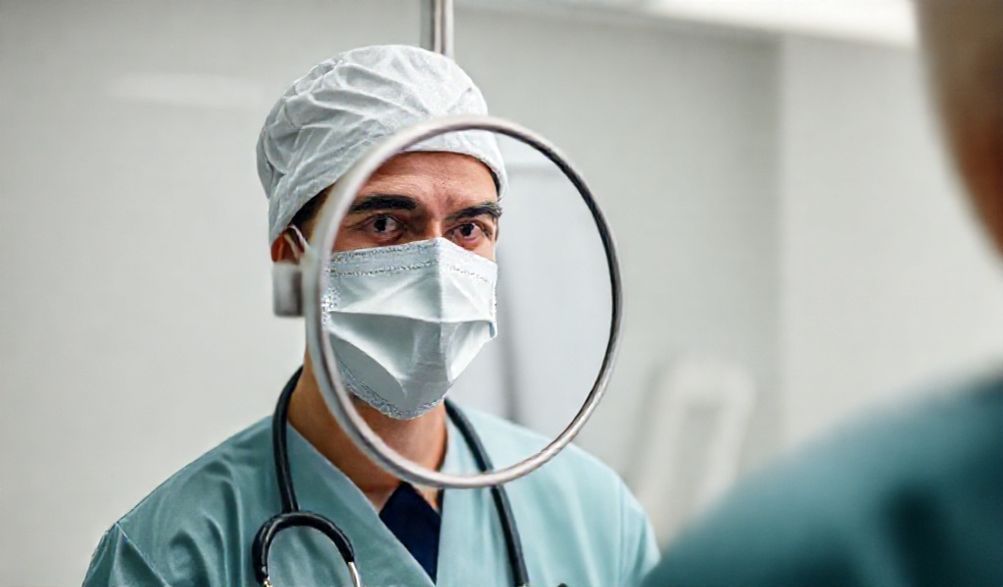
Doctor Headband Mirrors: A Comprehensive Guide for Medical Professionals
Introduction
Picture this: you’re in the midst of a delicate procedure—perhaps a complex dental restoration, a minor surgical excision, or an intricate wound closure. The overhead light is glaring, but it casts shadows precisely where you need clarity. You tilt your head, crane your neck, and contort your posture, all in a futile attempt to get a clear, illuminated view of the operative field. This frustrating scenario, a daily battle against poor visibility and awkward ergonomics, is a universal challenge in medicine, dentistry, and veterinary care.
The limitations of traditional fixed lighting and stationary mirrors are all too familiar. They force the practitioner to adapt to the tool, rather than the tool adapting to the practitioner. This constant compromise can lead to procedural inefficiencies, visual fatigue, and, over time, significant physical strain.
Enter the doctor headband mirror—an elegantly simple yet profoundly transformative piece of equipment. Also known as a جراحي عام, medical headband loupe, or frontal illuminator, this device is the ergonomic, hands-free solution to the age-old problem of directed vision. By bringing a focused light and, often, a magnifying lens directly to your line of sight, it revolutionizes how you see and interact with your clinical workspace.
This guide is designed to be your authoritative resource. Whether you are a seasoned surgeon, a dental student, a dermatologist, or a procurement officer for a clinical practice, our goal is to synthesize detailed product specifications, clinical best practices, and professional insights. We will demystify the doctor headband mirror, exploring its components, myriad benefits, and critical selection criteria, empowering you to make an informed decision that enhances both your practice and your well-being.
What is a Doctor Headband Mirror? Defining the Essential Tool
At its core, a doctor headband mirror is a wearable optical system designed to provide hands-free, directed illumination and magnification. It is not a simple headlamp; it is a precision instrument engineered for the exacting demands of clinical environments. By mounting a light source and mirror (or prism) on a secure headband, it projects a beam of light that moves in perfect synchrony with the practitioner’s gaze, eliminating shadows and providing consistent visual access to even the most recessed anatomical areas.
Core Components and How It Works
Understanding the anatomy of a headband mirror is key to selecting the right model:
- The Headband: This is the foundation. Look for adjustable, lightweight bands made from comfortable, hypoallergenic materials like silicone-padded foam or breathable fabric. A secure, balanced fit is crucial for all-day comfort and stability during precise movements. The best models feature a ratcheting or dial-adjustment system for a perfect, personalized fit.
- The Mirror & Articulating Arm: The optical heart of the device. A high-quality glass mirror (often front-surface to eliminate double reflection) is mounted on a multi-jointed, fully articulating arm. This arm, featuring ball-and-socket or geared joints, allows for infinite positioning. You can adjust the mirror’s angle, depth, and focal point with millimeter precision, locking it into place once the optimal view is achieved. The focal length—the distance from the mirror to the point of perfect focus—is a fixed property of the device, typically ranging from 14 to 20 inches for medical use.
- The Light Source: Modern devices exclusively use Light Emitting Diodes (LEDs) for their cool, bright, and efficient output. Key specifications include:
- Luminosity (Lumens): Indicates brightness. For clinical work, a range of 10,000 to 50,000 lux at the focal point is common.
- Color Temperature (Kelvin): A measure of light “warmth.” A neutral white light (4500K-5500K) is generally preferred as it closely mimics daylight and provides excellent tissue contrast without causing excessive eye strain.
- مؤشر تجسيد الألوان (CRI): A critical, often overlooked metric. CRI measures how accurately the light reveals the true colors of objects. A high CRI (90+) is essential for accurately assessing tissue health, inflammation, and subtle color variations in dermatology, dentistry, and surgery.
Primary Uses and Clinical Applications
The versatility of the doctor headband mirror makes it indispensable across numerous specialties:
- طب الأسنان وجراحة الفم: The quintessential application. It provides vital illumination and magnification for cavity preparations, endodontic procedures, periodontal surgery, and oral examinations, dramatically improving diagnostic accuracy and restorative precision.
- Otolaryngology (ENT): Essential for examinations and procedures within the nasal cavity, sinuses, and ears, where deep, narrow passages challenge traditional lighting.
- Dermatology & Minor Surgical Procedures: Perfect for excisions, biopsies, cyst removals, and cosmetic procedures. The shadow-free, magnified view ensures clean margins and meticulous suturing.
- الطب البيطري: Used in small animal surgery, dental procedures, and exotic animal care, where patient size and positioning can make visibility difficult.
- General Clinical Inspection & Wound Care: From detailed wound debridement and assessment in emergency rooms to intricate suture removal and foreign body retrieval, the hands-free advantage is invaluable.
Key Benefits of Using a Medical Headband Mirror
Investing in a quality doctor headband mirror yields immediate and long-term returns that extend far beyond simple illumination.
Enhanced Precision and Visual Acuity
This is the most direct benefit. By delivering a coaxial light beam (where the light path is aligned with your line of sight), the device completely eliminates the shadows created by your head, hands, and instruments. This results in a uniformly bright field. When combined with magnification loupes (often integrated or attachable), it creates a “brightfield” effect that enhances depth perception and reveals minute anatomical details invisible under overhead light. This leads to more accurate diagnoses, cleaner procedural execution, and ultimately, better patient outcomes.
Improved Ergonomics and Practitioner Health
The long-term health impact cannot be overstated. Constantly bending and twisting to see into a poorly lit area places tremendous strain on the cervical and lumbar spine. A medical headband mirror allows you to maintain a neutral, upright posture while simply directing your gaze and the light downward. This ergonomic correction significantly reduces the risk of chronic neck and back pain, a common occupational hazard for clinicians. Furthermore, optimal, glare-free lighting reduces the muscular effort required for ocular accommodation, minimizing eye strain and fatigue during long procedures.
Hands-Free Operation and Efficiency
Freedom is the operative word. With both hands liberated—one for the instrument and one for retraction or stabilization—procedural fluidity improves dramatically. There’s no more pausing to reposition a handheld light or asking an assistant to hold a mirror. This seamless integration can shorten procedure times, improve patient flow, and reduce overall cognitive load, allowing you to focus entirely on the task at hand.
How to Choose the Right Headband Mirror: A Buyer’s Guide
With numerous models on the market, selecting the right one requires careful consideration of your specific needs. Here’s a breakdown of the critical factors.
Critical Features to Compare
- جودة الإضاءة: Prioritize high CRI (90+) for true color fidelity. Adjustable intensity is a valuable feature, allowing you to dim the light for superficial work or maximize it for deep cavities. Check the LED’s rated lifespan (often 50,000+ hours).
- Mirror Optics: A glass mirror with a high-quality optical coating is superior to plastic. Consider size (larger mirrors offer a wider field of view) and anti-fog properties. For procedures near the mouth or nose, a heated mirror or a proprietary anti-fog coating is a near-essential investment to maintain a clear view.
- Comfort & Fit: This is paramount for compliance. The headband must be secure yet comfortable for hours. Look for lightweight construction (often 150-300 grams), balanced weight distribution, and soft, replaceable padding. Try it on if possible.
- Power Source: Rechargeable lithium-ion batteries are the standard. Evaluate battery life per charge (3-8 hours is typical) and charging time. Some professional-grade models offer hot-swappable batteries for uninterrupted use during long procedures. Corded models exist but sacrifice mobility.
Matching the Tool to Your Specialty
- High-Magnification Needs (Dentistry, Microsurgery): Prioritize systems that integrate or are compatible with high-quality Galilean or prismatic loupes (2.5x to 5.5x or higher). The optical clarity of the loupes is as important as the light.
- Broad-Field Illumination (General Surgery, Wound Care): Focus on models with a wider beam diameter and excellent light uniformity. High lumen output and adjustable focus may be beneficial.
- Sterile vs. General Use: For operating room use, ensure the device can withstand rigorous hospital-grade disinfection protocols. Some models have sterile, disposable headband covers available.
Trusted Brands and Durability Considerations
Invest in established brands known for manufacturing medical and dental devices, such as Heine, Zumax, Designs for Vision, or SurgiTel. While often a higher initial investment, they typically offer superior optics, robust construction, reliable warranties, and accessible service. Always verify that the device carries relevant regulatory markings (like CE or FDA clearance for medical devices), ensuring it meets safety and performance standards for clinical use.
Best Practices for Use, Maintenance, and Safety
To maximize the lifespan and effectiveness of your doctor headband mirror, proper handling is key.
Proper Adjustment and Calibration for Your Vision
- Fit the Headband: Adjust it to sit snugly and comfortably just above your eyebrows, ensuring it doesn’t slip during head movements.
- Position the Mirror/Light: Loosen the articulation joints. Look straight ahead at a fixed point at your typical working distance (e.g., a instrument tray). Adjust the arm until the light spot is centered in your field of view and the target is in sharp focus.
- Lock and Test: Tighten all joints securely. Practice turning your head side-to-side and up-and-down; the light should track perfectly with your gaze. Re-calibrate if needed.
Cleaning and Disinfection Protocols
Crucial: Always follow the manufacturer’s specific instructions and your clinic’s infection control policy.
* عصابة الرأس: Wipe down with a clinic-approved disinfectant wipe (e.g., 70% isopropyl alcohol). Avoid soaking it or allowing moisture to seep into padding or adjustment mechanisms.
* Mirror & Light Housing: Use a soft, lint-free cloth lightly dampened with disinfectant. Gently wipe the mirror surface and the light-emitting window. Never use abrasive cleaners, ammonia-based products (like Windex), or rough cloths, as they will permanently damage optical coatings.
* Articulating Arm: Wipe down with a disinfectant, being careful not to force liquid into the joints.
Safety Precautions and Common Mistakes to Avoid
- Never Direct the Light into a Patient’s Eyes: The intense, focused beam can cause retinal damage. Always be aware of the light path.
- التعامل بعناية: The articulating arm is precise but can be damaged by forceful, jerky movements. Adjust it gently and store the device in its protective case.
- العناية بالبطارية: Use only the manufacturer-provided charger. Avoid exposing the battery to extreme temperatures and do not completely drain it regularly for long-term health.
- Aid, Not Replacement: Remember, the doctor headband mirror is a tool to enhance your skill and vision. It does not replace fundamental anatomical knowledge, manual dexterity, or clinical judgment.
قسم الأسئلة الشائعة
Q: Can a doctor headband mirror be used for non-medical purposes, like hobbies?
A: Absolutely. Their excellent illumination and magnification make them fantastic for detailed hobbies like jewelry making, watch repair, model building, and electronics soldering. However, if you purchase one for clinical use, it should be dedicated solely to that purpose to maintain sterility and prevent cross-contamination.
Q: How much magnification do I typically need?
A: For most medical procedures (suturing, wound care, general surgery), 2.5x to 3.5x magnification is an excellent starting point. Dentistry often utilizes higher ranges, from 3.5x to 5.5x or more for endodontics. If you are new to magnification, starting lower (e.g., 2.5x) is advisable as it provides a larger field of view and is easier to adapt to.
Q: Are anti-fog features important?
A: They are critical for any specialty where practitioner or patient breath is near the field, such as dentistry, ENT, and facial procedures. A fogged mirror is useless. Heated mirrors are the gold standard, but effective anti-fog coatings are also available. For other fields, it may be a less critical feature.
Q: How do I maintain the battery life of a rechargeable unit?
A: Follow the manufacturer’s guidelines. General best practices include: avoiding full 0% discharges, storing the device (and battery) in a cool, dry place, and not leaving it on the charger indefinitely after it’s fully charged. Use the provided charger, as generic chargers may not regulate voltage correctly.
Q: Is it difficult to get used to working with a head-mounted mirror?
A: There is a short adaptation period, typically 1-3 days, as your hand-eye coordination adjusts to the fact that your “light source” moves with your head. The key is to practice with non-critical tasks first, like examining models or organizing instruments. Most users find the ergonomic and visual benefits far outweigh this brief learning curve, and the coordinated movement soon becomes second nature.
الخاتمة
A doctor headband mirror is far more than a simple convenience; it is a vital investment in clinical excellence, practitioner health, and procedural efficiency. It resolves the fundamental challenge of directed vision, transforming how you interact with your work and protecting your most valuable asset—your own physical well-being.
Selecting the right tool is a balance of understanding technical specifications—CRI, lumens, focal length—and marrying them to the practical realities of your specialty and daily workflow. We encourage you to use this guide as a foundation, consult with experienced colleagues, and, if possible, trial different models through trusted medical suppliers.
In an era of advanced medical technology, optimizing these fundamental, personal tools remains one of the most impactful steps you can take. By seeing better, you can work smarter, reduce strain, and ultimately, provide a higher standard of care—creating a more sustainable and successful practice for years to come.
ص>