
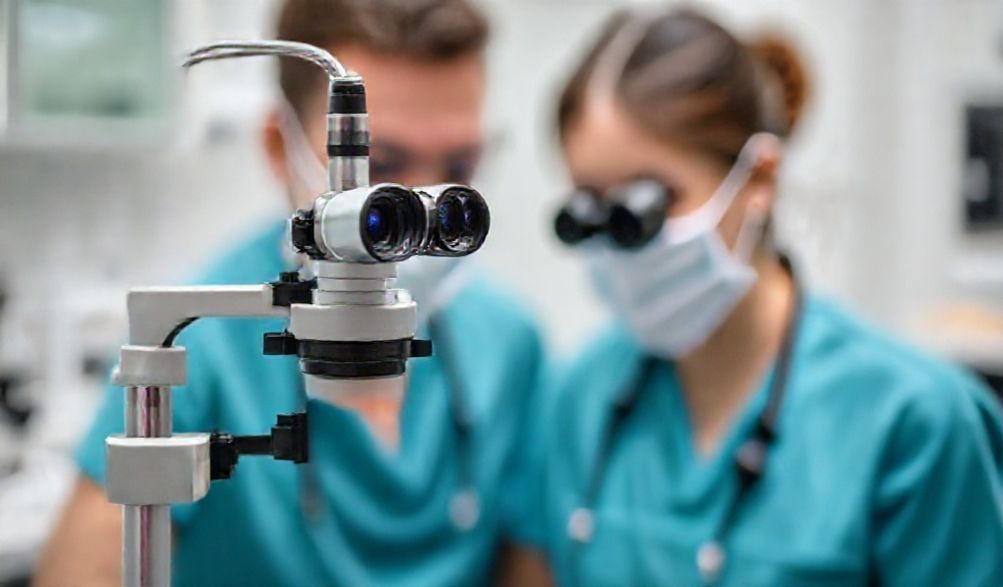
The Ultimate Guide to Loupes for Dental Assistants: Enhancing Precision, Ergonomics, and Career Growth
Introduction
It’s halfway through a busy Thursday, and you’re assisting with a deep margin elevation on tooth #19. You’re leaning in, craning your neck, squinting to see past the dentist’s hands and the patient’s cheek. Your shoulders are tight, a familiar ache is creeping up your cervical spine, and you’re willing your eyes to focus on the subtle line between tooth and restoration. Sound familiar? This daily scenario is more than just a tough day at the office—it’s a slow-motion injury in progress and a barrier to providing your best care.
For too long, عدسات طب الأسنان have been perceived as a tool reserved solely for the dentist. But the modern dental landscape demands more. Today, we frame loupes not as a luxury or a status symbol, but as an essential, non-negotiable tool for the serious dental assistant. They are a direct investment in three critical areas: unmatched procedural precision, long-term physical health, and meaningful career growth.
This guide is built on a foundation of الخبرة، التخصص، الموثوقية، والجدارة بالثقة (E-E-A-T). We’ve synthesized insights from seasoned dental assistants and hygienists, ergonomic research on musculoskeletal health, and principles of optical science. Our purpose is to demystify the world of loupes. We’ll move beyond the basics to explore the profound why behind their use, break down the key features you need to understand, and provide a clear, actionable path to choosing, using, and maintaining the right pair for you. Consider this your comprehensive roadmap to seeing better, feeling better, and performing at your peak.
Why Dental Assistants Need Loupes: Beyond Magnification
The role of the dental assistant is dynamic and visually demanding. From monitoring the operative field and managing suction to inspecting crown margins and placing cord, your eyes are one of your most vital tools. Relying on unaided vision in this environment isn’t just limiting—it’s a professional and personal liability. Let’s explore the transformative benefits that make loupes indispensable.
Enhanced Visual Acuity for Superior Assistance
Magnification is the most obvious benefit, but its impact is profound. Loupes bring the intricate world of the oral cavity into clear, detailed focus.
- Seeing the Unseeable: You can clearly distinguish subtle cracks, variations in tooth color, and the minutiae of tooth morphology. Visualizing the gingival sulcus, subgingival margins, and the precise endpoint of a root canal becomes dramatically easier. This isn’t about making things look bigger; it’s about making critical details visible.
- Elevating Clinical Performance: With this clarity, your entire skill set elevates. Your suction becomes more targeted and effective, keeping the field dry without obstructing the dentist’s view. Your instrument passing becomes anticipatory and precise. During procedures like composite placements or sealants, you can better monitor material adaptation and contour. This level of support transforms you from a helper to a true co-therapist, directly impacting procedural quality and efficiency.
The Critical Role in Ergonomics and Injury Prevention
This is arguably the most compelling reason for a dental assistant to adopt loupes. The statistics are soberning: studies consistently show that a vast majority of dental professionals will experience a work-related musculoskeletal disorder (MSD), with neck and back pain being the most common complaints. The primary culprit? Poor, static posture from constantly bending forward to see.
Loupes are a powerful ergonomic intervention. They are designed with two critical, personalized measurements:
- Working Distance: The optimal distance from your eyes to the patient’s mouth. Properly fitted loupes force you to sit or stand at this correct distance.
- Declination Angle: The angle of the lenses, which allows you to look downward while keeping your head upright and your spine in a neutral, aligned position.
By bringing the magnified image to you, loupes eliminate the need to hunch your back and crane your neck forward. The effect is transformative. As Sarah, a DA with 10 years of experience, shared: “I had constant neck pain and weekly migraines. I thought it was just part of the job. After getting fitted for loupes and committing to using them, the pain was gone within a month. I have more energy at the end of the day, and I wish I hadn’t waited so long.” This isn’t an isolated story; it’s the predictable outcome of improved biomechanics.
Improving Patient Care and Team Efficiency
The benefits of loupes extend beyond the assistant to the entire patient experience and practice workflow.
- Higher Standard of Care: Enhanced visualization leads to fewer oversights. You’re more likely to spot a missed piece of calculus, a poorly adapted margin, or a tiny void in a restoration during the procedure, when it can be corrected. This proactive attention to detail results in higher-quality outcomes and builds immense patient trust.
- Streamlined Team Communication: When you can see exactly what the dentist is seeing, communication becomes seamless. You can anticipate needs without verbal cues, respond to subtle visual signals, and engage in more informed dialogue about the procedure. This creates a cohesive “four-handed dentistry” rhythm that reduces stress, saves time, and enhances the clinical environment for everyone.
Key Features to Consider When Choosing Dental Loupes
Navigating the technical specifications of loupes can feel overwhelming. Think of this section as your evidence-based checklist. Understanding these features is the key to making an investment that will serve you for years, not one you’ll regret or leave in a drawer.
Magnification Power: Finding the Sweet Spot (2.0x to 3.5x)
Loupes for dental assisting typically range from 2.0x to 3.5x magnification.
* 2.0x – 2.5x: Offers a wider field of view, which is excellent for orientation and broader tasks. A great starting point for those new to magnification.
* 3.0x – 3.5x: Provides greater detail for intricate procedures like endodontic assistance, crown and bridge work, and pediatric dentistry.
Experience-Based Advice: For most dental assistants starting their loupe journey, 2.5x أو 3.0x offers the ideal balance. It provides significant detail enhancement without an overly restrictive field of view that can cause disorientation. It’s powerful enough for the vast majority of clinical tasks you’ll encounter.
Working Distance and Declination Angle: The Foundation of Posture
If you remember nothing else, remember this: Custom fitting is non-negotiable. Off-the-shelf or borrowed loupes will likely do more harm than good.
- Working Distance: This is measured from your cornea to your primary working point (typically the patient’s mandibular arch). An incorrect distance will force you into an awkward, strained position. A professional fitting ensures this measurement is perfect for أنت.
- Declination Angle: This is the angle of the lens barrels. It determines how far down you can look while keeping your head upright. An improper angle is the leading cause of the “turtle neck” posture that loupes are meant to prevent.
Advise with Experience: Always opt for a professional fitting. Reputable companies offer this service through local representatives or via detailed at-home measurement kits with video guidance. Do not skip this step.
Field of View and Depth of Field
- Field of View (FOV): The diameter of the magnified area you can see at once. Higher magnification typically reduces the FOV.
- Depth of Field (DOF): The range of distance (from near to far) within the magnified area that remains in clear focus. A greater DOF allows you to move slightly without losing focus.
Higher-quality, Galilean (lower-mag) or prismatic (higher-mag) optical systems often provide better depth of field. When trying loupes, move your head slightly back and forth to test how forgiving the focus is.
Lens Quality and Coating Options
The lenses are the heart of the system. Key considerations include:
* Coatings:
* Anti-Reflective (AR): Reduces glare from overhead lights, crucial for visual comfort.
* Anti-Fog: A lifesaver when you’re masked and working in a moist environment.
* Scratch-Resistant: Protects your investment from daily wear and tear.
* Material: High-index polymers are lightweight and durable, while glass offers superior optical clarity but can be heavier. For most assistants, a high-quality polymer with excellent coatings is the ideal choice.
Frame Styles: Through-the-Lens (TTL) vs. Flip-Up
- Through-the-Lens (TTL): The lenses are permanently mounted in the frame, custom-ground to your prescription (if needed) and measurements. They are generally lighter, more balanced, and offer a more “natural” viewing experience as the lenses are always aligned with your eyes.
- Flip-Up: The magnification loupes are on a hinge and can be flipped up and down. The frame can hold your regular prescription glasses underneath.
Offer Experienced Guidance:
* Choose TTL Loupes if you are the sole user, want the most ergonomic and lightweight design, and plan to wear them for most of your clinical day. They offer a superior, integrated experience.
* Choose Flip-Up Loupes if you need to frequently look away from the magnified field (e.g., to look at a screen or across the room), or if multiple people with similar prescriptions might need to share the device. They offer flexibility at the cost of slightly more weight and bulk.
Integrating Loupes with Lighting: The Essential Companion
Magnification without proper light is like a high-resolution camera in a dark room—useless. When you magnify an area, you concentrate the available light, making the field darker. A dental headlight is not an accessory; it is the essential companion to your loupes.
Why a Dental Headlight is Non-Negotiable
A coaxial LED headlight, mounted directly to your loupe frame, projects a bright, shadow-free beam of light exactly where you are looking. It illuminates the depths of the oral cavity, reveals true tissue color and texture, and eliminates the visual fatigue caused by squinting in inadequate light. It completes the ergonomic system by allowing you to maintain perfect posture without relying on poorly positioned overhead operatory lights.
Choosing a Compatible LED Headlight System
When selecting a headlight, consider:
* Brightness (Lumens): Look for systems offering at least 10,000+ lux at the working distance. Adjustable brightness is a valuable feature.
* Color Temperature (~5500K): This “daylight” temperature provides true color rendering, critical for distinguishing caries, tissue health, and shade matching.
* Battery System: Lightweight, rechargeable lithium-ion batteries are standard. Consider battery life (4+ hours per charge is typical) and whether you prefer a belt-clip or behind-the-head battery.
* Weight & Balance: The light source should be lightweight and counterbalanced by the battery to avoid neck strain.
Most reputable loupe manufacturers offer integrated loupe-light combo packages. This is highly recommended, as the systems are engineered to work together seamlessly in terms of weight distribution, attachment, and optical alignment.
The Investment: Cost, Care, and Long-Term Value
Viewing loupes as a cost rather than an investment is a common mistake. Let’s break down the financial and practical aspects with transparency.
Understanding the Price Range and What It Includes
A quality set of dental loupes can range from $500 to over $2,500. The price is driven by:
* Optical Quality & Magnification: Prismatic (higher-mag) systems are more complex and costly than Galilean.
* التخصيص: A fully custom TTL fit costs more than an adjustable flip-up.
* Frame Material: Titanium frames are lightweight and hypoallergenic but cost more than composite materials.
* Included Lighting: A package with a high-quality LED headlight will be at the higher end of the spectrum.
Frame this purchase as a long-term investment in your most valuable asset: your ability to work pain-free and effectively. The cost, amortized over a 5-10 year career (or longer), is minimal compared to the potential cost of chronic pain, medical treatments, or lost work time.
Proper Care, Cleaning, and Maintenance
Protecting your investment is simple but crucial.
1. التنظيف: Always use the microfiber cloth provided. For smudges, use a lens-safe spray or a drop of water. لا تقم أبدًا use your scrub top, paper towels, or harsh chemicals.
2. التخزين: قم دائمًا بتخزينها في حافظة صلبة واقية عند عدم الاستخدام. لا تضعها أبدًا والعدسة موجهة للأسفل على سطح.
3. التعامل: Put them on and take them off using both hands to avoid twisting the frame.
4. الصيانة: Have the frame alignment and tightness checked annually. If damaged, contact the manufacturer or an authorized repair center—do not attempt DIY fixes.
Tips for a Successful Adjustment Period
Share Experience: The first week with loupes can feel strange. Your depth perception will be off, and you might feel slightly confined. This is normal.
* ابدأ ببطء: Wear them for 30-60 minutes at a time during less complex tasks, like setup or cleaning.
* Practice Coordination: Use a typodont or even just moving instruments on a tray to rebuild hand-eye coordination in the magnified field.
* كن صبورًا: Commit to consistent use for 1-2 weeks. Most users report that the “click” happens suddenly, and the magnified view becomes their new normal. The initial awkwardness is a small price for a lifetime of better posture and vision.
الأسئلة المتكررة (FAQ)
Q: Are loupes only for dentists, or can dental assistants really use them?
ج: Absolutely. This is a critical misconception to dispel. Loupes are a vital tool for ضوء عالي الطاقة جداً clinical team member performing detailed visual tasks. They improve an assistant’s ability to provide superior support, enhance patient safety, and, most importantly, protect their own physical health. Their use is a mark of a modern, proactive professional.
Q: Will my practice pay for my loupes?
ج: Policies vary widely. An increasing number of forward-thinking practices offer stipends or full payment, recognizing loupes as essential safety and efficiency equipment, much like ergonomic chairs. We recommend preparing a professional proposal for your employer. Highlight the benefits: reduced risk of your work-related injury (lowering practice liability), increased procedural efficiency, and elevated standard of patient care. Be prepared to discuss cost-sharing options if full payment isn’t available.
س: كم من الوقت يستغرق التعود على العمل باستخدام العدسات المكبرة؟
ج: Most users achieve basic comfort and adapted hand-eye coordination within 1-2 weeks of consistent, daily use. Full, unconscious proficiency where they feel like a natural extension of your vision may take a month or two. The key is persistence through the initial adaptation phase.
Q: Can I use my dentist’s old loupes?
ج: We strongly advise against this. Loupes are as personal as a pair of prescription shoes. Using loupes fitted for someone else means the working distance, pupillary distance, and declination angle are all wrong for your body. This will force you into compensatory, awkward postures that can cause more musculoskeletal harm than using no loupes at all. It also won’t provide you with clear, focused vision. A professional fitting is a non-negotiable step for both safety and performance.
الخاتمة
Choosing to invest in dental loupes is one of the most significant decisions a dental assistant can make for their career trajectory and personal well-being. It is a commitment to precision that elevates patient care, an application of ergonomic science that safeguards your health, and a declaration of professional growth. This guide has moved beyond the “what” to explore the profound “why,” providing you with the knowledge to see loupes not as a mere tool, but as a foundational component of a sustainable, successful clinical practice.
Remember, this decision is grounded in expertise and experience. It’s a clinical choice backed by research on injury prevention and optical principles. Your next step is to act on this knowledge. Research reputable manufacturers known for quality and service. Schedule a consultation with a loupe representative for a professional fitting—even a virtual one. Begin the conversation with your practice owner or manager. Take that step toward a future of clearer vision, a pain-free neck and back, and the confidence that comes from performing at your absolute best. Your future self—and every patient you assist—will thank you for it.
ص>