
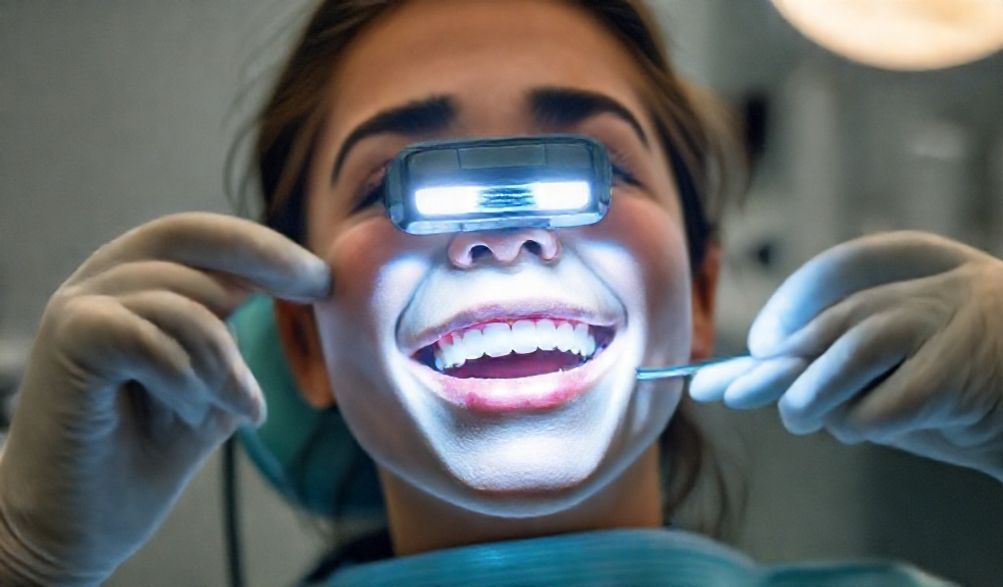
The Ultimate Guide to Wireless Dental Headlights: Benefits, Features & How to Choose
Introduction
Picture this: you’re deep into a complex Class II restoration. Your focus is absolute, your hands steady. But as you shift to access the distal margin, you feel the familiar tug—the cord from your مصباح رأس snags on the chair control, pulling your loupes askew and casting a shadow precisely where you need clarity. You pause, reposition, and lose your rhythm. This dance with cords, limited mobility, and inconsistent light is a daily reality for many clinicians, subtly undermining efficiency, ergonomics, and even clinical outcomes.
In modern dentistry, where sub-millimeter accuracy is the standard, precise, shadow-free illumination is non-negotiable. It’s the foundation for accurate diagnosis, meticulous preparation, and flawless restoration. Yet, for years, the very tool providing this light—the corded headlight—has been a source of physical constraint. The solution is no longer a futuristic concept but a present-day reality: the wireless dental headlight.
This technology represents a significant leap forward, untethering the clinician from physical limitations and redefining the operative field. But with growing options comes the challenge of choice. This guide serves as your comprehensive, authoritative resource. Drawing on technical specifications, ergonomic principles, and the lived experience of practitioners, we will dissect the benefits, detail the critical features, and provide a clear framework to help you select the wireless dental headlight that will seamlessly integrate into your practice and elevate your clinical care.
Why Wireless Dental Headlights Are Revolutionizing Patient Care
The shift from corded to wireless is more than a mere convenience; it’s a fundamental upgrade to the clinical environment that benefits both practitioner and patient.
Unparalleled Freedom of Movement and Ergonomics
The most immediate and palpable benefit is liberation. The elimination of cord drag is a game-changer for physical well-being. Without a tether pulling on your head and neck, you maintain a neutral posture naturally. This reduction in constant, low-grade resistance directly translates to decreased cervical strain and fatigue, especially during marathon procedures or busy clinical days. The result is a practitioner who leaves work feeling less physically drained, with a lower long-term risk of musculoskeletal disorders.
This freedom also translates to clinical agility. Accessing all quadrants of the mouth becomes fluid. You can move from the maxillary right molars to the mandibular left incisors without the subconscious calculation of cord management. There’s no need to constantly reposition the patient, the chair, or yourself to avoid a tangled cord. This dynamic mobility allows for a more natural, efficient workflow and optimal positioning for every step of a procedure.
Enhanced Visual Accuracy for Superior Outcomes
A wireless dental headlight isn’t just about removing a cord; it’s about delivering superior, consistent light. Advanced LED systems in wireless models provide a stable, focused beam with exceptional color rendering. This means:
- Revealing Critical Details: Fissures become clearer, marginal gaps are more evident, and subgingival anatomy is illuminated without shadow interference from a dangling cord.
- True Tissue Color: High-quality LEDs with a color temperature around 5000K-6000K (daylight white) and a high Color Rendering Index (CRI) allow for accurate differentiation between tooth structure, caries, and soft tissue. This is indispensable for precise caries removal and critical for accurate shade matching in aesthetic dentistry.
- Consistent Performance: Unlike some older halogen systems that can dim over time or with voltage fluctuations, a quality wireless LED provides consistent luminosity from the first minute of use to the last, before the battery indicator warns of a recharge.
This enhanced visualization is not a minor improvement; it’s a direct contributor to more precise diagnostics, more conservative cavity preparations, and better-fitting restorations—factors that fundamentally impact treatment longevity and patient satisfaction.
Improving the Patient Experience
The benefits extend visibly into the patient’s experience. A cordless setup appears less intimidating and more modern, reducing the “industrial” feel of the operatory. The clinician’s increased mobility and relaxed posture contribute to a calmer, more confident demeanor, which patients intuitively sense.
Furthermore, many wireless systems operate silently, eliminating the distracting hum or fan noise associated with some corded power boxes. The reduced physical intrusion—no cord brushing against the patient’s shoulder or the clinician needing to reach over them to manage the cable—respects the patient’s personal space, fostering a more comfortable and less stressful encounter.
Key Features to Evaluate When Choosing a Wireless Headlight
Not all wireless dental headlights are created equal. Understanding these core features will empower you to make a selection based on your specific clinical needs.
Light Source and Beam Quality (LED Types)
This is the heart of the system. Look beyond “bright” and understand the technology:
* LED Type: Most use advanced Surface-Mount Device (SMD) or Chip-on-Board (COB) LEDs. COB LEDs can offer a very uniform, shadow-reduced light field from a single source.
* Color Temperature (5000K-6000K): This “daylight” range provides a neutral white light that reveals true tissue color, crucial for diagnostics and aesthetics.
* Color Rendering Index (CRI >90): A high CRI means the light source accurately reproduces all colors in the spectrum. This is vital for distinguishing between healthy dentin, caries, and composite shades.
* Luminosity & Focus: Measured in lumens, brightness should be ample (often 10,000+ lux at working distance) and adjustable. A focus-adjustable beam allows you to change from a wide field for exams to a concentrated spot for fine margin work.
Battery Life and Charging System
Battery anxiety is a common concern, but modern systems are designed to alleviate it.
* Runtime: Seek a unit that offers a full clinical day (6-8 hours) on a single charge. Real-world runtime is key; manufacturer specs can be optimistic.
* Battery Type & Indicators: Lithium-ion (Li-ion) batteries are standard for their longevity and lack of “memory effect.” A clear, multi-level battery indicator (e.g., LED lights on the unit) is essential to avoid surprises.
* Charging: Options include docking stations (easy, ensures consistent placement) or USB-C cables (versatile, can use power banks). Quick-charge capability, providing several hours of use from a short charging period, is a valuable feature for busy practices.
Comfort, Fit, and Weight Distribution
A headlight you can’t wear comfortably is a poor investment, no matter how bright.
* عصابة الرأس: Look for padded, adjustable straps with moisture-wicking material. A secure, balanced fit prevents slippage and “headband headache.”
* Weight & Balance: While housing a battery, a well-designed wireless unit often balances the weight better than a corded system with a separate belt-pack. The total weight on your head (typically 80-150 grams for the light module) should feel negligible when properly fitted.
* Loupe Integration: Ensure the mounting system is compatible with your loupes—whether through-the-lens (TTL) or flip-up. Many brands offer universal or brand-specific adapters.
Durability and Ease of Maintenance
This is clinical equipment that must withstand daily disinfection.
* Build Quality & IP Rating: The housing should be robust. An Ingress Protection (IP) rating (e.g., IP54) indicates resistance to dust and water sprays, confirming it can handle clinical wipe-downs.
* Disinfection Protocol: The unit should be designed for easy cleaning without delicate crevices. A smooth, wipeable surface is a must.
* الضمان: A strong warranty (2-3 years) is a signal of the manufacturer’s confidence in their product’s reliability and build quality.
Practical Considerations for Integration into Your Practice
Adopting new technology requires thoughtful integration. Here’s how to ensure a smooth transition.
Cost Analysis: Initial Investment vs. Long-Term Value
Wireless headlights represent a significant investment, often ranging from several hundred to over a thousand dollars. Frame this cost not as an expense, but as an investment in:
* Practitioner Health: Reducing fatigue and strain can extend your career and improve daily quality of life.
* Clinical Efficiency: A smoother, more mobile workflow can save minutes per procedure, adding up over a week.
* Clinical Outcomes: The potential for improved visualization leading to higher-quality dentistry is a profound, albeit less tangible, ROI.
Consider the total cost of ownership, including the lifespan of the unit and battery replacement costs, against the ongoing drawbacks of your current system.
Compatibility with Your Existing Loupes
This is a critical step. Do not assume compatibility.
1. Identify your loupe brand, model, and frame style (e.g., TTL, flip-up).
2. Research the headlight manufacturer’s mounting options. Many have online compatibility charts.
3. When in doubt, contact both your loupe dealer and the headlight manufacturer directly for confirmation. An adapter may be required.
Establishing an Efficient Clinic Workflow
- Designate Charging Stations: Create a dedicated, accessible space (not a cluttered drawer) for charging docks or cables. A central location encourages consistent use.
- Implement a Battery Routine: Make it a habit to place the headlight on the charger at the end of the day. For practices with multiple users or units, a simple “check-in/check-out” log can ensure a charged unit is always available.
- Train Your Team: Ensure all users understand how to properly wear, adjust, use, and clean the device to maximize its lifespan and performance.
Addressing Common Concerns About Wireless Technology
Let’s demystify the most frequent hesitations.
“Will the Battery Die Mid-Procedure?”
Modern Li-ion batteries and smart power management make this unlikely with proper habit. The key is treating it like your phone or electric handpiece: develop the routine of charging it overnight. With 6-8 hour runtimes, a full day’s work is covered. Clear low-battery indicators (often flashing or changing color) provide ample warning—often 30-60 minutes—to finish a procedure and recharge. Some systems offer hot-swappable batteries for ultimate peace of mind.
“Is Wireless as Bright and Reliable as Corded?”
Yes, and often superior. Early wireless models had limitations, but today’s advanced LEDs frequently outperform older corded halogen systems in both brightness and color quality. They produce more lumens per watt with minimal heat output. Regarding reliability, a well-built wireless unit with solid-state electronics is often more reliable than a corded system, which has a physical cable susceptible to fraying, connector damage, and internal wire breakage from constant movement.
“Are They Difficult to Clean and Disinfect?”
A properly designed wireless dental headlight is engineered for the clinical environment. This is why the IP rating is important. The cleaning protocol is typically simple: after use, wipe down the headband and light casing with a soft cloth dampened with an EPA-approved, hospital-grade disinfectant. Avoid submerging the unit or spraying liquid directly into vents or ports. This process is no more cumbersome than cleaning corded loupes or a headlight cable.
قسم الأسئلة الشائعة
Q: How long does a wireless dental headlight battery typically last on a single charge?
ج: Most modern units offer between 6 to 8 hours of continuous use on a full charge, which is typically sufficient for a full clinical day. Always check the manufacturer’s real-world runtime specifications for the model you choose.
Q: Can I use a wireless headlight with any brand of dental loupes?
ج: Not always. Compatibility depends on the mounting system. Many wireless headlights offer universal or adaptable mounts, but it’s crucial to verify compatibility with your specific loupe brand, model, and frame type (TTL/flip-up) before purchasing. Contacting the manufacturers directly is the best approach.
Q: Are wireless headlights significantly heavier than corded ones?
ج: The weight difference is often minimal and can be better distributed. While the head-mounted module contains a battery, wireless headlights eliminate the heavy battery pack typically worn on the waist or belt with corded systems. The total weight on your head is often comparable or even less, with improved balance reducing perceived weight.
Q: What is the most important feature to prioritize?
ج: While individual needs vary, a combination of beam quality (for accurate vision) and comfort/fit (for all-day usability) is foundational. A bright light is useless if you can’t wear it comfortably, and a comfortable light must provide excellent, color-true illumination to be clinically effective. Battery life is a close third.
Q: How do I properly disinfect a wireless headlight?
ج: Always follow the manufacturer’s instructions precisely. Generally, this involves using a soft, lint-free cloth dampened with an EPA-approved hospital-grade disinfectant wipe to clean the headband and light casing. Avoid submerging the unit, using abrasive cleaners, or allowing excess moisture to enter charging ports or vents.
الخاتمة
الانتقال إلى wireless dental headlight is more than an equipment upgrade; it’s an investment in a more ergonomic, efficient, and precise practice. By eliminating physical tethers, you gain unparalleled mobility that protects your body from strain. By harnessing advanced LED light, you illuminate details critical for superior diagnostics and restorations. And by streamlining your operatory setup, you enhance the experience for everyone in the chair.
Choosing the right equipment is a significant clinical decision. We encourage you to use this guide as a foundational, experience-informed resource. Your next step is to prioritize your specific clinical needs and personal comfort above all. Create a checklist based on the features discussed—beam quality, battery life, fit, and compatibility. Seek out demonstrations or trial periods if possible, and consult with trusted colleagues who have made the switch. Their hands-on insights are invaluable.
As dentistry continues to evolve towards greater precision and clinician-centric design, wireless illumination is rapidly shifting from a premium option to a standard of care. It represents a clear step toward a practice defined not by limitations, but by freedom, clarity, and well-being.
ص>