
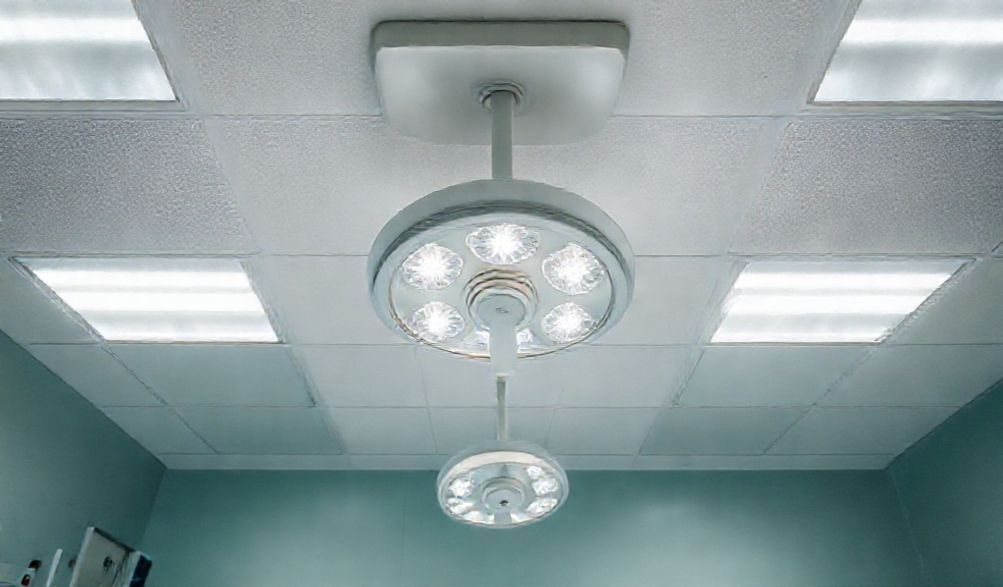
Operating Room Overhead Lights: A Guide to Technology, Safety, and Selection
In the high-stakes environment of the operating room (OR), precision is paramount. A surgeon’s skill, honed over years of training, meets the complexity of the human body. Yet, this expertise is fundamentally mediated by one critical, and often understated, factor: light. The clarity, color, and quality of illumination directly influence a surgeon’s ability to see, differentiate, and operate with confidence. A shadow obscuring a critical vessel, glare reflecting off an instrument, or poor color rendering masking tissue ischemia can be the difference between a routine procedure and a complication. Modern operating room overhead lights are not mere fixtures; they are sophisticated, safety-critical medical devices integral to successful surgical outcomes.
This guide synthesizes knowledge from surgical equipment standards, clinical ergonomics studies, and healthcare facility design principles to provide a comprehensive resource. Whether you are a hospital administrator overseeing a capital purchase, a clinical engineer ensuring compliance, a surgeon advocating for better tools, or a facilities planner designing a new suite, you are seeking reliable, in-depth information. We will explore the core technology behind today’s systems, decode the essential features that define performance, outline vital safety considerations, and provide a framework for selecting and maintaining the right lighting system for your needs.
The Critical Role of Surgical Lighting in Modern Medicine
The primary purpose of the operating room light is to illuminate the surgical site. However, this simple statement belies a profound clinical impact. Advanced surgical lighting is a cornerstone of modern medicine, affecting outcomes, team performance, and patient safety on multiple levels.
Beyond Illumination: Impact on Surgical Outcomes
First and foremost, superior lighting reduces surgeon fatigue and eye strain. Procedures can last for many hours, and the visual demand is immense. Inadequate or poorly designed lighting forces the eye to constantly adjust, leading to headaches, diminished concentration, and premature fatigue—all of which can compromise performance. High-quality, homogeneous light reduces this cognitive load, allowing the surgical team to maintain focus and precision throughout lengthy operations.
More directly, lighting quality is crucial for accurate visual diagnosis and tissue manipulation. It enhances tissue differentiation—the ability to distinguish between arteries, veins, nerves, and various tissue types based on subtle variations in color, texture, and reflectance. This is vital in procedures like cancer resections, where identifying tumor margins is critical, or in vascular surgery, where differentiating between an artery and a vein is essential. Proper illumination also provides the depth perception needed for delicate maneuvers in deep cavities, such as in neurosurgery or pelvic procedures.
Key Performance Metrics: What Defines Quality Light?
To understand what makes a great surgical light, one must speak the language of its technical specifications. These metrics are not just numbers on a datasheet; they are quantifiable measures of clinical utility.
- Illuminance (Lux): This measures the intensity of light falling on the surgical field. While more light isn’t always better (excessive light causes glare), sufficient illuminance is non-negotiable. Standards like IEC 60601-2-41 specify a minimum of 40,000 lux at the center of the field, with high-performance systems delivering 160,000 lux or more. Different specialties have different needs; microsurgery and cardiac surgery often demand higher intensities than general surgery.
- Shadow Reduction: A single light source casts hard, obstructive shadows from the surgeon’s head and hands. Modern lights use multi-point source technology, typically with several LED modules arranged in a ring or configuration. This design allows light to fill in from multiple angles, dramatically reducing the density and obscurity of shadows. Some systems feature a central “shadow-free” core, ensuring the primary surgical site remains perfectly illuminated regardless of obstruction.
- مؤشر تجسيد الألوان (CRI): Perhaps one of the most critical metrics, CRI measures a light source’s ability to reveal the true colors of objects compared to natural daylight (which has a CRI of 100). For surgical applications, a CRI greater than 90 is essential, with top systems achieving 95 or higher. High CRI is what allows a surgeon to accurately assess tissue perfusion (pink vs. pale), identify bile (greenish hue), or detect cyanosis (bluish discoloration). Poor CRI can literally change the perceived color of tissue, leading to misjudgment.
- Homogeneity: This refers to the evenness of light distribution across the entire illuminated field. A “hot spot” of extreme brightness in the center with a rapid fall-off at the edges is undesirable. Good homogeneity ensures consistent visual conditions across the entire wound, preventing the need for constant light repositioning and reducing eye strain as the surgeon’s gaze moves across the field.
Core Technologies in Modern OR Overhead Lights
The technology inside the iconic dome of the surgical light has undergone a revolution, moving from hot, inefficient, and maintenance-heavy sources to cool, reliable, and intelligent systems.
LED Dominance: The New Standard
Light Emitting Diode (LED) technology has completely supplanted older halogen and xenon lamps as the standard for surgical illumination, and for compelling reasons:
- Cool Light Operation: LEDs emit minimal infrared (IR) and ultraviolet (UV) radiation. This is a monumental advance over halogen lights, which projected significant heat onto the surgical site, potentially causing tissue desiccation (drying out) and increasing patient discomfort. The “cool light” of LEDs enhances patient safety and surgeon comfort.
- Exceptional Longevity & Reliability: LED modules boast lifespans of 50,000 to 60,000 hours or more, compared to a few hundred hours for halogen bulbs. This drastically reduces the frequency and cost of bulb replacements and the associated risk of a light failing mid-procedure.
- كفاءة الطاقة: LEDs consume a fraction of the power required by traditional systems, leading to substantial energy cost savings for a hospital, especially when multiplied across dozens of operating rooms.
- Superior Color Rendering: Modern surgical LEDs are engineered to produce a spectrum of light that achieves very high CRI values, often with tunable color temperature to match surgeon preference or procedural need (e.g., a warmer light for abdominal surgery, a cooler light for orthopedics).
Mechanical Design & Movement
The light source is only half the equation. Its ability to be precisely, safely, and ergonomically positioned is equally important.
- Ceiling Mounts: Systems are either mounted on a single-point ceiling column or on a track system. Single-point mounts are common and offer a wide range of motion from a fixed location. Track systems allow the light to be moved along a rail, providing greater flexibility to reposition the light for different table orientations or to get it completely out of the way for large equipment like C-arms.
- المفصلية: The arm assembly is a marvel of balanced engineering. It features multiple, fluidly moving joints that allow the light head to be positioned exactly where needed—often with a single, gentle touch—and then remain perfectly stable in that position without drift. Counterbalance systems ensure the light feels weightless to the user.
- Sterility Considerations: Every surface is designed for the OR environment. Handles are often removable and autoclavable, or designed for easy wiping with disinfectants. The entire light head and arm feature seamless, crevice-free surfaces to prevent the accumulation of contaminants and allow for thorough cleaning.
Essential Features and Safety Considerations
When a device is suspended over an open patient during surgery, its design philosophy must be rooted in fail-safe operation and infection control.
Redundancy and Fail-Safe Systems
Reliability is non-negotiable. High-end surgical lights incorporate multiple layers of redundancy:
* Backup Light Heads: Many systems feature a primary and a secondary (“buddy”) light on the same assembly. If the primary light fails, the secondary can be instantly activated to continue the procedure without delay.
* Dual Power Supplies: Critical systems may have redundant internal power supplies to protect against a single component failure.
* Established Protocols: OR teams have clear protocols for light failure, which may involve switching to a backup light, using a mobile stand-by light, or in rare cases, pausing the procedure. The design of the system aims to make invoking these protocols a rare event.
Infection Control and Cleanability
The light is a frequent point of contact in the OR. Its design must support the highest standards of asepsis.
* Materials: Surfaces are typically high-grade, medical-grade stainless steel or specially coated polymers that are resistant to the harsh chemicals used in hospital-grade disinfectants.
* Design for Cleaning: As mentioned, seamless surfaces without screws, gaps, or textured areas are standard. The shape of the light head is designed to shed dust and fluids, and all controls are sealed.
Ergonomic Design for the Surgical Team
A light that is difficult to position is a hazard. Ergonomic design reduces physical strain and frustration.
* Ease of Adjustment: The light should move effortlessly along its intended paths. Surgeons and nurses should be able to reposition it with one hand, often using large, easy-grip handles that can be manipulated even with a gloved hand.
* عناصر التحكم البديهية: Dimmability and, on advanced systems, color temperature adjustment should be accessible via simple, responsive touch panels or remote controls. The focus should be on the patient, not on fumbling with complicated interfaces.
How to Select the Right Operating Room Lighting System
Selecting an OR lighting system is a significant capital investment with a lifespan of a decade or more. A methodical, needs-based approach is crucial.
Assessing Your Facility’s Needs
Start with a clinical and operational assessment:
* Surgical Specialty Mix: A hospital performing primarily laparoscopic surgery has different needs (consistent ambient light for monitor viewing) than a level-1 trauma center or a hospital specializing in neurosurgery or ophthalmology (requiring extreme intensity and shadow-free performance for deep cavities or microscopic work).
* OR Layout and Size: Room height, the presence of other ceiling-mounted equipment (booms, monitors, gas columns), and table positioning protocols will dictate whether a single-point or track-mounted system is preferable.
* Technology Integration: Is the OR being designed as a “hybrid” room for interventional procedures? Lights may need to be compatible with large imaging systems like fixed C-arms and be capable of retracting fully into the ceiling.
The Procurement Checklist
Use this list to compare systems objectively:
* المواصفات الفنية: Compare key metrics side-by-side: Lux at center and edge of defined field diameters (e.g., at 1m distance), CRI value, depth of illumination, and homogeneity percentages.
* Warranty and Service: What is included in the warranty? What is the manufacturer’s reputation for service response times? A strong, local service network is invaluable.
* التكلفة الإجمالية للملكية (TCO): Look beyond the purchase price. Factor in energy consumption, the cost and frequency of replacement parts (LED modules, filters), and the expected costs of preventive maintenance contracts over the system’s lifetime.
Installation and Compliance
Professional installation by manufacturer-certified technicians is mandatory. It ensures proper electrical connection, mechanical balancing, and calibration. Compliance with international safety and performance standards is non-negotiable. Key standards include:
* IEC 60601-2-41: The international standard for the basic safety and essential performance of surgical luminaires and luminaires for diagnosis.
* NFPA 99: The U.S. standard for Health Care Facilities Code, which covers electrical systems in patient care areas.
* Local Regulations: Always verify additional requirements from local health authorities or accrediting bodies like The Joint Commission.
Maintenance, Certification, and Lifespan
A “set-it-and-forget-it” attitude with surgical lights is a recipe for risk. A proactive maintenance program ensures performance, safety, and longevity.
Routine Maintenance Protocols
- يومياً: Terminal cleaning of all handles and touch surfaces by OR staff using approved disinfectants.
- Scheduled (Annual/Bi-Annual): Performed by clinical engineering or a service technician. This includes checking the mechanical balance and smoothness of all joints, inspecting cables for wear, verifying electrical safety (grounding, leakage current), cleaning internal filters, and checking the actual light output (lux) against specifications to detect degradation.
Understanding Lifespan and Degradation
While LEDs don’t “burn out” like traditional bulbs, their light output gradually diminishes over time. Lifespan is rated using metrics like L70 أو L80, meaning the point at which the LED’s output has degraded to 70% or 80% of its original value. A light rated for 60,000 hours to L80 will still be functional after 60,000 hours, but at 80% of its initial brightness. Regular performance testing will identify when a light head is nearing the end of its useful clinical life and needs module replacement. Mechanical components like joints and springs may also require servicing or replacement well before the LEDs fail.
الأسئلة المتكررة (FAQ)
Q: What is the typical lifespan of a modern LED OR light?
ج: The LED modules themselves can last 50,000 to 60,000 hours, which often translates to over a decade of clinical use before light output degrades noticeably. However, mechanical components (joints, handles, balance mechanisms) may require servicing or replacement on a shorter timeline, typically outlined in preventive maintenance schedules.
Q: How often do surgical lights need to be serviced or certified?
ج: They should undergo routine preventive maintenance at least annually by a qualified biomedical technician or manufacturer’s service engineer. Formal certification for safety (electrical) and performance (light output) is typically required after any major repair and as dictated by local hospital policy, accreditation standards (like The Joint Commission), or national regulations.
Q: Can surgical lights be too bright? Do they cause heat issues?
ج: Yes, excessive brightness can cause disabling glare and reflective hotspots on instruments or tissue. High-quality lights offer a wide, adjustable intensity range. Regarding heat, modern LEDs are a breakthrough—they emit negligible infrared radiation compared to old halogen lights, virtually eliminating the risk of tissue thermal injury from the light source itself.
Q: What is the most important feature to look for in an OR light?
ج: It’s about a synergistic combination, but a foundational triad exists: تقليل الظل المتفوق (for unobstructed vision), a فإن مؤشر تجسيد اللون العالي (CRI >90) (for accurate tissue assessment), and Sufficient, Adjustable Illuminance (to meet the demands of various procedures). Compromise on any one of these, and clinical efficacy suffers.
Q: Are there “smart” or connected operating room lights?
ج: Absolutely. The integrated OR is a reality. Newer systems can connect to room control systems, allowing for preset lighting “scenes” for different procedure types. Features include touchless control via gesture or voice command to maintain sterility, automatic dimming when an imaging system is activated, and even integration potential with augmented reality (AR) surgical navigation systems.
الخاتمة
The journey of the operating room overhead light—from a simple incandescent bulb to today’s intelligent, ergonomic, and safety-engineered LED system—mirrors the evolution of surgery itself toward greater precision, safety, and integration. It has transformed from a basic utility into a pivotal component of the surgical ecosystem, directly impacting visual clarity, team ergonomics, and infection control.
Selecting and maintaining these systems is a strategic decision with long-term implications for patient outcomes, staff satisfaction, and operational efficiency. It requires a collaborative effort, balancing hard technical data with the nuanced feedback of the surgical teams who use them daily. We encourage anyone involved in this process to conduct thorough evaluations, demand hands-on demonstrations in a simulated OR setting, and consult both clinical stakeholders and facility engineering experts.
As we look forward, the integration of lighting with digital OR platforms, adaptive systems that respond in real-time to endoscopic video, and even smarter automation will continue to push the boundaries, ensuring that the surgeon’s most fundamental tool—the ability to see clearly—is supported by ever more capable and intelligent technology.
ص>