
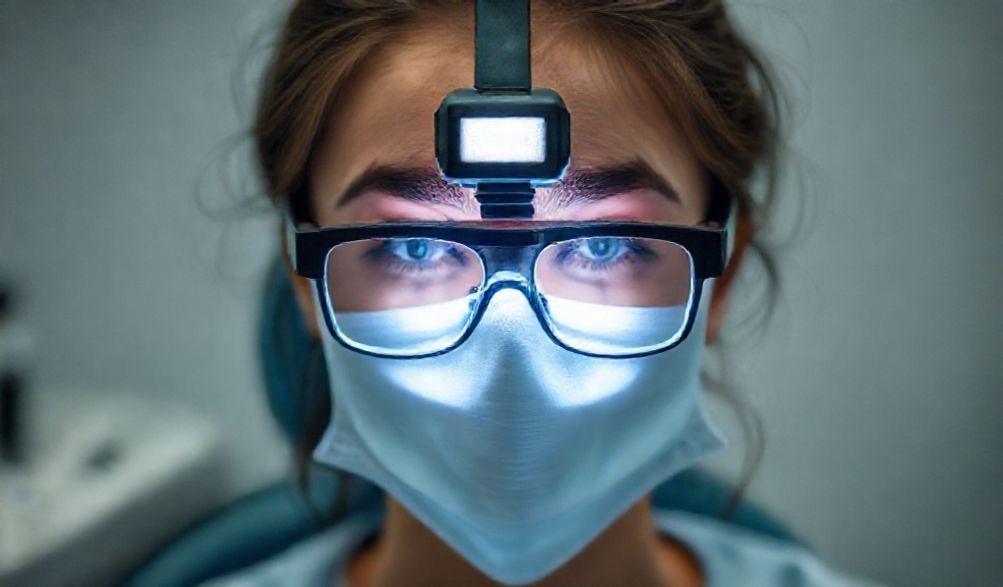
The Ultimate Guide to Dental Headlights for Glasses: Enhancing Precision and Comfort
For dental professionals, optimal visibility is non-negotiable. Every procedure, from a routine prophylaxis to a complex restoration, hinges on the ability to see minute details in a dark, confined, and often wet environment. Traditional overhead operatory lights, while essential for ambient lighting, have inherent flaws: they cast shadows from your head and hands, create glare, and fail to consistently illuminate the deep, hidden recesses of the oral cavity. This visual compromise can lead to eye strain, diagnostic uncertainty, and procedural inefficiency.
Enter the dental headlight for glasses—a transformative piece of ergonomic equipment that has evolved from a niche luxury to a clinical essential. More than just a bright light attached to your frame, it’s a sophisticated extension of your vision. By providing coaxial illumination (light that travels directly along your line of sight), it delivers brilliant, shadow-free clarity exactly where you are looking, hands-free. This guide is crafted for dentists, hygienists, and dental students who seek to understand, select, and master this critical tool. We will explore the compelling reasons for its adoption, break down the technical features you need to evaluate, and provide practical advice for setup and use. Our aim is to empower you to make an informed investment that elevates your clinical outcomes and safeguards your long-term professional well-being.
Why a Dental Headlight is an Essential Investment for Modern Practice
Moving beyond the basic notion of “more light,” a dental headlight for glasses addresses fundamental ergonomic and clinical challenges. Its value is measured not just in lumens, but in improved accuracy, reduced fatigue, and enhanced diagnostic confidence.
Overcoming the Limitations of Conventional Lighting
The shortcomings of overhead lights are familiar to every clinician who has struggled for a better view.
* Shadow Elimination: When you lean in to work, your head blocks the overhead light, casting a shadow over your field of operation. You then contort your body or the patient’s head to find an angle where the light can reach. A glasses-mounted headlight solves this by making the light source move with you. Wherever you look, the light follows, eliminating shadows created by your own posture.
* Deep Cavity Illumination: Overhead lights shine down, but they cannot shine إلى. Illuminating the distal of a second molar, a subgingival margin, or the depths of a preparation requires direct, focused light. A dental headlight projects a beam directly into these challenging areas, revealing anatomy and pathology that might otherwise remain hidden.
* Enhanced Contrast and Detail: The diffuse light from above washes out subtle differences in texture and color. A focused, high-quality headlight beam increases contrast, making it easier to distinguish between enamel and dentin, identify the faint line of a fracture, differentiate calculus from tooth structure, and spot the early signs of demineralization or caries.
Clinical Benefits: Precision, Accuracy, and Diagnosis
The technical advantages translate directly into tangible benefits for both practitioner and patient.
* Reduced Eye Strain and Fatigue: Squinting and straining to see under poor lighting is a primary cause of visual fatigue, leading to headaches and decreased concentration over long clinical days. A properly aligned dental headlight for glasses provides consistent, optimal illumination without glare, allowing your eye muscles to relax. This visual comfort is a cornerstone of sustainable practice.
* Improved Ergonomics and Posture: The constant need to align your eyes with a fixed overhead light source often leads to craning your neck and hunching your shoulders—a direct path to musculoskeletal disorders. With a personal headlight, you can maintain a more neutral, upright spinal posture, simply turning your head to direct the light. This integration of visual and physical ergonomics is crucial for career longevity.
* Increased Procedural Efficiency and Quality: When you see better, you work better and faster. Clear visualization means more accurate caries removal, more precise margin placement, and better adaptation of materials. It reduces the need for re-treatment and enhances the quality of every procedure, from scaling to suture placement. In essence, it allows your skill to be fully expressed without being hindered by poor visibility.
Key Features to Consider When Choosing a Dental Headlight
The market offers a wide array of dental headlight systems. Understanding the key specifications will help you navigate the options and select a model that fits your clinical style, specialty, and comfort needs.
Light Source Technology: LED vs. Halogen
The heart of any headlight is its light source. Today, the choice is clear.
* LED (Light Emitting Diode): The undisputed modern standard.
* Brightness & Efficiency: LEDs produce intense light (measured in lumens) with very low energy consumption and minimal heat output.
* درجة حرارة اللون: Measured in Kelvin (K). A range of 4500K to 5500K is ideal, mimicking natural daylight. This “cool white” light is less fatiguing than warmer tones and is essential for…
* مؤشر تجسيد الألوان (CRI): LEDs can achieve a CRI of 90+ (out of 100). A high CRI means colors are rendered accurately, which is أمر غير قابل للتفاوض for shade matching in restorative dentistry and accurately assessing tissue health.
* طول العمر: An LED module typically lasts 50,000 hours or more—effectively the entire lifespan of your career with no bulb changes.
* Halogen: Now largely obsolete, it’s helpful for historical context.
* Produced a warmer, more yellow light (lower Kelvin).
* Generated significant heat, requiring cooling fans.
* Bulbs had a short lifespan (often 50-100 hours) and needed frequent, costly replacement.
* Consumed more power for less light output.
Optical Specifications and Performance
Not all bright lights are created equal. These metrics define the quality of illumination.
* السطوع والقابلية للتعديل: Brightness is often listed in lumens (light output) or, more meaningfully, in lux (light intensity at a specific distance, e.g., 50,000 lux at 400mm). Adjustability is critical. The ability to dim the light is necessary for different procedures (e.g., high brightness for surgery, lower for patient communication or working on light-sensitive anterior teeth) and personal comfort.
* Field of View & Spot Size: This is the diameter of the light beam at your typical working distance. A wider field (e.g., 80mm) is excellent for general dentistry and hygiene, providing a broad view of a quadrant. A focused spot (e.g., 40mm) is preferred for surgical specialties like endodontics or periodontics, where deep, concentrated illumination is needed. Some advanced models offer adjustable spot sizes.
* مؤشر تجسيد الألوان (CRI): Reiterating its importance: Always choose a headlight with a CRI ≥ 90. This ensures you are seeing the true color of composites, teeth, gingiva, and caries, preventing costly aesthetic mismatches and diagnostic errors.
Design, Comfort, and Integration
A headlight that isn’t comfortable won’t be used.
* Mounting System:
* Glasses-Mounted: The light clips or attaches directly to the temple of your eyewear or loupes. Pros: Minimalist, less obtrusive, and moves perfectly with your head. Cons: Must be compatible with your specific frames; can add uneven weight.
* Headband-Mounted: The light is attached to an adjustable band worn around the head. Pros: Extremely stable, distributes weight evenly, independent of your glasses. Cons: Some find it less comfortable or hotter to wear; one more item to put on/take off.
* Weight and Balance: A system should feel lightweight and balanced on your head. An imbalanced or heavy light will cause neck strain and discomfort within hours. Look for systems where the battery pack can be clipped to a waistband or placed in a pocket to remove weight from your head entirely.
* Battery System:
* Corded: Plugs into an outlet or operatory unit. Pros: Unlimited runtime, no charging needed. Cons: The cord can be restrictive, get in the way, and is another surface to disinfect.
* Cordless/Rechargeable: Uses a lithium-ion battery pack. Pros: Complete freedom of movement, no tangling cords. Cons: Limited runtime per charge, requires charging discipline. Modern models offer 4-8 hours, often with quick-swap batteries for all-day use.
How to Properly Set Up and Use Your Dental Headlight
Investing in a premium dental headlight for glasses is only the first step. Proper setup and handling are essential to reap its full benefits and ensure its longevity.
Initial Setup and Alignment
A misaligned headlight is worse than no headlight at all, as it can cause glare and shadows.
1. Secure Mounting: Carefully attach the light module to your glasses’ temple or headband according to the manufacturer’s instructions. Ensure it is firmly seated.
2. Achieve Coaxial Alignment: This is the most crucial step. Sit in your normal working position. Hold a mirror in your lap, simulating the patient’s oral cavity. Look straight ahead into the mirror. The center of the bright hotspot of the light beam should be in the exact center of your field of vision through your loupes or glasses. Adjust the light’s angle until the beam is centered. The goal is for the light to illuminate precisely what you are looking at.
3. Fine-Tune Declination and Distance: Adjust the light’s declination angle so the beam hits your typical working distance (e.g., 14-16 inches). The spot should be crisp and evenly illuminated at that distance.
Best Practices for Daily Use and Maintenance
Treat your headlight as the precision instrument it is.
* Operational Routine: Develop a habit of turning the light on after it is on your head and pointed away from people’s eyes. Adjust the brightness to the lowest effective level for the task. Turn it off before removing it.
* Cleaning and Disinfection: This is critical for infection control. Always refer to the manufacturer’s manual for approved cleaning agents and methods. Generally, the non-optical surfaces (housing, cable, battery) can be wiped down with a disinfectant wipe (avoid bleach or alcohol on certain plastics). Use a dry, soft lens cloth for the glass or lens cover. Never submerge the light module or battery.
* العناية بالبطارية: For cordless models, to maximize lithium-ion battery life: avoid letting it fully discharge regularly, store it partially charged if not used for extended periods, and use the manufacturer-provided charger. Consider having a spare battery for uninterrupted workflow.
Frequently Asked Questions (FAQ) About Dental Headlights
Q1: Can I attach a dental headlight to my own prescription glasses?
ج: Many models are designed with universal clips that fit a wide range of frame temple shapes and thicknesses. However, compatibility is not guaranteed. Thick, curved, or very thin temples may not work. It is highly recommended to check the headlight manufacturer’s fit guide or, ideally, work with a dental equipment supplier who can test the fit. Many practitioners ultimately choose dedicated prescription safety glasses or loupes with integrated, guaranteed-compatible mounting points.
Q2: What is a good brightness level (in lumens) for general dentistry?
ج: Focusing on lux (intensity at the target) is more useful. For most general dentistry, a range of 30,000 to 60,000 lux at a 400mm working distance is excellent. In terms of lumens, modern LED headlights often output 1000-3000+ lumens. The key feature is قابلية التعديل, allowing you to tailor the brightness from lower levels for exams to maximum for cavity prep or surgery.
Q3: How long does the battery last on a cordless model, and how long does it take to charge?
ج: Performance varies. A high-quality cordless dental headlight typically offers 4 to 8 hours of runtime on a medium brightness setting. Full charge times usually range from من ساعتين إلى 4 ساعات. Many professional-grade systems now feature fast-charge capabilities (e.g., 1 hour for 80% charge) or come with dual batteries and a charging dock to ensure you never run out of power.
Q4: Are dental headlights safe for patient eyes?
ج: When used correctly, yes. The beam is highly focused on a small intraoral area. However, clinicians must be mindful to avoid accidentally shining the direct beam into a patient’s eyes. Using a rubber dam not only isolates the field but also protects the eyes. For longer procedures or anxious patients, providing patient safety glasses with tinted lenses is a considerate and safe practice.
Q5: What is the typical lifespan of an LED dental headlight?
ج: The solid-state LED light engine itself is incredibly durable, rated for 50,000 hours or more—which equates to decades of clinical use. The more common points of eventual wear or failure are the rechargeable battery (which may need replacement every 3-5 years depending on use cycles), the physical housing, switches, or cables. Investing in a reputable brand from a established dental equipment dealer ensures access to service, replacement parts, and technical support.
Conclusion: Illuminating a Path to Better Dentistry
يعد اختيار dental headlight for your glasses is a significant professional decision. It is an investment in your clinical capability, diagnostic accuracy, and personal health. By prioritizing key factors like تقنية LED متطورة مع مؤشر تجسيد ألوان مرتفع (90+), سطوع قابل للتعديل بالكامل, ، نظام تثبيت مريح ومستقر يتناسب مع سير عملك، و بطارية موثوقة طويلة الأمد, ، تختار أداة ستقدم عوائد يومية في الدقة والراحة.
أفضل مصباح رأس هو الذي يشعر وكأنه امتداد طبيعي لحواسك—بديهي ومريح لدرجة أنك تنسى وجوده، بينما يجلب بتعبٍ تفاصيل عملك الدقيقة إلى وضوح تام خالٍ من الظلال. قبل اتخاذ القرار النهائي، نوصي بالتشاور مع زملاء ذوي خبرة وتجار معدات أسنان ذوي سمعة طيبة. كلما أمكن، اختبر نماذج مختلفة لتشعر بتوازنها وترى جودة ضوئها مباشرة. مصباحك المختار dental headlight لن يضيء فقط تجويف الفم؛ بل سيضيء خبرتك، إجراءً تلو الآخر، لسنوات قادمة.
تم تجميع هذا الدليل بناءً على تحليل موسع لبيئة العمل في طب الأسنان، ومبادئ قياس البصر، والمواصفات الفنية من الشركات المصنعة الرائدة في مجال معدات طب الأسنان، مستنداً إلى سنوات من الخبرة في تقييم التكنولوجيا السريرية لمقدمي الرعاية الصحية.
ص>