
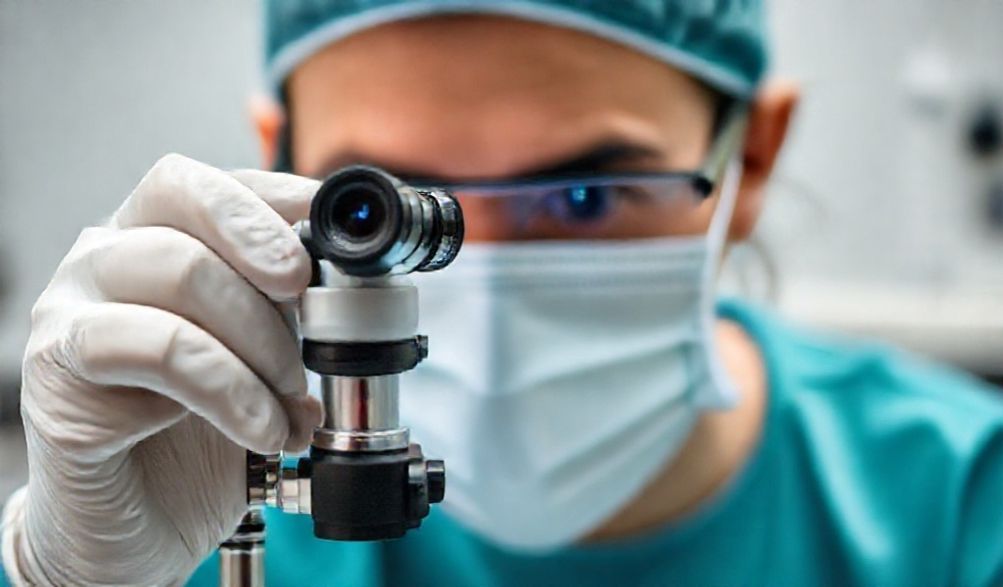
The Ultimate Guide to Eye Loupes for Dentists and Surgeons: Enhancing Precision and Protecting Health
Introduction
Imagine the scene: a surgical field no larger than a postage stamp, where a millimeter’s deviation can alter a patient’s outcome. Or a hidden fissure in a molar, invisible to the naked eye, that holds the key to a successful restoration. For dentists and surgeons, the margin for error is measured in microns, and the visual demand is relentless. Hours are spent leaning forward, neck craned, eyes straining to discern the critical details that define clinical excellence. This daily reality comes at a cost—chronic neck and back pain, debilitating eye strain, and premature career burnout are not just occupational hazards; they are epidemics in the medical and dental communities.
The core problem is a fundamental mismatch between human anatomy and the microscopic precision modern procedures require. The unaided eye, remarkable as it is, has limits. Squinting, hunching, and contorting into unnatural positions are the body’s desperate attempts to bridge the gap between what it can see and what it needs to see. This compromise affects everything: the quality of patient care, the longevity of a practitioner’s career, and their quality of life outside the operatory or OR.
Enter the magnifying surgical loupe: the essential ergonomic and visual solution. Far more than simple magnifying glasses, modern professional loupes are sophisticated optical instruments engineered to resolve this mismatch. They are a declaration that precision and practitioner health are not mutually exclusive. This comprehensive guide is designed to be your definitive resource. We will demystify the technology, detail the profound benefits, and walk you through the critical steps of selection and fitting. Our goal is to empower you to make an informed decision that enhances your practice, elevates patient care, and safeguards your most important asset—your own physical well-being.
This content is compiled from established industry standards, the recommendations of master opticians specializing in medical optics, and the hard-won insights of experienced clinicians. It is crafted to be the most trusted, expert-driven reference on the topic, helping you navigate your journey with confidence.
What Are Dental and Surgical Loupes? A Foundational Overview
Core Definition and Basic Optics
At their essence, dental and surgical loupes are magnification systems worn like glasses. They are precision optical devices that bring the operative field closer and make it larger, reducing the need for the practitioner to physically hunch forward. To understand them, a few key terms are essential:
* Magnification: Expressed as a factor like 2.5x or 4.0x, this indicates how much larger an object appears compared to viewing it with the naked eye at the same distance. It’s a balance; higher power isn’t always better.
* Field of View: The diameter of the area you can see clearly through the loupes at a given working distance. A wider field is generally preferable for orientation, but it often decreases with higher magnification.
* Depth of Field: The “slice” of space along your line of sight that remains in sharp focus. A greater depth of field allows for some natural movement without constant refocusing, a critical factor during dynamic procedures.
A Brief History: From Simple Lenses to Modern Ergonomics
The use of magnification in medicine dates back centuries, but its adoption in dentistry and surgery accelerated in the latter half of the 20th century. Early adopters used simple, handheld lenses or bulky, fixed-mount microscopes. The breakthrough came with the development of through-the-lens (TTL) and flip-up loupe systems that were wearable and customizable. The most significant evolution, however, has been the shift toward ergonomic design. Modern loupes are no longer just about seeing better; they are engineered to position the clinician’s spine and neck in a neutral, sustainable posture, fundamentally changing the relationship between the practitioner and their work.
The Primary Goal: Why Magnification is Non-Negotiable
The purpose of professional loupes is twofold, and both aspects are critical:
1. Enhanced Visual Acuity: They reveal anatomical details, marginal gaps, micro-fractures, and tissue textures that are otherwise invisible. This leads to more accurate diagnoses, finer operative techniques, and superior clinical outcomes.
2. Ergonomic Postural Support: By magnifying the image, loupes allow you to move your head and torso back into an upright, neutral position while keeping your hands at a comfortable working distance. This directly targets the root cause of career-ending musculoskeletal pain.
Key Benefits of Using Professional-Grade Eye Loupes
Unmatched Visual Precision and Improved Clinical Outcomes
Magnification is a force multiplier for clinical skill. In dentistry, it enables the definitive detection of recurrent caries, the precise finishing of restoration margins, and the delicate management of pulpal tissues in endodontics. In surgery, it allows for cleaner dissections along tissue planes, more accurate anastomoses, and gentler handling of delicate structures. The result is not just “better” work; it is work with higher predictability, fewer revisions, and improved long-term success rates. It transforms estimation into measurement.
Essential Ergonomics: Combating Neck and Back Pain
This is perhaps the most life-changing benefit. The human head weighs 10-12 pounds. For every inch it tilts forward, the effective weight on the cervical spine doubles. A 30-degree forward tilt can impose nearly 40 pounds of force on the neck muscles and discs. Loupes, with their properly measured زاوية الانحدار, break this cycle. They allow you to look down with your eyes while keeping your head up and your spine aligned. By promoting a neutral posture, they are a primary intervention against the neck, shoulder, and back disorders that plague so many clinicians.
Reducing Eye Strain and Fatigue for Longer Career Sustainability
The ciliary muscles inside your eyes work constantly to focus (accommodate). At a typical working distance of 14-18 inches, these muscles are under significant strain. Loupes incorporate a focusing lens that does this work for you, allowing your eyes to relax as if viewing an object 20-30 feet away. This dramatic reduction in accommodative effort minimizes headaches, dry eyes, and general visual fatigue, enabling you to maintain focus and steadiness through longer, more complex procedures. It’s an investment in career longevity.
The Professional Edge: Building Patient Trust and Practice Reputation
While the primary benefits are clinical and personal, there is a subtle professional advantage. Patients perceive a clinician using magnification as more meticulous, thorough, and technologically advanced. It signals an commitment to excellence and attention to detail that builds trust and enhances the reputation of your practice. In a competitive landscape, it’s a visible differentiator that speaks volumes before a single word is exchanged.
Critical Factors to Consider When Choosing Your Loupes
Magnification Power: Finding Your Sweet Spot (2.0x to 5.0x+)
Choosing the right power is a foundational decision. It’s not a “more is better” proposition.
* 2.0x – 2.5x: An excellent starting point for general dentistry, hygiene, and many general surgical procedures. Offers a wide field of view and good depth of field for orientation and less intricate work.
* 3.0x – 3.5x: The most popular range for restorative dentistry, periodontics, and a wide array of surgical specialties. Provides a strong balance of detail, field size, and depth.
* 4.0x and above: Reserved for high-precision work like endodontics, microsurgery, vascular anastomosis, and ophthalmic procedures. Requires a significant adaptation period, as the field of view and depth of field are markedly reduced.
Understanding Working Distance and Declination Angle
These are personalized, non-negotiable measurements.
* Working Distance: Measured from the bridge of your nose to your primary operative field (e.g., the patient’s molars or the surgical site). It is determined while you are sitting or standing in your natural, comfortable working posture. An incorrect distance will force you into a slouch or a stretch.
* Declination Angle: The angle at which the loupe barrels point downward from horizontal. This is set during fitting to match the angle of your downward gaze when your head is upright. A correct declination angle is the key to ergonomic comfort.
Field of View vs. Depth of Field: The Practitioner’s Trade-off
Understanding this relationship is crucial. Generally:
* As magnification increases, both the field of view و depth of field decrease.
* For a given magnification, a wider field of view will typically result in a shallower depth of field.
A general dentist may prioritize a wider field to see more of the oral cavity at once. A microsurgeon will accept a narrow, tunnel-like view to achieve the extreme magnification and may rely on moving the patient or instruments to stay within a shallow depth of field.
Lens Systems: Galilean vs. Prismatic (Keplerian)
These are the two main optical designs.
* Galilean Systems: Use a simple arrangement of a convex objective lens and a concave eyepiece. They are more compact, lighter, and less expensive. They typically offer lower magnification (up to about 3.5x) with good depth of field and image brightness.
* Prismatic (Keplerian) Systems: Use a series of prisms to fold the light path, allowing for longer focal lengths in a compact design. They provide higher magnification (3.5x and above) with superior optical clarity and a wider field of view at that power, but they are heavier, bulkier, and more expensive.
The Lighting Imperative: Integrating a Loupe-Mounted LED Light
Magnification without proper illumination is incomplete. Shadowing is magnified along with the image. A coaxial LED light source, mounted directly on the loupes, casts a bright, cool, shadow-free light directly onto the operative field. This:
* Eliminates visual noise from overhead shadows.
* Further reduces eye strain by providing optimal illumination.
* Improves color rendering for better tissue discrimination.
Key features to consider are قياس شدة الإضاءة (brightness), اللون القابلة للتعديل (cool, daylight-like light is standard), and battery life/pack (lightweight, rechargeable systems are typical).
A Step-by-Step Guide to Getting Fitted for Loupes
Why Professional Fitting is Mandatory, Not Optional
This cannot be overstated. Ordering loupes online based on generic measurements is a recipe for discomfort, visual distortion, and even injury. An improper fit can cause worse neck pain than using no loupes at all. A certified fitter—often a trained optician or company representative—will take precise, dynamic measurements that account for your unique anatomy and working posture.
The Fitting Process: What to Expect
A proper fitting is a clinical process:
1. Postural Assessment: You will assume your typical working position at a mock operatory or chair.
2. Measurement of Working Distance: Using a measuring rod or digital device, the fitter will find your ideal distance.
3. Determination of Declination Angle: They will measure the angle of your gaze with your head in a neutral, upright position.
4. Interpupillary Distance (IPD) Measurement: This critical measurement ensures the optical centers of the lenses align perfectly with your pupils.
5. Frame Selection & Discussion: You’ll choose a frame style (TTL or flip-up) and discuss lens system, magnification, and lighting options.
Trial Periods and Adjustments: Ensuring Long-Term Comfort
The best manufacturers and fitters offer a trial or adjustment period (e.g., 30-60 days). Use this time aggressively. Wear your loupes for progressively longer periods during real procedures. Note any discomfort, eye strain, or postural issues. A quality provider will make fine-tune adjustments to the angle, working distance, or frame fit to ensure they become a seamless extension of your senses.
Loupes Care, Maintenance, and Best Practices
Daily Cleaning and Safe Handling Protocols
عامل عدساتك المكبرة كأدوات دقيقة هي كذلك:
* التنظيف: First, use a blower bulb to remove abrasive dust. Then, use a lens-specific microfiber cloth with a few drops of lens cleaner (never glass cleaner, which can damage coatings). Gently wipe in a circular motion.
* التعامل: Always use two hands to put them on or take them off to avoid twisting the frame. Never place them lens-down on any surface.
Proper Storage Solutions to Protect Your Investment
When not in use, always store them in a hard, protective case. Avoid leaving them on the chairside cart, in a pocket, or in a car where they can be crushed, sat on, or exposed to extreme temperatures that can damage lenses and electronics (for lights).
متى يجب طلب الصيانة أو المعايرة المهنية
Be alert to signs that your loupes need professional attention:
* Loose or wobbly hinges.
* Misalignment where the two images no longer fuse into one clear picture.
* A change in your personal vision prescription.
* Flickering or dimming of the LED light.
Regular check-ups with your fitter, much like dental check-ups, can ensure they remain in perfect working order for years.
Frequently Asked Questions (FAQ) About Dental and Surgical Loupes
Q: What is the typical cost range for a good set of surgical loupes with light?
ج: A professional-grade system represents a significant investment in your craft and health. Expect a range from approximately $1,500 for a basic Galilean system إلى $5,000+ for a high-magnification prismatic system with a premium light and frame. Consider this a long-term investment amortized over a decade or more of use, with dividends paid in improved outcomes, reduced pain, and extended career longevity.
س: هل يمكنني ارتداء نظارتي الطبية العادية مع عدسات الجراحين؟
ج: The integrated solution is superior. Most quality loupes can be custom-made as “refractive loupes,” حيث يتم نقش وصفة النظر الشخصية الخاصة بك (لقصر النظر، طول النظر، الاستجماتيزم، وحتى قصور البصر الشيخوخي) مباشرة في عدسات العدسات المكبرة. وهذا يوفر وضوحًا بصريًا أمثل، ومجال رؤية أوسع، وراحة تامة مقارنة بارتداء العدسات المكبرة فوق نظارتك العادية.
س: كم من الوقت يستغرق التأقلم على استخدام العدسات المكبرة؟
ج: معظم العاملين في المجال السريري يمرون بمنحنى تعلم يستغرق من أسبوع إلى ثلاثة أسابيع. ابدأ باستخدامها في إجراءات أقصر وأقل تعقيدًا لبناء التنسيق بين اليد والعين. تدرب على مهام بسيطة مثل الكتابة أو التعامل مع الأدوات أثناء ارتدائها لتسريع عملية التأقلم. يحتاج عقلك إلى وقت للتوفيق بين المدخلات البصرية المكبرة ومهاراتك الحركية.
س: هل هناك عدسات مكبرة مختلفة موصى بها لطب الأسنان مقابل الجراحة؟
ج: المبادئ الأساسية متطابقة. الاختلافات تكمن في التأكيد بناءً على الاحتياجات الإجرائية. قد يدفع الجراح الذي يقوم بأعمال الأوعية الدموية الدقيقة للحصول على أعلى تكبير ممكن (5.0x+). بينما قد يفضل طبيب الأسنان العام نظام جاليليو 2.5x-3.5x لمجال رؤيته الأوسع في التجويف الفموي. المفتاح هو تحليل مزيج الإجراءات المحدد الخاص بك ومناقشتها بالتفصيل مع أخصائي التركيب.
س: ما هي الأخطاء الأكثر شيوعًا التي يرتكبها المشترون لأول مرة؟
ج: أهم المزالق التي يجب تجنبها هي:
1. اختيار تكبير عالٍ جدًا في زوجك الأول، مما يؤدي إلى الإحباط.
2. تخطي التركيب الاحترافي لتوفير الوقت أو المال.
3. التقليل من ضرورة الإضاءة المحورية المتكاملة.
4. إعطاء الأولوية للتكلفة المنخفضة على حساب بيئة العمل المناسبة والجودة البصرية, ، مما قد يؤدي إلى تكاليف أكبر على المدى الطويل من حيث الألم وضعف الأداء.
الخاتمة
رحلة اعتماد العدسات المكبرة هي خطوة تحويلية في الحياة المهنية للعامل السريري. إنها أكثر من مجرد أداة؛ فهي مكون أساسي للممارسة الحديثة القائمة على الدقة. الزوج المناسب من العدسات المكبرة لا يجعل الأشياء أكبر ببساطة — بل يجعل غير المرئي مرئيًا، ويحول الإجهاد إلى راحة، ويحمي الوعاء الجسدي الذي يضم مهارتك وخبرتك. تصبح، حرفيًا، امتدادًا لحواسك، مما يسمح لك بالأداء في ذروة قدرتك مع حماية صحتك في الرحلة الطويلة لمهنة مجزية.
القرار حاسم جدًا بحيث لا يمكن تركه للصدفة أو للنصائح العامة. وضعيتك، ورؤيتك، وتخصصك فريدون. لذلك، خذ الخطوة التالية بالجدية التي تستحقها. استشر أخصائي بصريات معتمدًا يفهم المتطلبات البيئية لمجال تخصصك المحدد. جرب تركيبًا احترافيًا، اطرح أسئلة مفصلة، واستثمر بوعي في مستقبل ممارستك ورفاهيتك الشخصية. مرضاك، ونفسك المستقبلية، سيشكرونك على ذلك.
ص>