
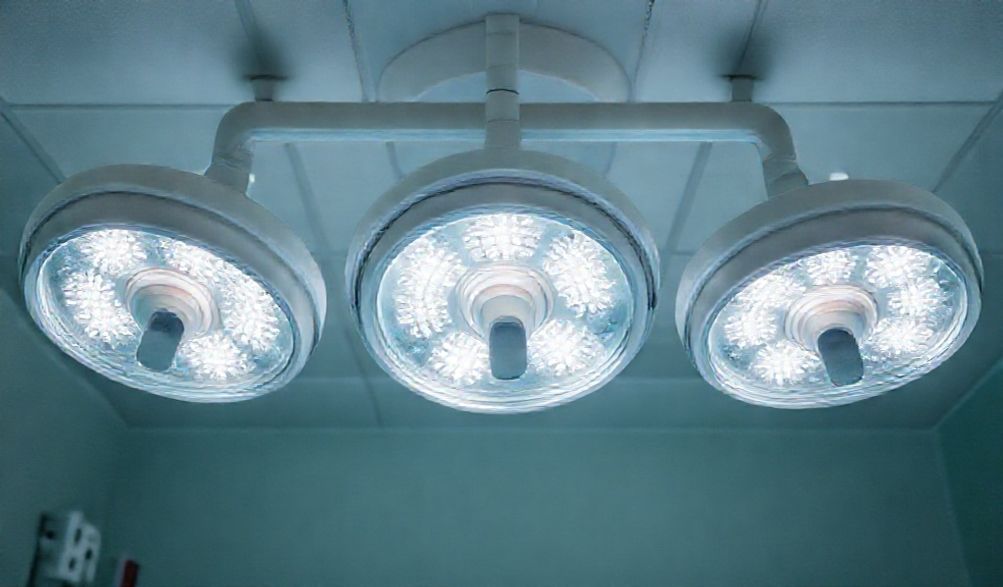
The Ultimate Guide to Medical Exam Lights: Choosing the Right Lighting for Accurate Diagnoses
Introduction
What if a missed detail during a patient exam—a subtle jaundice, a faint rash, or the true color of a healing wound—wasn’t due to a lapse in the practitioner’s skill, but a failure of the equipment they rely on every day? In the high-stakes world of healthcare, where diagnostic accuracy is paramount, the quality of light is a foundational, yet often overlooked, component of patient care.
Inadequate or improper medical lighting is more than an inconvenience; it’s a clinical risk. It can lead to practitioner eye strain, visual fatigue, diagnostic uncertainty, and even procedural errors. A light that casts harsh shadows, distorts colors, or fails to illuminate a cavity adequately can obscure the very details necessary for a correct assessment.
This guide is designed to be your comprehensive, evidence-based resource. Whether you are a physician, nurse, dentist, procurement officer, or facility manager, our goal is to synthesize industry standards, clinical research, and practical expertise into a clear roadmap. By the end, you will understand the critical features of medical-grade lighting, the different types available, and the key selection criteria to make an informed, safe, and effective investment for your practice.
We will explore why medical lighting is non-negotiable, break down the essential features to evaluate, survey the primary types and their applications, and provide a step-by-step guide to selecting the perfect light for your needs.
Why Medical-Grade Lighting is Non-Negotiable for Patient Care
medical exam lights are not mere room illuminators; they are precision diagnostic tools. The difference between a standard light and a medical-grade one lies in engineered specifications designed to support clinical outcomes.
The Impact on Diagnostic Accuracy
The human eye is remarkable, but its ability to discern detail is entirely dependent on the quality of light. Medical-grade lighting is engineered to optimize this ability.
- مؤشر تجسيد الألوان (CRI): This is arguably the most critical metric. CRI measures a light source’s ability to reveal the true colors of an object compared to natural daylight. A high CRI (90 or above is essential, with >95 being ideal) is crucial for accurately assessing skin tones (detecting cyanosis, pallor, or jaundice), evaluating tissue health during wound care, distinguishing between shades of red in vasculature, and performing accurate dental shade matching. Under a light with poor CRI, a potentially serious discoloration might be missed.
- Shadow Reduction & Uniformity: Harsh, contrasting shadows can hide lesions, swellings, or anatomical details. Quality medical lights use optical systems—like multiple LED arrays or specially designed reflectors—to create homogeneous, “hotspot-free” illumination. This shadow dilution ensures that the area of interest is evenly lit from multiple angles, revealing a clear, three-dimensional view.
- Light Intensity & Control: Different procedures require different light levels. A superficial skin exam needs less intensity than illuminating a deep oral cavity or a minor surgical site. The ability to precisely control brightness (measured in lux at the examination plane) allows the practitioner to adjust for optimal visualization without causing glare or patient discomfort.
Enhancing Practitioner Performance and Safety
The well-being of the healthcare provider is directly linked to patient safety. Good medical lighting is a key ergonomic tool.
- Reducing Physical Strain: A light with insufficient reach or poor adjustability forces practitioners into awkward, static postures—craning their necks, hunching over—to get a better view. Fully articulated arms with smooth, multi-axis movement allow the light to be positioned perfectly, promoting a neutral posture and reducing the risk of musculoskeletal injury over long clinical days.
- Minimizing Visual Fatigue: Glare, flicker (imperceptible in some low-quality LEDs), and poor color rendering force the eye muscles to work harder to focus and interpret images. This leads to eye strain, headaches, and diminished concentration. Medical-grade LEDs provide consistent, flicker-free, high-quality light that is easier on the eyes, helping to maintain practitioner focus and accuracy throughout the day.
- Heat Management: Traditional halogen lights are essentially small heaters, generating significant infrared radiation. This can cause patient discomfort, dry out tissues, and make the clinical environment unpleasant. Modern LED systems convert almost all energy into visible light, remaining cool to the touch—a major benefit for patient comfort and procedural safety.
Meeting Clinical and Regulatory Standards
“Medical exam light” is a regulated classification, not a marketing term. These devices must comply with stringent international standards for medical electrical equipment, such as those from the International Electrotechnical Commission (IEC 60601-1). This ensures:
* السلامة الكهربائية: Protection against shock, even in the presence of fluids.
* السلامة الميكانيكية: Stability, secure mounting, and integrity of moving parts.
* السلامة الحرارية: Limits on accessible surface temperatures.
Using a non-compliant light in a clinical setting introduces unnecessary liability and risk.
Key Features to Evaluate in a Medical Exam Light
Navigating product specifications can be daunting. Focus on these core features to compare models effectively.
Light Source & Technology: LED vs. Halogen
The industry has decisively shifted toward LED technology, and for compelling reasons:
- LED (Light Emitting Diode): The modern standard.
- اقتصادي التكلفة، يتحرك تلقائيًا مع الكرسي. Exceptional energy efficiency (up to 80% less power than halogen), extremely long lifespan (30,000-50,000 hours), minimal heat output, instant full brightness, and often feature adjustable color temperature. They offer superior control over light quality.
- يمكن أن يتعارض مع حركة المساعد، قد يكون له مدى محدود، ويرتبط عمر الضوء بعمر الكرسي. Higher initial purchase price (offset by long-term savings), and the light spectrum must be carefully engineered to achieve high CRI.
- Halogen: The legacy technology.
- اقتصادي التكلفة، يتحرك تلقائيًا مع الكرسي. Lower upfront cost, produces a warm light with generally good color rendering.
- يمكن أن يتعارض مع حركة المساعد، قد يكون له مدى محدود، ويرتبط عمر الضوء بعمر الكرسي. Very inefficient, generates intense heat, has a short lifespan (1,000-2,000 hours), and bulbs require frequent, costly replacement. Dimmable models often shift color temperature when dimmed.
Expert Verdict: For any new purchase or upgrade, LED is the unequivocal recommendation. The total cost of ownership, clinical performance, and safety benefits are overwhelmingly in its favor.
Luminosity and Adjustability (Brightness & Color Temp)
- Brightness (Lumens/Lux): Look for a wide, controllable brightness range. A useful light might offer 2,000 to 40,000 lux or more at a set distance. A general exam may use 2,000-5,000 lux, while a minor surgical procedure may require 40,000-100,000 lux. Ensure the control is intuitive and accessible.
- Adjustable Color Temperature: Measured in Kelvin (K), this controls how “warm” (yellowish, ~3500K) or “cool” (bluish, ~5500K) the light appears. The ability to adjust this is a premium feature. Cooler temperatures can enhance contrast and visual acuity (mimicking midday sun), while warmer light can be more soothing for patients and better for assessing certain tissue conditions.
Beam Focus, Field Size, and Uniformity
- Beam Focus: Can the light change from a focused spotlight (for deep cavity work) to a wide floodlight (for a general chest exam)? This flexibility is valuable in multi-purpose settings.
- Field Size & Uniformity: The diameter of the illuminated area at a typical working distance is crucial. More important is the uniformity ratio—the difference in brightness between the center and the edges. A poor light has a bright “hotspot” in the center that fades quickly, obscuring details in the periphery. A quality medical light provides a large, uniformly bright field. Ask for the “diameter at 50% lux” or uniformity ratio from the spec sheet.
Mechanical Design: Flexibility and Sterilization
- Articulation & Reach: The light should go where you need it, effortlessly. Look for multi-jointed arms with a long reach, 360-degree rotation, and smooth, tool-free adjustment. Counterbalanced or spring-assisted arms are essential for easy positioning without drift.
- Cleanability & Infection Control: The light must withstand daily cleaning with hospital-grade disinfectants. Key features include: a fully sealed housing to prevent fluid ingress, smooth surfaces without crevices, and optionally, antimicrobial coatings on frequently touched surfaces. The handle or control surfaces should be designed for easy wiping.
Types of Medical Exam Lights and Their Primary Applications
Matching the light type to your primary use case is critical for satisfaction and value.
Overhead Examination Lights (Ceiling-Mounted)
- Best For: General examination rooms, emergency department bays, hospital bedside use, primary care clinics.
- الوصف: The workhorse of clinical lighting. Mounted on the ceiling via a fixed or track system, they save floor space and provide broad, maneuverable coverage over an exam table or bed.
- اقتصادي التكلفة، يتحرك تلقائيًا مع الكرسي. Space-efficient, unobstructed floor, wide area of coverage, professional appearance.
- يمكن أن يتعارض مع حركة المساعد، قد يكون له مدى محدود، ويرتبط عمر الضوء بعمر الكرسي. Requires professional installation, limited repositioning range compared to mobile stands, often a higher initial investment.
Procedural & Surgical Lights
- Best For: Minor procedure rooms, labor & delivery, outpatient surgery centers, laceration repair, biopsy rooms.
- الوصف: A step up in performance from general exam lights. They are characterized by significantly higher intensity, exceptional shadow reduction (often via multiple LED heads or complex reflector systems), and frequently include sterile handles for direct manipulation by scrubbed-in staff.
- Key Differentiators: Higher lux output (often >40,000), superior depth of illumination, and a color rendering index (CRI) that often exceeds 95 for critical tissue discrimination.
Portable Diagnostic Lights (Wall-Mounted & Handheld)
- Best For: Supplementary lighting, specialized exams (ENT, dermatology, neurology), home health visits, and compact clinics.
- Types:
- Wall-Mounted Flex Arms: Offer flexible positioning without consuming floor or ceiling space. Ideal for smaller exam rooms or as a dedicated light for a specific station (e.g., slit lamp).
- Handheld Lights: Include penlights for pupil checks, transilluminators for sinus or tissue assessment, and focused LED hand lamps. They are indispensable for targeted exams.
- Mobile Floor Stands: Provide the flexibility of an overhead light without installation. Perfect for multi-purpose rooms or facilities where layout changes frequently.
How to Choose the Right Medical Exam Light: A Step-by-Step Guide
Follow this structured approach to narrow your options and make a confident decision.
Step 1: Assess Your Clinical Use Case
Define your primary and secondary procedures. Use this quick-reference table to align needs with features:
| Specialty/Procedure | Recommended Light Type | Key Features to Prioritize |
| :— | :— | :— |
| General Practice / Family Medicine | Overhead Exam Light | Good CRI (>90), wide field, easy articulation, adjustable brightness. |
| Wound Care / Dermatology | Overhead or Procedural Light | Very High CRI (>95), excellent uniformity, cool LED (no heat), high magnification option. |
| Oral/Dental Exam | Overhead Exam Light or Dedicated Dental Light | High intensity for cavity illumination, excellent shadow control, often a smaller focal spot. |
| Minor Surgery / L&D / Procedures | Procedural/Surgical Light | Very high intensity (>40,000 lux), superior shadow dilution, sterile handle capability. |
| ENT / Neurology | Wall-Mounted or Handheld | Focused beam, often with transillumination function, high color accuracy. |
Step 2: Evaluate Your Physical Space and Infrastructure
- Ceiling: What is the height? Is there structural support for mounting? Is there existing track or electrical in the right location?
- Layout: Would a mobile floor stand offer more flexibility than a fixed ceiling mount? Is wall space available for a mounted arm?
- الطاقة: Where are the electrical outlets? Does the light require a dedicated circuit?
Step 3: Set Your Budget and Consider Total Cost of Ownership (TCO)
Look beyond the sticker price. Calculate the TCO over 5-10 years:
* Purchase Price: Initial cost of the light unit.
* التثبيت: Cost for electrician and mounting hardware.
* استهلاك الطاقة: LEDs use far less electricity than halogens.
* Maintenance & Bulbs: Halogen bulbs need replacing every 6-12 months. Quality LED modules may last the entire lifespan of the device with no maintenance.
* وقت التوقف: A failed light during clinic hours has a real cost.
Step 4: Research Brands and Verify Compliance
- Seek Established Manufacturers: Prioritize companies with a proven track record in medical lighting. They understand clinical workflows and regulatory landscapes.
- Request Documentation: Always ask for the detailed specification sheet and the Declaration of Conformity stating compliance with relevant medical device standards (e.g., IEC 60601-1, ISO 13485).
- Verify Marks: Look for regulatory marks appropriate for your region (e.g., CE mark for Europe, UL listing for the US).
- Ask for a Demo: If possible, request a demonstration unit or visit a showroom. Test the smoothness of movement, the feel of the controls, and the quality of the light on a real object.
الأسئلة الشائعة (FAQ) حول أضواء الفحص الطبي
س1: ما هو مؤشر تجسيد اللون المثالي لمصباح الفحص الطبي؟
ج: A CRI of 90 is the minimum acceptable threshold for clinical work. For specialties where color discrimination is critical—such as dermatology, wound care, surgery, and dentistry—a CRI of 95 or higher is strongly recommended to ensure no detail is lost.
Q2: Can I use a high-quality commercial LED light in my clinic instead?
ج: لا يُوصى بذلك. بينما قد يبدو الناتج الضوئي مشابهاً، فإن الأضواء التجارية لا تُصنع وفق معايير السلامة الطبية (العزل الكهربائي، مقاومة السوائل، الثبات الميكانيكي). تفتقر إلى التصميم البصري المخصص لتقليل الظلال والمجالات الموحدة، كما أن هياكلها عادةً لا تُصمم للتنظيف المتكرر بمطهرات قوية، مما يشكل خطراً على مكافحة العدوى.
س3: كم مرة تحتاج أضواء LED الطبية إلى الاستبدال؟
ج: وحدات LED نفسها في الضوء الطبي عالي الجودة مصنفة لتدوم من 30,000 إلى 50,000 ساعة أو أكثر. مع الاستخدام السريري المعتاد، يعادل هذا 10-20 سنة قبل أن يتدهور الناتج الضوئي بشكل ملحوظ. غالباً لا يمكن للمستخدم صيانتها بنفسه؛ في نهاية عمرها الافتراضي، يتم استبدال الرأس أو الوحدة بالكامل بواسطة فني.
س4: هل توجد أضواء مخصصة لاستشارات الطب عن بُعد؟
ج: نعم، يتطلب الطب عن بُعد الفعال إضاءة عالية الجودة ومتسقة. ابحث عن ميزات تفيد الفيديو: مؤشر تجسيد ألوان مرتفع جداً ودرجة حرارة لون قابلة للتعديل لضمان ألوان بشرة طبيعية، ومجال واسع وموحد لتقليل الظلال القاسية على وجه المريض. يتم الآن تسويق بعض الأضواء خصيصاً لإعدادات الصحة عن بُعد.
الخاتمة
اختيار ضوء الفحص الطبي هو قرار يؤثر مباشرة على ثقة التشخيص، وراحة الممارس الصحي، وفي النهاية، على نتائج المريض. إنه استثمار في أداة أساسية من أدوات المهنة. كما استكشفنا، يعتمد الاختيار الصحيح على ثلاثية من الصفات: ناتج ضوئي متفوق (مؤشر تجسيد ألوان مرتفع، شدة/حرارة قابلة للتعديل، مجال موحد)،, تصميم قوي ومرن (حركة كاملة، تعقيم سهل)، و سلامة سريرية مثبتة (الالتزام بمعايير الأجهزة الطبية).
أعط الأولوية للإضاءة المصممة لغرض طبي وذات درجة طبية. استخدم الخطوات الموضحة في هذا الدليل—تقييم حالة الاستخدام، والمساحة، والميزانية، وامتثال المورد—للمضي قدماً بوضوح. نحن نشجعك بشدة على التشاور مع فريق الهندسة السريرية أو مورد موثوق لمعدات طبية. اطلب رؤية وحدات تجريبية وقيمها في بيئة سريرية محاكاة. الضوء المناسب لا يضيء فقط على مريضك؛ بل يضيء الطريق نحو رعاية دقيقة وواثقة.
ص>