
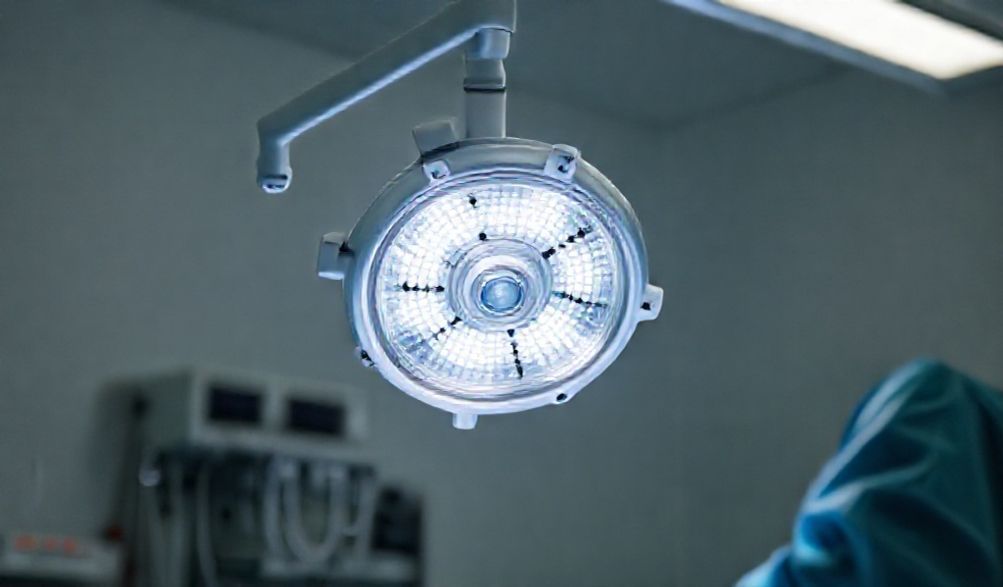
The Complete Guide to Mobile Surgical Lights: Enhancing Flexibility and Patient Care
Imagine this: a sudden, widespread power outage plunges a bustling hospital into darkness. In the main operating rooms, the massive, ceiling-mounted surgical lights go black. Yet, in the emergency department, a trauma team works steadily. Their critical illumination comes not from the ceiling, but from a self-contained, battery-powered unit wheeled to the bedside, its brilliant, shadow-reduced light ensuring a life-saving procedure continues without a hitch.
This scenario underscores a fundamental limitation of traditional fixed surgical lighting: it is anchored to one location. In today’s dynamic healthcare environment—where emergencies happen anywhere, outpatient procedures are booming, and resilience is paramount—this inflexibility can be a critical vulnerability. Enter the mobile surgical light: the versatile, indispensable solution that empowers surgical teams to deliver high-quality care precisely where and when it’s needed.
This comprehensive guide is designed for surgical directors, hospital procurement specialists, and biomedical engineers tasked with making informed capital equipment decisions. We will synthesize insights from clinical literature, industry standards, and practical application to provide an authoritative overview. We’ll explore the essential benefits of mobile surgical lights, break down the critical features you must evaluate, provide a framework for selecting the right system for your facility, and outline best practices for operation and maintenance. By the end, you’ll understand why these units are far more than just backup lights; they are strategic tools for enhancing surgical flexibility, capacity, and patient safety.
What Are Mobile Surgical Lights and Why Are They Essential?
Defining Mobile Surgical Lighting Systems
A mobile surgical light is a self-contained, maneuverable lighting system designed to provide high-quality, surgical-grade illumination independent of fixed room infrastructure. Unlike their ceiling-mounted counterparts, these units are integrated into a mobile stand—often with a heavy, stable base on casters—and feature one or more articulated arms terminating in a light head. This design allows the light to be easily positioned around a patient, in any room, providing the intense, focused, and shadow-controlled light required for precise surgical intervention.
Primary Use Cases and Clinical Applications
The versatility of mobile surgical lights makes them essential across a wide spectrum of healthcare settings:
- Emergency Departments & Trauma Centers: For bedside procedures like chest tube insertions, complex laceration repairs, or trauma resuscitations where moving the patient to an OR is impossible or unsafe.
- Field Hospitals & Military Medicine: In disaster response, humanitarian missions, or combat support hospitals where fixed infrastructure is non-existent. Their portability and battery operation are invaluable.
- Outpatient Surgery Centers & ASCs: To maximize operating room utilization. A mobile light can be shared between rooms or used to add a surgical-capable bay in a procedure room without a fixed light, offering a cost-effective way to scale capacity.
- Dental and Veterinary Surgical Suites: These fields often rely on mobile lights due to room layout and the need for precise, adjustable illumination for various procedures.
- As a Backup to Primary OR Lighting: They are a critical failsafe during primary light failure, maintenance, or power loss, ensuring surgical procedures are never compromised.
Key Advantages Over Fixed Lighting
The value proposition of a mobile surgical light extends beyond mere portability:
- Ultimate Flexibility: The core philosophy is to move the light to the patient, not the patient to the light. This is crucial for unstable patients, procedures in unconventional locations, or when optimizing ergonomics for the surgical team.
- Cost-Effective Scalability: Installing a fixed ceiling light involves significant construction, electrical work, and structural considerations. A mobile light delivers surgical-grade illumination at a fraction of the cost and time, allowing facilities to add or adapt surgical spaces quickly.
- Enhanced Preparedness: In an era of increasing climate-related events and infrastructure challenges, a fleet of battery-operated mobile lights is a key component of a hospital’s disaster preparedness plan, ensuring continuity of essential surgical services.
Critical Features to Evaluate in a Mobile Surgical Light
Not all mobile surgical lights are created equal. Selecting the right unit requires a careful evaluation of several key performance and design characteristics.
Optical Performance and Light Quality
This is the non-negotiable foundation. The light must meet the stringent visual demands of surgery.
- Luminance Intensity (Lux) and Adjustability: Look for a minimum intensity of 40,000 lux at the center of the field (with many high-end models exceeding 160,000 lux). The intensity should be easily adjustable via a dial or touch control to suit different procedures and tissue types.
- Color Rendering Index (CRI) and Color Temperature: A CRI close to 100 is ideal, as it ensures tissues, blood, and organs appear in their true, natural colors, critical for accurate diagnosis and dissection. A color temperature in the range of 4000K-4500K (cool white) is generally preferred for its bright, neutral light that reduces eye strain.
- Depth of Illumination and Field Diameter: The light must provide consistent, deep illumination, not just a bright spot on the surface. Evaluate specifications for illumination depth (e.g., ≥ 30 cm) and adjustable field diameter to cover both small, deep cavities and larger open fields.
- Shadow Reduction Technology: Modern LED lights use multiple, independently controlled LED arrays. When these arrays are focused from slightly different angles, they fill in shadows created by the surgeon’s head or instruments. The more sophisticated the array design and control, the better the shadow management.
Mobility, Stability, and Ergonomics
If the light is difficult to position, its optical brilliance is wasted.
- Stand Design: The base must be heavy and wide enough for exceptional stability, even with the arm fully extended. Casters should be large, lockable, and often conductive to prevent static buildup. The overall weight impacts portability—too light and it’s unstable; too heavy and staff won’t move it.
- Maneuverability and Reach: Articulating arms should move smoothly through a wide range of motion, with easy-to-use friction brakes or clutches. The system should have sufficient vertical reach and horizontal extension to position the light head appropriately over a patient from various angles.
- Sterility: The light must integrate into the sterile field. Look for models with handles designed to be easily draped with a sterile cover or, better yet, feature built-in, autoclavable or disposable sterile handles that surgeons can directly manipulate.
Power Systems and Safety
Reliability is paramount in a device that supports critical care.
- Battery Life, Type, and Charging: Battery life is a top concern. Seek models offering a minimum of 4-6 hours of full-intensity operation on a charge, with clear charge-level indicators. Lithium-ion batteries are now standard for their long life, lack of memory effect, and faster charging. A system with hot-swappable batteries or a dual-bay charger for keeping a spare ready is a mark of excellent design.
- Thermal Management: The light must dissipate heat away from the surgical field and the device’s internal electronics. Advanced designs use passive heat sinks and direct airflow to ensure the light head remains cool to the touch, enhancing patient and staff safety and LED longevity.
- Safety Certifications: Never compromise. The device must carry relevant international safety certifications, primarily IEC 60601-1 (general medical electrical equipment safety) and IEC 60601-2-41 (the particular standard for surgical luminaires and examination lights). Compliance with ISO standards for quality management is also a positive indicator.
How to Choose the Right Mobile Surgical Light for Your Facility
Selecting the optimal mobile surgical light is a strategic decision that blends clinical need with operational and financial reality.
Assessing Your Clinical Needs and Workflow
Start with a needs assessment involving the end-users—surgeons, nurses, and technicians.
- Types of Procedures: Will it be used for superficial procedures in the ED, or for deep-cavity surgery in a backup OR role? This dictates the required light intensity, depth, and shadow control.
- Room Layouts and Workflow: Measure the spaces where the light will be used. Consider door widths, storage locations, and the need to maneuver around other equipment. How often will it be moved between rooms?
- User Profiles: Involve staff in demos. Are the controls intuitive? Is the arm easy to position for surgeons of different heights? Their feedback is invaluable.
Budget Considerations: Total Cost of Ownership
Look beyond the initial purchase price to the total cost of ownership (TCO).
- Upfront vs. Long-Term Costs: A cheaper unit may have a shorter LED lifespan (e.g., 30,000 hours vs. 50,000+ hours), require expensive proprietary battery replacements, or have a poor service network leading to higher downtime costs.
- Return on Investment (ROI): Calculate ROI based on enabled revenue. Can a mobile light allow you to perform billable procedures in a room that previously couldn’t support them? Does it prevent costly case cancellations or delays due to fixed light failure? This often justifies investment in a higher-quality system.
Vendor Selection and Support
The manufacturer and distributor are as important as the product itself.
- Warranties and Service: A strong warranty (3-5 years) reflects confidence in the product. Investigate the local service network. How quickly can a technician arrive? Are common parts kept in stock?
- Training and Resources: Does the vendor provide comprehensive in-service training for clinical and biomedical staff? Do they offer clear operation manuals and troubleshooting guides?
- The Value of a Trial: Whenever possible, arrange for a hands-on clinical trial. Let your staff use the light in a simulated or real low-acuity setting. There is no better way to evaluate real-world performance and ergonomics.
Best Practices for Operation and Maintenance
Proper care ensures performance, longevity, and safety.
Daily Use and Sterilization Protocols
- Positioning: Train staff to position the light قبل draping the patient. The light head should be roughly 70-100 cm from the surgical field, angled to minimize glare and optimize shadow reduction. Fine-tune after draping using sterile handles or controls.
- Cleaning and Disinfection: Follow the manufacturer’s instructions meticulously. Typically, the external surfaces are wiped down with a hospital-grade, low-level disinfectant. Avoid abrasive cleaners or excessive moisture on the light head, controls, or joints. Sterile handles or covers must be changed between every procedure.
Routine Maintenance and Safety Checks
A proactive schedule prevents failures.
* العناية بالبطارية: Implement a routine charging protocol. Even if not used, lithium-ion batteries should be partially cycled every few months. Keep a log of battery performance and plan for replacement per the manufacturer’s lifespan guidelines.
* الفحص الميكانيكي: Biomedical engineering should regularly inspect the unit. Check that all casters roll and lock smoothly, articulation joints move without excessive play or stiffness, and all brakes and clutches hold securely.
* Performance Checks: Periodically measure light output (lux) and color temperature using a light meter to ensure the system hasn’t degraded below acceptable clinical levels.
استكشاف الأخطاء الشائعة وإصلاحها
- Dimming Lights: Usually indicates a depleted battery. If it occurs on a full charge, it could signal a failing battery, a faulty connection, or an issue with the LED driver.
- البطارية لا تحتفظ بالشحن: The battery may be at end-of-life and require replacement. Ensure it is being charged on the correct charger and that charging contacts are clean.
- Stiff or Loose Movement: This often requires adjustment of the tension in the articulated arm’s clutch mechanism, a task typically for biomedical engineering or a service technician.
- General Rule: For any electrical fault, persistent mechanical issue, or significant drop in light quality, remove the unit from service and contact your biomedical department or the vendor’s service team.
قسم الأسئلة الشائعة
Q1: What is the typical battery life of a mobile surgical light, and is it sufficient for long procedures?
ج: High-quality modern mobile lights typically offer 4 to 8 hours or more of continuous operation at full intensity on a single charge. For very long procedures, best practice is to have a spare, fully charged battery on hand or a second light unit available. Many systems are designed for continuous operation while plugged in, using the battery only as backup.
Q2: Can mobile surgical lights match the performance of fixed ceiling-mounted lights?
ج: Yes, premium mobile surgical lights are engineered to meet and often exceed the key optical performance standards (intensity, CRI, shadow reduction) of fixed lights. The primary difference is not performance, but integration. Fixed lights are seamlessly built into the OR ecosystem. Mobile lights trade that seamless integration for unparalleled flexibility and location independence. For many applications, their performance is entirely equivalent.
Q3: How do I ensure the light remains sterile during a procedure?
ج: There are two primary methods. First, many lights have a handle that can be covered with a disposable, sterile plastic sleeve or drape. Second, and increasingly common, is the use of dedicated sterile handle covers or even detachable, autoclavable sterile handles that attach directly to the light head. These are changed between every procedure to maintain the sterile field.
Q4: Are LED mobile lights better than halogen?
ج: Authoritatively, LED technology is now the unequivocal standard for new purchases. LEDs offer massive advantages: they run significantly cooler, eliminating heat radiation onto the surgical site; they have a lifespan of 50,000+ hours versus 1,000-2,000 for halogen bulbs; they provide instant, consistent light with stable color temperature; and they are far more energy-efficient. While some facilities may still use legacy halogen units, any new procurement should focus exclusively on LED-based systems.
س5: ما هي أهم معايير السلامة لهذه الأجهزة؟
ج: المعايير الأكثر أهمية هي:
* IEC 60601-1: المعيار العام للسلامة الأساسية والأداء الجوهري للمعدات الكهربائية الطبية.
* IEC 60601-2-41: المعيار الخاص للسلامة الأساسية والأداء الجوهري لمصابيح العمليات الجراحية ومصابيح التشخيص.
تحقق دائمًا من أن أي مصباح جراحي متنقل تفكر فيه يحمل هذه الشهادات، والتي يجب أن تكون مُوضحة بوضوح في الوثائق التقنية.
الخاتمة
تطورت المصابيح الجراحية المتنقلة من أجهزة احتياطية بسيطة إلى أصول لا غنى عنها مدفوعة بالأداء في مجموعة الأدوات الجراحية الحديثة. إنها تجسيد للرعاية المرنة والقادرة على التكحول والمرتكزة على المريض، مما يتيح إجراء التدخل الجراحي عالي الجودة أينما دعت الحاجة - من فوضى قسم الطوارئ إلى دقة مركز العيادات الخارجية.
اختيار النظام المناسب هو قرار استراتيجي يتطلب تحقيق توازن دقيق بين الأداء السريري، وبيئة العمل المناسبة للمستخدمين، والتكاليف التشغيلية طويلة المدى. إنه ليس شراءً يمكن إتمامه من خلال ورقة المواصفات وحدها. نحن نشجع بشدة إشراك فرقكم الجراحية في التقييمات العملية والتشاور بشكل وثيق مع قسم الهندسة الطبية الحيوية الخاص بكم لتقييم دورة الحياة واحتياجات الدعم.
أعط الأولوية لتحديات سير العمل المحددة لديك، وتعاون مع مصنعين ذوي سمعة طيبة يدعمون منتجاتهم بتدريب قوي وخدمة وضمان. لاتخاذ الخطوة التالية في تعزيز مرونة الجراحة واستعداد منشأتك، نوصي بـ جدولة عرض سريري مع مزود موثوق للمعدات الطبية وإجراء مراجعة رسمية لقدرات الإضاءة المتنقلة والاحتياطية الحالية لديك مع فريق الهندسة الطبية الحيوية الخاص بك. المصباح المناسب في المكان المناسب يمكن أن يُحدث كل الفرق.
ص>