
Illuminating Precision: A Comprehensive Guide to Surgical Lights and Their Critical Role in Modern Medicine
In the high-stakes environment of the operating room, where millimeter precision can define the line between success and complication, every element of the surgical ecosystem is critical. While advanced imaging and robotic systems often capture the spotlight, one foundational technology remains quietly indispensable: the surgeon light. Consider this: studies suggest that up to 30% of a surgeon’s time in complex procedures can be spent adjusting for inadequate visualization, and poor lighting is a recognized contributor to visual fatigue and error. A surgical light is far more than a simple lamp; it is a sophisticated piece of medical engineering designed to replicate the clarity of natural sunlight in the most challenging anatomical landscapes. This guide serves as an authoritative resource for surgeons, nursing staff, hospital procurement teams, and biomedical engineers, delving into the technology, selection criteria, and profound importance of modern surgical lighting, curated with insights into both clinical necessity and engineering excellence.
The Critical Role of Surgical Lighting in Patient Safety and Outcomes
The primary goal of any surgical intervention is a positive patient outcome. Achieving this hinges on the surgeon’s ability to see clearly. Surgical lighting is a direct, and often underappreciated, determinant of that ability, influencing safety, precision, and the overall flow of the procedure.
Beyond Illumination: How Lighting Directly Affects Surgical Precision
A superior surgeon light does not merely brighten the field; it creates an optimal visual environment. This involves two key challenges: eliminating shadows and rendering color accurately.
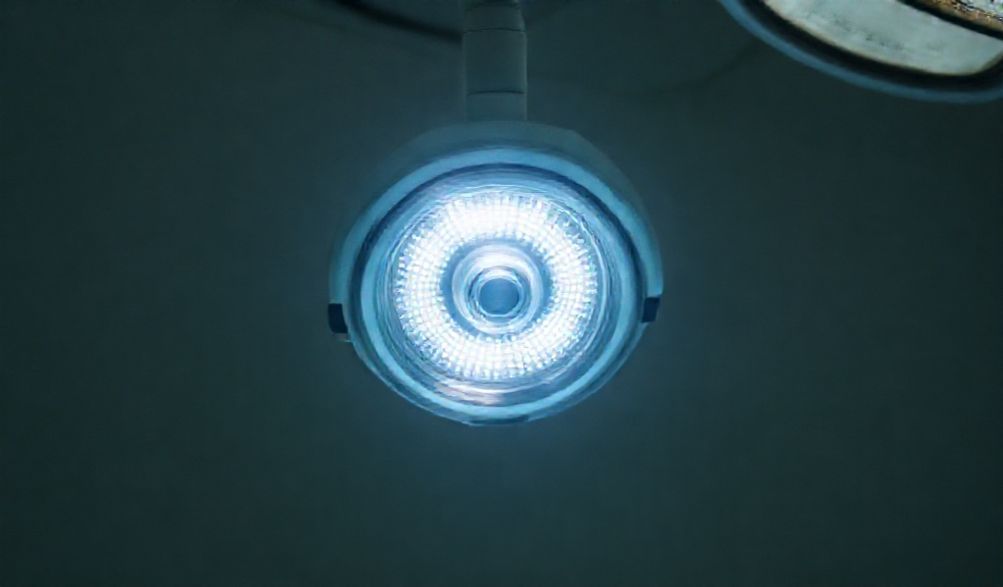
- Shadow Reduction: In a deep cavity, a single shadow can obscure a critical vessel, nerve, or bleed point. Modern lights employ multi-point source technology—often an array of hundreds of LEDs arranged in a specific pattern—to produce overlapping beams. This “shadow dilution” ensures that if one light source is obstructed by a surgeon’s head or instrument, light from other angles fills the gap, minimizing disruptive shadows.
- Color Rendering: Differentiating between arterial blood, venous blood, fatty tissue, and healthy parenchyma relies on subtle color cues. A light with poor color rendering can make tissues appear monochromatic or unnatural, increasing cognitive load and the risk of misinterpretation. Accurate color perception is vital for identifying tissue viability, inflammation, and anatomical boundaries.
- Reducing Visual Fatigue: Long procedures under harsh, flickering, or poorly contrasted light lead to eye strain, headaches, and diminished concentration. A high-quality, stable light source with adjustable intensity and optimal color temperature reduces the physiological stress on the surgical team, supporting endurance and sustained focus during marathon surgeries.
Key Performance Metrics: Understanding Lux, Color Temperature, and Shadow Control
To evaluate a surgeon light, one must speak the language of its technical specifications.
- Lux (Illuminance): This measures the amount of light (luminous flux) falling on a surface. Surgical requirements are demanding. While a well-lit office might be 500 lux, major surgical procedures typically require between 40,000 to 160,000 lux at the center of the illuminated field. Specialized procedures like microsurgery or neurosurgery may demand even higher intensities.
- Correlated Color Temperature (CCT): Measured in Kelvins (K), CCT describes the hue of “white” light. Warm white (e.g., 3500K) has a yellowish tint, while cool white (e.g., 5000K+) appears bluish. The clinical sweet spot for surgery is often considered 4000K to 5000K, closely mimicking midday sunlight. This spectrum provides excellent contrast and is considered less fatiguing, allowing for true tissue differentiation.
- Shadow Control & Depth of Illumination: This is a qualitative and quantitative measure of a light’s ability to provide uniform brightness deep within a wound. It’s a function of the optical design, the number and arrangement of light sources, and the focal length. A good light will maintain a high percentage of its central illuminance (e.g., ≥ 60%) even at a depth of 20-30cm within a cavity.
Types and Technologies of Modern Surgical Lights
The evolution from simple incandescent bulbs to today’s systems represents a leap in medical technology. Understanding the core technologies and configurations is the first step in informed selection.
LED vs. Halogen: A Comparison of Light Source Technologies
For decades, halogen was the standard. Today, Light Emitting Diode (LED) technology has unequivocally taken the lead.
- LED (Current Standard):
- طول العمر: 40,000 to 60,000 hours of life, essentially making them “lifetime” units for most ORs.
- Efficiency & Heat: Consume significantly less power and convert more energy to light rather than heat. This dramatically reduces infrared radiation, minimizing the risk of tissue desiccation and improving comfort for the surgical team.
- جودة الإضاءة: Offer exceptional, stable color rendering (CRI >90 is common) and precise control over CCT. They achieve full brightness instantly, with no warm-up time.
- Halogen (Legacy Technology):
- طول العمر: Typically 1,000 to 2,000 hours, requiring frequent and costly bulb changes and posing a risk of failure during surgery.
- الحرارة: Emit substantial infrared radiation, leading to potential tissue heating and a hotter operating field.
- الكفاءة: Less energy-efficient, with a greater proportion of energy wasted as heat.
The shift to LED is driven by total cost of ownership, superior performance, and enhanced patient safety.
Common Configurations: Ceiling-Mounted, Wall-Mounted, and Mobile Lights
- Ceiling-Mounted (Major OR Lights): The workhorses of the main operating theater. They are suspended from a track or fixed ceiling mount, offering extensive vertical and horizontal reach, effortless maneuverability, and minimal floor clutter. Modern systems often feature multi-link arms for precise positioning.
- Wall-Mounted & Surgical Headlights: Used in minor procedure rooms, endoscopy suites, or as supplementary lighting. They save ceiling space but offer a more limited range of motion. Surgical headlights (LED or fiber-optic) are worn by the surgeon, providing direct, coaxial illumination perfect for deep, narrow cavities in specialties like spine or ENT surgery.
- Mobile (Floor-Standing) Lights: Offer flexibility for use in multiple rooms, emergency situations, or in facilities without installed ceiling systems. They are less stable and can intrude on the sterile field if not carefully managed, making them less ideal for complex, lengthy procedures.
Advanced Features Shaping the Future
Today’s surgeon light is an intelligent device. Key advancements include:
* Adjustable CCT: Allows surgeons to toggle between, for example, 4000K for general tissue and 5000K+ for enhanced blood/tissue contrast at the touch of a button.
* Sterile, Ergonomic Handles: Enable the surgical team to reposition the light without breaking sterility. Some feature touch-sensitive controls within the handle.
* Integration & Hybrid ORs: surgical lights are increasingly part of a networked OR ecosystem. They can be linked to surgical video systems, with lighting profiles that automatically adjust for endoscopic or microscopic visualization, or dim when an imaging C-arm is in use.
How to Select the Right Surgical Light System: A Procurement Guide
يعد اختيار surgeon light is a strategic investment. The decision should be driven by clinical need, technical merit, and long-term value.
Assessing Clinical Needs: Procedure-Specific Requirements
A one-size-fits-all approach fails in the OR. Procurement must start with the surgical specialties served.
* Cardiac/Thoracic: Require very high intensity and excellent depth of illumination for deep-chest procedures.
* Neurosurgery & Spine: Demand exceptional shadow reduction in deep, narrow cavities. Co-axial lighting (often via headlights) is frequently critical.
* Orthopedics: Need broad, uniform field coverage for large incisions and deep joint spaces.
* Ophthalmology & Microsurgery: Require extremely high, focused illuminance with minimal heat on a very small field.
* General/Trauma: Need versatile, high-output lights with robust construction and easy maneuverability for unpredictable situations.
Technical Specifications Checklist
Create a must-review list for any potential system:
1. Central Illuminance: Minimum 40,000 lux for major ORs; 100,000+ for specialized suites.
2. قطر مجال الإضاءة: Adjustable, typically from a focused spot (e.g., 10cm) to a wide field (e.g., 30cm+).
3. مؤشر تجسيد الألوان (CRI): Must be ≥ 90 (out of 100). A CRI of 95+ is ideal for the most accurate tissue discrimination.
4. Depth of Illumination: Verify the illuminance at a stated depth (e.g., 20cm) is a high percentage of the central value.
5. Shadow Dilution: Look for quantitative metrics from the manufacturer, often expressed as a percentage.
Ergonomics, Sterility, and Total Cost of Ownership
- بيئة العمل: The light must be effortlessly positionable. Test the balance of the arms, the smoothness of movement, and the intuitiveness of the controls. Staff fatigue from wrestling with a light is a real operational cost.
- Sterility: All surfaces must be easily cleanable with hospital-grade disinfectants. Sealed optics and smooth, crevice-free housings are essential for infection control.
- التكلفة الإجمالية للملكية (TCO): Look beyond the purchase price. For LEDs, factor in 10+ years of operation with minimal service. For halogens, calculate the recurring cost of bulbs, labor for changes, and downtime. Include warranty terms and the availability/cost of local service support.
Maintenance, Safety Standards, and Best Practices
A poorly maintained light is a liability. Consistent performance requires a proactive approach.
Ensuring Consistent Performance: Routine Inspection and Cleaning Protocols
- يومياً: OR staff should wipe down handles and external surfaces with approved disinfectants after each procedure.
- أسبوعيًا/شهريًا: A visual check for physical damage, loose components, or flickering. Cleaning of optical lenses and glass covers with appropriate, non-abrasive cleaners to maintain light transmission.
- As per Manufacturer: Adhere strictly to the Preventive Maintenance (PM) schedule for mechanical inspections (arm tension, brake function) and electrical safety checks.
Compliance with International Standards (IEC 60601-2-41)
إن IEC 60601-2-41 standard is specifically for surgical luminaires and essential. Compliance ensures the device meets rigorous international benchmarks for:
* السلامة الكهربائية: Protection against shock and malfunction.
* السلامة الحرارية: Limits on accessible surface temperatures.
* السلامة الميكانيكية: Stability, strength of suspension systems, and weight limits.
* Photobiological Safety: Limits on UV and infrared emissions.
* الأداء: Defines test methods for illuminance, field size, and color rendering. Always verify compliance.
Common Issues and Troubleshooting
- Flickering/Dimming: Often indicates a failing power supply or LED driver. Requires immediate technical service.
- Poor Positioning/Drifting: May be due to worn brake pads or failing gas springs in the arm. Needs mechanical service.
- Reduced Output or Discoloration: Usually caused by dirty or degraded optical covers. Clean or replace as per protocol.
- General Rule: For any electrical, mechanical, or performance issue outside of basic cleaning, contact your clinical engineering department or the manufacturer’s certified technician. Do not attempt internal repairs.
قسم الأسئلة الشائعة
What is the typical lifespan of an LED surgical light compared to a halogen one?
LED lights typically last 40,000-60,000 hours, vastly longer than halogen’s 1,000-2,000 hours. This translates to over a decade of typical OR use versus frequent, disruptive bulb changes.
Can surgical lights cause tissue heating or damage?
Modern LED lights emit significantly less infrared radiation than older halogen models, drastically reducing the risk of tissue thermal damage and desiccation. However, proper use and maintaining an appropriate distance from the tissue (as per manufacturer guidelines) are still important best practices.
How often should surgical lights be serviced or recalibrated?
Always follow the manufacturer’s specific PM schedule. As a general rule, a full safety inspection, performance verification (lux, CCT), and mechanical service by a qualified biomedical technician is recommended at least سنويًا.
ماذا يعني “مؤشر تجسيد اللون (CRI)” بالنسبة لمصباح الجراح؟
يقيس مؤشر تجسيد اللون مدى دقة مصدر الضوء في إظهار الألوان الحقيقية للأجسام مقارنةً بضوء مرجعي طبيعي. يعتبر مؤشر تجسيد اللون أعلى من 90 ضرورياً في الجراحة للتعرّف الصحيح على الأنسجة والسوائل والأعضاء. يقلل المؤشر المرتفع من الغموض البصري والحمل الإدراكي للجراح.
هل توجد أضواء مخصصة لجراحات متخصصة مثل التنظير الداخلي أو جراحة الأعصاب؟
نعم. بينما تتميز أضواء غرفة العمليات العامة بتنوع استخداماتها، تستفيد الإجراءات المتخصصة من أنظمة مخصصة. غالباً ما تستخدم جراحات الأعصاب والعمود الفقري أضواء الرأس الجراحية للإضاءة المحورية العميقة. توفر بعض الأضواء إعدادات “الوضع الجراحي” التي تحسن التباين لمهام محددة. تم تصميم أضواء غرف العمليات الهجينة لتتكامل بسلاسة مع التصوير المتقدم مثل الرنين المغناطيسي أو التصوير المقطعي المحوسب.
الخاتمة
يعد اختيار وصيانة surgeon light مصباح الجراحة قراراً حاسماً قائماً على الأدلة يؤثر مباشرة على أداء الجراحة، وتحمل الفريق، وفي النهاية على سلامة المريض. لقد تطور من مجرد أداة إضاءة بسيطة إلى مكون ذكي متقدم في سير العمل الجراحي. وبالنظر إلى المستقبل، تشير الاتجاهات نحو تكامل أكبر – أنظمة إضاءة تكيفية تتزامن مع الفيديو الجراحي في الوقت الفعلي لتحسين التباين، أو إضاءة مدعومة بالذكاء الاصطناعي تتوقع تركيز الجراح. ومع ذلك، يبقى المبدأ الأساسي دون تغيير: الدقة في الجراحة تولد من وضوح الرؤية. لذلك، فإن الاستثمار في هذه التكنولوجيا المحورية والعناية بها بدقة ليس تفصيلاً تشغيلياً، بل ضرورة سريرية أساسية. بالنسبة للاحتياجات المحددة، استشر دائماً فريق الهندسة السريرية لديك وتعامل مع الشركات المصنعة الموثوقة التي يمكنها تقديم امتثال قابل للإثبات، وبيانات أداء، ودعم قوي طوال العمر الطويل للمعدات.
ص>