
Surgical Lights: A Comprehensive Guide to Types, Technology, and Selection for Optimal Operating Room Performance
Introduction
Imagine a master painter attempting to restore a priceless masterpiece in near darkness. Every stroke would be a gamble, every color choice a guess. Now, translate that scenario to an operating room, where a surgeon’s “canvas” is living human tissue, and the stakes are a patient’s life and well-being. In surgery, vision is not just a sense; it is the primary conduit for precision, decision-making, and safety. Studies have linked poor surgical lighting to increased surgeon eye strain, fatigue, and even a higher risk of procedural error. Optimal illumination is, therefore, not a mere utility but a foundational pillar of successful surgical outcomes.
This guide serves as an authoritative, expert-driven resource for the key decision-makers in healthcare: surgeons, hospital procurement teams, biomedical engineers, and facility planners. Our goal is to move beyond basic catalogs and provide a deep, holistic understanding of surgical lighting. We synthesize information from peer-reviewed medical journals, stringent international medical device standards (such as IEC 60601-2-41), and industry best practices to build a framework of knowledge you can trust.
We will journey through the remarkable evolution of surgical lights, decode the core technology behind modern systems, explore the various types tailored for different applications, and provide a practical, five-point checklist for selection. Finally, we’ll cover the critical, often-overlooked aspects of installation, maintenance, and safety to ensure your investment delivers peak performance for years to come.
The Evolution of Surgical Lighting: From Shadow to Precision
The history of surgical lighting is a story of humanity’s relentless pursuit of clarity, mirroring the advancement of surgery itself from a dreaded last resort to a precise science.
Early Days: Sunlight and Simple Lamps
For centuries, surgeons were at the mercy of the sun. Procedures were scheduled for midday near large windows. This was, of course, wildly inconsistent and impossible for complex or emergency operations. The introduction of candles, oil lamps, and later gas lamps brought surgery indoors but introduced new perils: flickering light, intense heat, smoke, and a significant fire and explosion risk. Shadows were deep and unmovable, and the light quality was poor, making differentiation of tissue types extremely difficult.
The Incandescent Revolution
The invention of the incandescent bulb in the late 19th century marked the first major leap. Dedicated surgical luminaires, often with mirrored reflectors, could be positioned over the operating table. This provided a more consistent and brighter light source than ever before. However, these early bulbs still produced substantial heat, had a short lifespan, and their color temperature tended to be warm and yellowish, which did not accurately represent tissue color.
Halogen and LED: The Modern Era
The mid-20th century saw the adoption of halogen bulbs, which offered brighter, whiter light and better color rendering than standard incandescents. They became the OR standard for decades. But the true transformative shift began with the advent of Light Emitting Diode (LED) technology. LEDs represent a quantum leap, offering intense, daylight-quality illumination while generating minimal heat. Their benefits—exceptional energy efficiency, lifespans measured in decades (50,000+ hours), and instant-on capability without warm-up time—have made them the undisputed standard in modern operating rooms, rendering older technologies virtually obsolete.
Core Technology & Features of Modern Surgical Lights
Today’s surgical lights are sophisticated optical instruments. Understanding their core features is essential to evaluating their performance.
LED Technology: Why It’s the Standard
LEDs are the heart of the modern system. Their superiority is defined by several key metrics:
* Color Rendering Index (CRI >90): This is arguably the most critical spec after brightness. CRI measures a light’s ability to reveal the true colors of objects compared to natural daylight. A CRI above 90 (with 100 being perfect sunlight) is essential for surgeons to accurately distinguish between subtle tissue shades—differentiating arterial blood from venous, identifying bile ducts, or spotting early signs of ischemia.
* Color Temperature (4000K-5000K): Measured in Kelvins (K), this describes the “warmth” or “coolness” of the light. The surgical sweet spot is “neutral white” (4000K-5000K), which mimics a bright, overcast day. It provides a clean, alert atmosphere without the blue-heavy harshness of higher temperatures or the yellow tint of lower ones.
* Minimal Infrared/UV Radiation: Unlike halogen bulbs that convert most energy into heat (infrared), LEDs are inherently “cool” lights. This drastically reduces the risk of tissue desiccation (drying out) and thermal injury in the surgical wound, a significant advancement in patient safety.
Understanding Illumination Metrics
Brightness isn’t just about a big number. It’s about useful light where it matters.
* Lux/Lumens: Lux measures illuminance—how much light falls on a surface (the surgical field). A typical requirement is 40,000 to 160,000 lux at the center of the focus point at a standard distance (e.g., 1 meter). Lumens measure the total light output of the source.
* Depth of Illumination: This indicates how well the light maintains its intensity as the surgeon’s hands or instruments move deeper into a cavity (e.g., in abdominal or pelvic surgery). A high depth of illumination (e.g., >25 cm) is crucial for deep procedures.
* قطر مجال الإضاءة: The size of the illuminated area. Lights should offer adjustable field sizes, from a small, intense spot for microsurgery to a wide field for major trauma or orthopedic surgery.
Advanced Optical Systems
To combat the eternal enemy—shadow—modern lights employ brilliant engineering.
* Multi-Focus Reflector Systems: Instead of a single bulb, a cluster of LEDs is arranged on a curved reflector. Each LED’s light is focused to converge at a central point, creating an intensely bright field.
* Light Field Homogeneity: This refers to the evenness of light across the entire field. A high-quality light will have minimal “hot spots” or dark edges, providing uniform illumination.
* Shadow Reduction Technology: The primary method is using multiple, slightly offset light sources (from multiple arms or within a single dome). When an instrument blocks one light path, the others fill in the shadow, making it diffuse and less obstructive. Some systems use computer-controlled LED arrays to dynamically adjust and minimize shadows.
Ergonomic and Hygienic Design
A light must serve the surgical team without becoming a burden or a biohazard.
* مقابض معقمة: Lights feature handles that can be covered with disposable sterile sleeves or are themselves autoclavable, allowing the surgeon to reposition the light mid-procedure without breaking sterility.
* Ease of Maneuverability: Counterbalanced arms with fluid, precise movement are essential. The light should glide into position with minimal effort and stay exactly where placed, without drift.
* Seamless Surfaces: The entire light head is designed with smooth, crevice-free surfaces that can be easily wiped down with hospital-grade disinfectants, preventing the accumulation of pathogens.
Types of Surgical Lights and Their Applications
Not all operating rooms are the same, and neither are their lighting needs.
Major Surgical Lights (Ceiling-Mounted)
These are the workhorses of the main operating theater.
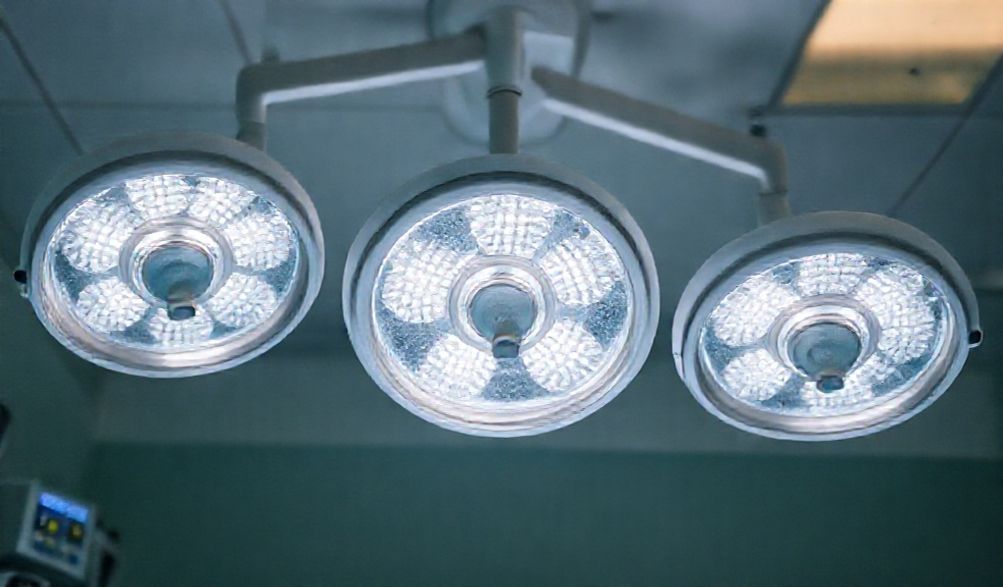
* Single vs. Multi-Arm Configurations: Single-dome lights are common and cost-effective. Multi-arm systems (e.g., two, three, or four independent light heads on one ceiling mount) offer superior shadow control and flexibility, allowing illumination from multiple angles—critical for complex procedures in cardiac, transplant, or major orthopedic surgery.
Minor Surgical Lights (Portable & Stand-Mounted)
Flexibility is key for spaces outside the main OR.
* These mobile units on wheeled stands are used in minor procedure rooms, emergency departments, labor & delivery suites, and outpatient surgery centers. They provide high-quality illumination without the need for permanent ceiling installation.
Specialty Lights
Certain disciplines demand specialized tools.
* Headlights and Loupe Lights: For fields where the surgeon’s head is the best light positioner. Used in maxillofacial, dental, plastic, and neurological surgeries. They often feature a fiber-optic or LED light source mounted on a headband, integrated with surgical loupes for magnification.
* Endoscopic/Cavity Lights: While modern endoscopes have built-in light, standalone cavity illuminators are used to provide general field lighting for laparoscopic or deep-cavity open procedures.
* Examination Lights: Softer, broader lights used for pre-operative assessment, wound dressing changes, and post-operative checks in PACU or patient rooms.
How to Choose the Right Surgical Light: A 5-Point Checklist
Selecting a surgical light is a strategic investment. This checklist will guide your evaluation.
1. Assess Clinical Procedure Requirements
Start with the end-user: the surgical team. What specialties will use the room? A light perfect for superficial dermatology procedures will fail in a neurosurgery suite requiring deep-cavity illumination. Involve lead surgeons in the evaluation process to understand their specific visual needs and ergonomic preferences.
2. Evaluate Technical Performance Specifications
This is your objective benchmark. Create a comparison matrix based on:
* Illumination: Lux at focus (e.g., 100,000 lux @ 1m).
* Depth: Depth of illumination (e.g., maintains 20% of central lux at 30cm depth).
* Color Quality: CRI (must be >90, aim for >95) and Color Temperature (~4500K).
* إدارة الظلال: Evaluate the design (multi-arm, multi-source reflector) and request a live or video demonstration of shadow dilution.
3. Consider Operational Efficiency & Ergonomics
How does it feel to use?
* Test the ease of positioning. Is it effortless to move and does it stay put?
* Inspect the sterility management system. Are handles easy to drape?
* Consider integration capabilities. Does it have ports for mounting a camera for teaching or documentation? Can it interface with the OR integration system?
4. Calculate Total Cost of Ownership (TCO)
Look beyond the sticker price.
* Upfront Cost: The purchase price.
* كفاءة الطاقة: LED lights can reduce power consumption by 50-80% compared to halogen.
* Lifespan & Maintenance: A 50,000-hour LED lifespan means 10-15 years of use with no bulb replacements. Factor in the cost and frequency of service contracts.
* وقت التوقف: A reliable light with good service support prevents costly OR delays.
5. Ensure Regulatory Compliance & Service Support
This is non-negotiable for safety and liability.
* الامتثال التنظيمي: The device must have appropriate clearances (FDA in the US, CE marking in Europe) and comply with IEC 60601-2-41, the international standard for basic safety and essential performance of surgical lights.
* Service & Warranty: What is the warranty period? Does the manufacturer have a responsive, qualified biomedical technician network for repairs and preventive maintenance?
أفضل ممارسات التركيب والسلامة والصيانة
A perfect light can be undermined by poor planning or care.
Proper OR Planning and Installation
- Engage architects, engineers, and the manufacturer early. Verify ceiling structural support for the weight and moment forces of the light.
- Ensure electrical requirements are met and that the installation allows for the full range of motion needed over the OR table.
- Plan for optimal placement relative to other ceiling-mounted equipment (booms, displays) to avoid collisions.
بروتوكولات التنظيف والتطهير الروتينية
- Follow the manufacturer’s Instructions for Use (IFU). Typically, this involves daily and between-procedure wiping of all handles and surfaces with a hospital-grade, non-abrasive disinfectant compatible with the materials.
- Never spray disinfectant directly onto the light; spray onto a cloth first to prevent fluid ingress into vents or electrical components.
Scheduled Preventive Maintenance
- A biomedical technician should perform scheduled checks (semi-annually or annually). This includes verifying illumination levels, checking balance and movement smoothness, inspecting cables and joints for wear, and cleaning internal filters if present.
- This proactive approach prevents failures and ensures the light always performs to its original specifications.
Staff Training for Optimal Use
- يجب أن يتلقى جميع المستخدمين المحتملين - الجراحون والممرضون والفنيون - تدريبًا رسميًا على ميزات الضوء والتعامل السليم وإجراءات التنظيف. هذا يزيد من الفائدة إلى أقصى حد، ويمنع التلف الناتج عن سوء الاستخدام، ويضمن اتباع بروتوكولات التعقيم.
الأسئلة الشائعة (FAQ) حول أضواء العمليات الجراحية
س5: ما هو العامل الأهم عند اختيار ضوء جراحي؟
ج: لا يوجد عامل واحد؛ إنه مزيج من الإضاءة الكافية (اللوكس والعمق)،, دقة لون ممتازة (مؤشر تجسيد الألوان العالي), ، و تقليل الظلال الفعال المصممة خصيصًا للإجراءات الجراحية المحددة التي يتم إجراؤها. الضوء الذي يتفوق في جانب ويقصر في آخر سيهدد نتيجة الجراحة.
س2: كم تبلغ العمر الافتراضي عادةً لأضواء الجراحة LED؟
ج: يمكن أن تدوم أضواء الجراحة LED عالية الجودة من 50,000 إلى 60,000 ساعة، وهو ما يعادل أكثر من عقد من الاستخدام النموذجي في غرفة العمليات، مما يقلل بشكل كبير من تكاليف الاستبدال وفترات التوقف مقارنة بمصابيح الهالوجين القديمة التي استمرت فقط من 1,000 إلى 2,000 ساعة.
س3: هل يمكن أن تسبب أضواء الجراحة تسخين الأنسجة أو تلفها؟
ج: تصدر أضواء LED الحديثة الحد الأدنى من الأشعة تحت الحمراء. الميزة الرئيسية هي أنها توفر ضوءًا ساطعًا وباردًا، مما يقلل بشكل كبير من خطر جفاف الأنسجة أو الإصابة الحرارية مقارنة بأنظمة الهالوجين القديمة، التي كانت مصادر كبيرة للحرارة المشعة.
س4: كم مرة يجب صيانة أضواء الجراحة؟
ج: اتبع إرشادات الشركة المصنعة. عادةً، يُوصى بالفحص اليومي من قبل المستخدم للنظافة، والفحص الأسبوعي للحركة والتوازن، والتفتيش الشامل السنوي من قبل مهندس طبي حيوي مؤهل لضمان الأداء الأمثل والسلامة.
س5: هل هناك معايير يجب أن تفي بها أضواء الجراحة؟
ج: نعم. تشمل المعايير الدولية الرئيسية IEC 60601-2-41 (المتطلبات الخاصة لأضواء الجراحة)، والتي تغطي مقاييس السلامة والأداء مثل إخراج الضوء، وتجسيد اللون، وتخفيف الظل. الامتثال للوائح السوق الإقليمية (إف دي إيه، سي إي) إلزامي للبيع والاستخدام.
الخاتمة
تطورت أضواء الجراحة من مصابيح بسيطة لتصبح من بين قطع المعدات الأكثر تقدمًا من الناحية التكنولوجية والأهم في غرفة العمليات الحديثة. إنها استثمار مباشر في سلامة المرضى، ودقة الجراحة، وكفاءة الفريق. يتطلب اختيار النظام المناسب توازنًا دقيقًا وتعاونيًا بين الاحتياجات السريرية، والمواصفات الفنية الدقيقة، والقيمة التشغيلية طويلة المدى.
ونحن نتطلع إلى المستقبل، سيتعمق دمج الإضاءة الجراحية مع تقنيات غرفة العمليات الأخرى. يمكننا توقع أضواء مزودة بكاميرات 4K مدمجة للتوثيق السلس، وأنظمة تضبط تلقائيًا مجال الضوء وشدته بناءً على بث الفيديو الجراحي، وإمكانية الاتصال التي تتيح تتبع بيانات الأداء للصيانة التنبؤية.
الخطوة الأخيرة والأكثر حسمًا في عملية الاختيار هي الانتقال من صفحات المواصفات إلى التجربة الواقعية. نحن نشجعكم بشدة على طلب عرض حي في بيئة غرفة عمليات محاكاة. هذا يسمح لجراحيكم وطاقمكم بتقييم الإحساس والأداء والتحكم في الظل للضوء مباشرة، مما يضمن أن النظام المختار يصبح حقًا امتدادًا سلسًا لمهارة فريقكم ورؤيته.
ص>