
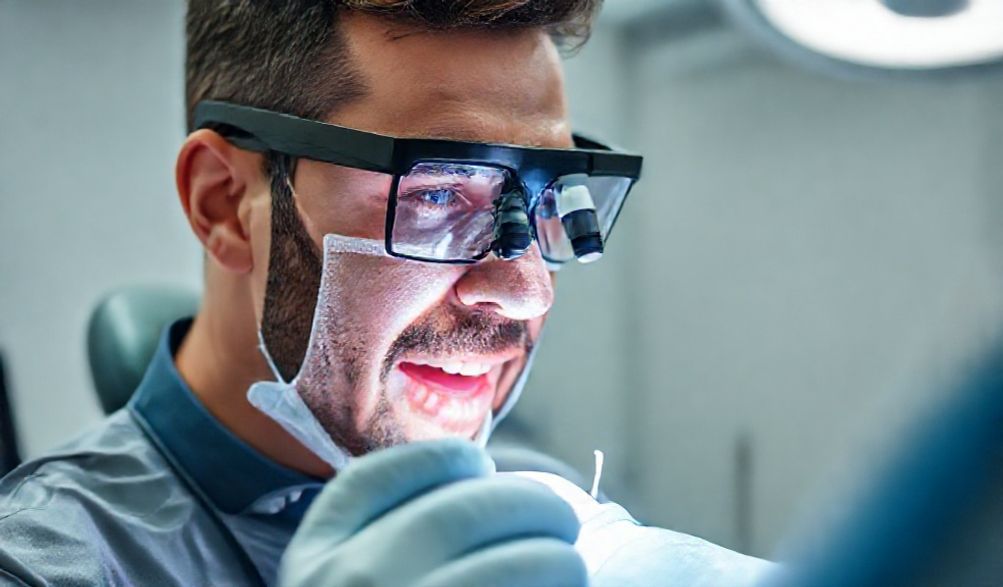
The Ultimate Guide to Dental Headlamps & LED Headlights: Enhancing Precision and Comfort
In the intricate world of modern dentistry, where fractions of a millimeter define success, one factor often separates adequate work from exceptional work: illumination. As a dental professional, you understand that the quality of your light is intrinsically linked to the quality of your care. The difference between straining to see and viewing with crystal clarity is not just about comfort—it’s about clinical accuracy, diagnostic confidence, and long-term practitioner health. The era of relying solely on overhead operatory lights, with their shadows and inconsistent coverage, is fading. Today, the dental headlamp, especially one powered by advanced تقنية LED الحديثة, has transitioned from a luxury to a non-negotiable cornerstone of the efficient, ergonomic practice.
This comprehensive guide is crafted from deep within the dental industry, drawing on years of clinical experience and a thorough understanding of the technologies that empower today’s practitioners. Our goal is to demystify dental headlamps, moving beyond marketing jargon to provide you with the practical knowledge needed to make a truly informed investment. We’ll explore why these tools are essential, delve into the science that makes LED the gold standard, and provide a clear checklist for selecting the perfect model for your unique needs. Whether you’re a seasoned specialist seeking an upgrade or a student building your first kit, consider this your definitive resource for illuminating the path to better dentistry.
Why Dental Headlamps Are a Non-Negotiable Tool in Modern Dentistry
The move to personal, head-mounted illumination is more than a trend; it’s a fundamental shift driven by the demands of precision dentistry. It addresses core challenges that every clinician faces daily, transforming both the process and the outcome of patient care.
The Critical Link Between Visibility and Clinical Accuracy
At its heart, dentistry is a visual and tactile discipline. What you can’t see, you can’t treat effectively. Overhead lights, no matter how powerful, are obstructed by your head, hands, and instruments, casting debilitating shadows into the oral cavity. A dental headlamp solves this by placing the light source directly in line with your vision.
- Enhanced Diagnosis: Subtle visual cues are everything. Detecting the early, subtle shadow of an incipient caries lesion, identifying a craze line versus a true crack in enamel, or distinguishing between healthy and inflamed gingival tissue requires optimal, shadow-free light. The focused beam of a headlamp reveals details that overhead lighting often obscures.
- Precision in Treatment: From placing a Class II composite with perfect marginal adaptation to locating a calcified canal orifice, your light dictates your precision. A bright, focused spot of light ensures you see the exact margin of your prep, the full extent of a caries excavation, and the fine anatomy during surgical procedures. This reduces guesswork, minimizes unnecessary tooth removal, and elevates the quality of every restoration.
Ergonomics and Practitioner Health: Reducing Strain and Fatigue
The physical toll of dentistry is well-documented. Neck, back, and shoulder pain are common occupational hazards, often exacerbated by poor posture adopted to “chase the light.” A headlamp is a powerful ergonomic intervention.
- Freedom of Movement: With the light attached to your head (or loupes), it illuminates exactly where you are looking, instantly and without adjustment. You maintain a neutral, healthy spine position instead of craning your neck to align your eyes with a fixed overhead light.
- Reduced Eye Fatigue: Constantly adjusting between bright operatory light and the relative darkness of a patient’s mouth causes pupil constriction and dilation, leading to eye strain and headaches. A headlamp provides consistent, targeted illumination, reducing this constant adjustment and allowing you to work longer with greater visual comfort.
Beyond the Operatory: Versatility in Dental Specialties
The utility of dental headlamps extends across the entire spectrum of dental care:
* Oral Surgery & Implantology: Provides deep, shadow-free illumination into surgical sites, crucial for flap management, bone grafting, and implant placement.
* Endodontics: Essential for visualizing the pulpal chamber and canal orifices, especially in molars, and for checking cleanliness during obturation.
* Periodontics: Illuminates deep periodontal pockets during scaling, root planing, and surgical procedures for better debridement and visualization of root surfaces.
* Hygiene: Allows hygienists to see subgingival calculus and plaque more clearly, improving the thoroughness of prophylaxis and periodontal maintenance.
LED Technology Explained: Why It’s the Gold Standard for Dental Headlights
While headlamps themselves are transformative, the light source within them is what defines the modern experience. LED (Light Emitting Diode) technology has completely supplanted older halogen and xenon bulbs, and for a compelling set of reasons rooted in both performance and practicality.
The Science of LED vs. Halogen/Xenon: A Comparison
Understanding the key advantages of LED helps justify its status as the industry standard.
- Cooler Operation: Halogen and xenon bulbs generate light through intense heat, producing a significant amount of infrared radiation. This heat is directed toward the patient’s face and, by proximity, the clinician. LED headlamps produce minimal heat, enhancing patient comfort and eliminating the “hot forehead” sensation for the dentist during long procedures.
- Energy Efficiency & Battery Life: LEDs are vastly more efficient, converting a higher percentage of electrical energy into visible light. This translates directly to longer runtime on a single battery charge—often 8-12 hours for LEDs versus 2-4 for halogen equivalents—and less frequent charging.
- Superior Color Rendering Index (CRI): CRI measures a light source’s ability to reveal the true colors of an object compared to natural light. A high CRI (90+ is ideal for dentistry) is critical for accurate shade matching of composites and ceramics, and for correctly assessing tissue health (erythema, cyanosis, etc.). LEDs naturally offer excellent CRI, while halogen lights often have a yellowish tint that can distort color perception.
- Durability and Longevity: An LED is a solid-state component with no fragile filament. It is highly resistant to shock and vibration. Where a halogen bulb might last 50-100 hours, an LED module can last 50,000 hours or more, effectively making it a “lifetime” component with no bulb replacement costs.
Key Technical Specifications You Must Understand
When evaluating dental headlamps led models, these technical terms are crucial for making an apples-to-apples comparison.
- Lumens vs. Lux: This is the most common point of confusion.
- اللومن measure the total amount of visible light emitted by the source (the “water flowing from a hose”).
- اللوكس يقيس الشدة of that light on a specific surface area (the “water pressure at the point it hits the ground”). For dentistry, lux is more important—it tells you how bright the light will be in the operative field, which depends on the optics focusing the lumens. A lamp with fewer lumens but superior optics can deliver higher, more useful lux.
- Color Temperature (Kelvin): تُقاس بالكلفن (K)، وتصف “دفء” أو “برودة” الضوء الأبيض.
- Lower K (3500K-4500K): “Warm white,” often considered easier on the eyes for long periods and can enhance contrast for some users.
- Higher K (5000K-6000K+): “Cool white” or “daylight,” offers a very bright, crisp light that many associate with maximum clarity and is excellent for shade matching, as it mimics north sky daylight.
- Beam Focus and Field Diameter: The optics should allow for adjustment.
- Spot/Focused Beam: A smaller, more intense circle of light (e.g., 40mm diameter at a standard working distance). Ideal for high-magnification work like endodontics or margin finishing.
- Flood/Wide Beam: A larger, slightly less intense field of light (e.g., 80mm+ diameter). Better for general procedures, oral surgery, or hygiene where a broader view is needed.
How to Choose the Perfect Dental Headlamp: A Buyer’s Checklist
With the foundational knowledge in place, selecting the right model becomes a matter of matching features to your specific clinical persona and practice patterns.
Assessing Your Clinical Needs and Common Procedures
Start with a self-audit.
* General Dentist: You need versatility. Look for a lamp with a good balance of spot and flood settings, high CRI for restorative work, and comfortable all-day battery life for a mix of procedures.
* Specialist (Endo, Perio, Surgery): Prioritize maximum brightness (lux) and a precise, focusable spot beam. A “pass-through charging” feature (use while plugged in) is critical for marathon surgical or endo sessions.
* Hygienist: Focus on comfort, lightweight design, and a wider flood beam to illuminate the full arch during prophylaxis. Long battery life is still key for a full day of patients.
Comfort and Design: Ensuring All-Day Wearability
If it’s not comfortable, you won’t wear it. Period.
* Weight & Balance: The total system weight (light module + battery) should be under 300 grams for optimal comfort. Well-designed systems place the battery at the back of the head (counterweight) or on a belt to balance the front-mounted light.
* Headband Style:
* Geared/Click Adjustment: Offers precise, stable fit that doesn’t slip. Ideal for those who move their head frequently.
* Elastic Strap: Often lighter and simpler, but can lose tension over time and may not support heavier light modules as well.
* Loupes Compatibility: This is non-negotiable if you use loupes. Ensure the headlamp mounts securely and unobtrusively to your specific loupe frame (via a dedicated clip or universal mount) without interfering with your field of view or balance.
Power System and Convenience Features
The power source is the engine of your headlamp.
* Battery Type & Placement:
* Belt/Waist Pack: Houses a larger battery, offering the longest runtime. Keeps weight off the head.
* Head-Mounted (Rear Counterweight): Integrated, cordless design for maximum freedom of movement. Runtime is typically shorter than belt-pack systems.
* Runtime & Charging: Aim for a minimum of 6-8 hours of runtime at a useful brightness level. Fast-charging capabilities and pass-through charging are major quality-of-life features.
* Quick-Disconnect: A simple magnetic or plug disconnect between the light cable and battery allows you to quickly step away without removing the entire headset.
Budget Considerations: Balancing Cost with Long-Term Value
View this as a long-term investment in your health and practice efficiency.
* التكلفة الإجمالية للملكية (TCO): While the upfront cost of a premium LED حديث لطب الأسنان is higher, calculate the TCO. An LED has no bulb replacement costs and a battery that lasts for years. A cheaper halogen system will have recurring bulb purchases ($50-$100 each) and shorter battery lifespan, often costing more within 2-3 years.
* الضمان والدعم: A robust warranty (2-3 years is standard for quality brands) and accessible customer support are part of the product’s value.
Best Practices for Using and Maintaining Your Dental Headlight
To protect your investment and ensure peak performance, proper handling and care are essential.
Initial Setup and Calibration for Optimal Performance
- Positioning: The light module should be positioned just above your line of sight, typically on your loupes or headband forehead mount. Adjust the angle so the beam center hits your operative field at your standard working distance.
- Focus: Use the focus ring to adjust the beam diameter. Start with a wider flood for general orientation, then focus down to a spot for detailed work. Match the beam size to your loupe’s field of view.
Daily Use Tips for Maximum Efficiency
- Power Management: Develop a routine. Turn the light off during patient entry/exit, consultation, and while taking X-rays. Use the lowest comfortable brightness setting to extend battery life.
- Cord Management: If using a belt-pack, route the cord under your scrubs or use a clip to prevent snagging. For rear-battery models, ensure the short cord isn’t pulling on the light module.
Cleaning, Disinfection, and Routine Maintenance
- التنظيف: Always follow the manufacturer’s instructions. Generally, wipe down the headband and non-optical surfaces daily with a clinic-grade disinfectant wipe that is safe for plastics and elastomers.
- Lens Care: Clean the glass or plastic output lens only with a soft, dry, lint-free microfiber cloth. Avoid alcohol or harsh chemicals on coated lenses, as they can damage anti-reflective coatings.
- العناية بالبطارية: For Lithium-ion batteries, avoid fully depleting them to 0% regularly. Partial discharges are better. Store the system in a cool, dry place. If storing long-term, charge the battery to about 50-60%.
الأسئلة الشائعة حول مصابيح الرأس LED لطب الأسنان
س2: هل مصابيح الرأس LED لطب الأسنان تستحق الاستثناء مقارنة بالموديلات القديمة؟
ج: Absolutely. While the initial cost may be higher, the long-term savings on bulb replacements, combined with superior battery life, cooler light, and better color accuracy, provide a rapid return on investment through improved efficiency, comfort, and diagnostic confidence. The ergonomic benefit alone, reducing physical strain, is invaluable.
Q: What is the typical battery life for a modern LED headlamp, and can I use it while charging?
ج: Most professional-grade LED headlamps offer 6-12 hours of runtime on a medium-to-high brightness setting on a full charge. Crucially, many high-end models feature “pass-through charging” or “hot-swap” capabilities, allowing you to use them while plugged in or to swap batteries without powering down—essential for long surgeries or busy days.
Q: How do I clean and disinfect my dental headlamp safely without damaging it?
ج: Always defer to the manufacturer’s guidelines. Typically, the headband and casing can be wiped with a mild, clinic-grade disinfectant. The light module and lens should be cleaned gently with a soft, dry cloth. Never immerse the light module or battery in liquid, and avoid harsh chemicals like bleach or ammonia-based cleaners on any part of the system.
Q: Can I integrate a new headlight with my existing surgical loupes?
ج: في معظم الحالات، نعم. لقد تم توحيد السوق إلى حد كبير. يتم تصميم العديد من مصابيح الرأس لتكون متوافقة عالميًا مع العدسات المكبرة، حيث يتم تركيبها عبر مشبك أو محول يلتصق بجسر إطار العدسة المكبرة أو ذراعيها الجانبيين. ومع ذلك، من الأهمية بمكان التحقق من التوافق مع العلامة التجارية والنموذج المحددين للعدسة المكبرة الخاصة بك (مثل Designs for Vision، Orascoptic، Zeiss) قبل الشراء، حيث يمكن أن تختلف أنماط التركيب.
الخاتمة
اختيار مصباح الرأس السني المناسب، خاصة ذلك الذي يستغل تقنية LED المتقدمة، يتجاوز كونه مجرد شراء معدات بسيطة. إنه استثمار استراتيجي في أهم أصولك السريرية: نظرك. إنه استثمار في صحتك الجسدية على المدى الطويل، لمكافحة الإجهاد المهني الذي يقصر المسارات المهنية. في النهاية، إنه استثمار في جودة الرعاية التي تقدمها لكل مريض، مما يتيح الدقة التي ترفع من نتائجك.
من خلال إعطاء الأولوية لعوامل مثل التصميم المريح، تجسيد الألوان الحقيقي (CRI)، شدة الضوء المركز (لوكس)، وأداء البطارية الموثوق، تختار أداة تثمر ثقة وقدرة كل يوم. نوصي باتخاذ الخطوة التالية: استشر موردي المعدات السنية ذوي السمعة الطيبة، اطلب عروضًا حية لتحسس التوازن وترى جودة الضوء مباشرة، وابحث عن تقييمات صريحة من زملائك في تخصصك. أنر عملك بالوضوح الذي يستحقه، وجرب الفرق الكبير الذي يصنعه الإضاءة المثلى في طب الأسنان الحديث.
عن المؤلف: مع أكثر من عقد من الخبرة كطبيبة تعمل في مجال تركيب الأسنان وكاستشارية تقنية سريرية لممارسات طب الأسنان، كرست الدكتورة أنيا شارما مسيرتها المهنية لدمج التميز السريري مع الابتكار المريح. لقد قيمت شخصيًا العشرات من تقنيات غرفة العمليات وساعدت مئات أطباء الأسنان في تبسيط سير عملهم وتقليل الإجهاد الجسدي من خلال خيارات المعدات الذكية.