
The Ultimate Guide to Finding the Best Loupe Light for Precision Work
Have you ever squinted at a tiny component, strained to see a hairline fracture, or lost track of time trying to distinguish minute details under poor light? If your work or hobby demands precision, you know the struggle is real. Inadequate lighting isn’t just an annoyance—it’s a professional barrier that leads to eye fatigue, headaches, and costly mistakes. The moment you realize you need more than just a bright desk lamp, your search for the best loupe light begins.
But here’s the catch: “best” is a loaded term. The perfect loupe light for a dentist is different from the ideal model for a jeweler or an electronics technician. This guide isn’t a simple list of top sellers. It’s an expert, experience-driven, and unbiased deep dive designed to cut through the marketing jargon. We’ve synthesized technical specifications, professional user feedback, and ergonomic principles to help you, the precision professional or dedicated hobbyist, make a truly informed decision.
We’ll demystify the key factors—from lens optics and lighting science to comfort and battery life—and match them to specific professions. By the end, you’ll have a clear checklist to find the best loupe light for your eyes, your tasks, and your comfort.
What is a Loupe Light and Who Needs One?
Defining the Tool
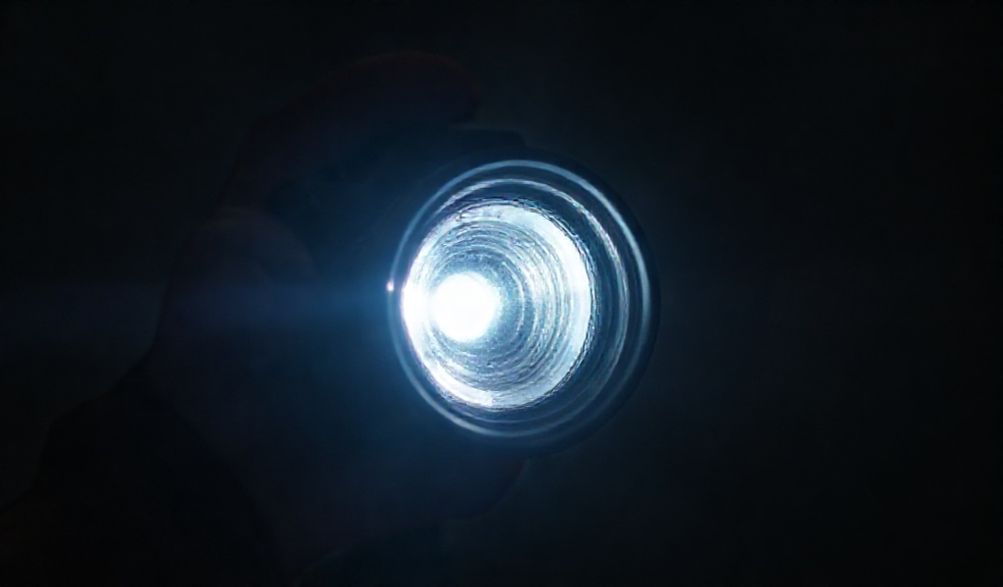
At its core, a loupe light is a fusion of two essential tools: magnification and illumination. A loupe (a small magnifying device) is integrated with a focused LED light source, often mounted on a headband or glasses frame. This combination creates a portable, personal workstation that brings light exactly where your eyes are looking, eliminating shadows and providing a brilliantly lit, magnified view of your subject. It’s a game-changer for any task where standard lighting fails.
Primary User Profiles & Professions
This tool is far from niche. It’s a critical piece of equipment across numerous fields where detail is paramount.
- Dentists & Dental Technicians: For procedures like cavity detection, margin preparation, and restorations, a clear, shadow-free, and color-accurate view of the oral cavity is non-negotiable.
- jewelers & Watchmakers: Working with tiny gem settings, intricate filigree, and microscopic watch components demands the highest levels of magnification and pristine, glare-free light to assess cuts, settings, and finishes.
- electronics engineers & PCB Inspectors: Soldering micro-components, tracing circuit paths, and inspecting for solder bridges or microfractures requires a steady, magnified view and adjustable light to avoid reflective glare on boards.
- Aestheticians, Dermatologists & Tattoo Artists: Analyzing skin texture, performing extractions, applying permanent makeup, or detailing a tattoo requires a close, well-lit view that doesn’t blast the client with uncomfortable heat.
- Hobbyists (Model Builders, Coin Collectors, etc.): Painting miniature figures, restoring vintage items, or grading coins and stamps transforms from a strain to a pleasure with the right hands-free magnification and light.
Critical Factors for Choosing the Best Loupe Light
Navigating product specs can be overwhelming. Let’s break down what truly matters, moving from the lenses in front of your eyes to the battery on the back of your head.
Magnification Power & Lens Quality
This is the foundation of the tool. Getting it wrong means a blurry, uncomfortable experience.
- Understanding Diopter & Magnification: Magnification is often expressed in “X” (e.g., 2.5x, 3.5x) or as a diopter (e.g., 3.5x ≈ +14 diopter). Higher isn’t always better. More magnification reduces the field of view and the depth of field (the range that stays in focus). Common sweet spots are:
- 2.5x to 3.5x: Excellent for dentistry, general inspection, and soldering. Offers a good balance of magnification, field of view, and working distance.
- 4.5x to 5x and above: Essential for ultra-fine work like advanced jewelry setting or micro-soldering. Requires a very steady hand and closer working distance.
- Lens Types: This is where cost and quality diverge.
- Glass Lenses: The gold standard. They offer superior optical clarity, scratch resistance, and are less prone to distortion, especially at higher magnifications. They are heavier and more expensive.
- Acrylic/Plastic Lenses: Lighter and more affordable, but can scratch easily and may have slight optical imperfections. They can be a good choice for lower magnification or occasional use.
- Coatings: Look for anti-fog coatings (crucial for dentists or anyone breathing near their work) and anti-reflective coatings to reduce glare and improve light transmission.
Lighting Technology & Performance
The “light” in loupe light is what separates a good tool from a great one.
- LED Type & CRI (Color Rendering Index): Not all white light is the same. CRI measures a light source’s ability to reveal the true colors of an object compared to natural sunlight (CRI 100). A high CRI (90+) is critical for dentists (matching tooth shades) and jewelers (accurately grading gems and metals). Low-CRI light can make colors look dull or misleading.
- Brightness & Adjustability:
- Brightness (Lumens): Look for adjustable brightness settings. A single overpowering setting can cause glare and eye strain. Dimmable controls let you match the light to the task.
- Light Temperature: Measured in Kelvin (K). Cool white (5000K-6000K) mimics daylight and promotes alertness, good for technical work. Warm white (3000K-4000K) is easier on the eyes for extended sessions and is often preferred in client-facing settings like aesthetics.
- Light Pattern & Shadow Reduction: The light should be even. Some systems use a single central LED (can create a hotspot), while advanced models use multiple LEDs or a ring light design to provide shadow-free, uniform illumination across the entire magnified field.
Design, Comfort & Ergonomics
You can have the best optics in the world, but if it’s uncomfortable, you won’t use it.
- Weight & Balance: The total weight (typically 100-300 grams) and its distribution are key. A well-balanced headband model should feel secure without excessive pressure. Lightweight glasses-frame styles exist but may not support higher magnifications as stably.
- Style: Headband vs. Glasses Frame:
- Headband Styles: Offer the most stability, adjustability, and are the standard for professionals who wear them for hours. They distribute weight around the head.
- Glasses Frame / Clip-On Styles: More portable and feel more like regular glasses. Some can flip up. They can be less stable for high-mag work and may not fit well over personal prescription glasses.
- Adjustability: Must-have features include interpupillary distance (IPD) adjustment to align the lenses with your pupils, and working distance adjustment (the distance from your eye to the work piece). A proper fit is essential to avoid double vision and neck strain.
Power Source & Battery Life
Convenience and reliability hinge on power.
- Rechargeable vs. Disposable: Rechargeable lithium-ion batteries are the modern standard. They are cost-effective and eco-friendly. Look for USB-C charging for modern convenience. Models with disposable AAA/AA batteries are becoming rare but offer the theoretical “never die” option if you have spares.
- Real-World Battery Life: Manufacturers often state “up to” hours. Consider your workflow. Does it last a full 8-hour clinic or workday on a medium setting? A battery pack that is separate and can be swapped (sometimes via a cable) is a premium feature for professionals who can’t afford downtime.
Top Loupe Light Applications & Feature Priorities
Let’s translate those technical factors into real-world needs. Your profession dictates your priority list.
For Dentistry & Clinical Use
- Top Priority: High CRI (95+) for accurate shade matching. Sterilization compatibility (wipable surfaces, removable lens covers). All-day comfort with a padded, adjustable headband.
- Key Feature: Through-the-Lens (TTL) design is overwhelmingly preferred. The light path is coaxial (through the center of the lens), providing brilliant, shadow-free illumination directly in the line of sight, crucial for deep oral cavities.
For Jewelry Making & Watch Repair
- Top Priority: Highest optical clarity with glass lenses. High magnification (4.5x to 10x) for working on tiny settings and gears. Bright, even, and shadow-free light to see facets and metal finishes perfectly.
- Key Feature: Optics are paramount. A pristine, multi-element glass lens system is a worthwhile investment. A flip-up or flip-down design can be useful for frequently switching between magnified and normal vision.
For Electronics & Technical Inspection
- Top Priority: Good depth of field to keep small components in focus. Hands-free, stable operation. Adjustable light intensity and angle to combat glare off shiny solder joints and components.
- Key Feature: A headband style provides the necessary stability. Look for a light that can be angled or dimmed to prevent “hot spots” of reflection on PCBs.
For Skincare & Aesthetics
- Top Priority: Client comfort is key. The device should look professional and not intimidate. Light should be bright but cool (not generating heat on the client’s skin). Portability for moving between treatment rooms.
- Key Feature: A lightweight design, often a glasses-frame style with a clean aesthetic. Balanced, flattering light (often cooler temperature) that allows for detailed analysis of skin texture and pores without discomfort.
How to Use Your Loupe Light Safely and Effectively
Owning a precision tool means using it correctly. Proper use maximizes its benefits and protects your most important asset: your vision.
Proper Adjustment and Fit
- Set the Interpupillary Distance (IPD): Hold the loupe up without the headband. Close one eye and adjust the hinge until the open eye sees a single, clear circle of view. Repeat for the other eye. The setting should now be correct for both eyes open.
- Set the Working Distance: With the loupe on, hold an object in focus. Measure the distance from your eye to the object. This is your working distance. Adjust the declination angle of the loupe barrels (if available) so you can maintain this distance with a neutral, upright head and neck posture.
- Adjust the Headband: The headband should sit comfortably around the crown of your head, with the rear strap cradling the occipital bone at the back of your skull. It should be snug enough to stay put when you look down, but not cause pressure points.
Eye Health and Ergonomics
- Take Regular Breaks: Follow the 20-20-20 rule. Every 20 minutes, look at something 20 feet away for at least 20 seconds. This relaxes your focusing muscles.
- Maintain Neutral Posture: Your work should be raised to meet your gaze. Avoid craning your neck forward or hunching over for extended periods. The goal is to look down with your eyes, not forward with your entire head.
- Start Slow: If you’re new to loupes, wear them for just 30-60 minutes at a time initially to allow your eyes and brain to adapt to the magnified, restricted field of view.
Maintenance and Care
- Cleaning Lenses: Always use the provided microfiber cloth or a lens-specific cloth. Use a drop of lens cleaner if needed, but never household glass cleaners on coated lenses. Blow off dust first to avoid scratching.
- Battery Care: For lithium-ion batteries, avoid fully draining them to 0% regularly. Partial discharges are better. Store in a cool, dry place.
- Storage: Always keep your loupe in its protective case when not in use. This prevents scratches, dust accumulation, and physical damage.
Frequently Asked Questions (FAQ)
Q: What is the most important feature in a loupe light?
A: There is no single “most important” feature—it’s a hierarchy based on your needs. However, lens quality and comfort are the non-negotiable foundations. Poor optics ruin the tool’s purpose, and discomfort means you won’t use it. After that, prioritize based on your task: CRI for color work, magnification for detail, battery life for mobility.
Q: Are more expensive loupe lights always better?
A: Not automatically. Price often correlates with premium materials (glass lenses, metal hinges), advanced features (ultra-high CRI, wireless charging), and brand reputation (often in dental/medical fields). However, many mid-priced models offer fantastic value with excellent acrylic optics and good LEDs. Focus on the specific features you need rather than the price tag alone.
Q: Can I wear my loupe light over my prescription glasses?
A: It depends. Most traditional headband loupes are designed for direct wear, not over glasses. However, many manufacturers offer custom prescription lens inserts that fit inside the loupe itself, which is the ideal solution. Some glasses-frame style loupes are made to fit over smaller prescription frames. Always check the product specifications for “OTG” (over-the-glasses) compatibility.
Q: How long do the LED bulbs typically last?
A: The LEDs in a quality loupe light are rated for 30,000 to 50,000 hours or more. In practical terms, they will likely last the entire functional lifetime of the device (5-10+ years of daily use). They are not typically designed to be user-replaceable.
Q: Is a through-the-lens (TTL) or flip-down design better?
A: This is a major preference point. TTL loupes provide a consistent, ergonomic posture and unimpeded, coaxial lighting. They are preferred by professionals who work in magnification for hours at a time (dentists, surgeons). Flip-down loupes offer flexibility to quickly look up at a patient, clock, or screen without removing the headset. They can be better for tasks requiring frequent switching between magnified and normal vision.
Conclusion
The journey to find the best loupe light ends not with a universal answer, but with a personalized one. It’s the tool that seamlessly disappears into your workflow—providing crystal-clear vision, brilliant light, and all-day comfort tailored to your specific craft.
Remember, while it’s tempting to focus on flashy specs like ultra-high magnification or the brightest LEDs, the core of your decision should be optical clarity and ergonomic fit. These are the factors that will determine whether the loupe becomes an extension of your senses or a frustrating burden.
Use this guide as your roadmap. Revisit the section dedicated to your profession, make a checklist of your priority features, and let that checklist guide your evaluation of specific models. Read professional reviews, watch demo videos, and if at all possible, try a model on before you commit. Investing in the right loupe light is an investment in the quality of your work, the health of your eyes, and the longevity of your passion for precision.
p>