
The Complete Guide to Ceiling Mounted Surgical Lights: Technology, Benefits & Selection
Introduction
In the high-stakes environment of the modern operating room (OR), every piece of technology plays a pivotal role in patient outcomes. Among the most critical, yet sometimes overlooked, is the ceiling mounted surgical light. More than just a lamp, it is the primary source of visual truth for the surgical team, illuminating the intricate landscape of human anatomy with clarity, precision, and consistency.
This comprehensive guide is designed for surgical directors, hospital procurement teams, biomedical engineers, and healthcare facility planners. Drawing on decades of collective industry expertise and technical specifications, we will demystify these sophisticated illumination systems. Beyond basic function, we will explore how advanced lighting technology directly impacts surgical precision, staff ergonomics, and operational efficiency. Whether you are upgrading an existing suite or planning a new surgical facility, this pillar resource provides the evidence-based knowLEDge needed to make an informed, optimal investment in this vital surgical infrastructure.
1. What is a Ceiling Mounted Surgical Light? Core Function & Evolution
The Primary Role in Modern Surgery
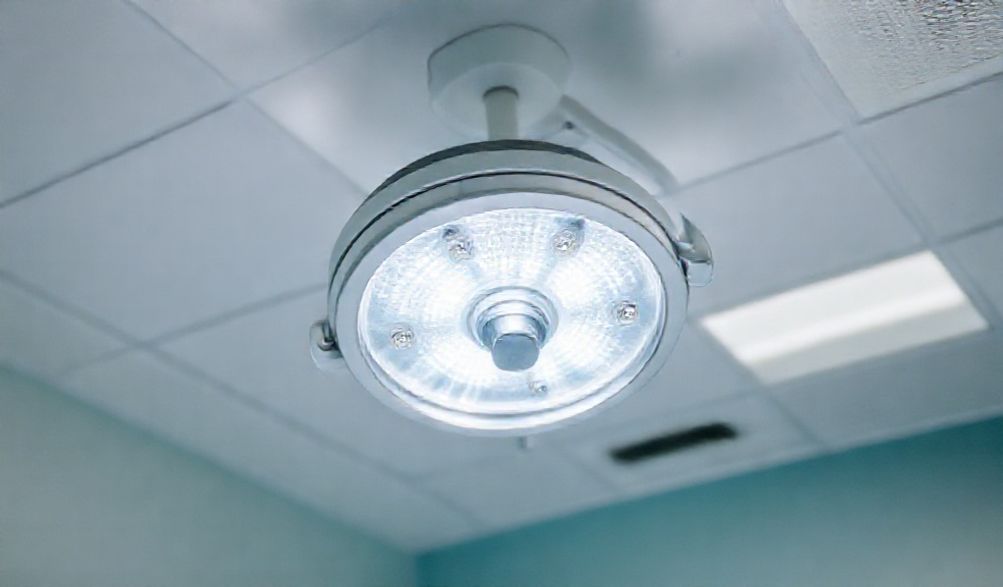
A ceiling mounted surgical light is a highly specialized medical device designed to provide intense, shadow-minimized, and color-accurate illumination directly onto the surgical site, or sterile field. Its core function is to replicate ideal daylight conditions, enabling surgeons to discern fine details, differentiate between tissues (arteries, veins, nerves, organs), and perceive true colors—all without causing heat discomfort or visual fatigue to the patient or the OR team. It is the cornerstone of visual guidance in procedures ranging from routine outpatient surgery to complex, multi-hour neurosurgical operations.
From Incandescent to LED: A Brief Historical Timeline
The journey of surgical lighting mirrors the broader arc of medical technological advancement:
* Early 20th Century: Simple incandescent lamps provided focused light but generated excessive radiant heat, risking tissue desiccation and creating an uncomfortable environment.
* Mid-20th Century: The introduction of halogen bulbs marked a significant improvement, offering brighter, whiter light. However, heat output and relatively short bulb life (1,000-2,000 hours) remained major drawbacks.
* Late 20th Century: Fluorescent systems emerged, offering cooler operation but often struggling with color accuracy and instant-on capability.
* 21st Century – The LED Revolution: The adoption of Light Emitting Diode (LED) technology has been transformative. Modern LED surgical lights provide exceptional brightness, near-perfect color rendering, virtually no infrared/ultraviolet heat radiation onto the surgical site, and lifespans exceeding 50,000 hours. They are also highly energy-efficient and digitally controllable.
Key Components and Anatomy
Understanding the anatomy of a surgical light system is key to evaluating its capabilities:
1. Light Head: The core assembly containing the LED arrays, sophisticated reflector optics for beam shaping and shadow control, and often a secondary handle for the sterile team.
2. Suspension Arm: A system of articulated segments (often 3-5) that provides the light head with extensive reach and maneuverability. Key specifications include horizontal reach, vertical travel, and the number of axes of rotation for precise positioning.
3. Control Panel: The user interface, which can be located on the light head, a separate pendant, or integrated into an OR control system. It manages intensity, color temperature (if adjustable), and often memory presets for different procedure types.
4. Ceiling Mount / Interface: The fixed point attached to the building structure. It houses the electrical connections and the first axis of rotation, and must be rated to support the system’s weight.
2. Critical Technical Features & Performance Metrics
When comparing systems, these technical specifications are non-negotiable indicators of performance.
Illumination Quality: Lux, Color Temperature & CRI
- Illuminance (Lux): This measures light intensity at the surgical field. While needs vary, a general benchmark is 40,000 to 160,000 lux at a 1-meter distance. Microsurgery and cardiac procedures demand the highest levels.
- Color Temperature (Kelvin, K): Measured in Kelvins, this describes the “warmth” or “coolness” of white light. The medical standard is 4000K to 5000K—a neutral, cool white that enhances contrast and reduces eye strain compared to warmer (yellower) or colder (bluer) light.
- Color Rendering Index (CRI): Perhaps the most critical metric. CRI measures a light’s ability to reveal the true colors of objects compared to natural light. A CRI of 90 or higher (Ra90+) is essential for accurately distinguishing between tissues, such as oxygenated vs. deoxygenated blood or healthy vs. necrotic tissue.
Shadow Reduction Technology
Advanced shadow reduction is what separates a surgical light from a simple spotlight. It is achieved through:
* Multi-Source Optics: The light head contains multiple, independently focused LED clusters arranged in a ring or matrix.
* Overlapping Beams: The optics are engineered so that the light beams from these multiple sources converge and overlap at the focal point (the surgical cavity). When a surgeon’s head or hand obstructs one cluster, the light from the surrounding clusters fills in the shadow, dramatically reducing its density and maintaining uniform illumination.
Depth of Illumination & Field Diameter
- Depth of Illumination (DoI): This indicates how well the light maintains consistent intensity as you move deeper into a cavity (e.g., in pelvic or thoracic surgery). A high DoI percentage means minimal light fall-off with depth.
- Field Diameter: The size of the illuminated area at a given distance. Lights should offer a large, homogeneous field (e.g., 200-300mm at 1m) to cover the surgical site without constant repositioning.
Heat Management
A key advantage of LED technology is its minimal radiant heat emission. High-quality systems use advanced heat sink designs and thermal management to dissipate what little heat is generated away from the light head and the surgical field. This prevents tissue drying, improves surgeon comfort, and does not disrupt laminar airflow in the OR.
3. Tangible Benefits for the Surgical Team & Patient Outcomes
Superior surgical lighting translates directly into measurable advantages.
Enhanced Visual Acuity & Surgical Precision
High CRI and adjustable intensity allow surgeons to work with greater confidence and accuracy. Reduced eye strain during long procedures minimizes fatigue-related errors. The ability to clearly differentiate anatomical structures can lead to shorter procedure times, reduced blood loss, and improved surgical outcomes.
Improved Ergonomics & Workflow Efficiency
Effortless positioning via balanced suspension arms reduces physical strain on nurses and surgical techs. Features like sterile handles with intuitive controls, memory presets for specific procedures, and smooth, silent movement all contribute to a more streamlined workflow, less OR traffic, and potentially faster turnover times between cases.
Infection Control & Sterility Maintenance
Modern lights are designed for the OR environment. They feature:
* Sealed, Smooth Surfaces: With no crevices or seams that can harbor pathogens.
* Cleanable Materials: Surfaces that can withstand repeated cleaning with hospital-grade disinfectants.
* Minimal Particulate Shedding: Enclosed optics and sealed joints prevent the release of particles into the sterile field.
Long-Term Cost Efficiency & Sustainability
While the initial investment in premium LED lighting may be higher, the total cost of ownership is often lower:
* Energy Savings: LEDs consume up to 80% less power than halogen systems.
* Extended Lifespan: 50,000-60,000 hours vs. 1,000-2,000 for halogen bulbs, eliminating frequent, costly bulb replacements and associated labor.
* Reduced Maintenance: With no bulbs to replace and minimal moving parts subject to wear, downtime and service costs are significantly reduced.
* Cooler Operation: Low heat output reduces the load on OR HVAC systems, contributing to further energy savings.
4. How to Select the Right System: A Procurement Checklist
Navigating the procurement process requires a structured approach.
Assessing Your OR’s Specific Needs
Begin with a clinical and architectural audit:
* Procedure Mix: Do you perform deep-cavity surgery (needing high DoI), microsurgery (needing extreme lux and precision), or wide-field trauma? Different specialties have different priorities.
* Room Dimensions: Measure ceiling height, room width/depth, and table location. Ensure the light’s reach and travel range can adequately cover all potential table positions.
* Existing Infrastructure: Note the location of structural supports, existing ceiling penetrations, and electrical capacity.
Integration with OR Infrastructure
The surgical light does not operate in isolation. Consider:
* Surgical Booms & Other Ceiling Mounts: Coordinate with planners to avoid spatial conflicts and ensure a clean, functional ceiling plan.
* OR Control Systems: Can the light interface with a centralized touchpanel for room presets (“Cardiac Mode,” “Ortho Mode”)?
* Imaging Equipment: In hybrid ORs, ensure the light can be positioned out of the way of C-arms and other imaging devices without compromising functionality.
Evaluating Durability & Service Support
- Build Quality & MTBF: Inquire about the Mean Time Between Failures (MTBF) for critical components. Robust metal construction is preferable.
- Warranty: Look for comprehensive warranties that cover parts, labor, and light output degradation.
- Service Network: Does the manufacturer have certified biomedical technicians in your region? What is their typical response time for urgent issues?
Compliance & Certification Standards
Ensure any system under consideration carries the necessary certifications for patient safety and quality management, such as:
* IEC 60601-1: The international standard for the safety and essential performance of medical electrical equipment.
* ISO 9001: Quality management systems certification.
* FDA 510(k) Clearance (for the U.S. market): Demonstrates the device is substantially equivalent to a legally marketed predicate device.
* Regional Electromagnetic Compatibility (EMC) standards.
5. Installation, Maintenance & Best Practices
Proper implementation is as crucial as the selection itself.
Pre-Installation Planning & Site Survey
- Mandatory Structural Review: A qualified engineer must verify the ceiling can support the dynamic and static loads of the light system, especially in seismic zones.
- Coordinated Planning: Work with electrical contractors, HVAC, and other trades to ensure conduits, power sources, and ceiling penetrations are in the correct locations before installation.
- Review Installation Manuals: Provide the full manual to the installing team well in advance.
Routine Cleaning & Preventative Maintenance Protocols
- Daily: Wipe down all external surfaces, including the light head, arms, and handles, with a soft cloth and approved hospital disinfectant. Avoid abrasive cleaners or sprays directly onto lenses.
- Monthly/Semi-Annually: Check arm movement for smoothness and balance. Inspect cables and sleeves for wear. Verify the tightness of fasteners (per manufacturer schedule).
- Annually/Bi-Annually: A detailed inspection by a qualified biomedical engineer or manufacturer technician to check electrical safety, calibrate sensors, and verify light output metrics.
Common Troubleshooting Tips
- Light Won’t Turn On: Check the main power disconnect (often located at the ceiling interface), the circuit breaker, and ensure the control panel is not in a locked “standby” mode.
- Poor Balance or Stiff Movement: The suspension arm may need re-balancing—a procedure outlined in the manual that often involves adjusting gas spring tension. Stiff joints may need lubrication with manufacturer-specified materials only.
- Intermittent Control Response: Clean the contact points on sterile handles or touch controls. Check for interference from other electronic devices in the OR.
Frequently Asked Questions (FAQ)
What is the typical lifespan of a modern LED surgical light?
Modern LED surgical lights typically offer 50,000 to 60,000 hours of operational life. Under normal OR use (approximately 10 hours per day, 250 days a year), this translates to over 20 years of service before the LEDs degrade to 70% of their original output (L70 rating), often the benchmark for replacement.
Can ceiling mounted lights be installed in older operating rooms?
Yes, but a professional site survey is absolutely essential. The survey must verify structural ceiling integrity (to support the weight and dynamic forces), adequate clearance height (older ORs may have lower ceilings), and sufficient electrical capacity. Retrofits often require custom mounting solutions or structural reinforcement.
How does shadow reduction actually work?
It uses multiple LED clusters arranged in a ring or matrix within the light head, paired with parabolic reflectors. Each cluster’s light is focused to overlap in the surgical field. When an object (like a surgeon’s head) blocks one light source, the beams from the surrounding clusters fill in the shadow, dramatically minimizing its density. This is sometimes called “parallel optical path” technology.
Are there options for controlling the light without breaking sterility?
Absolutely. Common options include:
* Sterile Handles: With integrated buttons for on/off and intensity.
* Touchless Gesture Control: A sensor allows the scrubbed team to adjust settings with a wave of the hand.
* Voice Activation: Integrated systems can respond to verbal commands.
* Foot Switches: A sterile-draped pedal on the floor.
* Remote Control Pendant: Operated by the circulating nurse.
What is the single most important factor when choosing a light?
While all features are important, illumination quality—defined as sufficient, shadow-reduced, and color-accurate light—is the fundamental purpose. A light must first excel in providing optimal visual conditions to support surgical success. Therefore, prioritizing high CRI (Ra90+), excellent shadow reduction, and appropriate lux levels for your procedures is the primary consideration, upon which other features like ergonomics and integration are built.
Conclusion
Selecting a ceiling mounted surgical light is a strategic decision that extends far beyond simple procurement. It is an investment in a core tool that directly enables surgical excellence, team well-being, and operational efficiency for years to come. By prioritizing evidence-based performance metrics—superior illumination quality, robust shadow reduction, ergonomic design, and seamless integration—over initial price alone, healthcare facilities can secure a system that delivers tangible clinical and financial value.
We recommend engaging with reputable manufacturers who provide comprehensive site support and can offer live demonstrations or evaluations in a clinical setting. Allowing your surgeons and OR staff to experience firsthand the critical differences in light quality, handling, and control is the most effective way to ensure your investment illuminates the path to better patient care.
p>