
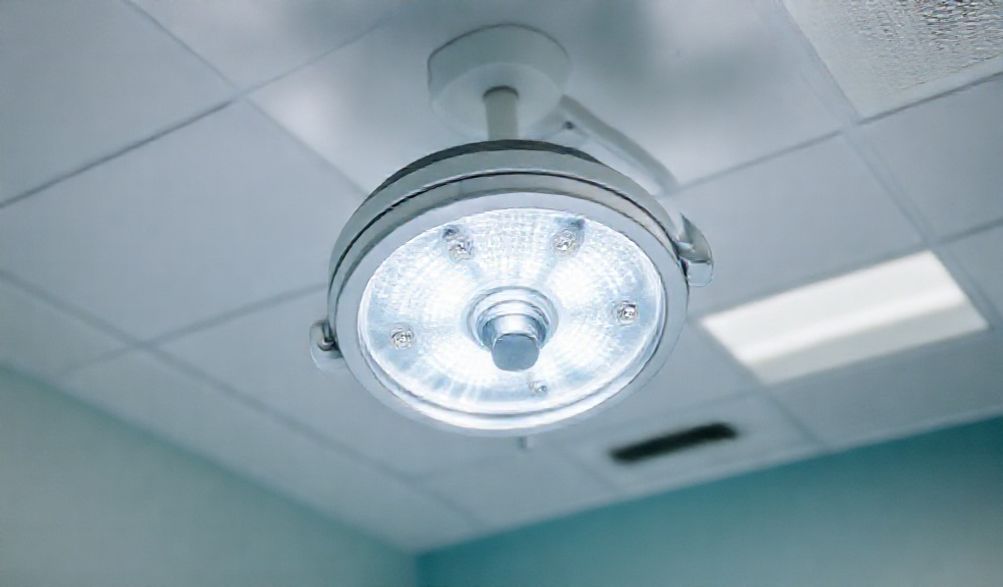
The Complete Guide to Ceiling Mounted Surgical Lights: Technology, Benefits & Selection
Introduction
In the high-stakes environment of the modern operating room, every detail matters. From the precision of the instruments to the skill of the surgical team, success hinges on a confluence of factors working in perfect harmony. Among these, one element is so fundamental it is often overlooked until it fails: illumination. surgical lighting is not merely about “brightness”; it is about creating a visual environment where human anatomy is revealed with absolute clarity, where shadows do not hide critical structures, and where surgeon fatigue is minimized over hours of intense focus.
At the pinnacle of this illumination technology stands the ceiling mounted surgical light. More than just a lamp, it is a sophisticated medical device engineered to meet the exacting demands of contemporary surgery. This guide serves as your definitive, expert resource on these critical systems. We will move beyond sales brochures to dissect the core technology, articulate the tangible benefits for patient outcomes and surgical teams, and provide a structured, unbiased framework for selection. Whether you are a hospital administrator overseeing a capital purchase, a clinical engineer responsible for performance, or a surgeon advocating for optimal tools, this guide synthesizes technical data, clinical experience, and practical wisdom to inform your most critical decisions.
1. Understanding Ceiling Mounted Surgical Light Systems
To make an informed choice, one must first understand what a modern ceiling mounted surgical light is and how it functions. It is a system of integrated components, each playing a vital role in delivering flawless illumination.
1.1 Core Components and Engineering
A surgical light system is an orchestration of mechanical, optical, and electronic engineering.
- Light Head Design: This is the business end of the system. Modern lights typically feature a multi-spot configuration, where several individual LED modules are arranged in a ring or cluster. Each module’s light is focused through a complex parabolic reflector system, designed to project overlapping beams. This is the key to shadow reduction—as a surgeon’s hand or instrument blocks one beam, the others fill in from different angles. The number and size of these “spots” vary, with larger diameters (e.g., 1800mm) providing broader, more diffuse fields for general surgery, and smaller, more intense configurations suited for deep-cavity work.
- The Suspension System: This is the “arm” that holds the light head. There are two primary types:
- Single-Point Mount: A central column with multiple articulated arms. It offers a wide range of motion and is a classic, reliable design.
- Track-Mounted System: The light head is suspended from a ceiling-mounted rail. This allows for incredible flexibility, enabling the light to travel the length of the track and be positioned entirely out of the way when not in use—a crucial feature in hybrid ORs with large imaging equipment. Regardless of type, the suspension must offer counterbalanced, fluid movement. A surgeon or nurse should be able to reposition the heavy light head with minimal effort using a sterile handle, and it must stay securely in place without drift.
- Control Systems: Ease of use is paramount. Controls are often duplicated: on a touchscreen panel mounted on the wall or light head, and via sterile handles on the light itself. Advanced systems may offer voice activation or integration with the OR’s central control hub, allowing pre-set lighting “scenes” for different procedure types.
1.2 Evolution of Illumination Technology: From Halogen to LED
The journey to today’s LED standard is a story of solving critical clinical problems.
- Halogen & Conventional Systems: For decades, halogen bulbs were the norm. They produced a warm, somewhat yellow light. Their significant drawbacks included intense heat output (which could dry out tissue and discomfort the surgical team), high energy consumption, and short lifespans (often 1,000-2,000 hours), leading to frequent, costly bulb changes and OR downtime.
- The LED Revolution: Light Emitting Diode (LED) technology has fundamentally transformed surgical lighting. It is now the unequivocal standard, and for compelling reasons:
- Cool Light: LEDs emit minimal infrared radiation, drastically reducing heat transfer to the surgical site and the surgeons’ heads.
- Exceptional Longevity: LED modules are rated for 50,000 to 60,000 hours—decades of typical OR use without a significant drop in output.
- Energy Efficiency: They consume a fraction of the power of halogen systems, offering substantial operational cost savings.
- Instant On/Off & Dimming: Unlike halogens that need to warm up, LEDs provide full-intensity light instantly and can be dimmed smoothly with perfect color stability.
- Advanced LED Features: The best systems leverage LED technology for more than just efficiency.
- Color Rendering Index (CRI >90): CRI measures how accurately a light source reveals the true colors of objects compared to natural sunlight (CRI 100). A CRI above 90 is essential for distinguishing subtle differences between tissues, arterial blood, venous blood, and bile.
- Adjustable Color Temperature: Surgeons can often tune the light from a warmer (~3700K) to a cooler (~5000K) white. Cooler light can enhance contrast and visual acuity for fine detail work.
- Homogeneous Light Field: Advanced optics ensure the illuminated field has even intensity from center to edge, with no hot spots or dark rings that could cause visual fatigue.
1.3 Key Technical Specifications Decoded
Navigating product specs requires understanding what the numbers mean for surgery.
- Illuminance (Lux): This is the measure of light intensity falling on a surface. International standard IEC 60601-2-41 specifies that surgical lights must deliver a minimum of 40,000 lux at the center of the field, and 20,000 lux at a periphery defined by the manufacturer (e.g., at a 300mm radius). More lux isn’t always better; excessive, unfocused brightness can cause glare. The key is achieving high, even lux across a large, usable field.
- Depth of Illumination (DoI): This is arguably the most critical spec for surgeons. It measures the system’s ability to provide adequate light deep into a body cavity. A light with a high DoI (e.g., >1200mm) will maintain a high percentage of its central lux value even when focused 30cm down into a wound, ensuring the base of a deep surgical site is as well-lit as the surface.
- Shadow Dilution: This is the qualitative result of the multi-spot design. It’s not that shadows are eliminated, but that they are rendered faint and non-obstructive. A good system will have a shadow dilution percentage specification, indicating how much the illumination is reduced when a primary light path is blocked. The best systems keep this reduction to less than 10%.
2. Critical Benefits for the Modern Operating Room
The investment in a premium ceiling mounted surgical light pays dividends across multiple dimensions of OR performance.
2.1 Enhancing Surgical Precision and Patient Safety
This is the primary mission. Superior lighting is a direct patient safety intervention.
- Optimal Visual Acuity: High CRI and homogeneous light reduce eye strain and mental effort for the surgeon. The ability to clearly differentiate between a nerve, a vessel, and a fascia layer in real-time can be the difference between a routine procedure and an iatrogenic injury.
- Minimizing Human Error: Deep, consistent illumination and effective shadow reduction remove visual uncertainty. In complex, lengthy procedures like oncological resections or vascular anastomoses, this stable visual environment supports sustained concentration and precision, reducing the risk of error.
- Supporting Advanced Modalities: Modern surgery is increasingly minimally invasive. A ceiling mounted surgical light must complement, not conflict with, endoscopic monitors and robotic consoles. Its light must be bright and color-true enough to balance with the monitor’s glow and illuminate external port sites without creating screen glare.
2.2 Improving Ergonomics and Workflow Efficiency
The OR is a workspace, and its design impacts staff performance.
- Unobstructed Floor Space: This is the most obvious advantage over floor-standing lights. By moving the light source to the ceiling, a major trip hazard and equipment obstacle is removed. This creates clear pathways for staff and allows for easier positioning of instrument tables, anesthesia equipment, and imaging devices like C-arms.
- Effortless Positioning: A well-balanced ceiling mount can be repositioned with a gentle nudge from a sterile elbow or a handle. This allows the surgical team to optimize the light angle throughout the procedure without breaking sterility or calling for assistance, streamlining workflow.
- Reducing Staff Fatigue: Glare, heat, and the strain of squinting into poorly lit cavities contribute to physical and cognitive fatigue over long cases. Cool, even, glare-controlled LED light creates a more comfortable environment, helping the entire team maintain peak performance.
2.3 Ensuring Sterility and Facilitating Hygiene
Infection control is paramount, and lighting plays a role.
- Seamless, Cleanable Designs: Modern light heads are designed with smooth, sealed surfaces and minimal seams where contaminants could lodge. They are constructed of materials that can withstand daily wiping with hospital-grade disinfectants without degrading.
- Reduced Air Turbulence: In ultra-clean environments like orthopaedic ORs, laminar airflow systems direct sterile air downward over the patient. A bulky floor stand disrupts this flow. A ceiling mounted surgical light, with its sleek profile suspended above, creates far less aerodynamic interference, helping to maintain the integrity of the sterile field.
3. How to Choose the Right Ceiling Mounted Surgical Light
Selection is a multi-faceted process that must balance clinical need, infrastructure, and finance.
3.1 Assessing Clinical Needs and Procedural Mix
One size does not fit all. The “best” light is the one best suited to your work.
- Matching Light to Specialty:
- General/Abdominal Surgery: Prioritize a large light field diameter and excellent depth of illumination for deep cavities.
- Neurosurgery & ENT: Often require smaller, more intense light heads for focused illumination in confined spaces. High CRI is non-negotiable for distinguishing subtle neural and mucosal tissues.
- Orthopedics: Need very bright, homogeneous light with excellent shadow control for working in deep bony structures. Compatibility with laminar flow is critical.
- Cardiac/Vascular: Require exceptional depth of illumination and color contrast to distinguish vessel walls and suture materials.
- Procedure Volume and Room Utilization: A high-turnover ambulatory surgery center needs a rugged, reliable system. A multi-purpose main OR might benefit from a track-mounted system for maximum flexibility. Consider if the room is dedicated to one specialty or used by many.
3.2 Evaluating Physical and Infrastructure Requirements
The most advanced light is useless if you can’t install it properly.
- OR Ceiling Structure: This is the first and most critical check. The ceiling must support the dynamic load—the weight of the light plus the force exerted when it is moved and positioned. Older buildings may require significant structural reinforcement. A pre-purchase site survey by the manufacturer or a structural engineer is essential.
- Room Dimensions and Layout: Measure the room size, table location, and the planned location of other ceiling-mounted equipment (booms, monitors, gas columns). Ensure the light’s suspension provides adequate coverage over the entire potential surgical site and can be parked clear of other devices.
- Integration Considerations: Is this a hybrid OR with a fixed CT or MRI? You may need a non-magnetic light system. Will it interface with a unified OR control system? Ensure communication protocols (like BACnet or proprietary systems) are compatible.
3.3 Budgeting: Total Cost of Ownership (TCO) Analysis
Look beyond the initial price tag.
- Capital vs. Operational Costs: While the upfront cost of a premium LED system is significant, its TCO is often lower than cheaper alternatives. Calculate the savings: No bulb replacements for 15+ years, ~50-70% lower energy consumption, and reduced downtime for maintenance.
- Service, Maintenance, and Warranty: Understand the warranty period (often 3-5 years on parts, 1-2 on labor). What is the manufacturer’s service network response time? What are the costs of planned preventative maintenance?
- Future-Proofing: Does the system have a modular design? Can LED drivers or control modules be upgraded separately in the future? Choosing a system from a manufacturer with a clear roadmap can protect your investment.
4. Installation, Maintenance, and Safety Standards
Proper stewardship of the equipment ensures it performs safely and reliably for its entire lifespan.
4.1 Professional Installation and Calibration
Installation is not a job for general contractors.
- Certified Installation: Insist on installation by the manufacturer’s certified technicians or highly qualified biomedical equipment technicians (BMETs). They understand the precise alignment, balancing, and electrical safety requirements.
- Post-Installation Testing: After installation, performance must be validated. This includes measuring illuminance (lux) at the focal point and periphery, verifying shadow dilution performance, testing all movement brakes and controls, and ensuring emergency battery backup systems function.
4.2 Routine Maintenance and Cleaning Protocols
Proactive care prevents failures.
- Maintenance Checklists: Follow a schedule:
- Daily/Pre-Use: Wipe down handles and surfaces with approved disinfectant; check for smooth movement.
- Monthly/Quarterly: Inspect suspension arms for wear, check balance, verify control panel functions.
- Annually: A full performance check by a BMET, including lux measurement and electrical safety tests, is recommended.
- Cleaning Procedures: Only use cleaning agents specified by the manufacturer. Harsh chemicals can damage anti-glare coatings, crack plastic lenses, or degrade seals.
4.3 Compliance with Global Regulatory Standards
These devices are regulated for patient and user safety.
- IEC 60601-2-41: This is the core international safety and performance standard for surgical luminaires. Compliance is mandatory in most markets.
- FDA Regulation: In the USA, surgical lights are Class II medical devices, requiring 510(k) clearance.
- Key Certifications: Look for the CE Marking (Europe), UL Listing or CSA Certification (North America), and evidence that the manufacturer’s quality system is certified to ISO 13485. These are indicators of regulatory compliance and manufacturing rigor.
Frequently Asked Questions (FAQ)
Q1: What is the typical lifespan of an LED ceiling mounted surgical light?
A: High-quality LED surgical lights are designed for extreme durability, often rated for 50,000 to 60,000 hours of use. With typical OR scheduling, this can translate to 15-20 years of service before a significant drop in luminance, far exceeding older halogen technologies.
Q2: Can ceiling mounted lights be installed in any operating room?
A: Not without assessment. A structural review of the ceiling is mandatory to ensure it can support the dynamic load (weight + movement forces). Older facilities may require reinforcement. A site survey by the manufacturer or a qualified engineer is a crucial first step.
Q3: How important is the Color Rendering Index (CRI) for surgical lights?
A: Extremely important. A CRI of 90 or higher (where 100 is natural sunlight) is considered essential. It ensures tissues, blood, and organs appear in their true colors, allowing surgeons to make accurate visual diagnoses and distinctions during critical moments.
Q4: What are the primary advantages over traditional floor-standing surgical lights?
A: Ceiling mounts offer three major advantages: 1) Sterility: They eliminate a major floor-based obstacle, improving cleanliness and reducing trip hazards. 2) Space: They free up invaluable floor space for staff and equipment. 3) Maneuverability: They typically offer a wider range of motion and easier positioning without contaminating the sterile field.
Q5: Are these systems compatible with hybrid ORs and advanced imaging?
A: Yes, modern systems are designed for hybrid environments. Key features include electromagnetic compatibility (EMC) to not interfere with sensitive equipment, non-magnetic versions for use with MRI, and designs that avoid obstructing large C-arms or imaging systems.
Conclusion
The selection of a ceiling mounted surgical light is a consequential decision that resonates through every procedure performed under its beam. It is far more than a line item on a capital equipment list; it is a foundational investment in surgical capability, patient safety, and operational excellence. By grounding your decision in a clear understanding of clinical requirements, a rigorous evaluation of infrastructure and total cost, and an unwavering commitment to the highest standards of performance and safety, you can choose a system that will serve as a reliable partner to your surgical teams for decades. This guide has aimed to illuminate not just the technology, but the critical decision-making pathway, empowering you to make a choice that brightens the future of care in your operating rooms.
p>