
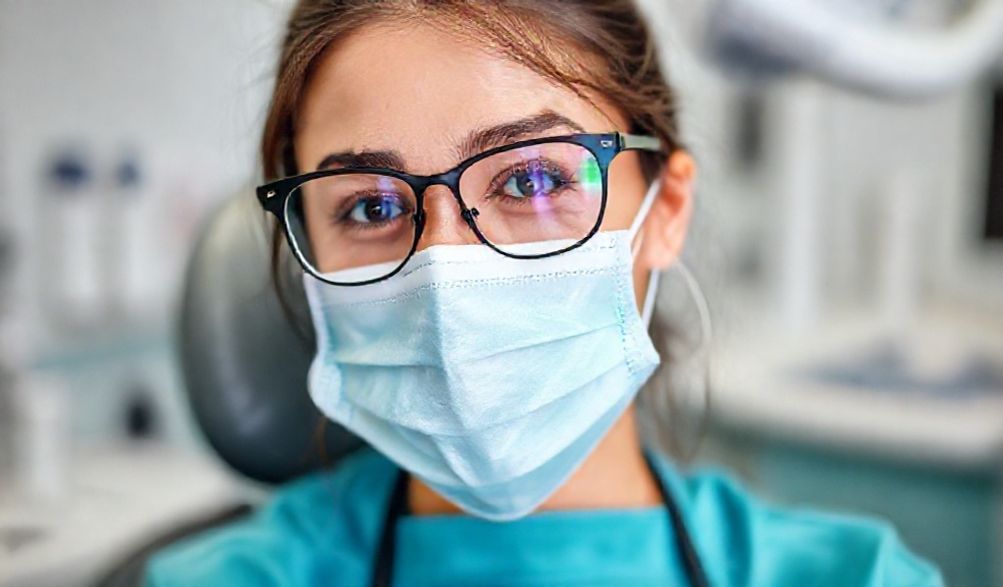
The Ultimate Guide to Dental Hygienist Glasses: Safety, Clarity & Comfort
You’re in the middle of a challenging scaling procedure, your focus laser-sharp. Suddenly, a tiny fragment of calculus flies toward your face, or a fine aerosol cloud mists your lenses, blurring your view. You blink, your eyes sting slightly from the strain of hours under the operatory light, and you feel the familiar, frustrating onset of lens fogging as you lean in. This isn’t just an inconvenience; it’s a break in your sterile field, a risk to your safety, and a hindrance to the precision your patients deserve.
For dental hygienists, eyewear is far more than a simple accessory. It is a critical piece of Personal Protective Equipment (PPE), as essential as your gloves and mask. The right pair of glasses is a shield, a tool, and an ergonomic aid, all in one. This comprehensive guide is designed to move beyond basic advice, providing an evidence-based deep dive into the world of dental hygienist glasses. We’ll synthesize insights from occupational safety standards, clinical ergonomics, and professional equipment reviews to help you make an informed, safe, and smart investment in your most important professional asset: your vision and eye health.
We will explore the non-negotiable reasons for specialty glasses, break down the key features that matter, compare the different types available, and walk you through a step-by-step process to choose the perfect pair for your unique practice.
Why Specialty Glasses Are Non-Negotiable for Dental Hygienists
In the dynamic environment of a dental operatory, your eyes are vulnerable to a surprising array of hazards. Understanding these risks is the first step in appreciating why generic eyewear falls dangerously short.
The Primary Risks: More Than Just Splashes
While splashes are the most obvious threat, the dangers are more varied and frequent than many realize.
- Impact from Flying Debris: The use of ultrasonic scalers, hand instruments, and high-speed handpieces can propel tiny, hard projectiles. Calculus fragments, tooth enamel, old restorative materials, or even broken instrument tips can travel at high velocity toward your eyes, posing a significant risk of corneal abrasion or more serious injury.
- Chemical Splashes: Your workspace contains a variety of chemicals, including disinfectants, etching agents, bleaching gels, and impression materials. An accidental splash or spill can cause severe irritation, burns, or permanent damage to ocular tissues.
- Harmful Optical Radiation: The blue light emitted from dental curing lights, while essential for polymerizing resins, can be phototoxic to the retina with prolonged, direct, or repeated exposure. This cumulative effect is a growing concern in dental professions.
- Exposure to Aerosols and Pathogens: The procedures you perform generate aerosols and spatter that contain oral fluids, blood, and microorganisms. While a mask protects your respiratory system, your eyes are a mucous membrane and a potential route for infection transmission.
Beyond Safety: Enhancing Clinical Performance
Specialty glasses do more than protect; they actively enhance your ability to perform your job with excellence and endurance.
- Reducing Eye Fatigue: Long hours of intense visual focus on a small, reflective field lead to digital eye strain. Lenses with appropriate tints, coatings, or magnification can reduce the muscular effort required, preventing headaches and fatigue.
- Improving Visual Acuity and Depth Perception: Procedures like subgingival scaling and root planing demand exceptional visual detail. Anti-reflective coatings, specific lens tints (like a subtle yellow), or integrated magnification bring fine details into sharper focus and improve depth perception, leading to more thorough and less traumatic patient care.
- Minimizing Distractions: Glasses that constantly slip down your nose, pinch behind your ears, or fog up the moment you wear a mask are more than annoying—they break your concentration and compromise your efficiency. A proper fit with reliable anti-fog technology allows for uninterrupted, focused work.
Key Features to Look for in Dental Hygienist Glasses
Not all safety glasses are created equal. When selecting eyewear for dental hygiene, these are the non-negotiable features to scrutinize.
Safety Certification (The Foundation)
This is the baseline. Never compromise on certified protection.
- ANSI Z87.1+ (U.S.) / EN 166 & EN 170 (EU): Look for this marking engraved on the frame and lens. The “+” following Z87.1 indicates the lens meets the high-impact standard, meaning it can withstand the force of a ¼-inch steel ball traveling at 150 feet per second. This is the level required for dental environments. EN 166 is the European standard for impact resistance, with EN 170 specifying protection against ultraviolet (UV) radiation.
- Side Protection: Impact can come from any angle. A wraparound design or integrated, permanent side shields are essential to seal off peripheral exposure. Temples alone are not sufficient.
Lens Technology for Optimal Vision
The lens is your window to the procedure. Advanced coatings and options transform it from a simple shield into a performance-enhancing tool.
- Anti-Fog Coating: Perhaps the most critical feature for clinical work. Permanent hydrophobic and oleophobic coatings cause moisture to bead and roll off. Some require gentle care with specific cleaners to maintain effectiveness. This feature is invaluable for maintaining a clear field of vision, especially when wearing a mask.
- Anti-Scratch Coating: A durable hard coat extends the life of your lenses by resisting the minor abrasions that occur during cleaning and storage, which can otherwise diffuse light and obscure vision.
- Blue Light Filtering: Lenses that filter a portion of the high-energy visible (HEV) blue light from curing lights and operatory LEDs can help reduce retinal strain and potential long-term phototoxic risk.
- Lens Tints & Magnification Options:
- Tints: A light yellow or amber tint can enhance contrast, making it easier to see details like plaque, calculus, and tooth cracks against the white tooth surface. Grey or brown tints are good for general light reduction.
- Magnification: Built-in low-power readers (+1.50 to +2.50 diopter) can help with close work without the need for a full loupe system. For more significant magnification, see the Integrated Loupe Systems section below.
Design for All-Day Comfort
If they aren’t comfortable, you won’t wear them consistently, negating all their safety benefits.
- Adjustable Features: Soft, adjustable silicone nose pads and flexible temple tips allow you to customize the fit to your facial structure, preventing pressure points and slippage.
- Lightweight Materials: Frames made from materials like TR-90 (a flexible, durable nylon) or Grilamid are incredibly light, strong, and resistant to deformation, making them ideal for long clinical days.
- Secure Fit: The glasses should sit snugly without pinching. A secure fit is crucial when you’re moving dynamically around the patient’s head; you shouldn’t have to constantly readjust them.
Types of Dental Hygienist Glasses: Pros and Cons
Understanding the categories will help you narrow down your choice based on your vision needs and budget.
Over-the-Glass (OTG) Safety Glasses
These are designed specifically to fit comfortably over your existing prescription glasses.
- Pros: A convenient and immediate solution. Cost-effective if you already have prescription lenses you’re happy with. Easy to put on and take off.
- Cons: Can be bulky, increasing pressure on the nose and ears. The air gap between the two lenses can sometimes lead to increased fogging. Field of view may be slightly reduced.
Prescription Safety Glasses
These are custom-made by an optician: your precise prescription is ground into lenses that are then mounted into a safety-certified frame.
- Pros: The gold standard for those requiring vision correction. Provides optimal, distortion-free vision and full safety protection in a single, streamlined pair. No compromising on fit or comfort.
- Cons: Higher upfront cost. Requires a current prescription and working with an optician experienced in safety eyewear. You may need a separate pair for everyday use.
Plano (Non-Prescription) Safety Glasses
These are safety glasses without any vision correction power.
- Pros: The widest variety of styles and often the most affordable option. Perfect for clinicians with 20/20 vision or those who prefer to wear contact lenses.
- Cons: Offer no vision correction. Contact lens wearers must consider the potential for dry eyes in the air-conditioned operatory environment.
Integrated Loupe Systems
These are safety glasses that have surgical telescopes (loupes) built into the lenses or mounted on the frame.
- Pros: Provide significant ergonomic benefits by promoting a more upright, neutral spine posture. Dramatically improve visual acuity and precision for fine work like calculus detection and removal. Many systems offer customizable magnification, working distance, and declination angle.
- Cons: Represent a significant financial investment. Require a period of training and adaptation to use effectively. Can be heavier than standard safety glasses.
How to Choose the Right Pair for You: A Step-by-Step Guide
Follow this process to make a confident, personalized decision.
Step 1: Assess Your Primary Needs & Work Environment
Ask yourself: What procedures do I perform most? Do I work extensively with curing lights? Do I struggle with eye fatigue or need help seeing fine details? Do I wear contacts or prescription glasses? Your answers will guide you toward the necessary features (e.g., blue light filter, magnification, OTG design).
Step 2: Get a Professional Eye Exam (If Needed)
This step is critical for expertise, authoritativeness, and trustworthiness (E-E-A-T). Schedule a comprehensive eye exam with an optometrist or ophthalmologist. Not only will this provide an up-to-date prescription, but it also allows you to discuss your specific occupational hazards and visual demands. A professional can recommend lens designs (like anti-fatigue lenses) or tints you may not have considered and ensure your ocular health is monitored.
Step 3: Prioritize Fit and Try Before You Buy
Whenever possible, try glasses on. Use this checklist:
* Do the nose pads distribute weight evenly without pinching?
* Do the temples hold the frame securely without squeezing your head?
* Does the frame provide a full field of view without obstruction?
* Do they feel stable when you move your head side-to-side and up-and-down?
Step 4: Consider Maintenance and Durability
Understand how to care for your investment.
* Cleaning: Use only the recommended lens cleaner and a microfiber cloth. Avoid paper towels, clothing, or harsh chemicals like window cleaner, which can destroy anti-fog and anti-scratch coatings.
* Lifespan: Even with perfect care, lens coatings degrade over time. Plan to replace your safety glasses every 2-3 years, or immediately if lenses become pitted, scratched, or the frame is damaged, as this compromises their structural integrity and safety rating.
Frequently Asked Questions (FAQ) About Dental Hygienist Glasses
Q: Are regular glasses or sunglasses enough for protection?
A: No. Regular prescription glasses or fashion sunglasses are not manufactured to meet the ANSI Z87.1+ high-impact safety standard. They lack sufficient side protection and their lenses can shatter upon impact, potentially causing more severe injury. They are not adequate PPE in a clinical setting.
Q: How often should I replace my safety glasses?
A: You should replace them immediately if the lenses are scratched, pitted, cracked, or if the frame is bent or deformed. Even with meticulous care, the protective coatings degrade. A good rule of thumb is to evaluate and likely replace your primary safety glasses every 2 to 3 years.
Q: Can I get prescription safety glasses through my vision insurance?
A: Often, yes. Many vision insurance plans (like VSP, EyeMed) have specific allowances or discounts for safety eyewear, recognizing it as occupational PPE. Check your plan details and work with a participating optician who can process the claim for safety-certified frames and lenses.
Q: What’s the best way to prevent fogging?
A: Start with quality glasses featuring a permanent anti-fog coating. Use only anti-fog sprays or wipes that are formulated to be safe for coated lenses. Ensure good ventilation in your operatory. Properly fitting your mask by pinching the nose wire and placing the top edge under the bottom rim of your glasses can also help direct exhaled air downward.
Q: Are there stylish options that are still safe?
A: Absolutely. The market for safety eyewear has evolved dramatically. Numerous reputable brands now offer ANSI Z87.1+ certified glasses in a wide array of modern, sleek, and stylish frame designs, colors, and lens shapes. You can absolutely find a pair that you feel confident and professional wearing.
Conclusion
Choosing the right dental hygienist glasses is a decision that resonates through every aspect of your professional life. It’s an investment in a fundamental piece of PPE that safeguards you from physical, chemical, and optical hazards. Equally, it’s an investment in your clinical performance, reducing fatigue, enhancing precision, and allowing you to provide the highest standard of care with unwavering focus.
The guidance here is rooted in safety standards and professional best practices—investing in properly certified, well-fitted eyewear is an investment in your personal safety, professional competence, and long-term career sustainability.
Your Call to Action: Take a moment to audit your current eyewear. Does it have the proper ANSI Z87.1+ marking? Does it fit securely and comfortably for an entire day? Are the lenses clear and unscratched? Your next step might be to schedule that eye exam, research reputable safety eyewear brands tailored for dental professionals, or consult with a qualified optician about prescription safety options.
Clear, protected vision is the foundation upon which you build trust with every patient. Equip yourself with the tools that protect your ability to provide that care, confidently and safely, for years to come.
p>