
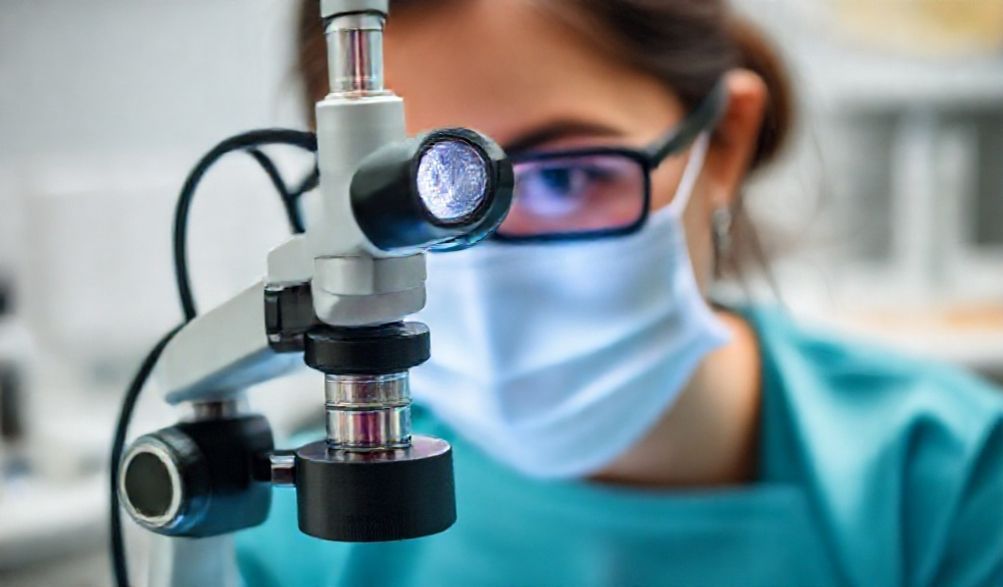
The Ultimate Guide to Dental Hygienist Loupes with Light: Enhance Precision & Reduce Strain
Introduction
It’s 4:45 PM on a Friday. You’ve just finished your last patient of the week, and a familiar ache is settling into your neck and shoulders. As you chart, you recall that tricky distal surface on #31—was that shadow a stain, or the beginning of subgingival calculus? You leaned in, squinted under the operatory light, and did your best, but a nagging doubt remains. This scenario, blending physical strain with clinical uncertainty, is all too common in dental hygiene.
Modern dental hygiene demands microscopic precision. We are detectives and clinicians, tasked with finding and eliminating threats to oral health that are often invisible to the naked eye. The tools of the past—relying on overhead lights and unaided vision—are no longer sufficient for the standard of care patients deserve and that our bodies can sustain. This is where technology steps in as a powerful ally.
Enter dental loupes with integrated LED lights. This isn’t just another piece of equipment; it’s a transformative system that fundamentally changes how you see and work. By combining magnification with coaxial, shadow-free illumination, these tools elevate your clinical capabilities while actively protecting your most valuable asset: your long-term physical health.
This guide is designed to cut through the marketing noise. Our purpose is to provide a comprehensive, unbiased resource built on industry knowledge, ergonomic principles, and the real-world experiences of practicing hygienists. We won’t be selling you a specific brand. Instead, we’ll equip you with the expertise to ask the right questions, understand the critical specifications, and make a confident, informed investment in your career. You’ll learn about the “why,” the key features to compare, an objective look at the market, and the practical steps to finding your perfect fit.
Why Loupes with Lights Are a Game-Changer for Dental Hygienists
For many hygienists, moving to loupes with a light is the single most impactful career upgrade they make. The benefits are interconnected, creating a positive feedback loop of better care and better health.
Unmatched Visual Acuity for Superior Patient Care
Magnification opens up a new world. What appears as a clean tooth surface to the naked eye is revealed, under loupes, to be a complex landscape.
- Revealing the Hidden: 2.5x to 4.5x magnification allows you to clearly identify and differentiate between plaque, stain, and tenacious calculus—especially the subgingival deposits that are feel-based without visual confirmation. You can spot early caries, microfractures, and minute discrepancies in restoration margins that would otherwise go unnoticed.
- Precision in Procedure: Scaling and root planing become more accurate and less traumatic. You can debride more completely while preserving healthy tooth structure. Assessing tissue health, detecting inflammation, and performing detailed charting are all enhanced.
- Elevated Patient Communication: The ability to show a patient, on a monitor or through detailed description, exactly what you’re seeing builds immense trust and case acceptance. It transforms you from a cleaner to a true oral health clinician.
The Ergonomic Imperative: Protecting Your Career
The statistics are sobering. Studies consistently show that a vast majority of dental professionals will experience work-related musculoskeletal disorders (MSDs)—pain in the neck, back, shoulders, and wrists. This isn’t just discomfort; it’s a career-threatening issue.
Loupes are a primary ergonomic intervention, not just a visual aid. Here’s why:
- Forcing Neutral Posture: Properly fitted loupes have a defined working distance (the space from your eyes to the patient’s mouth) and declination angle (how far the lenses are tilted downward). To see a sharp image, you must sit upright with your spine aligned and bring the patient up to you. This eliminates the damaging, hunched-over posture that leads to chronic pain.
- Prevention Over Treatment: Using loupes is a proactive strategy. By promoting proper posture from the start of your career or adopting it now, you invest in your ability to practice pain-free for decades.
Beyond Magnification: The Critical Role of Illumination
Magnification is only half the equation. Without proper light, you’re simply magnifying shadows and glare. Overhead operatory lights are problematic: they create shadows from your head and hands, cause glare off wet surfaces, and often force the patient to close their eyes against the brightness.
An integrated LED light changes everything:
- Shadow-Free, Coaxial Illumination: The light is attached to your loupes, so it shines directly along your line of sight, illuminating exactly what you’re magnifying. Shadows are virtually eliminated.
- Reduced Eye Strain: Your pupils don’t have to constantly dilate and constrict between a bright operatory light and the darker oral cavity. The consistent, focused light reduces fatigue dramatically.
- True Color Representation: High-quality LED systems offer excellent Color Rendering Index (CRI) and appropriate color temperature, allowing you to distinguish between healthy and inflamed tissue, different types of calculus, and tooth shades with accuracy.
Key Considerations Before Buying Your Loupes with Light
Purchasing loupes is a highly personal decision. Understanding these core concepts will guide you toward a system that fits your clinical style and physical needs.
Finding Your Perfect Magnification & Field of View
Magnification is a balance, not a case of “more is always better.”
- The Range: Common magnifications for hygienists range from 2.5x (entry-level) to 5.5x or higher (often used in perioperative care).
- The Beginner’s Sweet Spot: Most professionals recommend starting at 2.5x or 3.0x. This provides a significant visual boost with a wider field of view (the area you can see at once) and less image wobble (the disorienting movement amplified at higher powers). It’s easier to adapt to and is sufficient for most preventive and periodontal care.
- The Trade-Off: As magnification increases, the field of view shrinks, and image stability becomes more sensitive to head movement. Higher mag (e.g., 4.5x+) is incredible for fine detail but requires more practiced, deliberate movements.
- The Golden Rule: A professional, in-person fitting is non-negotiable. Your optimal magnification depends on your working distance and posture.
Understanding Light Source Technology: LED Types & Features
Not all loupe lights are created equal. Pay attention to these specs:
- Lumens: Measures brightness. For dental hygiene, a range of 40,000 to 80,000 lux at the working distance is typical. Enough to illuminate deeply, but not so much it causes glare or patient discomfort.
- Color Temperature: Measured in Kelvins (K). “Daylight” white (around 5500K-6000K) is common and provides a bright, clear light. Some prefer a slightly warmer light (e.g., 4500K) for reduced eye strain.
- Color Rendering Index (CRI): On a scale of 0-100, this measures how accurately the light reveals true colors. Aim for a CRI of 90+ for the best tissue differentiation.
- Light Field Pattern: A spot beam offers intense, focused light for deep pockets. A wide flood illuminates a broader area, like a full quadrant. Some systems offer adjustable or hybrid patterns.
Ergonomics & Customization: Fit for Long-Term Comfort
If the loupes aren’t comfortable, you won’t wear them. Comfort is a science.
- Frame Styles: Through-the-Lens (TTL) loupes have the magnification lenses permanently mounted, offering a lighter weight and more streamlined look. Flip-Up loupes have a binocular that flips up, allowing you to quickly switch between magnified and normal vision. They are often easier to share for trial purposes.
- Custom Fit Parameters: A professional fitter will measure your Interpupillary Distance (IPD), determine your ideal Working Distance (based on your arm length and posture), and set the Declination Angle (based on your height and how you sit). This customization is what makes loupes truly ergonomic.
- Weight & Materials: Lightweight titanium frames are popular for durability and comfort. Consider prescription lens inserts if you wear glasses.
Top Features to Compare in Dental Loupe Light Systems
When comparing models from different brands, drill down into these practical features.
Battery Life & Charging Systems
Your light is useless if it’s dead by lunch.
- Run-Time: Look for systems that offer a full clinical day (6-8+ hours) on a single charge. Many offer 4-6 hours at highest brightness, which is usually sufficient.
- Battery Type: Removable, rechargeable batteries are a major advantage. You can carry a spare, swap it mid-day, and replace the battery when it eventually loses capacity. Integrated batteries require the entire unit to be plugged in.
- Charging: Convenient docking stations or magnetic chargers simplify daily routines. Battery level indicator lights are essential.
Durability, Warranty, & Service Support
This is a professional investment. It should be built to last and backed by strong support.
- Build Quality: Look for robust construction, water resistance (for cleaning), and secure cable management if the battery is separate.
- Warranty: A strong warranty is a sign of manufacturer confidence. Look for at least a 2-year warranty on the entire system, with longer coverage on the optical lenses (often 5+ years against defects).
- Service: Can the loupes be adjusted or repaired if you drop them? How responsive is the company’s customer service? Ask colleagues about their after-purchase experiences.
Integrated vs. Modular Systems: Flexibility & Upgradability
- Integrated Systems: The light and loupes are one complete unit. They are often more streamlined and balanced. However, if light technology improves in 5 years, you may need to replace the entire system.
- Modular Systems: The light source is a separate attachment that clicks onto your loupe frame. The major advantage is upgradability. You can keep your perfectly fitted loupes and upgrade just the light head as newer, brighter, more efficient models are released.
An Objective Look at Leading Brands & Models
(This is a high-level overview for educational comparison. Models and technologies change; always consult directly with dealers for current information.)
Premium Performance Brands
- Orascoptic: Known for excellent optics, ergonomic designs (like their ergo-prism loupes), and a wide range of magnification. Their Nano LED light is popular for its brightness and color quality. Positioned in the higher price tier with a strong clinical reputation.
- Designs for Vision (DFV): A pioneer in the field, often associated with high-magnification, expanded-field prism loupes. Favored by many specialists for their wide, flat field of view. Their light systems are robust and well-integrated.
- Zeiss: The gold standard in optics globally. Their dental loupes are known for exceptional clarity, minimal distortion, and brilliant illumination. Represents a top-tier investment, often with a corresponding price point.
Popular Value & Innovation Brands
- SurgiTel (General Scientific): Offers a wide variety of frame styles and magnifications at competitive price points. Known for good customer service and durability. A very common and reliable choice in many practices.
- SheerVision: Often recognized for their “MegaView” expanded field loupes, which provide a wider view at a given magnification. They offer solid systems and are a strong contender in the market.
- Admetec (Andau Medical): Has gained attention with its “Ergo” loupes, designed with a significant declination angle to promote an upright posture. Their light is often praised for its true color temperature.
Direct-to-Consumer & Emerging Options
Newer brands selling primarily online have entered the market, often at lower price points. Exercise extra diligence here. The critical question is: How will you get a proper, in-person fitting and adjustment? Ensure they have a reliable network of fitters or a robust self-measurement/return policy. Research their warranty and service support thoroughly.
Making the Investment: Practical Steps & Tips
The Non-Negotiable: A Professional In-Person Fitting
Do not buy loupes online based on a self-measurement kit alone. A fitting session should:
1. Assess your current posture at the operatory.
2. Have you try different magnifications to feel the difference.
3. Precisely measure your IPD, working distance, and declination angle.
4. Allow you to wear demo units for several minutes to assess comfort and balance.
Budgeting & Financing Your Equipment
Be prepared for a significant investment. A quality loupe and light system typically ranges from $1,200 to $3,500+.
* Employer Contribution: Many practices have equipment stipends or will co-invest, especially if you’re a new hire.
* Tax Advantages: Loupes are a tax-deductible professional expense. Consult with your accountant.
* HSA/FSA: You can often use Health Savings or Flexible Spending Account funds.
* Financing: Most major manufacturers offer payment plans.
The Adjustment Period: Getting Used to Your New Loupes
There is a learning curve, typically 2-4 weeks.
* Start Slow: Wear them for 30-60 minutes at a time during easier procedures.
* Re-learn Hand-Eye Coordination: Your hands will feel like they are not where your eyes see them. Practice moving instruments on a typodont or a stationary object.
* Trust the Posture: You will feel “too far away” at first. Resist the urge to hunch. Trust the optics and let the patient come to you.
* Be Patient: Mild dizziness or eye strain is common initially. It will pass as your brain adapts.
Frequently Asked Questions (FAQ)
Q: What magnification is best for a first-time dental hygienist user?
A: Most professionals recommend starting at 2.5x or 3.0x. This provides a significant visual boost and a wider, more stable field of view, making the adaptation period easier. You can always upgrade to higher magnification later.
Q: How long does the battery typically last, and how do I maintain it?
A: Modern LED systems last between 4 to 8+ hours on a single charge, easily covering a full clinical day. To maintain battery health, follow the manufacturer’s instructions: avoid complete discharges, store in a cool place, and use the provided charger.
Q: Can I add a light to my existing loupes?
A: It depends. Some brands offer modular systems where you can purchase a compatible light attachment separately. For most traditional loupes, it is not possible. Consult directly with your loupe manufacturer to explore options.
Q: Are dental loupes with lights covered by insurance or tax-deductible?
A: They are typically not covered by health insurance. However, as a required professional tool, they are almost always a tax-deductible business expense. Consult with a tax professional for specifics, and keep your receipt.
Q: How do I clean and care for my loupes and light?
A: Use only the microfiber cloth and lens cleaner provided or recommended by the manufacturer. Avoid harsh chemicals like alcohol or window cleaner. For the frame and light body, wipe gently with a damp cloth and mild soap. Never submerge the light unit unless it’s specifically rated as waterproof.
Conclusion
Investing in dental hygienist loupes with an integrated light is not merely purchasing equipment; it’s making a strategic commitment to your clinical excellence and your career longevity. The combination of magnification and shadow-free illumination elevates the standard of care you can provide, turning subtle clues into clear diagnoses. More importantly, it is your primary defense against the debilitating musculoskeletal pain that plagues our profession, allowing you to practice with comfort and confidence for years to come.
Remember, the “best” system is the one that fits you perfectly—your eyes, your posture, and your clinical workflow. This decision hinges on the non-negotiable step of a professional fitting and a clear understanding of your own needs. Use this guide as a foundation for your research.
Prioritize your well-being and the quality of your patient care. The daily dividends of reduced strain, heightened precision, and professional confidence make this one of the most valuable investments you will ever make in your life as a dental hygienist.
Your Next Steps: Research reputable local dealers who offer fittings. Talk to colleagues about their experiences with different brands and models. Then, armed with the questions and knowledge from this guide, schedule a fitting session to see—and feel—the difference for yourself.
p>