
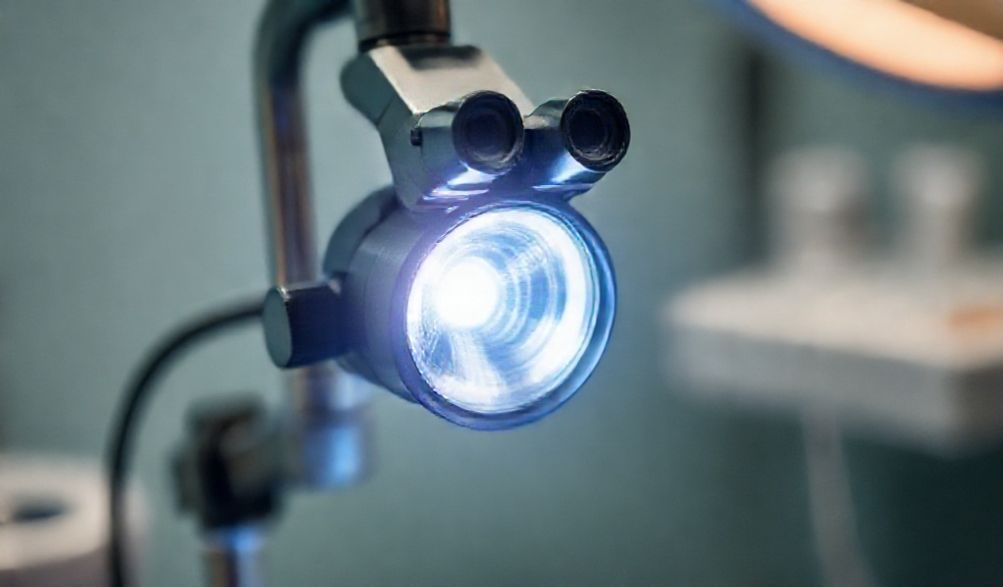
Dental Loupes Headlights: A Complete Guide to Enhanced Vision, Precision, and Ergonomics
Introduction
Have you ever finished a long day of intricate dentistry feeling like you’ve run a marathon with your neck and eyes? That persistent ache between your shoulder blades, the dull throb behind your eyes after focusing for hours on a tiny margin, or the frustrating moment you shift to get a better view and lose your light—these are not just minor annoyances. They are the daily barriers that stand between you and peak clinical performance, and more importantly, your long-term physical well-being.
For decades, dental loupes have been rightfully hailed as a game-changer, bringing the microscopic world of the oral cavity into clear view. But magnification alone is only half the solution. Working under the shadow-casting, often poorly aligned light of a traditional overhead operatory lamp forces you into contorted postures, leading to strain, fatigue, and compromised visibility where it matters most.
This guide is designed to illuminate the other critical half of the equation: the dental loupes headlight. Based on technical specifications, ergonomic research, and the real-world experiences of practicing dentists and hygienists, this post will serve as your comprehensive, unbiased resource. We will demystify what a loupes headlight system is, detail its undeniable benefits for both patient outcomes and practitioner health, break down the key features you need to evaluate, and provide a clear framework for selecting the perfect system for your specific practice and budget. Consider this your roadmap to investing in a tool that protects your most valuable asset—your ability to practice—while elevating the standard of care you provide.
What Are Dental Loupes Headlights and How Do They Work?
At its core, a dental loupes headlight is a sophisticated personal lighting system designed to integrate seamlessly with your magnification loupes. It’s the difference between looking at a detailed sculpture in a dim, shadowy room versus examining it under a bright, focused spotlight held at the perfect angle.
The Synergy of Magnification and Illumination
The power of this tool lies in the synergy of its two components:
* Loupes (Magnification): Bring the treatment area closer, revealing fine details like craze lines, subtle caries, and subgingival margins.
* Headlight (coaxial illumination): Projects a powerful beam of light directly along your line of sight. This “coaxial” lighting is the key. It fills the entire magnified field with bright, shadow-free light, eliminating the dark spots and glare that occur when the light source (the overhead lamp) is at a different angle than your eyes.
This combination creates an optimal visual environment, allowing you to see with unprecedented clarity and depth, all while maintaining a healthy, upright posture.
Core Components of a Headlight System
A typical system consists of four main parts:
1. Light Source (LED): The heart of the system. Modern dental headlights use powerful, cool-running Light Emitting Diodes (LEDs) known for their bright, white light, long lifespan, and energy efficiency.
2. Light Engine/Module: This houses the LED and optics. It is a small, lightweight unit that attaches directly to your loupes or headband.
3. Power Source: This provides electricity to the LED.
* Corded: Connects to a wall outlet or operatory unit via a cable. Offers unlimited runtime but less mobility.
* Wireless: Uses a rechargeable lithium-ion battery pack, typically worn on a waistband or belt. Provides complete freedom of movement.
4. Connection: A fiber optic cable (for most corded and some wireless systems) transmits light from the source to the module, or a direct electrical connection powers an integrated LED in the module itself.
Key Benefits: Why Every Dental Professional Should Consider a Headlight
Integrating a headlight with your loupes isn’t merely an upgrade; for many, it becomes an indispensable part of their clinical toolkit. The benefits span clinical outcomes, personal health, and practice efficiency.
Uncompromised Clinical Precision and Improved Diagnostics
This is the most immediate and impactful benefit. With shadow-free, coaxial illumination:
* Enhanced Caries Detection: Differentiate between stained grooves and active decay with greater confidence. Transillumination effects can reveal proximal lesions.
* Superior Margin Visualization: Identify minute gaps, overhangs, or deficiencies in crown and filling margins, both supragingivally and subgingivally, leading to better-fitting restorations.
* Improved Endodontic Access: Clearly distinguish between dentin and pulp chamber, locate calcified canals, and identify intricate anatomy.
* Detailed Periodontal Assessment: Better visualize subgingival calculus, root surfaces, and tissue contours during scaling, root planing, and surgical procedures.
In short, you move from assuming you see everything to knowing you do.
Essential Ergonomics: Reducing Physical Strain and Fatigue
If loupes encourage better posture by bringing the patient to you, the headlight enforces it. To use the headlight effectively, you must position your head so the beam is on the treatment area. This naturally promotes a more upright, neutral spinal position—head over shoulders, shoulders over hips.
- Eliminates “Stooping for Light”: You no longer crane your neck or hunch your back to get under the operatory light.
- Reduces Static Muscle Load: Maintaining a neutral posture significantly reduces the strain on the trapezius, levator scapulae, and cervical spine muscles.
- Prevents Long-Term Injury: By mitigating daily micro-traumas, you directly invest in career longevity, helping to prevent chronic pain and early burnout.
Boosting Efficiency and Reducing Procedure Time
A headlight streamlines your workflow:
* No More Light Adjustments: You never have to stop, reposition the overhead light, resterilize, and refocus. The light is always exactly where you are looking.
* Consistent Visibility: Uninterrupted, optimal lighting means fewer pauses and less mental effort spent compensating for poor vision.
* Faster Diagnostics: Seeing issues clearly the first time reduces re-examination and uncertainty.
The time saved per procedure adds up, reducing fatigue and potentially increasing daily capacity.
Critical Features to Evaluate When Choosing a Dental Headlight
Not all headlights are created equal. Understanding these key specifications will help you make an informed choice.
Light Source Metrics: Lumens, Lux, Color Temperature, and Beam Pattern
- Lumens vs. Lux: While lumens measure total light output, Lux is more relevant as it measures light intensity at the working distance. Dental headlights are often rated in Lux (e.g., 40,000 to 100,000+). A higher Lux provides a brighter field.
- Color Temperature (Kelvin): Measured in Kelvins (K), this describes the “warmth” or “coolness” of the white light.
- Cool White (5000K-6000K+): A bright, bluish-white that enhances contrast and is often preferred for its “daylight” quality, making it easier to distinguish details.
- Warm White (3500K-4500K): A softer, yellowish-white that can be easier on the eyes for long periods but may offer slightly less contrast.
- Beam Pattern: The light should produce a focused, even circle that fills your loupes’ field of view without dark spots (“donutting”) or intense central hotspots that cause glare and eye fatigue. A smooth, homogeneous beam is ideal.
Power and Battery Life: Corded vs. Wireless Systems
- Corded Systems: Offer reliable, unwavering brightness with no runtime concerns. The cable can sometimes feel restrictive, but newer, lightweight cables minimize this.
- Wireless Systems: Provide ultimate freedom of movement, especially useful when moving around the chair or for hygienists. Critical factors are:
- Battery Life: Ranges from 1.5 to 4+ hours on a full charge at high brightness. Always check the rating.
- Charging Time & Options: Fast charging and the availability of spare batteries are major advantages.
- Brightness Consistency: High-quality systems maintain consistent light output until the battery is nearly depleted.
Comfort and Integration: Weight, Balance, and Mounting
You’ll wear this for hours, so comfort is paramount.
* Weight & Balance: The total system (light module, cable, battery) should feel balanced and unobtrusive. Lightweight components prevent neck strain.
* Mounting Style:
* Loupe-Mounted: The light module attaches directly to your loupes’ frame. This is the most popular as it ensures perfect coaxial alignment and minimizes weight on the head.
* Headband-Mounted: The module is on a separate headband. This is useful if you share the light between different loupes or wear safety glasses.
How to Select the Perfect Loupes Headlight System for Your Practice
Choosing the right system is a personal decision. Follow this framework to find your ideal match.
Assessing Your Clinical Specialties and Common Procedures
Your daily tasks dictate your needs.
* General Dentists & Hygienists: A versatile system with good brightness (40,000-60,000 Lux), adjustable intensity, and reliable battery life is ideal for the variety of procedures performed.
* Endodontists: Maximum brightness and contrast are crucial for working in dark chambers and locating canals. A very focused beam is beneficial.
* Periodontists & Oral Surgeons: High brightness is needed for deep pocket visualization and surgical fields. A wireless system offers greater mobility during surgery.
* Prosthodontists: Excellent color rendering and even illumination are vital for shade matching and evaluating ceramic layers and margins.
Compatibility with Your Existing Dental Loupes
This is a critical step. Not all headlights fit all loupes.
* Integrated Systems: Many loupe manufacturers (e.g., Orascoptic, Zeiss, Designs for Vision, SurgiTel) sell their own branded headlights designed for seamless integration with their frames.
* Universal Adapters: Some third-party headlight companies offer adapter clips designed to fit a wide range of popular loupe models.
* Action: Before purchasing, confirm compatibility with your specific loupe brand and model. Contact your loupe supplier or the headlight manufacturer directly.
Budgeting and Evaluating Cost vs. Long-Term Value
A quality dental loupes headlight is an investment, with systems ranging from several hundred to over two thousand dollars.
* Factors Influencing Cost: Brand reputation, light output (Lux), battery technology, wireless capability, and build quality.
* Reframing the Cost: View this not as an expense, but as an investment in:
* Your Health: Reducing the risk of career-ending musculoskeletal disorders.
* Your Clinical Quality: Improving diagnostic and procedural accuracy.
* Your Efficiency: Saving time and mental energy daily.
The long-term return on investment, in terms of career longevity and patient outcomes, is significant.
Maintenance, Care, and Best Practices for Your Investment
Protect your investment with proper care to ensure years of reliable service.
Daily Cleaning and Safe Handling
- Lens/Crystal: Gently wipe with a soft, lint-free microfiber cloth. Use only manufacturer-approved lens cleaning solutions if needed. Avoid abrasive materials.
- Fiber Optic Cables: These are delicate. Avoid sharp bends, kinks, or crushing. Coil them loosely. Keep connectors clean; a cotton swab with isopropyl alcohol can be used on metal ends if they become soiled.
Battery Care and Storage for Optimal Lifespan
- Follow the manufacturer’s charging instructions. Avoid constantly draining to 0%.
- For long-term storage, charge the battery to about 50-60%.
- Have a fully charged spare battery ready for wireless systems to ensure uninterrupted use.
When to Seek Professional Servicing or Repairs
If you notice a significant drop in brightness, flickering, a damaged cable, or a battery that no longer holds a charge, contact the manufacturer or an authorized service center. Do not attempt to repair electronic or fiber optic components yourself.
Frequently Asked Questions (FAQ) About Dental Loupes Headlights
Q: Are dental headlights worth the investment?
A: Absolutely. They are a critical investment in three key areas: clinical accuracy (better diagnostics and treatment), personal health (reduced physical strain for career longevity), and practice efficiency (less time adjusting lights). The benefits far outweigh the initial cost for most serious practitioners.
Q: What is a good brightness (Lux) for dental procedures?
A: For general dentistry and hygiene, a range of 40,000 to 60,000 Lux is an excellent starting point and sufficient for most tasks. Specialists like endodontists or surgeons may prefer systems exceeding 80,000+ Lux for maximum illumination in dark fields. The ability to adjust the intensity is a valuable feature.
Q: Can I add a headlight to my existing dental loupes?
A: In most cases, yes. Many manufacturers sell headlights as add-ons with compatible mounting kits. The first step is to check your loupe brand’s website or contact them directly to confirm compatibility with your specific frame model.
Q: How long do the batteries typically last on a wireless system?
A: Battery life varies by model and brightness setting. A high-quality battery pack typically lasts between 1.5 to 4+ hours on a single charge at optimal brightness. Many practitioners purchase a spare battery to swap mid-day, ensuring full clinical-day coverage without interruption.
Q: How do I clean the headlight lens and fiber optic cable?
A:
* Lens: Use only a soft, dry microfiber cloth. If necessary, lightly dampen the cloth with distilled water or a manufacturer-approved lens cleaner.
* Fiber Optic Cable: Wipe the exterior with a soft cloth. For the metal connector ends, use a cotton swab lightly moistened with >90% isopropyl alcohol to remove debris, ensuring it is completely dry before reconnecting. Never immerse the cable in liquid.
Conclusion
The journey from struggling with shadows and strain to practicing with effortless clarity and comfort begins with a single, powerful integration: pairing your dental loupes with a dedicated headlight. As we’ve explored, this combination is transformative, delivering superior visualization for unmatched clinical precision, enforcing the ergonomic posture essential for a long, healthy career, and streamlining your daily workflow.
When making your decision, prioritize your health and clinical needs. The right dental loupes headlight is not merely another piece of equipment; it is a foundational tool for sustainable practice. We strongly recommend seeking hands-on experience. Consult with reputable vendors who offer demonstrations, talk to colleagues who use different systems, and if possible, test a system during a typical procedure.
Investing in the right optical and illumination technology is a profound commitment to your profession and yourself. It signals a dedication to excellence in patient care and a mindful approach to personal well-being. In the demanding world of dentistry, clear vision and a pain-free practice are not just advantages—they are essentials for a successful, fulfilling career.
Call to Action: This week, take note during your most challenging procedures. Identify moments where shadows hindered your view or where you contorted your posture to find the light. Then, take the next step: contact a trusted dental equipment supplier to schedule a demonstration of a integrated loupes and headlight system. Experience the difference for yourself.
p>