
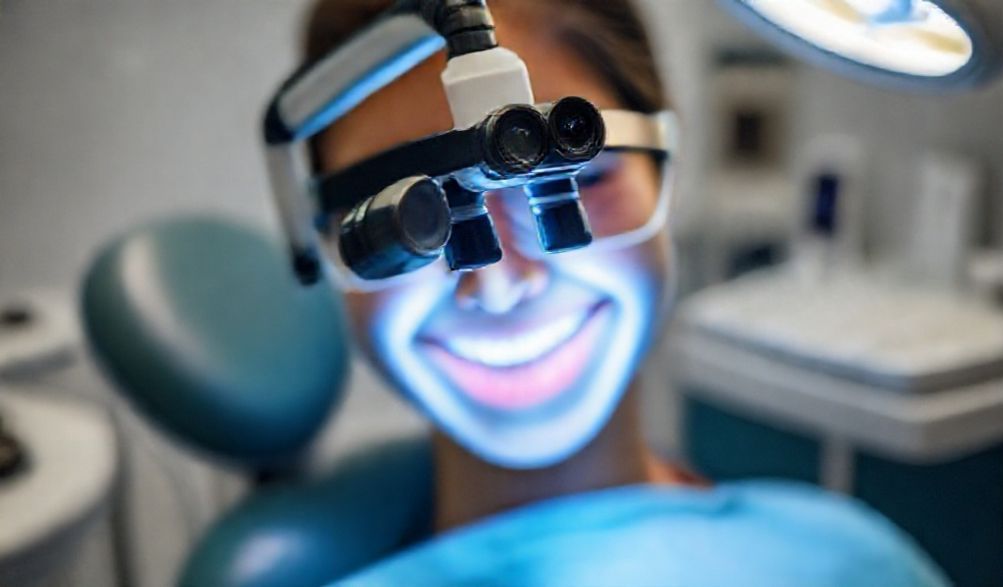
The Ultimate Guide to Dental Loupes with Wireless Light: Enhancing Precision and Ergonomics
It’s halfway through a busy Thursday, and you’re leaning in—again. Your neck is beginning to protest, a familiar ache settling between your shoulders as you focus on a deep distal margin. You shift slightly, and your overhead light casts a frustrating shadow right where you need clarity. You’re contorting your spine for a better view, and the cord from your loupe light has just snagged on the unit for the third time this hour. Sound familiar?
For dentists and hygienists, the daily grind isn’t just about patient care; it’s a physical marathon. The twin challenges of maintaining a clear, magnified view and achieving perfect, shadow-free illumination are constant. Traditional setups often force a choice: suffer the tether and weight of a corded light or compromise on visibility. But what if you didn’t have to choose?
Enter dental loupes with integrated wireless light—a transformative solution that seamlessly merges high-definition magnification with cordless, coaxial illumination. This isn’t just a minor upgrade; it’s a paradigm shift in clinical ergonomics and precision. This comprehensive guide is designed to cut through the marketing speak. We’ve compiled information from technical specifications, expert ergonomic principles, and clinical reviews to provide you with an evidence-based resource. By the end, you’ll understand the key benefits, know which features to prioritize, and be equipped to make an informed decision on investing in a system that can redefine your practice and preserve your physical well-being.
Why Dental Loupes with Wireless Light Are a Game-Changer
Moving from traditional loupes or a basic headlight to an integrated wireless system is more than a convenience—it’s a fundamental upgrade to your clinical capabilities and daily comfort.
Unparalleled Visual Clarity and Precision
The core benefit lies in the synergy between magnification and lighting. Wireless loupe systems feature coaxial illumination, meaning the light is projected directly along your line of sight. This eliminates the parallax effect and shadows created by overhead or side-mounted lights. The result is a bright, even, and shadow-free field that reveals true tissue color, minute caries, subtle crack lines, and intricate marginal details. This enhanced visual data reduces eye strain (as your pupils don’t have to constantly dilate and constrict) and leads to more accurate diagnoses, preps, and finishes. You’re not just seeing better; you’re perceiving more.
Enhanced Ergonomics and Posture
Properly fitted loupes are the first line of defense against career-ending neck and back pain. They allow you to sit upright while bringing the magnified image to your eyes, promoting a neutral spine. Adding a wireless light amplifies this benefit. Without a cord pulling on your frame or a battery pack on your waist, your range of motion is completely free. There’s no subconscious leaning to accommodate cord tension, no awkward maneuvers to avoid snagging. This unencumbered movement supports sustained, healthy posture throughout long procedures, directly investing in your long-term physical health.
Boosting Efficiency and Productivity
When you can see clearly and work comfortably, everything flows better. Less time is spent repositioning the patient, your chair, or your own body to chase the light. Procedures become more intuitive and confident, potentially reducing operative time. The reduction in physical and visual fatigue means you can maintain a high level of focus and fine motor control from your first patient to your last. This isn’t about rushing; it’s about working smarter, with less wasted effort and a lower likelihood of errors.
The Freedom of Wireless Technology
Contrast this with the old way: the cord that gets caught on drawer handles, the battery pack that bumps against the chair, the constant awareness of your tether. Wireless technology liberates you. It offers a cleaner, more professional appearance and simplifies sterilization protocols (no cord to wipe down). The freedom to turn your head quickly to consult a screen or speak to an assistant without a second thought is a small but profound quality-of-life improvement in the operatory.
Key Features to Consider When Choosing Wireless Loupes
Not all wireless loupe systems are created equal. Understanding these core specifications will help you find the perfect match for your specialty and style.
Magnification Power and Field of View
Magnification typically ranges from 2.5x to 6x or higher for surgical applications. A critical concept is the trade-off: higher magnification provides more detail but comes with a smaller field of view and a shallower depth of field.
* 2.5x – 3.5x: Excellent for general hygiene, periodontics, and restorative work. Offers a wider field of view, making it easier to maintain spatial awareness.
* 4.0x – 6.0x: Ideal for endodontics, implantology, and intricate restorative procedures where extreme detail is paramount.
A professional fitting is essential to ensure the working distance (the distance from your eyes to the patient’s mouth) is correct for your posture.
Wireless Light Specifications
This is the heart of the “wireless” advantage. Pay close attention to:
* Light Source (LED): Look for high-lumen output (often 40,000+ lux at the working distance) for brilliant illumination. Color temperature is crucial; a “daylight” temperature around 5500K-6000K renders tissue colors most accurately. Also, check the LED’s rated lifespan—tens of thousands of hours is standard.
* Battery Life and Charging: Your system should easily last a full clinical day (aim for 8+ hours on a single charge). Modern systems use lithium-ion batteries with charging docks or USB-C ports. Features like a battery level indicator and quick-charge capability are valuable.
* Beam Focus and Adjustability: The ability to switch between a focused spot (for deep cavities) and a wider flood (for full-arch views) is incredibly useful. Dimmable intensity allows you to adjust brightness to the task, improving comfort for both you and the patient.
Optical Quality and Lens Type
The lens system defines your visual experience.
* Galilean Systems: Use simple lenses. They are more affordable, lighter, and compact, but typically offer lower magnification (up to about 3.5x) with a shallater depth of field.
* Prismatic (Keplerian) Systems: Use a series of prisms to fold the light path. They provide higher magnifications (3.5x and above) with a superior depth of field and wider field of view at a given power, but are generally heavier and more expensive.
Frame Fit, Weight, and Adjustability
Comfort is non-negotiable. A poorly fitted frame will negate all ergonomic benefits.
* Professional Fitting: This is mandatory. A certified rep will measure your pupillary distance, vertex distance, and declination angle to ensure the optical path is perfectly aligned with your eyes.
* Weight Distribution: The wireless light module should be counterbalanced by the frame design. Lightweight materials like titanium or advanced composites are common. The goal is to make the system feel like a natural extension of your body.
Durability and Warranty
This is a significant investment for a hard-use clinical environment. Look for robust construction, scratch-resistant lens coatings, and reliable build quality. A strong manufacturer’s warranty (often 3-5 years on optics, 1-2 years on electronics) and accessible service support provide essential peace of mind.
Top Brands and Models in the Wireless Loupes Market
Here’s a balanced look at some leading innovators in the space. (Note: This is a comparative overview, not an endorsement. Always seek a live demo).
A Comparative Overview:
| Brand | Known For | Typical Wireless System Highlight |
| :— | :— | :— |
| Orascoptic | Ergonomic designs, wide model range | Ergo and EyeZoom lines with proprietary “Spark” wireless lights, known for comfort and user-friendly features. |
| Designs for Vision | High-end prismatic optics, durability | Vue wireless systems, offering exceptional optical clarity and robust, field-repairable construction. |
| SurgiTel (General Scientific) | Customizable systems, research-backed | G2 Wireless series, with a focus on maximizing field of view and offering modular, customizable components. |
| Heine | German engineering, optical precision | Cordless LED systems integrated with their Omega loupes, praised for brilliant, true-color illumination. |
Highlighting Key Innovations:
* SheerVision: Often noted for their Perf-Eyez fitting system and very lightweight frames, making their wireless systems a favorite for those sensitive to weight.
* Orascoptic Spark: Their wireless technology often emphasizes long battery life and a streamlined, integrated look where the light module is barely noticeable.
* Q-Optics: Gaining attention for their unique “Through-The-Lens” (TTL) flip-up design and comfortable frames paired with capable wireless lights.
The Investment: Cost, ROI, and Maintenance
Understanding the Price Range
A high-quality dental loupe system with integrated wireless light is a professional investment, with prices typically ranging from $1,500 to over $6,000. This variance depends on:
* Optical quality (prismatic vs. Galilean)
* Magnification power
* Sophistication of the wireless light (LED power, battery tech)
* Frame material and customizability
* The cost of the professional fitting service
Calculating Your Return on Investment (ROI)
Frame this purchase not as an expense, but as an investment with multiple returns:
* Clinical ROI: Improved accuracy leads to better outcomes, fewer remakes, and higher patient trust.
* Health ROI: The potential prevention of chronic pain, extending your clinical career by years. Reduced daily fatigue improves your quality of life.
* Efficiency ROI: The time saved per procedure and the ability to comfortably see more patients or perform more complex cases.
* Professional ROI: The confidence that comes with superior visualization and a modern, streamlined operatory setup.
Care and Maintenance Tips
Protect your investment with simple habits:
1. Cleaning: Use only lens-specific microfiber cloths and spray. Never use paper towel, clothing, or harsh chemicals.
2. Storage: Always place them in a hard, protective case when not in use.
3. Battery Care: Follow the manufacturer’s charging instructions. Avoid letting the battery fully deplete regularly. If storing long-term, charge to about 50%.
4. Servicing: Have the alignment and fit checked periodically by a representative. Address any issues with the light or frame immediately through authorized channels.
Frequently Asked Questions (FAQ)
Q1: Are wireless loupes significantly heavier than traditional loupes?
A: Modern engineering focuses on balance. While the light module adds some weight, it’s strategically placed, and frames are designed as counterweights. During a proper fitting, the rep will ensure the system feels secure and comfortable, with the ergonomic benefits far outweighing any minimal weight increase.
Q2: How long does the wireless battery typically last, and what happens if it dies mid-procedure?
A: Most premium systems offer 6-10+ hours of runtime on the highest setting—more than enough for a full day. Many feature quick-charge capabilities (e.g., 1 hour of charge for 4 hours of use) or include a spare, hot-swappable battery for true uninterrupted workflow.
Q3: Can I add a wireless light to my existing loupes?
A: Some manufacturers offer retrofit kits for recent models, but compatibility is not universal. An integrated system, designed from the ground up, ensures optimal weight balance, seamless aesthetics, and guaranteed performance that an add-on may not provide.
Q4: Is the light intensity strong enough for all procedures, including endodontics?
A: Absolutely. Today’s wireless LED lights are incredibly powerful, often exceeding the brightness of older corded halogen systems. For specialties like endodontics, look for models with a high-intensity “turbo” or spot mode specifically engineered to illuminate deep within the canal.
Q5: How important is a professional fitting, and can I buy them online?
A: A professional, in-person fitting is critical. It is not a luxury. Proper optical alignment (PD, declination angle) is what makes loupes ergonomic. An improper fit can cause eye strain, headaches, and even worsen posture. While some online options exist, they involve self-measurement and carry a high risk of error. The fitting is a core part of the value and performance of the system.
Conclusion
Dental loupes with wireless light represent a significant leap forward, combining unparalleled visual clarity with the ergonomic freedom of cordless technology. The benefits are clear: enhanced precision for superior patient care, a sustainable upright posture for your health, and a streamlined workflow that boosts confidence and efficiency.
Choosing the right system is a deeply personal and professional decision. We strongly encourage you to prioritize a comprehensive, in-person fitting above all else. Test different models, compare the feel of the frame and the quality of the light, and consider how each system aligns with your clinical needs. This is an investment not just in a tool, but in your clinical capabilities, your patients’ outcomes, and your own long-term physical well-being. Consult with colleagues, schedule live demos, and experience the transformative difference for yourself. Your eyes, your neck, and your practice will thank you.
p>