
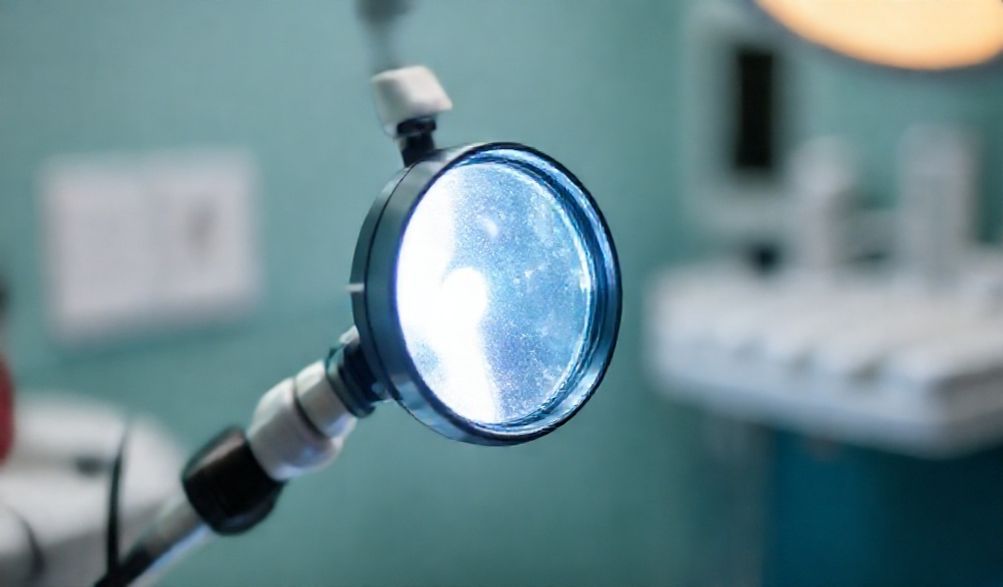
Dental Magnifying Glasses with Light: A Complete Guide for Enhanced Precision & Patient Care
Have you ever finished a long day of clinical work with a dull headache behind your eyes? Or leaned in so close to a preparation margin that your back protested? Perhaps you’ve reviewed a post-op radiograph only to question if a sliver of caries was fully removed. If these scenarios sound familiar, you’re confronting the universal, fundamental challenge of dentistry: achieving absolute precision in a workspace that is notoriously tiny, dark, and unforgiving.
For decades, the “naked eye” and overhead operatory light were the standard tools of the trade. Today, that paradigm has decisively shifted. Dental magnifying glasses with integrated LED illumination are no longer a luxury for a select few specialists; they are an essential, ergonomic tool and a standard of care for the modern, quality-focused dental practice. This comprehensive guide is designed to move beyond simple product listings. We will delve into the why, the what, and the how—providing an evidence-based overview to help you, the dental professional, make a confident, informed decision that will benefit your patients, your clinical outcomes, and your long-term physical well-being.
Our purpose here is to offer expert, practical guidance rooted in an understanding of clinical demands, product engineering, and the daily realities of practice life. We consider not just specifications, but also durability, real-world value, and the tangible impact on your work. Let’s explore how the right magnification system can transform your approach to dentistry.
Why Magnification and Lighting are Essential in Modern Dentistry
The leap from unaided vision to assisted magnification is profound. It’s not merely about making things look bigger; it’s about fundamentally upgrading your primary diagnostic and operative tool: your sight.
The Science of Enhanced Visualization
The human eye has inherent limitations. At a typical working distance of 14-18 inches, our resolving power—the ability to distinguish two separate points—drops significantly. Subtle cracks, early demineralization, and minute marginal discrepancies can easily reside in a visual “blind spot.”
Magnification shatters this barrier. By bringing the operative field closer to your eye (optically, not physically), it dramatically increases visual resolution and improves depth perception. This translates directly to superior diagnostic accuracy. You’re not just seeing a tooth; you’re examining its topography. You can detect incipient caries long before they become radiographically evident, evaluate crown margins with micron-level scrutiny, and discern the intricate patterns of fissures and grooves. Furthermore, proper visualization promotes a healthier “working posture.” When you can see clearly without craning your neck, you naturally maintain a more upright, neutral spinal position.
Ergonomics and Practitioner Longevity
This leads to the most compelling argument for many clinicians: ergonomics. Dentistry is a physically taxing profession, with musculoskeletal disorders (MSDs) of the neck, back, and shoulders being a leading cause of premature career burnout or even disability.
Magnification, when properly fitted, is a powerful ergonomic intervention. By providing a clear view while allowing you to sit back, it drastically reduces the constant forward head flexion and hunching that strain cervical and thoracic vertebrae. Eye strain from squinting and focusing fatigue is minimized. The integrated light eliminates shadows and the need to constantly reposition the patient or overhead light, reducing repetitive, awkward motions.
From personal observation, the transition is telling: on day one with new loupes, a clinician might feel constrained. By the one-year mark, the adaptation is complete. The slouching posture adopted to “get a better look” is gone, replaced by a sustainable, upright stance. The reduction in daily fatigue is not subjective; it’s a tangible preservation of your most valuable asset—your ability to practice pain-free for decades.
Improving Patient Communication and Trust
The benefits extend beyond the clinician to the patient. Modern systems often allow for the attachment of cameras or can be used in tandem with intraoral scanners. Showing a patient a magnified, illuminated view of a fractured cusp, subgingival calculus, or a leaking margin is an unparalleled educational tool.
This visual evidence fosters transparency and builds immense trust. It moves the conversation from abstract description to concrete demonstration, helping patients understand the why behind your treatment recommendations. It embodies patient-centered care, making them an active participant in their oral health journey.
Key Features to Consider When Choosing Dental Loupes
Navigating the market for dental magnifying glasses with light can be daunting. Understanding the key specifications will empower you to choose a system tailored to your specialty and physical needs.
Understanding Magnification Levels (Galilean vs. Prismatic)
Not all magnification is created equal. The two primary optical systems are:
- Galilean Systems: These are entry to mid-range loupes, typically offering 2x to 3.5x magnification. They are lighter, more compact, and offer a wider field of view. They are an excellent starting point for general dentists and hygienists.
- Prismatic (Keplerian) Systems: These use a more complex series of prisms to fold the light path, allowing for higher magnification (3.5x to 8x and beyond) while maintaining a longer, more ergonomic working distance. They are generally heavier and have a narrower field of view but provide exceptional clarity and detail. They are the choice for specialists in endodontics, periodontics, and micro-dentistry.
Expert Guidance: For a general dentist starting out, 2.5x to 3.5x magnification is often the “sweet spot.” Specialists may begin at 4x or higher. It’s crucial to try different levels, as higher power isn’t always better if it compromises your field of view or comfort.
The Critical Role of Working Distance and Field of View
- Working Distance: This is the measured distance from your eye to your patient’s oral cavity when you are in your ideal, upright working posture. It is not the length of the loupes. An accurate measurement, often taken by a trained representative, is non-negotiable. Incorrect working distance will force you back into poor posture.
- Field of View: This is the diameter of the area you can see through the lenses at a given distance. As magnification increases, the field of view decreases. You must find a balance that allows you to see the fine detail you need without losing situational awareness of the surrounding area.
Integrated LED Lighting Systems: What to Look For
The light is half of the equation. Modern systems use cool, bright LEDs. Key specs include:
- Color Temperature (5000K-6000K): This “daylight” range provides neutral, white light that reveals true tissue color and tooth morphology, critical for shade matching and diagnosis.
- Brightness (Lumens) & Beam Pattern: Look for sufficient, adjustable brightness and, most importantly, a shadowless, even circular beam that co-axially illuminates the center of your field of view without hotspots or dark edges.
- Battery System: Cordless LED lights with rechargeable battery packs (often worn on a waistband) offer complete freedom of movement. Consider battery life (typically 4-8+ hours per charge) and the availability of a spare, hot-swappable battery.
Frame Fit, Lens Options, and Comfort
You’ll wear this system for hours each day. Comfort is paramount.
- Frames: Options include through-the-lens (TTL), where the optical barrels are fixed in the frame, and flip-ups, which can be flipped up when not in use. TTL designs are generally lighter and more stable. Ensure the frame is fully adjustable (nose pads, temple length) and fits securely without pressure points.
- Lens Coatings: Invest in anti-fog and anti-reflective coatings. The former is a lifesaver, especially when wearing a mask. The latter reduces glare and increases light transmission.
- Declination Angle: This is the downward tilt of the optical barrels. It must be customized so you are looking through the optical center with your head in a neutral position, not craned forward.
The Golden Rule: A professional, in-person fitting is essential. Even the most expensive loupes are useless if the working distance, interpupillary distance, and declination angle are wrong for you.
Top Applications in Clinical Practice
The utility of dental magnifying glasses with light spans every discipline:
- Restorative Dentistry & Crown & Bridge: For impeccable margin preparation (bevels, shoulders), checking adaptation of provisional and final restorations, and meticulous cement cleanup to ensure gingival health.
- Periodontics & Oral Surgery: For definitive detection and removal of subgingival calculus, thorough root surface debridement, and precise suture placement for optimal healing.
- Endodontics: For locating calcified or hidden canal orifices, identifying root fractures (craze lines vs. true fractures), and removing separated instruments or posts with greater control.
- Preventive Care & Diagnostics: Transforming routine exams into high-definition screenings for oral cancer (assessing vascular changes, texture), identifying plaque retention areas, and monitoring the earliest signs of demineralization for non-invasive intervention.
Investment Analysis: Cost vs. Value Over Time
It’s a significant purchase, but it’s critical to view it as a long-term investment in your practice and health, not merely an expense.
Initial Price Range and What It Includes
Prices vary widely. Basic flip-up loupes with a simple light can start around \$800-$1,500. Custom, through-the-lens Galilean systems with a good LED light typically range from \$1,800 to \$3,200. High-end, custom prismatic (surgical) systems can range from \$3,000 to \$5,000+. This investment should include the professional fitting service, all custom measurements, and the chosen frame, lenses, and light system.
Calculating Your Return on Investment (ROI)
The ROI is both qualitative and quantitative:
- Qualitative ROI: This includes better clinical outcomes, fewer remakes or post-op issues, dramatically reduced physical strain (potentially saving on future medical costs), and increased professional confidence.
- Quantitative ROI: While harder to pin down, consider the potential for increased efficiency (less time squinting and repositioning), the ability to confidently perform higher-value, precision-based procedures, and the extension of your clinical career by years.
Maintenance, Care, and Warranty
Protect your investment:
* Cleaning: Use only lens-specific microfiber cloths and spray. Never use paper towels or clothing.
* Storage: Always place them in a hard, protective case when not in use.
* Light Care: Follow charging instructions, keep ports clean, and handle cords/batteries gently.
* Warranty: Understand the terms—often 2-5 years for frames/lenses and 1-2 years for the light system. Know what is covered (e.g., manufacturer defects) and what is not (e.g., accidental damage).
FAQ: Your Questions About Dental Magnification, Answered
Q: I’m a new graduate. Are dental loupes worth it for me?
A: Absolutely. In fact, it’s the ideal time. Establishing proper ergonomic habits from the start of your career is one of the best decisions you can make. It prevents the entrenchment of bad posture. Consider a reliable entry-level or mid-range system to build your skills.
Q: How long does it take to get used to working with loupes?
A: Most clinicians report a 2 to 4-week adaptation period. Start by wearing them for shorter, less complex procedures (exams, simple restorations) to build muscle memory and visual comfort before using them for full, demanding schedules.
Q: Can I wear my prescription glasses with dental loupes?
A: Yes, but the ideal solution is to have your prescription ground into the ocular lenses of the loupes themselves (custom TTL). This provides the best optical quality, comfort, and stability. Some flip-up models are designed to be worn over your regular glasses.
Q: What is the single most important factor in choosing loupes?
A: Proper fit and customization. All the advanced features are meaningless if the working distance forces you to hunch or the declination angle strains your neck. A professional fitting is non-negotiable.
Q: How do I prevent the lenses from fogging?
A: A high-quality anti-fog coating is the first line of defense. For added security, use anti-fog sprays or wipes formulated for optical lenses. Ensuring the mask fits snugly over your nose and directing your exhaled breath downward can also help.
Conclusion
Dental magnifying glasses with integrated light represent a fundamental evolution in clinical practice. They are a synergistic tool that enhances precision, safeguards your musculoskeletal health, elevates your diagnostic capability, and enriches patient communication. They move you from working harder to working smarter.
Our final, strongest recommendation is this: Prioritize the fit. The “best” loupes on the market are the ones that fit you—your posture, your working style, and your clinical needs—perfectly. This often requires trying different models and working with a knowledgeable representative.
Your next step is to engage in hands-on research. Schedule consultations with reputable manufacturers or distributors. Talk to colleagues about their experiences and, if possible, ask to try their systems. Frame this decision not as a mere equipment purchase, but as a foundational commitment to a sustainable, successful, and fulfilling career in dentistry. Your eyes, your back, and your patients will thank you for years to come.
p>