
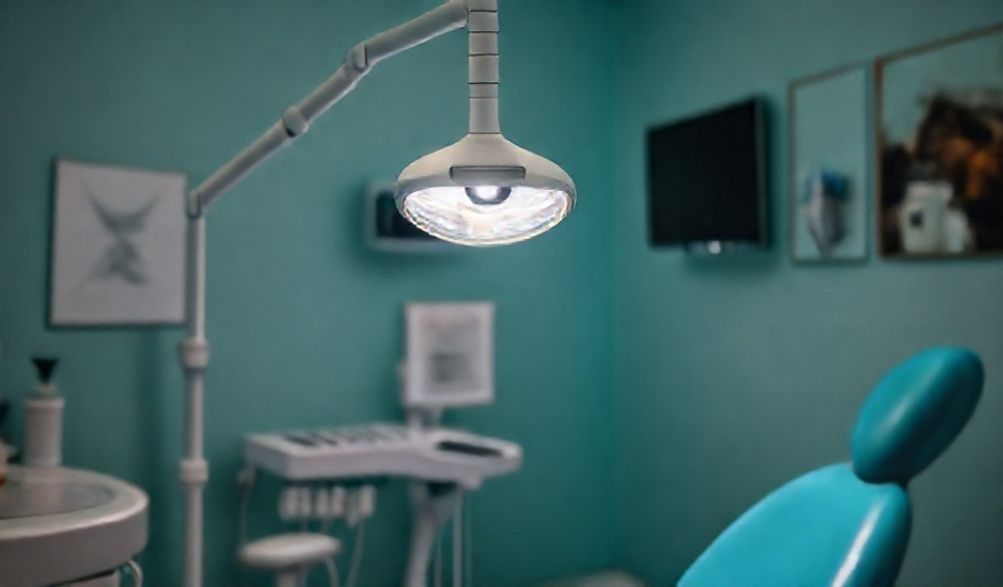
The Ultimate Guide to Dentist Lamps: Illuminating Precision in Modern Dentistry
Imagine your dentist preparing to perform a delicate root canal or match the exact shade for a front-tooth crown. Now, imagine them trying to do it in the dim, shadowy light of a standard room lamp. The thought is unsettling, and for good reason. In dentistry, clear, accurate vision is the absolute bedrock of every procedure, from a routine filling to complex oral surgery. The difference between success and a compromised outcome often lies in what the clinician can see.
The problem of inadequate operatory lighting is a silent thief. It steals clinical accuracy, contributes to chronic eye strain and musculoskeletal pain for the practitioner, and can unnecessarily prolong appointment times for the patient. The solution, however, is a masterpiece of focused engineering: the modern dentist lamp. Far more than a simple light bulb on an arm, today’s operatory lights are sophisticated, essential pieces of technology designed to bathe the oral cavity in perfect, shadow-free illumination.
This guide is designed to be your comprehensive resource. It synthesizes insights from dental equipment reviews, practitioner preferences, and fundamental clinical requirements. We’ll move beyond marketing jargon to explore the technical specifications, evidence-based benefits, and practical selection criteria that matter. Our recommendations align with established industry standards and ergonomic best practices, and we are committed to providing balanced, trustworthy information to help you make a confident, informed investment for your practice’s future.
Why Dental Lighting is More Critical Than You Think
A dentist lamp is often categorized as “operatory equipment,” but this undersells its role. It is a primary diagnostic and treatment tool, as vital as a handpiece or an X-ray sensor. Its quality directly impacts three core pillars of dental practice: clinical outcomes, practitioner well-being, and patient experience.
The Impact on Clinical Accuracy and Diagnosis
The human mouth is a cavernous, reflective, and multi-hued environment. Detecting the subtle, early signs of decay (especially interproximal caries), identifying hairline cracks in enamel, distinguishing between healthy and inflamed tissue, and ensuring complete plaque removal all require exceptional visual clarity.
- Shadow-Free Illumination: Shadows can hide cavities, obscure canal orifices during endodontics, and make margin detection for restorations guesswork. A high-quality dentist lamp is engineered to produce an even, wide field of light that penetrates the oral cavity without casting the clinician’s head or hands as obstructive dark spots.
- Color-Corrected Light: Accurate color rendering is non-negotiable for shade matching in cosmetic dentistry, assessing tissue vitality, and identifying different types of calculus or plaque. Poor lighting can make a subtle grey hue appear brown or mask the true redness of inflammation, leading to diagnostic errors or aesthetically disappointing results.
Precision in dentistry is born from visual confidence. A superior light provides that confidence, transforming treatment from an approximation into a precise, predictable science.
Ergonomics and Practitioner Health
Dentistry is physically demanding, with practitioners often holding static, awkward postures for extended periods. Inadequate lighting is a major, yet frequently overlooked, contributor to occupational pain and fatigue.
- Promoting Neutral Posture: When a light is dim or creates a small, focused hotspot, clinicians instinctively crane their necks and hunch their backs to get their eyes closer to the treatment area. A bright, broad-field dentist lamp allows the professional to maintain a more upright, neutral spinal position while still seeing perfectly, significantly reducing strain on the neck, shoulders, and back.
- Combating Eye Fatigue: Staring for hours into a poorly lit, high-contrast environment (dark mouth vs. bright operatory) forces the eye muscles to work overtime, leading to headaches, dry eyes, and long-term visual strain. Modern lamps with optimal intensity and color temperature reduce this glare and contrast, creating a visually comfortable workspace that supports sustainability throughout a full day of procedures.
Investing in proper lighting is an investment in the long-term health and career longevity of the dental team.
Patient Comfort and Experience
The patient’s perspective under the light is equally important. A positive clinical experience is built on comfort and trust.
- Reduced Glare and Heat: Older halogen dentist lamps were notorious for emitting significant heat and creating a glaring “spotlight” effect that patients often found uncomfortable or intimidating. Modern LED lamps run cool and use advanced diffusers to spread light evenly, eliminating the “hot spot” feeling and minimizing glare in the patient’s eyes.
- Professional Aesthetics: The operatory light is a prominent feature in the patient’s line of sight. A sleek, clean, and modern lamp subconsciously communicates professionalism, attention to detail, and a commitment to advanced technology. Conversely, a yellowed, dusty, or outdated fixture can undermine the practice’s image of cleanliness and competence.
Key Features to Look for in a Modern Dentist Lamp
Understanding the specifications is key to cutting through the sales pitches. Here are the critical features that define a high-performance dentist lamp.
Illumination Quality: Lux, CRI, and Color Temperature
These three metrics define the character of the light.
- Lux (Illuminance): This measures the intensity of light falling on a surface. For dental procedures, a minimum of 20,000 to 25,000 lux at the working distance (typically 30-40 inches) is considered the standard for general dentistry. Surgical procedures may require even higher intensities (30,000+ lux) for extreme detail.
- CRI (Color Rendering Index): Rated on a scale of 0-100, CRI indicates how accurately a light source reveals the true colors of objects compared to natural daylight. For clinical accuracy, a CRI of 90 or higher is essential. A low CRI can distort tissue color and restorative material shades.
- Color Temperature (Kelvin – K): This describes the “warmth” or “coolness” of the light. Measured in Kelvins (K), dental lighting typically falls in the 4000K to 5500K range, simulating bright, neutral daylight. This cool white light enhances contrast and reduces the sedative, yellowing effect of warmer lights.
Light Field and Shadow Reduction
It’s not just about brightness; it’s about the quality and distribution of that brightness.
- Large, Even Field: The ideal lamp produces a wide, homogeneous circle of light (often 12-16 cm in diameter at the working distance) with no dark rings or bright central hotspots. This ensures the entire quadrant, not just a single tooth, is evenly illuminated.
- Shadow-Reduction Technology: This is achieved through sophisticated optical design. Common methods include:
- Multiple LED Arrays: Using several small LED sources arranged in a ring or pattern, rather than one single bulb, to fill in shadows from multiple angles.
- Specialized Reflectors: Engineered reflectors that blend and direct light from a single source to create a more diffuse field.
Mobility, Reach, and Positioning
A brilliant light is useless if it can’t be positioned exactly where you need it, effortlessly.
- Articulation and Balance: Look for lamps with multiple, smooth-gliding joints (often 4-5). They should offer a wide range of motion and be perfectly counterbalanced. This means the light stays firmly in any position you place it, without drifting or requiring you to fight against its weight.
- Mounting Options:
- Ceiling-Mounted: Offers the greatest freedom of movement, unobstructed by equipment or the dental chair, and is ideal for multi-doctor practices or rooms with limited wall space.
- Wall-Mounted: A cost-effective and space-saving solution, but its range is limited to the wall it’s attached to.
- Chair-Mounted: Attaches directly to the dental chair, moving with the patient. This can be convenient but may limit independent positioning and can add weight to the chair.
Durability, Sterilization, and Maintenance
The operatory is a harsh environment. Your light must withstand constant repositioning and rigorous infection control protocols.
- Materials and Design: Housing should be made of high-quality, durable polymers or metals. The most critical feature is a seamless, smooth surface with minimal crevices where contaminants can hide. All seams should be sealed.
- Cleaning Protocol: The lamp must be easily wipeable with standard clinic disinfectants without degrading the materials or finishes. Removable, autoclavable handles or touchpoints are a premium feature.
- Lifespan: This is where LED technology shines. While a halogen bulb may last 1,000-2,000 hours, LED arrays routinely last 50,000 hours or more. This translates to over a decade of clinical use before light output significantly degrades, virtually eliminating bulb replacement costs and downtime.
Comparing Dentist Lamp Types: LED vs. Halogen
The shift from halogen to LED is the defining technological change in operatory lighting over the last decade.
The LED Revolution: Benefits and Considerations
LED (Light Emitting Diode) technology has become the unequivocal standard for new purchases.
- Advantages:
- Cool Operation: Emits minimal infrared radiation, keeping the patient and clinician comfortable.
- Energy Efficiency: Uses up to 80% less electricity than an equivalent halogen lamp.
- Exceptional Lifespan: 50,000+ hour lifespan eliminates frequent, costly bulb changes.
- Instant Performance: Reaches full brightness immediately with no warm-up time.
- Consistent Output: Light intensity and color temperature remain stable throughout the diode’s life.
- Consideration: The initial purchase price for a high-quality LED dentist lamp is typically higher than for a halogen model. However, this is offset by the long-term savings on energy and replacement bulbs.
Traditional Halogen Lights: Are They Still Relevant?
Halogen lights are now largely considered legacy technology.
- Potential Advantages: Lower upfront acquisition cost. The light quality, when new, can be very good with a high CRI.
- Significant Drawbacks:
- High Heat Output: Can be uncomfortable for patients and clinicians.
- High Energy Consumption: Inefficient compared to LED.
- Short Bulb Lifespan: Requires regular (and sometimes expensive) bulb replacements and recalibration.
- Degradation: Light output and color temperature shift as the bulb ages.
Side-by-Side Comparison Chart
| Feature | LED Dentist Lamp | Halogen Dentist Lamp |
| :— | :— | :— |
| Initial Cost | Higher | Lower |
| Operating Heat | Very Low / Cool | High |
| Bulb Lifespan | 50,000+ hours | 1,000 – 2,000 hours |
| Energy Efficiency | Very High (up to 80% less power) | Low |
| Light Quality | Excellent, stable CRI & Kelvin | Good when new, degrades over time |
| Maintenance | Virtually none for years | Frequent bulb replacement |
How to Choose the Right Lamp for Your Dental Practice
Selecting the perfect dentist lamp requires a practical assessment of your specific situation.
Assessing Your Practice’s Specific Needs
Ask yourself these key questions:
* Clinical Focus: Do you primarily do general dentistry, surgery, endodontics, or cosmetics? Surgical and endo may demand higher lux levels.
* Operatory Layout: What is the size and shape of your room? Where are cabinets, monitors, and windows? This will dictate whether a ceiling, wall, or chair mount is most practical.
* Budget: Consider Total Cost of Ownership. A cheaper halogen lamp will cost more in bulbs and electricity over 5 years than a more expensive LED. Factor in potential productivity gains from better ergonomics.
Top Brands and Models Overview
(Note: This is an illustrative overview of reputable manufacturers known for quality and innovation. It is not an exhaustive ranking. We strongly recommend hands-on demos and consultations with peers and equipment specialists before purchasing.)
- A-dec: A legacy leader known for unparalleled reliability and seamless integration with their delivery systems. Their lights are often praised for smooth articulation and robust construction.
- Daray / Waldmann: Renowned for optical excellence. Waldmann (marketed as Daray in some regions) is frequently cited for having some of the most advanced shadow-reduction technology and brilliant, homogeneous light fields in the industry.
- Midmark: Offers a strong balance of innovative features (like their “M” shaped LED array for shadow control) and user-friendly design, often at a competitive price point.
Installation and Calibration Tips
- Professional Installation: For ceiling-mounted units, professional installation by a qualified technician is non-negotiable. It ensures secure mounting, proper electrical connection, and correct counterbalance adjustment.
- Initial Calibration: Once installed, take time to calibrate the focus. Adjust the light at its typical working distance to ensure the field is even, circular, and covers the desired area. Familiarize yourself with the intensity controls to set preferred levels for different procedure types.
Frequently Asked Questions (FAQ) About Dentist Lamps
Q: How often should I replace my dentist lamp?
A: With LED technology, replacement is rarely due to bulb failure. These lamps can last 50,000+ hours—often over a decade of clinical use. You may consider replacing one due to mechanical wear on the joints, a desire for newer features, or a technology upgrade, not because the light has burned out.
Q: Can the bright light harm my patients’ eyes?
A: Modern dental lamps are designed with patient safety in mind. They use diffusers to minimize glare and filters to block most ultraviolet (UV) and infrared (IR) radiation. However, direct, prolonged exposure to any bright light is not advised. This is why providing patient protective eyewear for every procedure is a standard and essential practice.
Q: Is it difficult to clean and disinfect a dental operatory light?
A: Reputable models are specifically designed for the clinical environment. They feature smooth, non-porous, seamless surfaces that can be quickly wiped down with standard EPA-registered hospital-grade disinfectants. Always consult and follow the manufacturer’s cleaning instructions to avoid damaging sensitive components or finishes.
Q: Are there “smart” features available in new dentist lamps?
A: Yes, the market is evolving. High-end models now offer features like touchless activation (wave-to-turn-on), memory presets for different procedure types (e.g., “surgery” mode vs. “exam” mode), and even integration with digital operatory systems, allowing the light to adjust automatically based on the selected procedure in your practice management software.
Conclusion
A high-quality dentist lamp is far more than an accessory; it is a foundational investment in the triad of clinical excellence, practitioner well-being, and superior patient care. It is the tool that makes every other tool more effective. Choosing the right light requires looking beyond the initial price tag to consider the profound impact of illumination quality, ergonomic design, and long-term reliability.
Your final decision should prioritize value over cost. View this purchase as a long-term partnership that will support your practice’s quality and efficiency for the next decade or more. The right light doesn’t just illuminate the oral cavity; it illuminates the path to better dentistry.
Call to Action: Ready to see the difference? Your next step is to engage with reputable dental equipment suppliers. Request detailed catalogs, but more importantly, arrange for live demonstrations in your operatory or at a showroom. Consult with colleagues about their experiences with different brands and models. There is no substitute for positioning a lamp yourself and seeing the quality of its light firsthand.
p>