
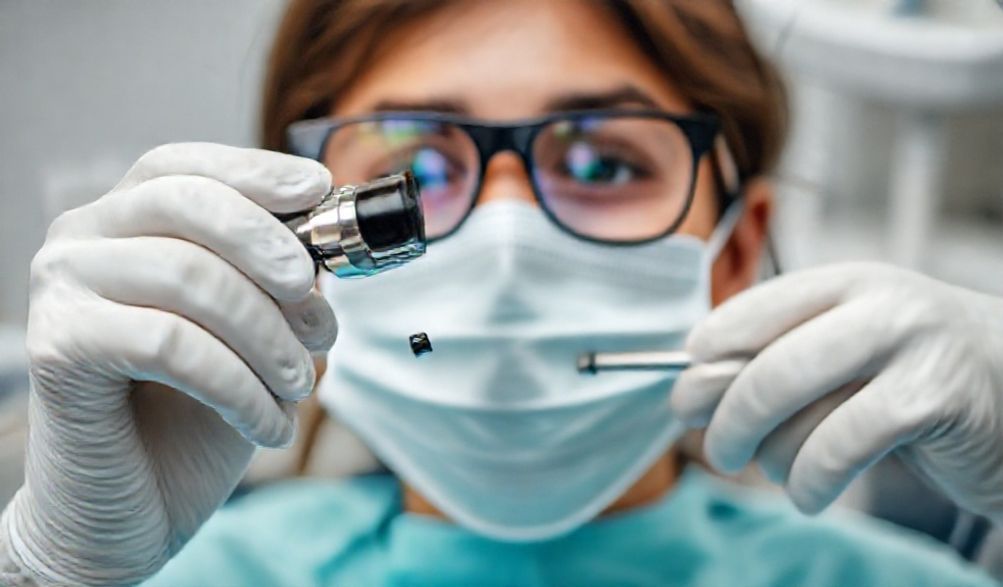
Dentist Loupes: The Ultimate Guide to Enhanced Vision, Ergonomics, and Clinical Precision
Picture this: You’re halfway through a challenging Class II composite restoration. The margins are subgingival, the isolation is tricky, and you find yourself hunching forward, squinting to see the distal box. By the time you finish, a familiar ache has settled into your neck and shoulders, and a dull throb pulses behind your eyes. You know you did good work, but at what cost? This scenario, played out in operatories worldwide, highlights a silent epidemic of strain and preventable error in dentistry. The solution, however, is not to work harder, but to see better.
This comprehensive guide is crafted for the discerning dental professional. Drawing on principles of ergonomic science, optical engineering, and clinical best practices, our purpose is to move beyond viewing loupes as a mere accessory. Instead, we will frame them as a critical, evidence-based investment in your clinical precision, your physical health, and the long-term viability of your practice. We will dissect the benefits, demystify the specifications, and provide a clear, step-by-step framework for selecting and implementing a loupe system that seamlessly integrates into your workflow. By the end of this guide, you will possess the knowledge to confidently choose a system that enhances patient outcomes, safeguards your well-being, and elevates the standard of care you provide.
Why Dentist Loupes Are a Critical Investment, Not Just an Accessory
For too long, dental loupes have been relegated to the status of an optional tool, often pursued only after the first signs of chronic pain appear. This perspective is fundamentally flawed. Modern loupes are a foundational component of contemporary, precision-based dentistry. Their value extends far beyond simple magnification, impacting three core pillars of a successful practice.
Enhancing Clinical Precision and Accuracy
The human eye has its limits. At a standard working distance, discerning a subtle craze line, detecting incipient caries, or ensuring a perfectly adapted margin becomes an exercise in estimation. Magnification shatters these limitations.
- Error Reduction: With loupes, what was once a faint discoloration becomes a clear demineralized pathway. Sub-millimeter discrepancies in margin adaptation are glaringly obvious. This enhanced visualization directly translates to higher-quality restorations, more complete caries removal, and improved outcomes in endodontics and periodontics. Studies and clinical consensus consistently point to a significant reduction in procedural errors and remakes when magnification is employed.
- Elevated Standard of Care: Loupes enable you to operate at a level of detail that defines excellence. They transform “looks good” into “is perfect,” allowing you to deliver a truly meticulous standard of care that benefits every patient.
The Ergonomic Imperative: Protecting Your Career
The statistics are alarming: a overwhelming majority of dentists will experience work-related musculoskeletal disorders (MSDs). Chronic neck, back, and shoulder pain are not occupational hazards to be accepted; they are preventable consequences of poor posture.
- Promoting Neutral Spine: The primary ergonomic benefit of loupes is not in the lenses themselves, but in the working distance they enforce. To see clearly through the loupes, you must sit upright with your back straight and your head positioned correctly. This eliminates the destructive, career-shortening habit of craning your neck forward and hunching your shoulders.
- Preventing Burnout: Chronic pain is a leading contributor to early career burnout. By promoting a healthy, sustainable posture, loupes are an investment in your longevity. They protect your most valuable asset—your ability to practice pain-free for decades.
Improving Patient Communication and Trust
Clinical excellence must be communicated to be valued. This is where loupes integrated with camera systems become a powerful practice-building tool.
- Visual Evidence: With a simple flip of a mirror or via an integrated camera, you can show a patient exactly what you see. Displaying a fractured cusp, subgingival calculus, or a leaking margin on a monitor makes the diagnosis undeniable and the proposed treatment logical.
- Building Trust: This transparent, evidence-based approach demystifies dentistry. Patients become active participants in their care, leading to dramatically higher case acceptance and a stronger, more trusting doctor-patient relationship.
Understanding the Core Components of a Dental Loupe System
Choosing loupes requires understanding a few key optical and ergonomic principles. These aren’t just specs on a sheet; they define your clinical experience.
Magnification Levels: From 2.5x to 8x and Beyond
Magnification is the most obvious feature, but more is not always better. It’s a balance with field of view.
- General Dentistry (2.5x – 3.5x): This is the ideal starting range for most restorative, pediatric, and prosthodontic work. It provides a significant visual boost while maintaining a wide, manageable field of view, allowing you to see the tooth, adjacent structures, and your instruments simultaneously.
- High-Precision Specialties (4.5x and above): Endodontists, periodontists, and oral surgeons often prefer higher magnification (4.5x, 5.0x, 6.0x+) for procedures like locating calcified canals, performing microsurgery, or placing implants. The trade-off is a narrower field of view and a shallower depth of field, requiring more precise head positioning.
- Advice: For a first-time user, 3.0x to 3.5x is widely recommended as it offers substantial benefit without a steep learning curve.
Field of View and Depth of Field Explained
- Field of View (FOV): This is the diameter of the area you can see clearly through the loupes at a given distance. Think of it as your “visual window.” Higher magnification typically reduces the FOV.
- Depth of Field: This is the “slice” of space, from near to far, that remains in sharp focus. A deeper depth of field allows for some minor head movement without losing clarity. Higher magnification usually reduces depth of field.
- The “Sweet Spot”: Your goal is a system where the FOV is wide enough for your workflow, and the depth of field is sufficient for the procedure. This “sweet spot” is where you work comfortably without constant refocusing.
Working Distance: The Key to Proper Posture
This is the single most critical ergonomic measurement. Working Distance (WD) is the distance from your eye to the patient’s mouth (specifically, to the plane where you work most frequently).
- How to Measure: Sit in your typical operating posture with your back and neck straight. Have a colleague measure from your cheekbone (just below the eye) to the patient’s incisors or first molars. This measurement, in centimeters or inches, is your personal working distance.
- Consequences of Error: If your WD is too short, you will hunch. If it’s too long, you will lean back and strain to see detail. An incorrect WD nullifies the ergonomic benefits of the loupes and can cause more harm than good.
A Detailed Comparison of Dental Loupe Types
Loupes generally fall into two main categories based on how they mount to your frame, each with distinct advantages.
Through-The-Lens (TTL) Loupes: Custom-Fit Precision
In TTL systems, the optical barrels are permanently fixed to the lenses of the frame at the precise angle needed for your individual pupillary distance (PD) and working distance.
- Pros: They offer perfect, permanent optical alignment. They are typically lighter and less bulky since there are no moving parts. You simply put them on and they work—no fiddling with adjustments.
- Cons: They represent a higher initial investment. They are custom-made for you and cannot be shared with an associate or colleague. Your parameters (WD, declination angle) are fixed.
Flip-Up Loupes: Flexibility and Versatility
These loupes feature a binocular-style optical assembly that flips up on a hinge mounted to a standard eyewear frame.
- Pros: The interpupillary distance (IPD) is adjustable via a dial or slider, allowing multiple users to share the same set (though WD remains personal if custom ordered). They are often less expensive upfront. You can flip them up to look at an X-ray or speak to a patient without removing your glasses.
- Cons: They tend to be slightly heavier and can feel bulkier on the face. The hinge mechanism can loosen over time, potentially leading to misalignment. The adjustable nature means the optics may not be perfectly centered for every user.
Prismatic (Galilean) vs. Keplerian (Compound) Optics
This refers to the internal lens design, which dictates performance capabilities.
- Prismatic (Galilean): Uses a simple lens system. Best for lower magnifications (2.5x, 3.0x). They are lighter, more compact, and generally less expensive. They offer good image quality for general dentistry.
- Keplerian (Compound): Uses a more complex multi-lens system, like a telescope. Required for higher magnifications (3.5x and above). They provide a wider field of view and better depth of field at higher powers but can be slightly heavier and more costly.
Integrating Lighting: Why Loupes Are Incomplete Without a Headlight
Magnification without proper light is like a high-resolution camera in a dark room—it’s ineffective and even counterproductive.
The Shadow Dilemma in the Oral Cavity
Overhead operatory lights are designed for general illumination, not for illuminating deep, dark intraoral cavities. When you magnify a shadowed area, you simply see a larger, darker shadow. A coaxial headlight, mounted directly on your loupes, projects light exactly where you are looking, eliminating shadows and providing brilliant, shadow-free illumination.
Choosing a LED Headlight: Lumens, Color Temperature, and Battery Life
Modern LED headlights are marvels of efficiency. Here’s what to look for:
- Lumens & Lux: Lumens measure total light output; lux measures light intensity on a surface. For dentistry, 10,000 to 30,000 lux is a common effective range, providing bright, white light without excessive heat.
- Color Temperature: Measured in Kelvin (K). 5,000K to 5,500K is ideal, mimicking natural daylight and providing excellent color rendition for accurately distinguishing tooth shades and tissue health.
- Battery Systems: Cordless systems offer ultimate freedom of movement. Look for lightweight battery packs (often waist-worn) with a runtime that exceeds your longest clinical day (4+ hours). Corded systems are reliable and never run out of charge but can feel restrictive.
The Purchasing Process: A Step-by-Step Guide for Dentists
Investing in loupes is a significant decision. Follow this structured approach to ensure you get the right system.
Step 1: Self-Assessment and Clinical Needs Analysis
Ask yourself:
* What procedures do I perform most? (Restorative, surgery, endo?)
* What are my current pain points? (Neck strain, eye fatigue, difficulty seeing?)
* What is my realistic budget for this long-term investment in my health?
* Do I wear prescription glasses?
Step 2: Reputable Brands and the Importance of In-Person Consultation
Research established, reputable manufacturers known for quality and support, such as Orascoptic, Zeiss, SurgiTel, Designs for Vision, and Heine.
CRITICAL E-E-A-T ADVICE: An in-person, professional fitting by a certified company representative is non-negotiable. This is not a product you buy online based on specs. A proper fitting involves precise measurement of your PD, WD, and declination angle, frame selection for comfort, and a clinical trial to assess the “sweet spot.” This step is paramount for achieving the promised ergonomic and visual benefits.
Step 3: Trial Periods, Warranties, and Long-Term Support
- Trial Period: Many reps offer a 2-4 week trial period. Use them in your actual practice.
- Warranty: Look for comprehensive warranties covering optics (often 5-10 years or lifetime) and frame/components (1-3 years).
- Support: Choose a company known for excellent customer service, easy repair processes, and the ability to update your prescription or add a camera in the future.
FAQ: Your Top Questions About Dentist Loupes, Answered
Q: How long does it take to get used to wearing dental loupes?
A: Most clinicians adapt within 1-2 weeks. Start by wearing them for short, non-critical tasks (oral exams, hygiene checks) to build muscle memory and overcome any initial dizziness or spatial disorientation. Your brain will remarkably quickly learn to reconcile the magnified view with your hand movements.
Q: Can I wear my prescription glasses with loupes?
A: Yes, you have three main options: 1) Custom TTL Loupes: Your exact prescription is ground into the loupe lenses (the gold standard). 2) Flip-Ups Over Glasses: Some flip-up models are designed to fit over your regular frames. 3) Contact Lenses: Wear contacts and use standard loupes.
Q: What is the typical cost range for a good loupe and headlight system?
A: A quality system is an investment. You can expect a range from approximately $1,500 to $5,000+. Price is influenced by magnification, optical design (Galilean vs. Keplerian), frame material, lighting specs, and whether you need a prescription. Consider it a per-year cost over a 10+ year career—it’s minimal compared to its benefits.
Q: How do I clean and maintain my dental loupes?
A: Use only a microfiber cloth and lens cleaner designed for coated optics (or a mild dish soap and water rinse). Never use paper towels, clothing, or alcohol-based cleaners, as they will scratch and degrade the anti-reflective coatings. Store them in a hard case.
Q: Are digital/electronic loupes the future?
A: Emerging technologies like loupes with integrated digital displays (showing patient vitals, radiographs) or 4K recording capabilities are on the horizon. For now, consider these advanced, premium options. The core principles of optics, fit, and lighting covered in this guide remain the essential foundation for any system.
Conclusion
Dental loupes transcend the category of mere equipment. They are a transformative tool that directly enhances the three pillars of a fulfilling practice: uncompromising clinical precision, sustainable physical health, and effective patient partnership. They allow you to see more, strain less, and communicate better.
This guide underscores a final, critical point based on Expertise, Authoritativeness, and Trustworthiness (E-E-A-T): this significant investment must be guided by professional expertise. The specifications on paper are meaningless without a perfect custom fit for your eyes, posture, and workflow. Do not let price alone dictate your choice.
Your call to action is clear: Schedule consultations with reputable vendors. Talk to experienced colleagues about their systems. Most importantly, prioritize an in-person demo and fitting. Experience the profound difference of perfect vision and posture firsthand. Ultimately, a properly fitted loupe and light system is not an expense—it is one of the most strategic investments you can make in your most important asset: your ability to practice exceptional, pain-free dentistry for the long and rewarding career you deserve.
p>