
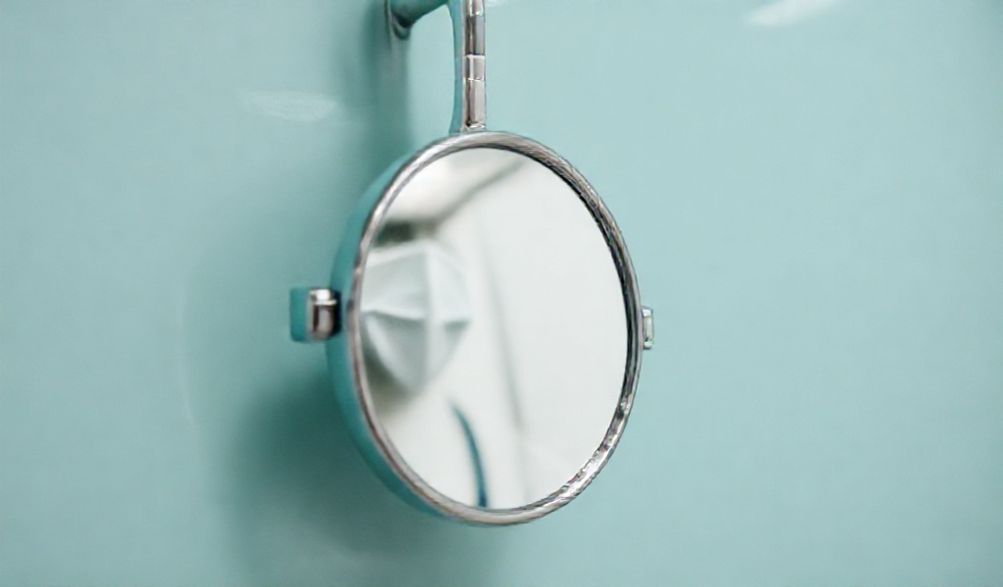
The Doctor’s Head Mirror: A Timeless Tool in Modern Medicine
The scene is familiar, almost archetypal. In the quiet, focused atmosphere of an examination room, a patient tilts their head. The doctor, seated opposite, adjusts a gleaming disc strapped to their forehead. With a turn towards a nearby lamp, a brilliant circle of light springs to life, converging into a single, intense spot deep within the patient’s ear or throat. This is the doctor head mirror in action—an instrument that seems plucked from a medical history museum yet remains a vital, daily tool in thousands of clinics worldwide.
To the uninitiated, the head mirror appears to be an antique, a charming anachronism in an era of digital endoscopes and wireless ultrasound. Its silhouette is iconic, evoking a bygone era of medicine. Yet, this perception belies its enduring, specialized utility. Far from being obsolete, the head mirror is a masterpiece of simple physics and ergonomic design, offering illumination capabilities that modern technology often struggles to replicate perfectly for specific tasks.
This post will delve into the fascinating world of the doctor head mirror, exploring its precise anatomy, the elegant science behind its function, and its storied history. We will demystify its primary uses in contemporary medicine, provide a step-by-step guide to its operation, and objectively compare it to modern alternatives. By drawing on historical medical texts, the principles of optical instrument design, and the standard practices of modern otolaryngology, we’ll demonstrate why this seemingly simple tool has earned its permanent place in the medical toolkit.
What is a Doctor Head Mirror? Anatomy and Function
At first glance, a head mirror is a simple device. But its design is the result of meticulous refinement, with each component serving a specific, critical purpose for delivering unparalleled diagnostic illumination.
Key Components: The Mirror, Headband, and Optics
The heart of the instrument is, of course, the mirror. This is not a flat bathroom mirror, but a precision concave mirror, typically 3 to 4 inches (7.5 to 10 cm) in diameter. The curvature is carefully calculated to have a specific focal length, usually between 12 to 20 inches, which is the ideal working distance between the doctor and the patient.
The most distinctive feature is the central perforation, a hole about ¼ inch in diameter right in the middle of the mirror. This is the doctor’s viewport. The mirror itself is mounted on a universal joint, allowing it to be tilted up, down, and sideways with a gentle touch. This assembly is then attached to a sturdy, adjustable headband. Often padded with leather or foam, the headband is designed to be worn securely and comfortably for extended periods, leaving the doctor’s hands completely free—a fundamental advantage.
The Simple Physics of Brilliant Illumination
The magic of the head mirror lies in applying basic principles of optics. The concave mirror is a converging mirror. When light from an external source (like a dedicated examination lamp) hits its surface, the rays are reflected and focused to a single point—the focal point.
Here’s the elegant part of the system:
1. The doctor positions the lamp to the side and slightly behind the patient, aiming it at the mirror on their forehead.
2. The doctor then tilts the mirror so that the light from the lamp is reflected and focused as a bright, concentrated “hot spot” onto the area to be examined—a patient’s eardrum, vocal cord, or nasal passage.
3. The doctor looks directly through the central hole. Due to the mirror’s optics, the illuminated area is perfectly aligned with the line of sight through the aperture. The doctor sees a brilliantly lit field, free from the shadow their own head would normally cast.
This system provides intense, shadow-free illumination exactly where it is needed, delivered hands-free.
A Brief History: From Ancient Reflection to Essential Instrument
The desire to see into the body’s dark cavities is as old as medicine itself. Ancient practitioners used polished metal or glass to reflect sunlight, but these were crude and unreliable tools.
The doctor head mirror as we know it emerged during the 19th century’s medical revolution. While several figures contributed to its development, French surgeon Dr. Antonin Jean Desormeaux is often credited with popularizing an early version in the mid-1800s alongside his work on endoscopy. Its adoption coincided perfectly with the birth of specialized otolaryngology (ENT). As physicians began to seriously diagnose and treat conditions of the ear, nose, and throat, they needed a reliable way to see into these narrow, deep passages. The head mirror provided the solution, becoming the symbol of this new specialty.
Why It Has Endured When Other Tools Faded
In a world of rapid technological obsolescence, the head mirror’s persistence is remarkable. Its endurance is a testament to a powerful combination of virtues:
* Simplicity & Reliability: It has no moving parts, requires no batteries, and never needs software updates. It cannot fail.
* Unmatched Optical Quality: For deep orifice examination, it provides a uniquely bright, white, and shadow-free light that is difficult to replicate with a light source attached to an instrument.
* Cost-Effectiveness: It is inexpensive to manufacture and maintain, with essentially zero ongoing costs.
* Ergonomic Superiority: It enables true binocular (two-eyed) vision and the use of both hands for instruments, which is critical for procedures like removing a foreign object from a child’s nose or performing a delicate ear procedure.
Primary Uses in Contemporary Medical Practice
While its use has narrowed to specific fields, within those areas, the doctor head mirror is not just an option—it is often the instrument of choice.
The Cornerstone of Otolaryngology (ENT) Examinations
For ENT specialists, the head mirror is a fundamental tool for three key examinations:
* Otoscopy (Ear Exam): While a handheld otoscope is used for routine checks, the head mirror is superior for detailed examination and procedures. It provides a wider field of view and, crucially, stereoscopic depth perception, allowing the doctor to gauge the precise contours of the eardrum or the location of a tiny perforation. It leaves both hands free to hold an ear speculum and manipulate an instrument for cleaning or minor surgery.
* Anterior Rhinoscopy (Nasal Cavity Exam): Using a nasal speculum in one hand, the doctor can gently open a nostril and use the head mirror’s light to get a clear, deep view of the nasal passages and septum.
* Indirect Laryngoscopy (Throat/Vocal Cord Exam): This is a classic application. The doctor uses a small, handheld laryngeal mirror placed at the back of the patient’s throat. The light from the head mirror is reflected off this small mirror to illuminate the larynx and vocal cords, allowing for a dynamic assessment as the patient speaks or sings.
Applications in Other Specialties: General Practice & Dermatology
Some general practitioners trained in its use keep a head mirror for more detailed ear and throat exams. Furthermore, dermatologists have found it useful for examining skin lesions. The focused, shadow-free light it provides can reveal subtle textural changes and borders of a mole or rash that might be missed under diffuse overhead lighting.
How to Properly Use a Head Mirror: A Step-by-Step Guide
Mastering the head mirror is a rite of passage for ENT residents. It feels awkward at first but becomes second nature with practice. Here’s how it’s done:
Setting Up Your Light Source and Positioning
- The Lamp: Use a dedicated examination lamp with a bright, point-source bulb (often halogen or LED). Position it on the same side as the eye you will use to look through the hole (usually your dominant eye). It should be slightly above and behind the patient’s head, about level with your own head when seated.
- The Headband: Adjust the headband so it sits securely but comfortably on your forehead. The mirror should be positioned just above your eyebrow, centered on your chosen eye.
- Seating: Sit directly facing the patient, at a distance roughly equal to the focal length of your mirror (the “hot spot” will be brightest at this distance).
Achieving a Clear “Hot Spot” and Aligning Your Vision
- Focus the Light: Before examining the patient, practice on a stationary object like your own thumb held in the exam position. Tilt your head and the mirror (they should move as one unit) until you catch the light from the lamp on the mirror. Refine the tilt until the reflected light forms a tight, bright circle on your thumb.
- Align Your Sight: Close the eye that is not behind the mirror’s hole. With your open eye, look through the aperture. You should now see your thumb brilliantly illuminated. The key is to learn to move your head and mirror together to keep the light spot on the area of interest while viewing it through the hole.
Common Beginner Challenges and Troubleshooting
- Blurred Vision or Double Image: This usually means you are trying to use both eyes, or your eye is too far from the hole. Use one eye and get close.
- Shaky Light Spot: You are moving the mirror independently of your head. Lock your neck and move from the waist, keeping your head and mirror as a fixed unit.
- Neck Strain: This indicates poor posture or an incorrectly adjusted headband. Ensure you are sitting upright and the headband bears the weight, not your neck muscles.
- “Lost” the Light: This happens to everyone at first. Don’t move the patient. Simply look away from the patient back toward the lamp to re-catch the light on your mirror, then smoothly sweep back.
Proficiency requires deliberate practice, but the skill, once learned, is never forgotten.
Head Mirror vs. Modern Alternatives: When is Each Best?
The modern clinic offers powerful alternatives, but the head mirror holds its ground by excelling in specific scenarios.
The Head Mirror’s Unique Advantages
- Shadow-Free, Deep Cavity Illumination: Its external light source avoids the obstruction caused by an instrument in a narrow canal.
- True Binocular Vision: This allows for critical depth perception during procedures, which a monocular scope cannot provide.
- Complete Freedom of Both Hands: Essential for any procedure requiring two instruments.
- Perfect Color Rendering & Comfort: The light is easy on both the doctor’s and patient’s eyes, with no “hot” LED glare or distorted colors.
The Role of Fiber-Optic Headlights and Video Scopes
Modern LED fiber-optic headlights are brilliant, mobile, and fantastic for surgery in open fields or dark cavities like the mouth. Video endoscopes (flexible or rigid) are revolutionary for diagnosis, offering magnification, digital recording, and the ability to share images with patients.
The conclusion is not that one tool replaces the other, but that they are complementary. For a quick, dynamic assessment of the throat, a complex ear procedure requiring depth perception, or a nasal foreign body removal, many ENT specialists will still reach for the doctor head mirror. For documenting a sinus finding or performing a full endoscopic exam, they will use a video scope. The head mirror remains the superior tool for specific, hands-on, in-office procedures where its optical and ergonomic qualities are paramount.
Frequently Asked Questions (FAQ)
Q: Is the doctor’s head mirror still used today?
A: Absolutely. While not as universally common as in the past, it remains a standard, frequently used tool in otolaryngology (ENT) clinics worldwide for its specific optical advantages in procedures requiring depth perception and two free hands.
Q: Why does the mirror have a hole in the middle?
A: The hole allows the doctor to look directly through the mirror. The optics are designed so that the area they see through the hole is perfectly illuminated by the ring of light focused by the concave mirror around it, creating a brilliant, unobstructed view.
Q: Can a head mirror be used for self-examination?
A: Effectively, no. The setup requires a separate light source positioned correctly relative to the patient and user. The geometry makes self-alignment for examining your own ear or throat extremely impractical, if not impossible.
Q: How do doctors keep from getting dizzy or strained while using it?
A: Proper adjustment and practice are key. The headband distributes weight, and doctors learn to move their head smoothly as a unit with the mirror, minimizing disorientation. Initial dizziness is common but passes quickly with training as the brain adapts.
Q: Are there different types or sizes of head mirrors?
A: Yes. Mirrors vary in diameter (e.g., 3″, 3.5″, 4″) and focal length. A mirror with a flatter curvature provides a wider field of view, while a more concave mirror offers a more intense, focused spot. The choice depends on the doctor’s preference and the specific clinical application.
Conclusion
The doctor head mirror is not a relic to be displayed under glass; it is a precision optical instrument refined by over a century of daily clinical practice. Its core value is timeless: it delivers brilliant, shadow-free illumination while preserving the doctor’s natural binocular vision and dexterity. In an age of digital marvels, it solves a fundamental problem—seeing clearly into the body’s small, dark spaces—with an elegance and effectiveness that modern technology often complements but does not wholly supersede.
It symbolizes a perfect blend of historical ingenuity and enduring clinical utility. Its continued presence on the foreheads of specialists is a powerful testament to a simple truth: when fundamental physics perfectly meets a specialized human need, the resulting tool can become timeless.
p>