
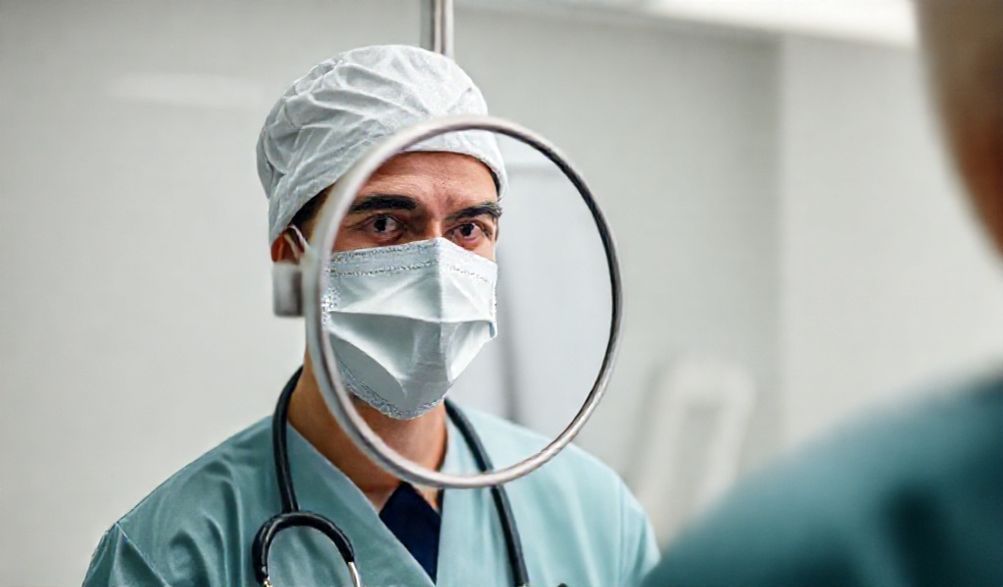
Doctor Headband Mirrors: A Clear Guide for Medical Professionals & Students
If you’re a medical student nervously preparing for your first ENT rotation, a resident refining your diagnostic skills, or a clinical purchaser sourcing reliable equipment, you’ve likely encountered the iconic doctor headband mirror. More than a nostalgic symbol of medicine, this tool—also known as a head mirror or headband magnifier—remains a vital piece of optical equipment for one fundamental reason: it provides unparalleled, hands-free illumination and magnification. In an era of advanced digital scopes and LED headlamps, the timeless design of the headband mirror continues to offer a uniquely clear, bright, and shadow-free view into the body’s cavities, particularly the ears, nose, and throat.
This comprehensive guide is designed to move beyond a simple product description. We will delve into the core function and rich history of the instrument, detail its key applications and tangible benefits in modern practice, and provide actionable, evidence-based advice on selecting, using, and maintaining the right model for your needs. Whether you’re learning the basics or seeking to optimize your clinical toolkit, understanding this essential instrument is a mark of a thorough medical professional.
What is a Doctor Headband Mirror? Core Function & History
Before mastering its use, it’s crucial to understand the elegant simplicity of its design and its storied place in medical history. The doctor headband mirror isn’t just a tool; it’s a lesson in practical optics and diagnostic tradition.
The Traditional Design: Mirror, Headband, and Optics
The classic doctor headband mirror consists of three primary components:
1. The Concave Mirror: This is the heart of the instrument. Typically 3 to 4 inches in diameter, this circular mirror is slightly concave (curved inward). It is mounted on a swivel joint that allows for a wide range of vertical and horizontal adjustment. The concave shape is not arbitrary; it gathers light from an external source and focuses it into a bright, concentrated spot.
2. The Adjustable Headband: Usually made of leather or durable vinyl with a soft foam or felt lining, the headband is designed for secure and comfortable wear. Its adjustability ensures a stable fit for different head sizes, keeping the mirror perfectly positioned without constant manual adjustment.
3. The Working Distance & Focal Point: This is the critical spatial relationship. The mirror is designed to work at a specific distance from the area being examined—usually around 10 to 15 inches. When properly aligned, the clinician looks through the central aperture (a small hole in the middle of the mirror). The light from an external lamp is reflected off the concave surface and converges brilliantly onto the examination site, which is also at the mirror’s focal point. This allows the clinician to see the illuminated area with exceptional clarity and without their head casting a shadow.
The basic principle is one of reflection and focus. It requires an external light source, traditionally a dedicated gooseneck or wall-mounted examination lamp. The clinician positions themselves so that this light source is directly behind them, reflects off their head mirror, and is projected onto the patient.
A Brief History in Medical Diagnosis
The headband mirror is inextricably linked to the birth of specialized diagnostic medicine, particularly otolaryngology (ENT). In the late 19th century, as physicians began to systematically explore the internal passages of the head and neck, they needed a way to see deep into dark, narrow cavities. The head mirror, adapted from earlier forms used by dentists and jewelers, provided the solution.
Pioneers like Sir Morell Mackenzie in London and physicians in Vienna and Berlin standardized its use, transforming the examination of the larynx, nasopharynx, and ear canal from a guessing game into a precise visual science. For decades, it was the definitive tool of the specialist. While modern fiber-optic and LED-powered headlamps offer convenience and portability, the traditional head mirror is far from obsolete. It is still widely taught in medical schools, used in clinics worldwide, and prized by many practitioners for its superior, natural light quality, lack of batteries, and cost-effectiveness. It represents a direct, unmediated connection between the clinician’s eye and the patient’s anatomy.
Key Applications & Benefits in Clinical Practice
Understanding why the headband mirror has endured requires a look at its specific, unbeatable advantages in real-world clinical scenarios.
Primary Use: ENT Examinations
This is the instrument’s home turf. For examinations of the ear, nose, and throat, it remains arguably the optimal tool for several reasons:
* Otoscopy (Ear Exams): It provides intense, coaxial illumination (light traveling along the same axis as the line of sight) down the ear canal, brilliantly illuminating the tympanic membrane (eardrum) without obstruction. The slight magnification helps in assessing minute details like vascularity, fluid levels, or perforations.
* Rhinoscopy & Laryngoscopy (Nose & Throat Exams): Using a nasal speculum or a laryngeal mirror, the clinician can direct the head mirror’s brilliant spot of light deep into the nasal cavities or onto the vocal cords. The hands-free operation is critical here, as it allows the physician to hold instruments and manipulate tissues while maintaining a perfect, shadow-free view.
Benefits Over Standard Pen Lights
It’s a common comparison, but the headband mirror is in a different league:
* Illumination Quality: A pen light provides directional, often harsh, shadow-creating light. The head mirror produces a shadow-free, diffuse, and brilliantly concentrated field of light that fills the cavity being examined.
* Hands-Free Utility: This is its most practical advantage. Having both hands available to hold a speculum, a tuning fork, a suction catheter, or a surgical instrument is indispensable for efficient and effective examination and minor procedures.
* Magnification: Integrated optical lenses add a layer of diagnostic power that a simple pen light cannot match, bringing fine tissue structures and pathologies into clear focus.
Beyond ENT: Other Medical and Surgical Uses
The utility of bright, hands-free light and magnification extends to other fields:
* Dentistry & Oral Surgery: For examining the oral cavity, posterior teeth, and during certain procedures.
* Minor Surgical Procedures & Wound Care: In dermatology, for suturing small lacerations, incision and drainage of abscesses, or detailed wound debridement.
* Veterinary Medicine: For small animal examinations of ears, oral cavities, and eyes.
* Any Detailed Close Work: Its principles apply to any field requiring illuminated, magnified, hands-free precision.
How to Choose the Right Doctor Headband Mirror
Not all headband mirrors are created equal. Investing in a quality instrument from a reputable manufacturer pays dividends in optical clarity, durability, and comfort. Here’s what to look for.
Key Features to Compare
-
Mirror Quality & Focal Length:
- Diameter: A 3.5-inch (approx. 90mm) mirror is the standard and offers an excellent balance of light-gathering ability and manageable size. Larger mirrors gather more light but can be heavier.
- Surface & Coating: High-quality mirrors use front-surface glass with a protective coating or are made from precision-polished, coated metal. Avoid cheap plastic or poor-quality glass that can distort the image. The coating should resist tarnishing.
- Focal Length: This is fixed by the mirror’s concavity. Standard focal length (working distance) is suitable for most ENT work. Ensure the mirror feels natural at your typical examination distance.
-
Magnification Options:
- Diopter Strength: Magnifying lenses are measured in diopters (D). A +2D lens is a versatile, standard choice that provides helpful magnification without overly restricting the working distance or field of view. A +3D or +4D lens offers greater magnification for fine detail work but has a shorter, more critical focal distance.
- Recommendation: For students and general practitioners, a +2D lens is ideal. Specialists who perform very detailed procedures may prefer higher magnification. Some systems offer interchangeable lenses for flexibility.
-
Comfort & Adjustability:
- Headband: Look for padded, breathable materials. Leather is traditional and durable, while modern synthetic bands are easier to clean. The adjustment mechanism should be secure and easy to operate with one hand.
- Swivel Joint: The connection between the headband and the mirror must be robust and friction-based, allowing smooth, stable positioning in any orientation without drooping during use.
Top Brands and Reliable Suppliers
When it comes to medical instruments, brand reputation is a proxy for quality control and optical excellence. Established names in diagnostic equipment include:
* Heine: Known for exceptional German engineering and optics. Their head mirrors are often considered the gold standard.
* Keeler: A long-standing leader in ophthalmic and optical diagnostic instruments, offering high-quality ENT mirrors and magnifiers.
* Welch Allyn: A trusted name in general medical diagnostics, providing reliable and durable headband mirror systems.
Purchasing Advice: Always buy from authorized medical supply distributors or directly from the manufacturer. This ensures you receive a genuine product with the correct optical specifications and qualifies you for any warranty support. Avoid unknown brands on general marketplaces, as the optical flaws in a poor-quality mirror can hinder, not help, your diagnostic accuracy.
How to Use and Maintain Your Headband Mirror
A fine instrument is only as good as the skill of its user. Proper setup, alignment, and care are simple but essential.
Step-by-Step Setup and Alignment
- Position the Headband: Adjust the headband so it sits securely and comfortably on your forehead, just above your eyebrows. The mirror should be positioned over your dominant eye.
- Align the Light Source: Sit or stand with your back to the examination lamp. The light should be at the same height as your head, roughly 2-3 feet behind you.
- Find the Reflex: Look through the central aperture of the mirror at your target (e.g., your own thumb held at exam distance). Tilt the mirror up/down and left/right until you see a bright, white circle of light (the “reflex”) illuminating your target perfectly.
- Focus: Move your head slightly forward or backward until the illuminated spot is smallest and brightest. This is the focal point. Practice this alignment until it becomes second nature.
Common Troubleshooting Tips
- “I can’t get a bright spot”: Ensure you are directly between the patient and the light source. The light must hit the center of your mirror. Dim room lights to increase contrast.
- The spot is blurry or large: You are likely not at the correct focal distance. Move your head closer or farther from the patient in small increments.
- Patient discomfort: The light can be bright. Warn the patient beforehand and avoid shining it directly into their eyes. For nasal exams, warm the speculum.
Cleaning and Storage Best Practices
- Cleaning: Use a soft, lint-free cloth (like a microfiber lens cloth) to gently wipe the mirror and any magnifying lenses. For smudges, lightly moisten the cloth with lens cleaner or isopropyl alcohol. Never use abrasive cloths, tissues, or harsh chemicals, as they will scratch the delicate optical coatings.
- Storage: Always store the mirror in its protective case or a soft pouch. This prevents scratches, dust accumulation, and accidental damage to the swivel joint. Avoid leaving it exposed on clinic counters.
Frequently Asked Questions (FAQ)
Q: Is a doctor headband mirror still used today, or is it obsolete?
A: Absolutely not obsolete. While modern LED headlamps are popular for their convenience and portability, the headband mirror is still widely used and taught. Many ENT specialists and trainers value it for its superior, shadow-free light quality, its lack of reliance on batteries, its affordability, and its role in teaching the fundamental principles of focused illumination. It remains a cornerstone tool in many practices worldwide.
Q: What kind of light source do I need to use with it?
A: It works best with a dedicated examination lamp that provides a consistent, bright point source. A classic gooseneck lamp with an incandescent or halogen bulb is ideal. Modern LED examination lamps also work very well. Standard overhead fluorescent or ambient room lighting is too diffuse and insufficient to create the necessary bright reflex.
Q: Can I use it for procedures on myself?
A: With practice, yes. It is famously used by physicians for self-examination of the throat (by using a tongue depressor and a laryngeal mirror). However, it requires coordination and is primarily designed for examining patients. For self-care, a good handheld mirror and light are often simpler.
Q: How do I choose the right magnification strength?
A: For most users, a +2 diopter lens is the recommended starting point. It provides useful magnification while maintaining a comfortable and forgiving working distance. A +3 diopter lens offers more magnification for extremely fine detail but has a shorter, more critical focal length, requiring you to be closer to the subject. Beginners should master the standard power first.
Conclusion
The doctor headband mirror is more than a piece of vintage medical equipment; it is a testament to the enduring principle that optimal visualization is the foundation of accurate diagnosis. Its elegant design solves a complex problem—delivering brilliant, shadow-free light and magnification while keeping the practitioner’s hands free—with timeless efficiency.
For the medical student, learning to use it is a rite of passage that hones skills in optics, positioning, and manual dexterity. For the practicing clinician in ENT, dentistry, or other procedural fields, it remains a reliable, cost-effective, and optically superior tool that stands alongside modern technology. By applying the criteria outlined in this guide—prioritizing optical quality, reputable brands, and proper technique—you can select an instrument that will serve as a trusted partner in your clinical practice for years to come. In the pursuit of clarity, both visual and diagnostic, the headband mirror continues to shine a brilliant light.
p>