
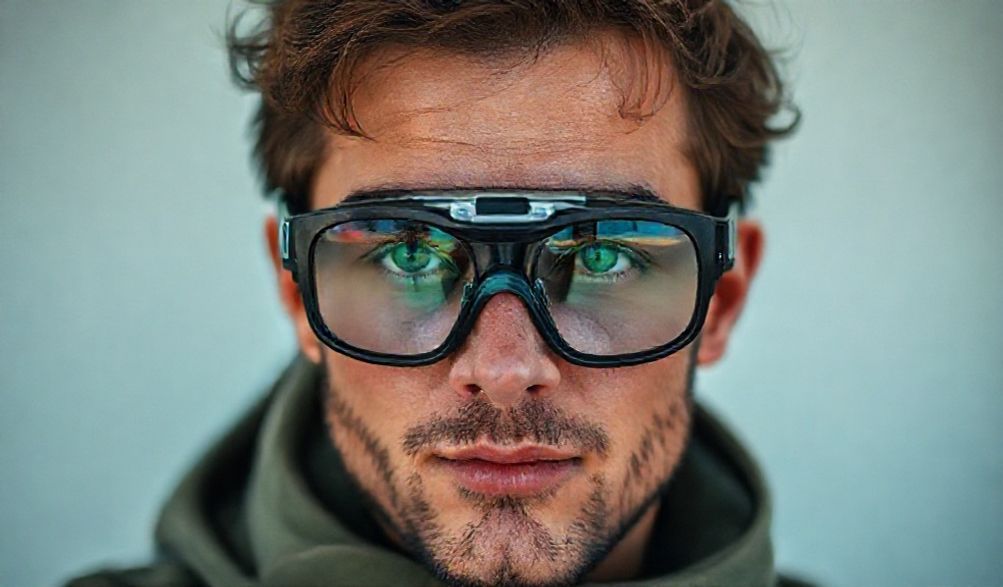
Ergo Loupes: The Ultimate Guide to Ergonomics, Precision, and Eye Health
Do you finish your workday with a stiff neck, aching shoulders, or a pounding headache behind your eyes? If you’re a dentist, surgeon, jeweler, laboratory technician, or anyone who spends hours in demanding, detail-oriented work, you’re likely all too familiar with this physical toll. For decades, professionals have relied on magnification loupes to achieve the precision their work demands. Yet, paradoxically, the very tool designed to enhance vision has often been a primary contributor to chronic musculoskeletal disorders (MSDs). The culprit? Traditional straight-through loupe designs that force you into a debilitating “head-down” posture.
This comprehensive guide introduces you to the ergonomic evolution that is changing fields from dentistry to microsurgery: ergo loupes. More than just an accessory, ergo loupes represent a fundamental redesign centered on the user’s long-term health. This evidence-based guide will demystify ergo loupes, detailing their profound benefits, providing a step-by-step framework for choosing the right pair, and offering essential tips for use and care. Our insights are drawn from optical science, ergonomic research, and professional best practices, empowering you to make an informed investment in your most valuable professional assets—your vision, your health, and your career longevity.
By the end of this article, you will understand not just what ergo loupes are, but why they are a critical upgrade, how to select the perfect pair for your needs, and the practices to maximize their value for years to come.
What Are Ergo Loupes? Redefining Magnification with Ergonomics
At their core, ergo loupes (short for ergonomic loupes) are magnification systems engineered with the user’s posture as a primary design constraint. Unlike conventional loupes, which are an afterthought to optics, ergonomics is baked into their very optical path.
The Core Principle: Declined Angle vs. Traditional Straight-Through
The difference is foundational. Imagine looking through a paper towel tube.
- Traditional Galilean or Prismatic Loupes: These typically offer a straight-through optical path. To see your work area—a patient’s mouth, a circuit board, a watch movement—you must angle the loupes downward. This forces you to crane your neck forward and tilt your head down, often by 20-40 degrees, to align your eyes with the eyepieces. Your spine follows, creating a curved, stressful posture.
- Ergo Loupes: These utilize sophisticated prism systems to bend the light path at a specific angle (the declination angle). You wear the loupe frame comfortably on your head with your spine and neck in a neutral, upright position. The prisms then redirect your line of sight downward to your workspace. The result is an “eyes-down, head-up” posture. You look down with your gaze, but you are not bending down with your neck.
The Science of Neutral Posture
The impact of this design is backed by ergonomic science. Studies consistently link sustained neck flexion—the act of looking down—to increased intradiscal pressure in the cervical spine, muscle fatigue in the trapezius and posterior neck muscles, and a cascade of issues that can lead to pain in the shoulders and lower back. For a professional spending 30+ hours a week in magnification, this is a recipe for chronic injury.
Ergo loupes directly combat this by facilitating a neutral spine posture. This position, where the ears are aligned over the shoulders and the shoulders over the hips, is the body’s strongest and least taxing alignment. By maintaining it, you significantly reduce the static load on your musculoskeletal system, turning hours of strain into hours of supported, sustainable work.
Key Benefits of Switching to Ergo Loupes
The decision to switch to ergo loupes is an investment that pays dividends across multiple dimensions of your professional life.
Enhanced Physical Health & Career Longevity
- Reduction of Chronic Pain: This is the most immediate and compelling benefit. By eliminating forced neck flexion, ergo loupes directly address the root cause of neck and back pain common among precision professionals. They are a proactive tool in preventing career-ending MSDs, allowing you to practice pain-free.
- Decreased Fatigue: Static muscle contraction required to hold a “head-down” posture is incredibly energy-intensive. By adopting a neutral posture, your body uses far less energy to simply hold itself up. This conserved energy translates to reduced overall fatigue, allowing you to maintain focus and steadiness through longer procedures or at the end of a demanding day.
Improved Clinical & Technical Performance
- Superior Field of View & Depth of Field: Due to their advanced prismatic optical design, ergo loupes often provide a wider field of view and a greater depth of field compared to traditional loupes of similar magnification. This means you can see more of your work area without moving your head, and objects remain in focus across a broader range of distances, enhancing situational awareness and efficiency.
- Sustained Precision: Physical comfort is inextricably linked to technical performance. As muscle fatigue sets in, fine motor control diminishes, and hand tremor can increase. By reducing physical strain, ergo loupes help you maintain steadier hands and sharper mental focus throughout a procedure, ensuring your precision doesn’t wane as the clock ticks on.
Investment in Well-being and Productivity
Framed holistically, ergo loupes are not merely a purchase; they are a strategic investment. The cost is an investment in your personal well-being, reducing the likelihood of painful, costly medical interventions down the line. Professionally, it’s an investment in sustained productivity, higher-quality outcomes, and the ability to extend a healthy, active career for years or even decades. The return on investment is measured in health, happiness, and professional fulfillment.
How to Choose the Right Ergo Loupes: A Step-by-Step Guide
Selecting ergo loupes is a highly personalized process. Getting it wrong can negate the benefits, making professional guidance non-negotiable.
Critical Technical Specifications
-
Magnification & Working Distance: These are interdependent.
- Magnification (e.g., 3.0x, 4.5x, 6.0x): Higher isn’t always better. It comes with a smaller field of view and shorter depth of field. Choose the lowest magnification that allows you to perform your tasks with ease.
- Working Distance: This is the critical distance from your eye to your work plane. It is determined by your posture, arm length, and the type of work you do. An incorrect working distance will force you back into a poor posture. It must be measured precisely during a fitting.
-
Field of View: As mentioned, a wider field is generally preferable for efficiency. Discuss the specific field of view specifications for different models with your fitter.
-
Declination Angle: This is the angle at which the loupes direct your gaze downward (typically between 30° and 45°). It is not a one-size-fits-all setting. The correct angle is calculated based on your seated or standing working height and your measured working distance to ensure a truly neutral head position.
The Vital Importance of Professional Fitting
This point cannot be overstressed: Ergo loupes are a custom medical device for your eyes and posture. An off-the-shelf or online order based on guesswork will fail.
- What a Proper Fitting Entails: A certified fitter will take precise measurements of your Pupillary Distance (PD), your Working Distance, and calculate your optimal Declination Angle. They will assess your frame fit, ensure the loupes are centered perfectly before your eyes, and have you simulate your work posture to confirm comfort and alignment. This process embodies the Experience aspect of expertise—it requires a trained professional.
- The Risk of Self-Ordering: Ordering without a fitting risks incorrect PD (causing eye strain and headaches), wrong working distance (defeating the ergonomic purpose), and an improper declination angle. The result is an expensive pair of loupes that may cause more harm than good.
Frame, Lens, and Lighting Considerations
- Frame Type: You’ll choose between Through-The-Lens (TTL), where the optical barrels are permanently fixed in the frame at your custom angles, and Flip-Up models, where the optical assembly can be flipped up. TTL designs are generally lighter and more stable, while flip-ups offer the convenience of quick magnification disengagement.
- Lens Coatings: Essential upgrades include anti-reflective coating to reduce glare and increase light transmission, and scratch-resistant coating to protect your investment.
- Integrated LED Lighting: Shadow-free, coaxial illumination is not a luxury; it is a necessity for high-precision work. A built-in, high-CRI (Color Rendering Index) LED light source eliminates shadows cast by your head and hands, reduces eye strain, and dramatically improves contrast and detail recognition. It is the perfect companion to your magnification.
Maximizing Your Investment: Use, Care, and Maintenance
Proper use and care ensure your ergo loupes perform flawlessly for years.
Achieving the Perfect Posture: A Setup Checklist
Your loupes are one part of an ergonomic triangle. For optimal benefit:
1. Position Your Patient/Work: The work should be at a comfortable height, typically at or slightly below elbow level when your upper arms are vertical.
2. Adjust Your Seat: Sit (or stand) so your thighs are parallel to the floor and your feet are flat. Your back should be fully supported.
3. Don Your Loupes: Put on your loupes and look at your work. Without moving your head, only your eyes should need to glance down slightly. If you find yourself tilting your head forward, re-check your working distance and chair height.
Daily Care and Cleaning Protocols
- Use Only Recommended Materials: First, blow away loose debris with a bulb blower. Clean lenses with a soft, lint-free microfiber cloth.
- Use Proper Solution: If needed, use a lens cleaner specifically designed for anti-reflective coatings. Never use alcohol, window cleaner, or your clothing, as these can damage delicate coatings.
- Store Safely: Always keep them in a hard, protective case when not in use.
Troubleshooting Common Issues
- Eye Strain or Headaches: The most likely cause is an incorrect Pupillary Distance (PD). Contact your fitter for a re-check.
- Fogging: This is common, especially in clinical environments. Use a commercial anti-fog solution or spray designed for optical lenses. Ensure good ventilation in your workspace.
- Discomfort or Slipping: The frame may need adjustment. Most manufacturers offer free minor adjustments.
Frequently Asked Questions (FAQ) About Ergo Loupes
Q: Are ergo loupes significantly heavier than traditional loupes?
A: Modern ergo loupes are engineered with lightweight titanium and advanced polymers. While the prism system adds some complexity, the total weight is carefully balanced and distributed. Any minimal weight increase is dramatically offset by the elimination of the “head-weight” effect caused by neck strain, making them feel lighter over time.
Q: How long does it take to adapt to ergo loupes?
A: Most users adapt within 1-2 weeks. The sensation of looking down with a neutral head feels unusual at first. Start by wearing them for 30-60 minute intervals during less critical tasks to allow your brain and posture to adjust comfortably.
Q: Can I use my existing prescription with ergo loupes?
A: Absolutely. Reputable manufacturers will incorporate your precise refractive prescription (for myopia, hyperopia, astigmatism, and presbyopia) directly into the custom-cut loupe lenses during fabrication. Provide your current prescription to your fitter.
Q: What is the typical cost, and are they worth it?
A: Ergo loupes are a premium investment, with quality systems (including integrated light) often ranging from $1,500 to $3,500+. While higher than entry-level loupes, the cost reflects custom fabrication, advanced optics, and ergonomic engineering. When viewed as essential, health-preserving professional equipment—akin to a surgeon’s scalpel or an artist’s finest brush—the value is clear. They are an investment in preventing injury, maintaining peak performance, and extending your career.
Q: How often should I have my loupes re-fitted or serviced?
A: An annual “check-up” is recommended. Your fitter can ensure the frame alignment is still perfect, tighten any components, and check the lighting system. More importantly, if your vision prescription changes or you begin to experience any discomfort, schedule a re-fitting immediately.
Conclusion
Ergo loupes represent a paradigm shift in magnification technology. They move beyond the simple goal of “making things bigger” to the holistic objective of enabling sustained precision through sustained health. By fundamentally aligning optical excellence with biomechanical science, they protect the professional while empowering their work.
The evidence is clear: for anyone whose livelihood depends on detailed, prolonged visual tasks, ergo loupes are no longer a niche luxury but a standard for professional best practice. They are the definitive tool for those who value not just the quality of their work today, but their ability to perform it for decades to come.
Therefore, the most authoritative advice we can reinforce is this: Your journey begins with a professional consultation and fitting. Do not shortcut this process. Seek out a certified, experienced vendor or consult with a trusted mentor in your field who uses ergo loupes. Make the investment in a proper fitting—your spine, your eyes, and the quality of your craft will thank you every single day of your long and healthy career.
Ready to experience the difference? Take the next step: research certified optical suppliers specializing in ergo loupes for your profession, schedule a live demo or fitting appointment, and speak to colleagues who have made the switch. Your future self will be grateful you did.
p>