
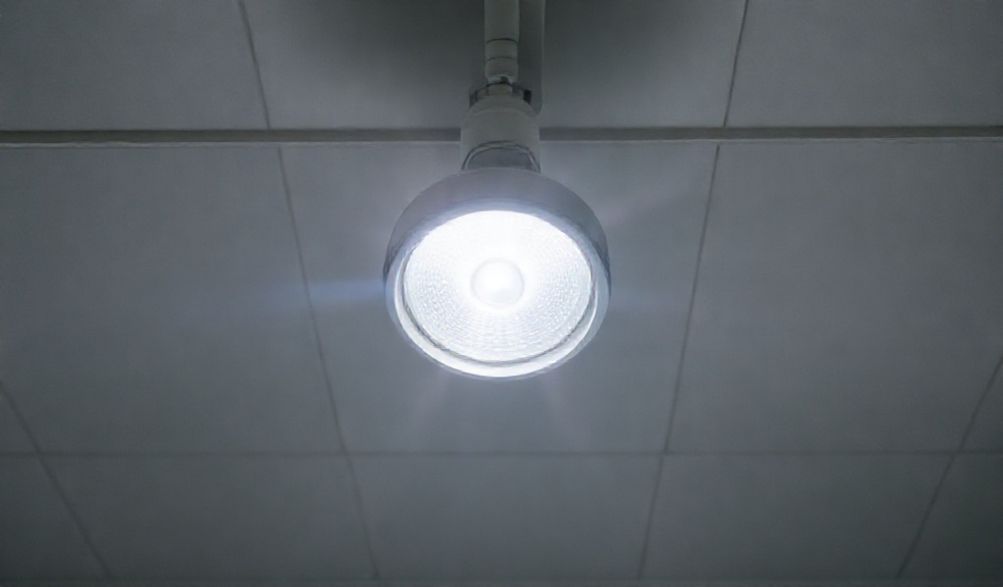
Operating Lights: A Comprehensive Guide to Surgical Illumination Technology
In the high-stakes environment of a modern operating room, every detail matters. From the surgeon’s skill to the sterility of the instruments, each element is meticulously controlLED to ensure patient safety and optimal outcomes. Among these critical components, one often operates in plain sight yet is so fundamental that its failure would halt a procedure instantly: the operating light. More than just a lamp, today’s surgical illumination systems are sophisticated technological marvels engineered to become a seamless extension of the surgical team’s senses. This guide serves as an authoritative resource for healthcare professionals, clinical engineers, and procurement teams, synthesizing insights from clinical studies, engineering specifications, and industry best practices to illuminate the critical role of the modern operating light.
The journey from the shadow-casting candles of early surgery to today’s intelligent, cold-light systems is a story of relentless innovation. We have moved far beyond simple brightness. The contemporary operating light is a hub of optical precision, ergonomic design, and digital integration, directly impacting tissue differentiation, surgeon ergonomics, and procedural efficiency. Selecting the right system is not a mere procurement task; it is a strategic decision with direct implications for clinical outcomes, workflow, and long-term operational costs. This post will delve into the core technology, essential selection criteria, future trends, and vital safety protocols that define excellence in surgical illumination.
The Core Technology Behind Modern Operating Lights
Understanding the engineering principles behind an operating light is key to appreciating its performance and making an informed selection. Modern systems are built upon a foundation of advanced optics, solid-state lighting, and human-centered design.
LED Dominance: Benefits Over Traditional Halogen and Xenon
The shift from halogen and xenon to Light Emitting Diode (LED) technology represents the most significant leap in surgical lighting in decades. This transition is driven by compelling advantages:
- Energy Efficiency & Longevity: LED modules consume significantly less power than their predecessors, generating substantial cost savings and reducing the thermal load on the OR’s HVAC system. More importantly, their lifespan is measured in tens of thousands of hours (often 50,000-60,000), virtually eliminating the disruptive and costly need for bulb changes during a system’s operational life.
- Reproducción Cromática Superior: The Color Rendering Index (CRI) is a critical metric, quantifying a light source’s ability to reveal the true colors of objects compared to natural light. LED systems consistently achieve CRIs above 90, and often above 95, which is crucial for accurate differentiation between tissues, such as distinguishing a pale nerve from surrounding fascia or identifying subtle variations in tissue perfusion.
- Consistency & Cool Operation: Unlike halogen bulbs, which dim and yellow over time, LEDs maintain consistent color temperature and intensity throughout their lifespan. Furthermore, they emit minimal infrared radiation, drastically reducing radiant heat directed at the surgical site. This “cold light” prevents tissue desiccation and enhances comfort for the surgical team.
Optical Systems and Light Field Design
The quality of an operating light is defined not just by the source, but by how the light is shaped and delivered. The optical system is the heart of the device.
- Depth of Field & Shadow Management: A high-quality light provides deep, uniform illumination even in deep cavities (e.g., during pelvic or spinal surgery), minimizing the need for constant repositioning. Advanced systems use multi-point source designs—often with hundreds of individual LED chips arranged in a specific geometry—to dramatically reduce the formation of obstructive shadows cast by surgeons’ heads and hands. This is often achieved through parallel beam technology, where light rays are projected almost parallel to each other, creating a wide, deep field with exceptional homogeneity.
- Homogeneous Illumination: Homogeneity refers to the evenness of light across the entire field. A poor system will have a bright “hot spot” in the center with rapid fall-off at the edges. Premium lights achieve homogeneity of 90% or greater, ensuring no part of the wound is under- or over-illuminated, which reduces eye strain and improves visual accuracy.
Ergonomic Design and Sterility Considerations
Technology must serve the user. The physical design of an operating light is paramount for OR workflow and infection control.
- Maneuverability: The light must be effortlessly positioned and remain securely in place. This involves perfectly balanced arms with multiple points of articulation, allowing the light head to be moved with minimal force and without drift. The range of motion should cover the entire surgical table and surrounding area without impeding staff or equipment.
- Sterile Integrity: Every surface must be designed for easy and effective cleaning and disinfection. Seamless, non-porous housings prevent microbial harborage. Controls should be accessible via sterile handles or, increasingly, through touchless interfaces like gesture control or voice command integrated into the OR system, maintaining the sterile field.
Key Selection Criteria for Surgical Suites
Evaluating an operating light requires moving beyond brochure specifications to practical, clinical performance metrics. Here’s how to assess what truly matters.
Assessing Luminous Performance: Lux, Diameter, and Homogeneity
These three interconnected metrics form the core performance triad:
- Illuminance (Lux): This measures the intensity of light falling on the surgical field. While standards like IEC 60601-2-41 specify a minimum of 40,000 lux at a defined distance, modern lights far exceed this. Neurosurgery, cardiac, and other microsurgical specialties often demand 160,000 lux or more for exceptional detail.
- Light Field Diameter: The size of the illuminated area can be adjusted on most lights. A larger diameter is useful for open procedures like laparotomies, while a smaller, focused spot is key for deep-cavity work. Evaluate if the system maintains high lux levels across a range of diameters.
- Homogeneidad: As noted, this is the percentage of evenness. Demand a minimum of 80%, with 90%+ being the gold standard. Test this during a demo by observing a flat surface.
Color Temperature and Tissue Contrast Enhancement
Color temperature, measured in Kelvin (K), defines the “warmth” or “coolness” of white light.
- Clinical Impact: A 4000K light appears slightly warmer (more yellow/red), while 4500K-5000K is a cooler, daylight-like white that many surgeons prefer for its perceived brightness and contrast. Some systems offer a D55 (5500K) mode, which is calibrated to match standard daylight viewing conditions for color-critical tasks.
- Specialty Modes: Advanced lights feature programmable modes that alter the light spectrum to enhance specific structures. A “vascular mode” might enhance the red-blue contrast between oxygenated and deoxygenated blood. A “bile duct mode” can improve visualization of ductal structures during cholecystectomy.
Integration with the Operating Room Ecosystem
No piece of equipment is an island. The modern operating light must be a connected node in the digital OR.
- Surgical Video & Recording: The light must provide flawless, flicker-free illumination for 4K/8K cameras used in minimally invasive and open video recording. Look for lights with dedicated, regulated power outputs for camera heads to ensure perfect color balance.
- Sistemas de Control del Quirófano: Integration allows surgeons or circulators to adjust light position, intensity, and mode directly from a touchscreen panel or voice control system, streamlining workflow.
- Hybrid OR Readiness: In suites with fixed CT or MRI, the light must have a wide enough range of motion to park completely out of the imaging field and be constructed from non-ferromagnetic materials.
Advanced Features and Future Trends
The frontier of surgical lighting is defined by intelligence, data, and sustainability.
Smart Lighting and IoT Connectivity
El operating light is becoming a data-generating smart device. With IoT connectivity, it can:
* Automatically load pre-set intensity and color temperature profiles for a “Total Knee Replacement” or “Craniotomy.”
* Transmit usage data and performance metrics, enabling predictive maintenance before a failure occurs.
* Provide analytics on OR utilization based on light activation patterns.
4K/8K Visualization and Digital Guidance Overlays
As surgery becomes more digital, the light plays a new role. It is the primary source for ultra-high-definition visualization in open surgery. Looking ahead, systems are being developed to integrate with augmented reality (AR) platforms. Imagine the light projecting critical navigation landmarks, tumor margins, or vital signs directly onto the surgical field, perfectly aligned and in focus, guided by pre-operative imaging.
Sustainability in Surgical Lighting
Healthcare sustainability is a growing imperative. LED technology is inherently greener, but the evaluation is expanding to the full lifecycle:
* Integración: Factor in energy savings, elimination of replacement bulbs, and reduced maintenance.
* Recyclability: Manufacturers are now designing for disassembly, using recyclable materials and offering product take-back programs at end-of-life.
* Green Manufacturing: Procurement teams are increasingly considering the environmental policies of their equipment suppliers.
Maintenance, Safety, and Compliance
The most advanced light is only as good as its upkeep. A rigorous maintenance protocol is non-negotiable for patient safety and consistent performance.
Routine Maintenance Protocols and Calibration
Clinical engineering teams should follow a strict schedule:
* Diario / Previo al Uso: Visual inspection for damage, check of all movements and brakes, verification of sterile handle integrity.
* Mensual/Trimestral: Measurement of central illuminance and homogeneity with a calibrated light meter to detect any LED degradation. Check and clean optical surfaces.
* Anualmente: Full performance validation and safety inspection per manufacturer guidelines, including electrical safety tests.
Navigating Regulatory Standards
Compliance is the bedrock of safety. Key standards include:
* IEC 60601-2-41: The international standard for the basic safety and essential performance of surgical luminaires and examination lights. It defines requirements for light output, depth of illumination, color rendering, and safety from excessive heat.
* Regional Markings: FDA 510(k) clearance in the U.S., CE Marking in Europe, and other regional certifications are mandatory for market entry.
* Accreditation Readiness: Documentation of compliance, installation qualifications (IQ), operational qualifications (OQ), and maintenance logs are essential for surveys by bodies like The Joint Commission.
Sección de Preguntas Frecuentes
Q1: What is the typical lifespan of an LED operating light, and what does it depend on?
A: High-quality LED luces quirúrgicas halógenas, are rated for 50,000 to 60,000 hours of operation. This lifespan primarily depends on the effectiveness of the thermal management system (heat sinks, etc.), the quality of the LED drivers and power supply, and the operational environment (e.g., usage cycles, ambient temperature). The lifespan is typically defined as the L70 point—the time it takes for the light output to depreciate to 70% of its initial lumens.
Q2: How does an operating light reduce surgeon eye strain and fatigue?
A: It combats fatigue through multiple features: High homogeneity eliminates harsh bright spots and deep shadows, reducing the need for constant pupil adjustment. Excellent color rendering (high CRI) minimizes cognitive effort in distinguishing tissues. Stable, flicker-free intensity prevents subtle visual stress. Reduced infrared/heat output increases comfort over long procedures. Together, these factors lessen visual and mental fatigue.
Q3: Can existing halogen operating lights be retrofitted with LED modules?
A: While third-party retrofit kits are marketed, they are generally discouraged by original equipment manufacturers (OEMs). Retrofitting can compromise the precision-engineered optical path, leading to poor homogeneity and shadow control. Crucially, it will void the original safety certifications (CE, FDA) and may introduce electrical or mechanical hazards. For guaranteed performance, safety, and liability protection, a complete system replacement is the recommended path.
Q4: What is the single most important factor when choosing a light for a high-volume OR?
R: Reliability and Serviceability. In a high-volume setting, downtime equates to cancelled surgeries and lost revenue. Prioritize models with a proven high Mean Time Between Failures (MTBF), backed by a responsive and local service network. Ensure that common replacement parts are readily available. The goal is maximum uptime and minimal disruption.
Q5: How do I properly evaluate an operating light before purchase?
A: Insist on an demostración in situ in one of your own operating rooms. Conduct a simulated procedure with your surgical team. Key tests include: maneuvering the light into awkward positions, assessing shadow control when two surgeons and an assistant are working, checking clarity at the deepest point of a cavity simulator, and evaluating the intuitiveness of controls while maintaining sterility.
Conclusión
El operating light has evolved from a simple utility to a core, intelligent component of the surgical safety and efficiency system. Its role is foundational: to render the surgical field with such clarity, depth, and accuracy that it empowers the surgeon’s skill and protects the patient. The investment decision, therefore, must balance cutting-edge optical performance with proven reliability, seamless integration, and a clear understanding of total lifecycle costs.
As we look forward, the trajectory is clear. Surgical lighting will become even more deeply embedded in the digital surgery platform. Through enhanced connectivity, integration with augmented reality, and data-driven insights, the next generation of operating lights will not only illuminate but also inform and guide, actively contributing to improved outcomes and operational excellence. When evaluating these critical systems, always ground your decision in evidence: consult with clinical engineers, review the latest clinical literature on surgical visualization, and demand comprehensive, validated performance data from manufacturers. In the illuminated field of modern surgery, knowledge is the most powerful light of all.
p>